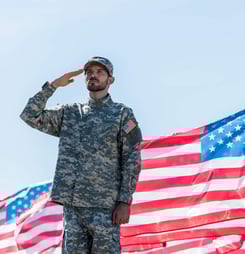

Take some time on this day to think about the freedoms offered through those who serve in the military, and also to show some appreciation for those service men and women who work so hard to provide it. It’s time to enjoy and celebrate National Hug a G.I. Day!
National Hug a G.I. Day Timeline
“G.I.” Entered U.S. Army Supply Vocabulary
The abbreviation “G.I.” was documented in U.S. Army usage to mark “galvanized iron” on equipment and supply listings, a technical label that later evolved into slang for soldiers themselves.
From Galvanized Iron to Government Issue
During World War I and its aftermath, “G.I.” began to be reinterpreted in soldiers’ slang as “government issue” or “general issue,” broadening from a materials code to a catchall term for standard army equipment and personnel.
G.I. Joe Became the “Average American Soldier”
Cartoonist Dave Breger debuted the character “G.I. Joe” in Yank, the Army Weekly, helping cement “G.I.” as a popular nickname for ordinary U.S. enlisted men during World War II.
Servicemen’s Readjustment Act, the Original G.I. Bill
President Franklin D. Roosevelt signed the Servicemen’s Readjustment Act of 1944, soon known as the G.I. Bill, offering returning veterans education funding, home loan guarantees, and unemployment benefits that reshaped postwar American society.
U.S. “G.I.” Culture Goes Global with “King Creole”
Elvis Presley’s draft into the U.S. Army and his 1958 film “King Creole,” followed by the 1960 movie “G.I. Blues,” popularized the image of the American G.I. worldwide and linked military service with youth culture and entertainment.
Hasbro Launched the G.I. Joe Action Figure
Toy company Hasbro introduced the G.I. Joe action figure line, explicitly marketing it as “America’s movable fighting man” and turning “G.I.” into a central part of children’s popular culture.
Creation of the U.S. Department of Veterans Affairs
Congress elevated the Veterans Administration to Cabinet level as the Department of Veterans Affairs, reflecting a national commitment to long-term medical care, benefits, and support for former G.I.s and their families.
History of National Hug a G.I. Day
The story behind the term “G.I.” is an interesting one that has a number of different interpretations. It seems that originally the term “G.I.” stood for galvanized iron, which is the material from which many different items were made, such as buckets or trash cans. The letters “G.I.” were stamped on these items and so it began to be used to define anything that was related to the army. As this happened, the term “G.I.” was interpreted to mean “government issue”, “general issue,” or even “ground infantry”, but that wasn’t where it first came from.
The prevalence of the term “G.I.” during World War II led the American soldiers to begin referring to themselves as G.I.s. Some soldiers would use the term sarcastically to imply that they are simply just another standard issue item from the army, rather than a human being. It was during this same time in World War II that “G.I. Joe” became a term that was used to describe a typical American soldier and a cartoon of the same name followed.
By 1944, President Roosevelt signed into law the Servicemen’s Readjustment Act, which became casually known as the “G.I. Bill”. This legislation provided benefits and help to veterans returning from war, including special unemployment insurance, home loans and college funding.
National Hug a G.I. Day got its start quite a bit later, in 1996 ,when it was founded by Adrienne Sioux Koopersmith. The idea behind the day was to honor and show appreciation for men and women of the armed forces who are serving (or have served) their country.
National Hug a G.I. Day was established to be celebrated on March 4th because it is the only date of the year that also acts as a military command – “march forth”. So, it’s a fun little way to remember that these soldiers, airmen, sailors and other members of the military forces might just need a hug now and then! And if they can’t get an actual hug, then it’s still a great time to show appreciation in some other ways.
How to Celebrate National Hug a G.I. Day
Say you care and show some love on National Hug a G.I. Day with a wide variety of creative actions and activities, including some of these:
Hug a G.I.
It’s so easy when the name of the day also tells everyone how to celebrate! National Hug a G.I. Day is here to remind friends, family members and other loved ones of the nation’s service men and women that everyone can use a hug now and then – even a member of the armed forces.
Of course, before hugging anyone, it’s important to be sure to ask them first to make sure it’s okay! In addition to simply respecting people’s boundaries, it is also helpful to remember that some G.I.s return from service with injuries, chronic pain, mental health issues, or even PTSD, so be sure to communicate clearly with them about the hope for a hug.
Other good ways to show affection that perhaps aren’t so intimate might be a firm handshake, a pat on the back, or a high five. Whatever the relationship, be sure to set aside a moment to show some appreciation and say thank you for the hard work these folks do to serve their country.
Send a G.I. Care Package
One excellent way to show some love to members of the military might be to gather up a care package to be sent overseas. Those who know someone who is serving overseas can make up their own care package and send it through the typical US Postal Service.
But even those who don’t personally know a man or woman in the military can still send a care package. While the Department of Defense does not have such a program itself, there are several different legitimate non-profit organizations that exist to help do just that (although it’s important to beware of potential scammers).
One such program is Holiday for Heroes by the American Red Cross, and others can be found through the official US military website.
Help and Support Veterans
Organized to serve those who have been actively engaged in serving their country, the National Veterans Foundation encourages individuals, groups and communities to show support to veterans. In honor of National Hug a G.I. Day, it is possible to offer small gestures that can make a big impact.
Check out some of these important suggestions for supporting those who used to be G.I.s and are now veterans:
- Visit wounded veterans. Veterans Association facilities are located all over the United States and visiting those who are in these medical centers might be a great way to show some appreciation for their service.
- Provide transportation. One difficulty that veterans may have, especially those who are wounded, is getting transportation to and from their medical and health appointments. Drivers can sign up to become part of a volunteer network that helps veterans.
- Help fight homelessness. The National Coalition for Homeless Veterans works to prevent eviction or foreclosure for those who have served in the armed forces. Volunteer or make a donation to this organization.
- Visit a vet with your pet. It is a well-known fact that pets provide care, nurturing and stability to people in need. Veterans who have difficulties with mental or physical health may appreciate the ability to spend time with pets who are trained in animal-assistance therapy.
Facts About Hugging, Stress, and the Meaning of “G.I.”
These facts explore the science behind hugging and its measurable effects on stress and health, alongside the historical origins of the term “G.I.” Together, they connect human connection with cultural and military history, showing how both physical touch and language have shaped social support and identity over time.
Touch Lowers Stress Hormones in a Measurable Way
Laboratory studies have found that supportive physical touch can dampen the body’s stress response.
In one controlled experiment with romantic partners, participants who held hands and received a reassuring touch before facing a stressor showed significantly lower blood pressure and heart rate than those who did not, suggesting that safe, welcomed touch helps regulate the autonomic nervous system during anxiety-provoking situations.
Hugging Is Linked With Fewer Colds Under Stress
Research on adults exposed to a common cold virus found that those who reported receiving frequent hugs and strong social support were less likely to become infected, and if they did get sick, their symptoms tended to be less severe.
The authors concluded that hugging may act as a marker or mechanism of social support that buffers people from stress-related susceptibility to illness.
The Term “G.I.” Began With Hardware, Not Humans
The letters “G.I.” first appeared in U.S. Army supply catalogs in the early 20th century to label items made of galvanized iron, such as trash cans and buckets.
During World War II, the abbreviation spread from equipment to paperwork and pay records, and American troops gradually adopted “G.I.” as a wry nickname for themselves, later reinterpreting it as “government issue” or “general issue.”
“G.I. Joe” Helped Cement the G.I. Nickname in Popular Culture
The phrase “G.I. Joe” was popularized by a 1942 cartoon character created by artist Dave Breger for the military magazine Yank, the Army Weekly, where the everyman soldier Joe became a humorous stand-in for typical U.S. enlisted men.
The character’s wide circulation among troops and later on the home front helped fix “G.I.” in the American imagination as a term for U.S. soldiers rather than just government property.
The Original G.I. Bill Transformed American Higher Education
The Servicemen’s Readjustment Act of 1944, known as the G.I. Bill, offered World War II veterans tuition payments and living stipends that opened college doors to millions who otherwise could not have afforded it.
By 1956, roughly 7.8 million veterans had used education or training benefits under the law, a surge that helped democratize higher education and reshape the U.S. middle class.
Military Service Members Face Elevated Risk of Post‑Traumatic Stress
While most veterans do not develop post‑traumatic stress disorder, large epidemiological studies suggest that PTSD remains more common among those who have served in combat zones than in the general population.
For example, surveys of Iraq and Afghanistan veterans have estimated PTSD prevalence in the range of about 11 to 20 percent, highlighting why many clinicians stress the importance of asking about comfort with physical touch rather than assuming it is welcome.
Veterans Are Overrepresented in the U.S. Homeless Population
Federal data show that U.S. military veterans make up a disproportionately large share of people experiencing homelessness relative to their share of the overall adult population. A
lthough veteran homelessness has declined by more than 50 percent since 2010 through targeted housing and support programs, thousands of former service members still lack stable housing on any given night, reflecting ongoing gaps in income, health care, and social support after leaving the military.