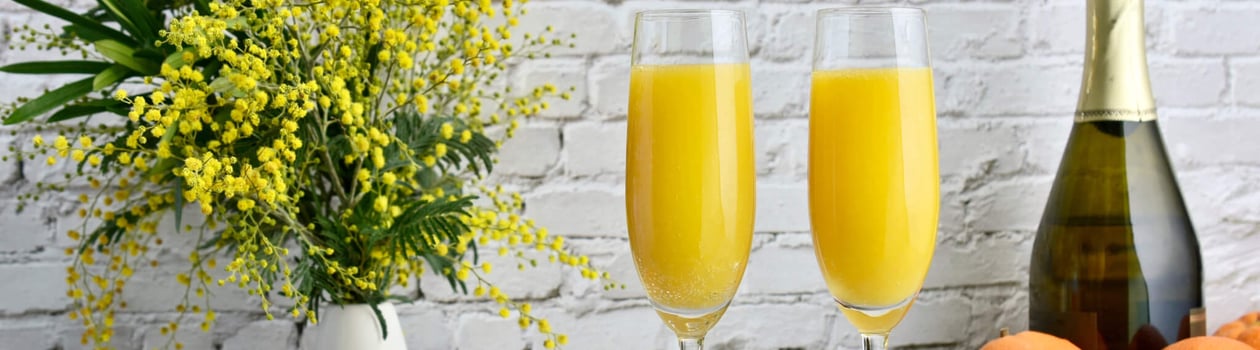
Sparkling wine combined with refreshing citrus juice brings about a delightfully fizzy combination that is refreshing and relaxing. The Mimosa, brunch’s favorite drink, offers a delightful way to make things a bit more festive. And this little cocktail gets a whole day to be celebrated because it’s National Mimosa Day!
How to Celebrate National Mimosa Day
Have fun at breakfast, brunch and all day long on National Mimosa Day. Get excited about celebrating with some of these ideas:
Enjoy a Mimosa
The first order of business on National Mimosa Day is to celebrate by enjoying one of these delicious cocktails — along with a delicious brunch. Those who don’t need to go to work, or drive anywhere, might want to fix one at home while still in their pajamas!
Others might choose to wait until after work or when they are safely tucked in at home for the evening. Of course, this is a less traditional time of day to enjoy this cocktail, but exceptions can certainly be made in light of the fact that National Mimosa Day lasts for 24 hours!
Get Creative with Mimosas
The exciting part about a super simple recipe like the one for mimosas is that it’s a perfect opportunity to get creative and explore new tastes. Start with the basics of sparkling wine and juice, but mix it up a little. Perhaps change the orange juice to grapefruit or choose a sparkling wine that is a little more dry than usual.
Once the basic drink is there, other options can include adding a splash of another juice, such as cranberry, pomegranate or pineapple juice. Or make it a bit more boozy with a tablespoon of liqueur, such as Chambord of Grand Mariner. Or just go all out and splash a little vodka in there for fun!
Since mimosas are traditionally a brunch drink, make mimosas a bit more interesting by adding various types of fruit. Put some fruit puree, such as strawberry or peach, directly into the bottom of the champagne flute. Or get adventurous with chopped fruits such as blueberries, orange slices or strawberries. Explore to see what combinations work for you and your guests!
Brunch It Up!
Mimosas are the perfect pairing for a delicious late breakfast and early lunch – otherwise known as “brunch”. Love the combinations of breakfast foods that go so well with a Mimosa, such as a delightful omelet, a fluffy stack of chocolate chip pancakes, or a pile of waffles doused in maple syrup. Add in a few fried or scrambled eggs, some flaky buttermilk biscuits and a bit of jam on the side, and that will make for one amazing way to celebrate National Mimosa Day!
Appreciate the Mimosa Flower Behind the Name
National Mimosa Day was most likely established in celebration of the yellow-ish orange cocktail that is made from sparkling wine and orange juice. But it certainly won’t hurt to learn a little bit more about the namesake of the drink in observance of the day.
Consider these interesting facts about the Mimosa Tree in honor of National Mimosa Day:
- Many varieties of this beautiful ornamental plant are native to South and Central America and can grow to a height of 20-40 feet tall.
- The name of the Mimosa Tree originates from the Greek word “mimos”, which means “to mimic”.
- The flowers of the Mimosa Tree are extremely aromatic, growing in clusters at the ends of the branches and typically blooming in the spring and summer, from April until July.
- The Mimosa Tree is part of the legume family, which means it has fruit that developed in long, flat pods with seeds inside.
History of National Mimosa Day
Named after a beautiful plant with yellow flowers, the Mimosa is a cocktail that has been around for about a century — since the early 1920s. An ancestor, or perhaps an inspiration, to this cocktail was the Buck’s Fizz, which seems to have been created at the Buck’s Club in London in 1921. This similar drink also combines orange juice and champagne, but tends to have a larger amount of the sparkling wine.
Another interesting story shows that the origins of the Mimosa can be traced back to Frank Meier when he was a bartender at the Ritz hotel in Paris in 1926. This drink was more like the modern day Mimosa, where the orange juice and sparkling wine are included at an equal ratio. A decade later, Meier included his Mimosa recipe in his book, “The Artistry of Mixing Drinks,” which is believed to be the first published copy of this famous cocktail in a recipe book.
By the 1960s, the Mimosa had continued to gain popularity, particularly with the endorsement of the Royal Family in the United Kingdom. In addition, the English-born American mystery writer and filmmaker, Alfred Hitchcock, seems to have made it popular in the United States, along with other famous celebrities like British actress Vanessa Redgrave and French actress Denise Darcel.
While Sunday brunch had been around for decades by this time, these folks lending their stamp of approval to the drink created more interest so that it finally took over the Bloody Mary in popularity. And by the time Ronald Reagan’s turn at president rolled around, the Mimosa was the go-to cocktail for day-drinking and morning or afternoon meals.
More than just serving Mimosas at brunch, this cocktail has become synonymous with celebrations. Whether using the drink to toast at a wedding brunch, celebrating a baby’s baptism or serving them at a late morning garden party. Many airlines have also been known to serve this drink as part of their business class or first class special offerings.
National Mimosa Day was founded to show appreciation for this popular and delicious brunch cocktail. It was likely founded by Jace Shoemaker Galloway sometime in the early 2000s. Now, each year the day is enjoyed and celebrated at brunches all throughout the globe to pay homage to the beauty and simplicity of sparkling wine combined with orange juice!
Curious Facts About the Mimosa
From its surprising botanical origins to the story behind its name and behavior, mimosa is more than just a brunch favorite or a decorative plant. These facts reveal how history, language, and science all come together to shape what we know about mimosa today.
The “Mimosa” Cocktail Took Its Name From a European Acacia
The brunch cocktail called a mimosa is widely believed to be named after the bright yellow blossoms of Acacia dealbata, a tree native to southeastern Australia but grown ornamentally around the Mediterranean and in parts of Western Europe.
In France and Italy, its fluffy, golden flower clusters were commonly called “mimosa,” and their color closely matched the hue of orange juice mixed with champagne, making the floral nickname a natural fit for the drink in early 20th-century Europe.
Not All “Mimosa Trees” Are True Mimosas
In many parts of the United States, the pink, powder‑puff “mimosa tree” that lines streets and backyards is actually Albizia julibrissin, also known as the silk tree, which belongs to a different genus from true Mimosa species.
Although it shares similar feathery leaves and tufted flowers, Albizia julibrissin is native to Asia and was introduced to North America in the 18th century as an ornamental, where it later became invasive in several southeastern states.
The Word “Mimosa” Comes From the Idea of Mimicry
The name “mimosa” traces back to the Greek word “mimos,” meaning “mime” or “imitator,” a reference to how some plants in this group seem to “mimic” animal sensitivity.
In particular, species like Mimosa pudica fold their leaves rapidly when touched, shaken, or exposed to heat, giving the impression that the plant is reacting like a living creature, which fascinated early botanists and led to the evocative name.
A “Sensitive” Plant Helped Scientists Study Plant Behavior
Mimosa pudica, often called the sensitive plant, has been used for decades as a model organism in experiments on plant behavior, learning, and memory.
Research has shown that after repeated harmless drops or disturbances, the plant can stop folding its leaves, suggesting a form of habituation that some scientists argue resembles a simple type of learning in organisms without a nervous system.
Buck’s Fizz and the Mimosa Differ Mostly in Their Ratios
The British Buck’s Fizz, first served at London’s Buck’s Club in the early 1920s, predates the mimosa and also mixes champagne and orange juice, but traditionally uses a much higher proportion of sparkling wine to juice.
The mimosa that later became popular in France and the United States generally settled on closer to equal parts wine and citrus juice, which makes it lighter in alcohol and better suited to long, sociable daytime meals like brunch.
Oranges Became a Winter Luxury Thanks to the Mediterranean Trade
The orange juice in a mimosa has deep historical roots in Mediterranean agriculture and global trade.
Sweet oranges were introduced to Europe from Asia in the late Middle Ages and, by the 17th century, became prized winter fruits grown in protected “orangeries” for the wealthy; only with the expansion of citrus farming in places like Spain, Italy, and later Florida and California, along with refrigerated transport, did orange juice become an everyday ingredient that could casually appear in breakfast cocktails.
Sparkling Wine’s Bubbles Are a Relatively Recent Innovation
The fizz in a mimosa depends on techniques that winemakers did not fully control until the 17th and 18th centuries.
In the Champagne region of France, advances such as stronger glass bottles and more reliable corks allowed secondary fermentation to be harnessed safely, trapping carbon dioxide and creating stable sparkling wines; before that, bubbles were often an accidental and sometimes dangerous flaw rather than a feature.
National Mimosa Day Timeline
Buck’s Fizz makes an appearance
This drink shows up at the Buck’s Club in London and is made from mostly champagne with some orange juice.
Mimosas appear in Paris
At the Ritz hotel in Paris, Frank Meier serves the Mimosa, made with equal parts champagne and orange juice.
First printed recipe for mimosas
Frank Meier’s book, The Artistry of Mixing Drinks, includes the first Mimosa recipe in print.
Alfred Hitchcock adds to the fame of Mimosas
Drinking a Mimosa during an interview, Hitchcock is so associated with the drink that people begin to believe he invented it.
Movie “Mimosas” is released
This indie film with amazing cinematography tells a dramatic story of life and death in the Moroccan mountains.