
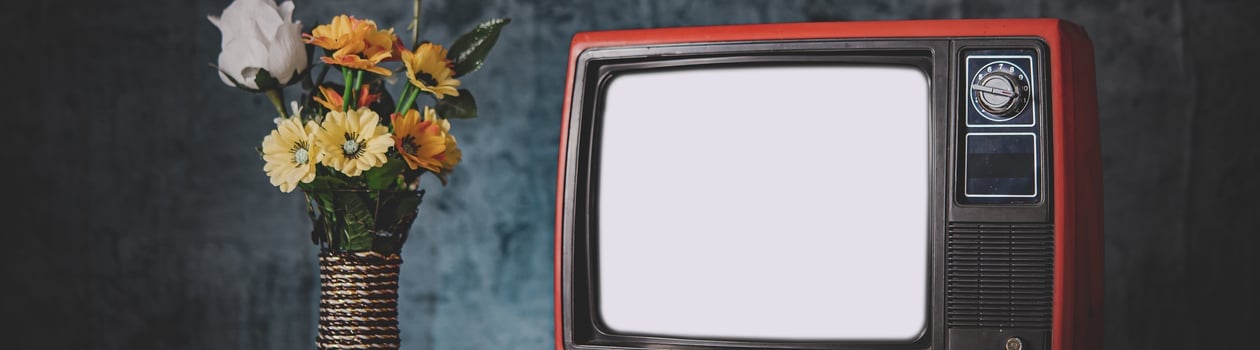
National Television Heritage Day is a spirited celebration of a device that has spent decades glowing in the corner of living rooms, waiting rooms, and break rooms, quietly shaping the way people learn, relax, and talk to one another. From snowy black-and-white pictures to crisp high-definition screens, television has continuously reinvented itself while still doing its favorite trick: gathering people around a shared story.
It’s a chance to appreciate how TV has shaped society, from bringing headline-making moments into the home to transforming entertainment into something that can be watched live, recorded for later, or streamed on demand. Television heritage is not only about old shows and vintage sets, it’s also about the habits, innovations, and cultural shifts that grew up around the screen.
How to Celebrate National Television Heritage Day
Kick Off with a Classic TV Show Marathon
A classic TV marathon is the easiest way to step into television history without leaving the couch. Choosing a few landmark series can make the experience feel like a guided tour through changing styles of storytelling, comedy, and production.
A marathon can be curated by theme rather than just by title. For example, one might pick:
- A pioneering sitcom to see how timing, physical comedy, and studio audiences helped define early TV humor.
- An anthology series to appreciate an era when writers and directors used television as a weekly laboratory for bold ideas.
- A classic game show or variety program to get a sense of how “appointment viewing” used to feel when entire households watched at the same time.
To make it more “heritage” and less “background noise,” it helps to watch with intention. Paying attention to details like set design, commercial breaks, laugh tracks, or the pacing of scenes reveals how television once had to work within tighter time limits, simpler effects, and fewer channels. Even the imperfections can be part of the charm. Older shows often move at a different rhythm, and that slower pace is practically a time capsule.
Craft Your TV Show
Creating a TV show concept is a surprisingly good way to understand why television looks and feels the way it does. Television writing is its own craft, built around episodes, seasons, and characters people want to spend time with repeatedly.
To keep the project fun and doable, the “pilot episode” can be sketched using a few simple building blocks:
- Premise: What is the show’s central idea in one sentence?
- Main cast: Who are the regular characters, and what do they want?
- Pilot problem: What challenge or event kicks off the first episode?
- Hook: What makes someone want to watch the next episode?
A clever twist is to design the same show for two different eras. One version could be made for old-school broadcast television, with strict time slots and cliffhangers designed to keep viewers through the next week. Another could be built for modern binge-watching, where episodes flow together and character arcs stretch longer. This playful comparison highlights how technology influences storytelling. When people had to wait a week between episodes, writers leaned on recaps and punchy endings. When viewers can watch instantly, shows can afford slow-burn plots and deeper serialized narratives.
For an extra nod to heritage, one might add “period authentic” constraints, like imagining the show must be filmed on a single set, or that special effects must be practical rather than digital. Limitations can spark creativity, and television history is full of creators making magic with what they had.
Upgrade Your Viewing Setup
Television technology has always been part of the story. For many people, National Television Heritage Day is a reminder of how much the hardware has changed, from heavy wood-cabinet sets and rabbit-ear antennas to ultra-thin displays and wireless streaming.
Upgrading a viewing setup does not have to mean buying the biggest screen available. It can simply mean setting up a space that makes watching more enjoyable and more intentional. A few practical improvements include:
- Adjusting picture settings: Many televisions ship with overly bright “store” settings. Tweaking brightness, contrast, and motion smoothing can make classic shows look more natural.
- Improving audio: Television speakers are often the weakest link. Even a modest soundbar can make dialogue clearer, which matters a lot for older shows where audio mixing was different.
- Reducing glare: Moving lamps or changing screen placement can make a bigger difference than expected, especially for darker dramas or black-and-white programs.
It can also be fun to honor the past while enjoying the present. Some viewers watch vintage content in modern formats, while others enjoy “retro tech nights” using older equipment if it is safely functional. Either way, the upgrade theme fits the spirit of television’s long march from experimental curiosity to everyday essential.
Host a Themed Watch Party
A themed watch party turns television heritage into a social experience, which feels fitting for a medium that has always encouraged shared viewing. The trick is choosing a theme that gives guests something to do besides passively staring at the screen.
A decade-based party works well because each era has a recognizable look and sound. The group might pick a decade and build the night around:
- Wardrobe: Simple accessories and color palettes can capture an era without requiring costume-level effort.
- Menu: Snacks can match the theme, including classic party foods associated with TV nights.
- Programming block: Selecting a few episodes that show different genres from the same era makes the night feel like an old-style lineup.
To make it interactive, a host can add mini-games between episodes, such as guessing the decade based on theme songs, spotting period technology on screen, or trivia about how shows were made. Even the concept of a “commercial break” can be recreated with quick activities, like sharing a short memory of a beloved show or voting on the best opening credits.
For guests who love details, themed parties can also highlight the way television used to be watched. Older eras often centered on a single family set in one room, while modern viewing tends to be individualized across devices. A watch party is a charming throwback to the idea that TV could be a communal event.
Dive Into TV History
Television history is full of fascinating leaps that are easy to overlook because the screen feels so ordinary now. Diving into TV history can mean watching a documentary, reading about a specific innovation, or exploring how a favorite genre evolved.
A productive approach is to pick one thread and follow it. Some approachable topics include:
- From mechanical to electronic systems: Early television experiments involved mechanical scanning before electronic methods took over, accelerating image quality and reliability.
- Broadcasting becoming routine: Once television moved from demonstrations to regular programming, it began shaping daily schedules and household routines.
- Color broadcasting and changing aesthetics: The move from black-and-white to color did more than add hues. It changed set design, wardrobe choices, and even the way advertisers sold products.
- Cable, recording, and time-shifting: As channels multiplied and recording became common, viewers gained control over when and what they watched.
- Streaming and the “new television”: Modern platforms made older content easier to access and encouraged new formats, from limited series to global releases.
Television heritage also includes preservation. Many early broadcasts were never saved, and some recordings were lost due to the limitations and costs of storage. Learning about how archives preserve old tapes and films, and how restoration teams clean up picture and sound, adds a deeper appreciation for any classic show that still exists in watchable form.
Significance of National Television Heritage Day
Television’s influence is unusually broad because it sits at the intersection of technology, art, journalism, and daily life. It has served as a primary source of news for generations, introduced audiences to new music and comedy, popularized catchphrases, and taught countless people how to cook, fix things, and think about the world beyond their immediate surroundings.
One of television’s biggest cultural contributions is shared reference points. Even people who do not watch the same shows often recognize the same tropes: the cliffhanger ending, the laugh track, the dramatic theme music, the recap at the start of an episode. Television trained audiences in a common storytelling language. That shared language helps explain why TV moments become conversation starters, inside jokes, and nostalgic touchstones.
Television has also been an engine of change in how entertainment is produced and consumed. Early broadcast schedules rewarded programs that could capture a wide audience at a specific time. Cable expanded niches, allowing more specialized channels and content. Recording devices empowered viewers to time-shift, which slowly loosened the grip of the schedule. Streaming completed the transformation by making vast libraries available instantly, encouraging everything from binge-watching to rediscovering old favorites.
National Television Heritage Day is not just a nod to the past but a look forward to continuing advancements in television technology and storytelling. Modern screens and distribution methods may change, but the core idea remains familiar: a curated stream of stories and information that can educate, entertain, and connect people through shared experiences.
It is also a reminder that “television heritage” is something worth keeping. Iconic programs and historic broadcasts do not preserve themselves. Behind the scenes, preservationists and archivists work with fragile film, aging videotape, and obsolete formats that require special equipment and expertise. Celebrating television heritage means recognizing the creative work on screen and the technical work that keeps those images from fading away.
National Television Heritage Day Timeline
Nipkow Patents Mechanical Scanning Disc
German inventor Paul Gottlieb Nipkow patents his rotating scanning disk, providing a crucial mechanical method for breaking images into lines that early television systems would use.
Baird Gives First Public Television Demonstration
Scottish inventor John Logie Baird presents what is widely regarded as the first public demonstration of true television, showing moving silhouette images to scientists and reporters in London.
Farnsworth’s First Electronic Television Transmission
American inventor Philo T. Farnsworth successfully transmits the first image using his all‑electronic television system, proving that purely electronic scanning can capture and display moving pictures.
BBC Begins Regular High‑Definition Television Service
The BBC launches the world’s first regular public high‑definition television service from Alexandra Palace in London, initially alternating between mechanical and electronic systems before settling on all‑electronic broadcasts.
FCC Adopts NTSC Color Television Standard
The U.S. Federal Communications Commission approves the NTSC color standard, allowing compatible color broadcasts that can still be viewed on existing black‑and‑white sets and ushering in mass‑market color TV.
History of National Television Heritage Day
National Television Heritage Day draws inspiration from the long arc of television’s development, honoring the medium’s progression from experimental technology to a global cultural force. While the observance is broadly framed around appreciation of TV history rather than a single milestone, its focus naturally points back to the breakthroughs that made television possible and the cultural shifts that followed.
Television began as an ambitious idea: transmitting moving images over distance. Early inventors explored mechanical systems that used spinning disks and scanning methods to produce rudimentary pictures. These experiments helped prove that “seeing at a distance” could be more than science fiction. As the technology matured, electronic systems replaced mechanical scanning, enabling clearer images and more reliable broadcasts. This transition from mechanical to electronic television was one of the crucial turning points that moved TV from a fascinating experiment into a practical communications medium.
As broadcasting infrastructure grew, television started to develop its own identity. It was not simply radio with pictures. Television demanded new production techniques, new performance styles, and new forms of writing. The studio audience sitcom, the live variety show, the evening news broadcast, and the serialized drama each evolved in response to what television did best: immediacy, intimacy, and routine presence in the home.
By the mid-20th century, television had become a household staple in many places, and the medium continued to evolve dramatically. The introduction of color broadcasting expanded creative possibilities and changed audience expectations. Color influenced everything from set decoration to makeup artistry, and it pushed advertisers to craft more visually striking commercials. Over time, screens grew larger, picture quality improved, and sound became more sophisticated, helping television compete with other entertainment formats.
Later innovations changed not only how TV looked, but how it fit into everyday life. Remote controls made viewers more active participants, flipping channels and shaping the idea of “just seeing what’s on.” Cable television increased channel capacity and encouraged specialized programming. Recording technologies allowed audiences to watch on their own schedule, gradually weakening the idea that everyone would see the same program at the same time.
In the digital era, television became less about a single box and more about a flexible ecosystem. Broadcast signals, cable systems, and internet streaming coexist, and the definition of “watching television” expanded to include phones, tablets, and computers. At the same time, older programs became easier to revisit through digital libraries and restored releases, giving new generations access to shows that once would have disappeared into the static of history.
National Television Heritage Day reflects on these developments, celebrating the medium’s ability to adapt while keeping its essential purpose: delivering stories, information, and shared cultural moments. It highlights how television grew from early technical experiments into a complex, interconnected platform, and how its heritage continues to influence the way entertainment and communication are created and experienced.
National Television Heritage Day Facts
Scanning Television With a Spinning Disk
Long before flat‑screens, early television systems used a mechanical device called the Nipkow disk to “scan” images.
Patented in 1884 by German inventor Paul Nipkow, the disk had a spiral of tiny holes; as it spun in front of a scene and a light‑sensitive cell, it broke the picture into a sequence of electrical signals that could be sent and then reconstructed by a matching disk at the receiver.
These systems produced dim, flickering pictures only a few dozen lines tall, but they established the basic principle of line‑by‑line image scanning that all later electronic TV would refine.
How Electronic Television Replaced Mechanical Sets
By the mid‑1930s, electronic televisions using cathode ray tubes had effectively displaced mechanical sets that relied on spinning disks.
Pioneers such as Philo T. Farnsworth in the United States and Vladimir Zworykin at RCA developed camera tubes and picture tubes that could scan and display hundreds of lines per frame, delivering brighter, larger, and more stable pictures.
Industry histories note that by about 1934, mechanical television had virtually disappeared from the market, as broadcasters and manufacturers converged on all‑electronic systems.
The 1939 Launch of Regular Electronic TV Broadcasting in the U.S.
Television shifted from experiment to everyday medium in the United States when RCA’s National Broadcasting Company (NBC) began regularly scheduled electronic television service from New York in April 1939.
Timed to coincide with the New York World’s Fair, the broadcasts included news, sports, and entertainment, and were transmitted to a small number of compatible receivers in homes and public viewing rooms.
Media historians treat this 1939 rollout as a key milestone in establishing television as a commercial broadcast service rather than a laboratory curiosity.
One Million Hours in a Single TV Archive
Modern television heritage collections are enormous. The Digital Preservation Coalition notes that the BBC’s broadcast archive alone holds roughly one million hours of content, and that most national public service broadcasters across Europe also maintain very large television archives.
Managing and preserving such vast holdings presents ongoing challenges in cataloging, storage, and digital migration, and illustrates why television is now treated as a significant part of a nation’s cultural record.
Why Preserving Digital TV Is Harder Than Tape
Digitizing television did not automatically make it safer for the long term. A Library of Congress report on preserving digital public television points out that born‑digital broadcasts depend on complex file formats, codecs, metadata, and storage systems that can quickly become obsolete.
Unlike analog videotape, which can sometimes be played decades later on surviving decks, digital TV content may become unreadable without active management, format migration, and careful documentation, making long‑term preservation a technical as well as organizational challenge.
Global TV and Video Heading Toward a Trillion‑Dollar Market
Television today is part of a much larger TV‑and‑video ecosystem that includes traditional broadcasting, pay‑TV, and online streaming.
Industry analysis by Omdia, reported by Señal News, projects that combined global revenues from television and online video will surpass 1 trillion U.S. dollars annually by 2030, with fast‑growing streaming services contributing a large share of that expansion.
These figures highlight how economically significant television and its descendants remain, even as viewing shifts from broadcast schedules to on‑demand platforms.
Educational Children’s TV as a Social Experiment
When Sesame Street premiered in 1969, it was explicitly designed as a research‑driven experiment in using television to improve school readiness among disadvantaged children.
Studies summarized by Sesame Workshop and independent scholars have found that regular viewing in its early years was associated with gains in basic literacy and numeracy, and that the series has repeatedly woven in public health themes like handwashing and emotional coping.
This made Sesame Street a landmark example of television being used not just for entertainment but as a tool for education and social policy.
National Television Heritage Day FAQs



You may also like

Color TV Day
Host a TV or movie watching marathon and work your way through different eras to see how color TV has developed, improved and changed over time.
- United States

Mechanical Pencil Day
Make a point to use mechanical pencils in your daily work, or donate some to school districts and charities that help schoolkids with these necessary supplies.
- China
- Germany
- Japan
- and 2 more

National Mechanical Dry Eye Day
Mechanical Dry Eye Day spots a lesser-known eye issue. It’s about the extra folds of conjunctiva pressing between the eyelid and the eye. That pressure interrupts tear flow. Tears pile up or dry quickly. This condition is common in people over age 60, but many do not receive the correct...
- United States
Analog to Digital TV Day
Analog to Digital TV Day celebrates a significant technological shift. This transition improved how we watch TV by offering clearer images and sound. This day marks a pivotal moment in TV history, celebrating the advancements that have made our viewing experiences richer and more reliable. How to Celebrate Analog to Digital...
- United States
National days and holidays on July 1

Canada Day
Have a Canadian cook-out, research the history of this wonderful country, or plan a trip to see first-hand what the vast and diverse place has to offer.
- Canada
- United Kingdom
- United States

National Financial Freedom Day
Discover National Financial Freedom Day, a celebration inspiring smart budgeting, investing, and financial literacy to build independence, security, and peace of mind.
- Australia
- Canada
- United Kingdom
- and 1 more

International Reggae Day
Get into the laid-back reggae vibe by firing up some classic reggae artists like Bob Marley or Peter Tosh, or dig into the history of reggae and find some new music.
- Jamaica
- United Kingdom
- United States

National Postal Workers Day
Rain, shine, wind or snow, they’re out there delivering our important mail and making sure we get our packages. Thank your postal worker for their hard work.
- Australia
- Canada
- United Kingdom
- and 1 more
Seize Every Day
Join free for personalised recommendations, email reminders and exclusive guides. Never miss a day.