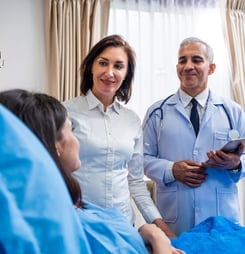

As opportunities for women in medicine have expanded over the past century and a half, the face of the doctor’s office has changed with them. In many places, women now make up a steadily rising share of physicians, and in the United States, women have also become a larger proportion of medical students.
That shift did not happen by accident. It was built by individuals who were determined to learn, practice, teach, and lead in a profession that repeatedly told them “not for you.”
National Women Physicians Day recognizes the past, present, and future of women who diagnose, operate, research, advocate, and comfort patients through every stage of life.
It celebrates the trailblazers who forced open the doors to medical education, the clinicians who keep communities healthy day in and day out, and the students who will shape what modern care looks like next.
How to Celebrate National Women Physicians Day
Observing National Women Physicians Day can be simple and sincere or thoughtfully planned, depending on someone’s time and resources.
The best celebrations have one thing in common: they treat women physicians as whole professionals, not just inspirational posters in white coats. Consider a mix of gratitude, practical support, and curiosity about the work itself.
Thank a Woman Physician
A genuine “thank you” lands differently when it is specific. Women physicians often balance intense clinical workloads with responsibilities that are less visible to patients, such as reviewing lab results after hours, coordinating care with multiple specialists, teaching trainees, or handling administrative documentation. A brief note that recognizes the care and the craft can be meaningful.
Some ways to make gratitude feel personal:
- Mention a concrete moment: a careful explanation, a calm presence during a stressful appointment, a follow-up that helped someone feel safe, or advocacy that improved access to a test or specialist.
- Recognize expertise, not just kindness: careful differential diagnosis, a well-explained plan, a respectful approach to consent, or the ability to translate complex medical information into plain language.
- Thank the team mindset: many physicians keep health systems running by mentoring others, supporting colleagues, and sharing leadership responsibilities.
For workplaces, small gestures can be designed to avoid turning appreciation into a performance. A department can share a message board of patient compliments, highlight the work of women physicians across specialties, or invite staff to write short notes that are delivered privately rather than posted publicly.
For patients, a card, a message through a clinic portal, or a thoughtful review that focuses on professionalism and care can help counteract the reality that women clinicians sometimes face unfair expectations about warmth, tone, or time.
Gratitude also matters within families. Many women physicians have family members who see the unseen parts of the job: the studying, on-call interruptions, and the mental load of caring for people in crisis. Recognizing that effort supports the physician as a person, not just as a provider.
Make an Appointment with a Woman Physician
Choosing a physician is a personal decision, and National Women Physicians Day offers a good excuse to think intentionally about what someone values in care.
Patients may look for a clinician who communicates clearly, asks good questions, and treats concerns with respect, regardless of how simple or complicated the issue seems.
In many settings, patients appreciate that women physicians often emphasize communication, shared decision-making, and preventive care. Some research has suggested that patient outcomes can differ by physician gender in certain contexts, and that women physicians may spend more time with patients or follow guidelines closely.
While no single trait guarantees great care, it is fair to say that many patients actively seek women physicians because they feel heard, understood, or comfortable discussing sensitive topics.
If someone is exploring a new primary care clinician or specialist, a practical approach could include:
- Looking for a physician whose specialty matches the need: family medicine, internal medicine, pediatrics, obstetrics and gynecology, emergency medicine, psychiatry, surgery, and many others.
- Considering the kind of relationship desired: a highly structured visit style versus a more conversational one, or a clinician known for patient education.
- Checking what support exists around the physician: access to nurses, care coordinators, interpreters, and appointment availability.
It also helps to remember that women physicians work in every environment, from small clinics to major hospitals to academic centers. Some lead research labs, some run community health programs, and some combine clinical work with policy and public health.
Making an appointment with a woman physician can be a way to support a professional pathway that still faces uneven representation in leadership roles, particularly in academic medicine and senior administrative positions.
For those who already have a doctor they trust, the spirit of this idea can still apply. Patients can ask whether the clinic has women clinicians in other roles they might see for preventive care, specialty referrals, or second opinions.
The goal is not to treat health care like a popularity contest but to be mindful that excellent physicians come from every background, and that broadening the search can lead to a better match.
Study to Become a Doctor
National Women Physicians Day can be especially motivating for girls and young women who are curious about medicine but unsure whether they “fit” the image of a doctor. The reality is that modern medicine needs more kinds of minds, not fewer.
It needs problem-solvers who like biology and chemistry, but also communicators, educators, advocates, and ethical thinkers who can navigate uncertainty with patients.
For students considering the path, the physician pipeline can feel mysterious. Breaking it into understandable steps makes it less intimidating:
- Explore the day-to-day work. Shadowing programs, clinic volunteering, hospital internships, or informational interviews can clarify what physicians actually do.
- Build a foundation in science and writing. Medicine is data-heavy, but it also relies on clear documentation and communication with patients and teams.
- Look for mentors. A woman physician mentor can help with practical advice about courses, applications, work-life planning, and specialty exploration.
- Learn about specialties early. Many students only picture one or two types of doctors. In reality, medicine includes everything from radiology to pathology to anesthesia to rehabilitation.
It also helps to name the challenges honestly. Women physicians can face higher rates of burnout in some settings, and professional life can include bias, unequal expectations, and obstacles to advancement.
Studying to become a doctor is not about pretending those issues do not exist. It is about joining a profession with eyes open and contributing to a healthier culture for everyone who practices within it.
Celebrating the educational journey can be as simple as reading about women who changed medicine, visiting a science museum with a medical exhibit, or attending a local lecture or panel discussion on health careers.
Even small actions can reinforce the message that medicine is a place where women belong, lead, and innovate.
National Women Physicians Day Timeline
Elizabeth Blackwell Becomes First Woman MD in the United States
Elizabeth Blackwell graduates from Geneva Medical College in New York, becoming the first woman in the United States to earn an M.D. degree and helping open the medical profession to women.
New York Infirmary for Women and Children Opens
Elizabeth Blackwell, her sister Emily Blackwell, and Marie Zakrzewska establish the New York Infirmary for Women and Children, a hospital staffed entirely by women that treats the poor and trains women physicians.
First Woman Listed on the British Medical Register
Elizabeth Blackwell becomes the first woman entered on the British Medical Register, formally qualifying her to practice medicine in the United Kingdom.
Women’s Medical College of the New York Infirmary Founded
Elizabeth Blackwell organizes the Women’s Medical College of the New York Infirmary to provide formal medical education and clinical training specifically for women.
London School of Medicine for Women Established
Elizabeth Blackwell joins Sophia Jex-Blake and others in founding the London School of Medicine for Women, the first institution in Britain created to prepare women for medical qualifications.
History of National Women Physicians Day
National Women Physicians Day is celebrated on February 3, the birthday of Dr. Elizabeth Blackwell. Blackwell’s story has become symbolic not because it is neat and easy, but because it is full of the obstacles that shaped women’s participation in medicine for generations.
Blackwell became the first woman in the United States to earn a medical degree when she graduated from Geneva Medical College in 1849. She did not stroll into medical school with a welcome banner waiting.
She faced repeated rejections from institutions unwilling to admit a woman, and when she finally gained entry, her presence was treated by some as a novelty rather than a serious commitment to the profession. Instead of backing down, she excelled academically, graduating at the top of her class.
Even with a diploma, the barriers did not vanish. Early women physicians often struggled to find clinical training placements, hospital roles, and patients willing to trust them.
Blackwell’s career reflected that reality. She pursued additional training, navigated professional skepticism, and continued to advocate for women as legitimate medical professionals rather than exceptions.
Her impact went beyond being “first.” Blackwell helped build structures that allowed other women to practice medicine with real training and professional credibility. In 1857, she and her sister, Dr. Emily Blackwell, along with Dr. Marie Zakrzewska, founded the New York Infirmary for Women and Children.
This institution offered medical care to patients who often had limited access to services and created opportunities for women physicians to gain clinical experience at a time when traditional pathways were blocked.
Blackwell also played a role in medical education for women, supporting the development of training programs connected to the infirmary and contributing to broader efforts to improve women’s access to rigorous medical instruction.
Her work extended internationally as well, including involvement in the establishment of medical education for women in the United Kingdom.
This broader legacy is the heartbeat of National Women Physicians Day. The day recognizes not only a milestone, but also the long arc of change: from a single woman fighting for admission, to generations of women building hospitals, leading departments, publishing research, training students, and redefining what medical leadership can look like.
National Women Physicians Day was founded in 2016 by Physician Moms Group, along with Medelita, to honor Elizabeth Blackwell and the continuing contributions of women physicians.
The founding focus reflected a modern reality: women doctors today are not just proving they can do the work. They are also reshaping systems, advocating for better workplace structures, and pushing for equity in leadership, pay, and professional culture.
The day’s history sits at the intersection of celebration and realism. It recognizes progress, such as growing representation in medical schools and across specialties, while also acknowledging the ongoing challenges that many women physicians report.
Studies and professional discussions have highlighted persistent issues, including burnout, disproportionate non-clinical workload, bias in evaluations, underrepresentation in senior academic ranks, and barriers to advancement.
Honoring women physicians means appreciating not only the care they provide to patients but also the resilience and leadership required to thrive in a demanding field.
Ultimately, National Women Physicians Day is a reminder that medicine is built by people who show up when others are hurting, and that the profession is stronger when it welcomes and supports talented physicians of every gender.
The path Elizabeth Blackwell helped carve continues to expand, not as a closed chapter, but as an ongoing project that each generation of physicians helps shape.
Facts About Women in U.S. Medicine
Over the past half-century, women have reshaped the landscape of U.S. medicine—moving from near exclusion to becoming the majority of medical students today. This shift marks one of the most significant demographic changes in the history of the American physician workforce. Yet educational gains have not translated evenly into practice, pay, specialty choice, or leadership, revealing a complex picture of progress alongside persistent structural barriers.
Women are now the majority of U.S. medical students
In the United States, women went from being just 9% of medical students in 1965 to surpassing men in enrollment in 2017, when they became 50.7% of all students in MD-granting schools; by the 2023–2024 academic year, women accounted for 53.8% of U.S. medical students, signaling a long-term shift in the future physician workforce.
Female physicians remain underrepresented in the workforce overall
Despite gains in medical school, women still make up a minority of practicing U.S. physicians: in 2019, 36.3% of active physicians were women, compared with about 7.6% in 1970, showing that workforce demographics lag far behind educational parity because of training length and historical barriers to women entering medicine.
Patients of women physicians have slightly lower mortality and readmission
A large 2017 cohort study of over 1.5 million Medicare hospitalizations found that patients treated by female internists had significantly lower 30‑day mortality (11.07% vs. 11.49%) and readmission rates than those cared for by male internists, even after adjusting for patient and physician characteristics, suggesting that differences in practice style may translate into measurable outcome gaps.
Women physicians more often follow evidence-based guidelines
Research comparing practice patterns has found that female physicians are more likely to adhere to clinical guidelines, provide preventive counseling, and use patient‑centered communication, with randomized and observational studies in primary care showing women doctors spend more time in visits and ask more psychosocial questions, behaviors linked to higher patient satisfaction and better chronic disease management.
Gender pay gaps persist even after adjusting for specialty and hours
Analyses of physician earnings show substantial gender gaps that cannot be fully explained by specialty choice or working hours; a 2019 study of more than 80,000 U.S. physicians estimated that women earned, on average, about $90,000 less per year than comparable men after adjustment, implying a cumulative career loss of over $2 million for many women physicians.
Women physicians are clustered in a few specialties
While women are a majority of U.S. pediatricians (over 60%) and obstetrician‑gynecologists (around 59%), they remain a small minority in higher‑paid and procedure‑heavy specialties such as orthopedic surgery (about 6%), neurosurgery (roughly 8%), and interventional cardiology, reflecting ongoing structural and cultural barriers that influence specialty choice and career trajectories.
Leadership in academic medicine remains overwhelmingly male
Even as women now earn roughly half of U.S. medical degrees, they held only about 18% of department chair positions and 18% of medical school dean roles in 2022; women are more likely to be found in lower academic ranks and less likely to be promoted or retained, highlighting a persistent “leaky pipeline” between entry into medicine and top leadership.