Niagara Falls Runs Dry Day
Did you know that Niagara Falls, one of the world's most famous natural wonders, once ran dry in 1848? Discover the fascinating story behind this rare event.
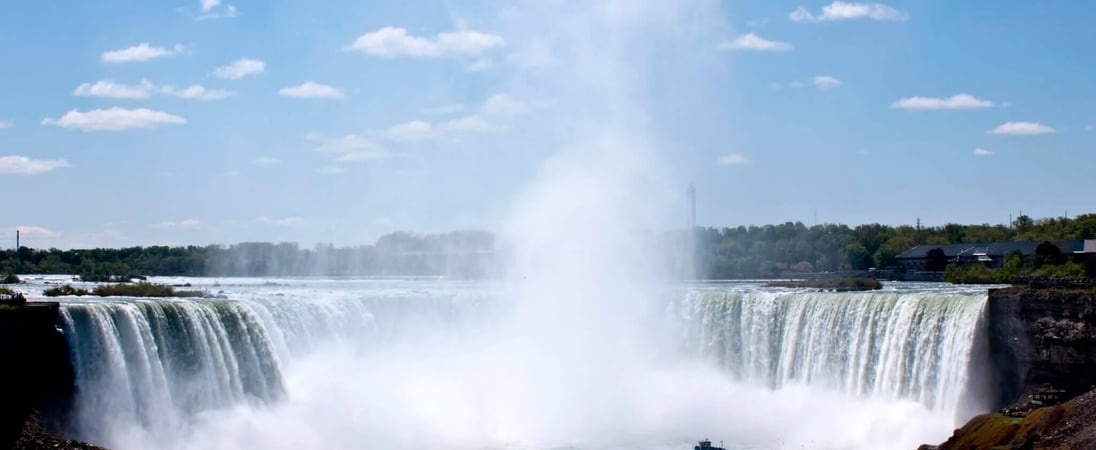
Anyone who has ever visited Niagara Falls, whether on the American side or the Canadian side, can attest to the fact that its roaring water is powerful and fascinating. The mist, the rumble, the constant motion, it all feels wonderfully unstoppable.
But nature occasionally enjoys proving a point. In the mid-1800s, Niagara’s famous thunder went unexpectedly quiet, and parts of the riverbed were left shockingly bare.
That astonishing moment is exactly what Niagara Falls Runs Dry Day is about: remembering a rare natural shutdown, appreciating the science behind it, and enjoying the odd little reminder that even the mightiest landscapes have offbeat chapters.
How to Celebrate Niagara Falls Runs Dry Day
For fans of Niagara Falls, fans of unusual natural events, fans of history, or just fans of big, dramatic scenery, Niagara Falls Runs Dry Day is a playful excuse to dig into a truly strange story. The best celebrations balance wonder with a little learning, because this day is basically a reminder that “normal” is not a guarantee in nature.
Below are a few ways to mark it without needing an engineering degree or a parka the size of a sleeping bag.
Head Over to Niagara Falls
With plenty of places to stay and lots to do nearby, it’s easy to turn a trip to the falls into a full day built around Niagara Falls Runs Dry Day. Whether it’s your first visit or a return, the occasion is a perfect reason to see the falls with fresh perspective and imagine what it might feel like if that familiar roar suddenly disappeared.
Here are a few ways to make the experience feel intentional rather than simply scenic:
- Listen with intention. Niagara is famous for its view, but its sound is just as powerful. Take a moment to stand still and focus on the constant thunder of the water. That steady roar helps explain why the unexpected silence during the run-dry event would have felt so strange.
- Notice the structure beneath the flow. Water conceals much of the landscape. From overlooks and walking paths, you can spot rock layers, shelves, and the natural contours that shape the cascade. Niagara Falls Runs Dry Day reminds us that geology provides the stage, and the water performs upon it.
- Observe the river upstream and downstream. The Niagara River is more than a short channel feeding a waterfall. It’s a dynamic system connecting major lakes and reacting to wind, ice, and seasonal changes. Watching the calm sections, rapids, and whirlpools makes the idea of the falls “running dry” feel more plausible and less like legend.
- Put safety first. Stories of people stepping onto newly exposed rock may sound adventurous, but slippery surfaces, sudden water surges, and restricted zones make getting too close dangerous. The purpose of the day is curiosity and appreciation, not unnecessary risk.
If a trip isn’t possible, you can still experience Niagara from afar. Watching documentary footage, exploring maps, or comparing images of the falls across seasons helps create context. The real takeaway is to appreciate how remarkable it is for a place defined by constant motion to become, even briefly, completely still.
Learn Fun Facts About Niagara Falls
Celebrating Niagara Falls Runs Dry Day can be as simple as learning a few unusual facts and passing them along to friends, family, classmates, or anyone who appreciates a very specific slice of natural history. The story of Niagara blends geology, moving water, tourism, and the occasional unexpected twist.
Here are a few conversation starters to spark interest:
- Niagara Falls is young in geologic terms. It formed after the last ice age, when retreating glaciers reshaped the landscape and the Niagara River began carving its path through layers of rock.
- The falls are always changing. Erosion gradually reshapes the edge and has slowly moved the falls upstream over time. What seems permanent is actually part of a landscape in motion.
- The sound is part of the experience. Niagara is not just something to see. The deep rumble, the subtle ground vibrations, and the constant mist all remind visitors of the immense force at work.
- People have added their own dramatic chapters. For generations, Niagara has attracted thrill-seekers and spectators. One famous example is Annie Edson Taylor, a schoolteacher who survived a trip over the falls in a barrel in the early 1900s, becoming part of the site’s long history of bold—and sometimes questionable—stunts.
One easy way to bring these ideas to life is to host a quick “Niagara trivia break” at home or at work. You can also show a photo alongside a surprising claim and invite people to guess whether it’s true before revealing the answer. With so many unexpected details, Niagara easily keeps even skeptical listeners curious.
For a more hands-on approach, focus on the science behind the story. A simple demonstration using a bowl of water and floating ice can illustrate how wind and tightly packed ice can block a narrow channel. It won’t recreate the scale of the Great Lakes, but it makes the basic idea easier to understand—especially for children.
Learn Fun Facts About Niagara Falls
Get on board with celebrating Niagara Falls Runs Dry Day by learning and sharing some interesting facts with others. Mostly, because it’s just fun to learn but also to raise awareness for others who might want to celebrate the day as well!
Here are some delightful facts to share about Niagara Falls:
-
Niagara Falls is likely around 12,000 years old. This actually makes it fairly young, considering the age of many other waterfalls in the world.
-
Niagara Falls is getting smaller. Sadly, every year, the falls shrink back about twelve inches, but it’s unlikely to disappear any time soon – perhaps in the next 50,000 years or so.
-
The water at Niagara Falls flows approximately 35 miles per hour or 56 kilometers per hour.
-
The first person to go over Niagara Falls in a barrel and live through it was a teacher, Annie Edson Taylor, who did it as a stunt to raise money in 1901.
Share the Story Behind the Silence
Celebrating Niagara Falls Runs Dry Day can be as simple as learning a few unusual facts and passing them along to friends, family, classmates, or anyone who appreciates a very specific slice of natural history. The story of Niagara blends geology, moving water, tourism, and the occasional unexpected twist.
Here are a few conversation starters to spark interest:
-
Niagara Falls is young in geologic terms. It formed after the last ice age, when retreating glaciers reshaped the landscape and the Niagara River began carving its path through layers of rock.
-
The falls are always changing. Erosion gradually reshapes the edge and has slowly moved the falls upstream over time. What seems permanent is actually part of a landscape in motion.
-
The sound is part of the experience. Niagara is not just something to see. The deep rumble, the subtle ground vibrations, and the constant mist all remind visitors of the immense force at work.
-
People have added their own dramatic chapters. For generations, Niagara has attracted thrill-seekers and spectators. One famous example is Annie Edson Taylor, a schoolteacher who survived a trip over the falls in a barrel in the early 1900s, becoming part of the site’s long history of bold—and sometimes questionable—stunts.
One easy way to bring these ideas to life is to host a quick “Niagara trivia break” at home or at work. You can also show a photo alongside a surprising claim and invite people to guess whether it’s true before revealing the answer. With so many unexpected details, Niagara easily keeps even skeptical listeners curious.
For a more hands-on approach, focus on the science behind the story. A simple demonstration using a bowl of water and floating ice can illustrate how wind and tightly packed ice can block a narrow channel. It won’t recreate the scale of the Great Lakes, but it makes the basic idea easier to understand—especially for children.
-
Niagara Falls Runs Dry Day Timeline
12,000 BCE
Glacial Meltwater Carves Niagara Gorge
As the last Ice Age glaciers retreated, torrents of meltwater from the newly formed Great Lakes poured over the Niagara Escarpment, carving the Niagara River gorge and creating the early Niagara Falls.
1678
First Detailed European Description of Niagara Falls
French Recollect priest Louis Hennepin visits Niagara Falls with La Salle’s expedition and later publishes one of the earliest detailed written and illustrated accounts, helping introduce the cataract to European readers.
1885
Creation of the First State Reservation at Niagara
After a “Free Niagara” movement pushes to protect the falls from private industry, New York State establishes the Niagara Reservation, one of the earliest state parks in the United States devoted to preserving scenic natural features.
1917
Ontario Hydro Plant Brings Major Power to Canada
The Ontario Power Company Station and related hydro plants along the Niagara River are fully integrated into regional grids, marking Niagara Falls as a centerpiece of North American hydroelectric development and industrial growth.
1950
U.S.–Canada Niagara River Diversion Treaty
The United States and Canada signed the Niagara River Diversion Treaty, allowing large-scale diversion of water from above the falls for hydroelectric generation while setting minimum flow rates to preserve the scenic spectacle for tourism.
March 29–30, 1848
Natural Ice Jam Stops Niagara’s Flow
Strong winds push ice from Lake Erie into the mouth of the Niagara River, forming a massive ice jam that halts water flow over the falls for 30 to 40 hours, the only known time in recorded history that Niagara Falls stopped naturally.
June–November 1969
American Falls Dewatered for Study
The U.S. Army Corps of Engineers builds a rock cofferdam above the American Falls, temporarily diverting its water to Horseshoe Falls so geologists can examine the bare cliff, assess erosion, and consider stabilization options.
History of Niagara Falls Runs Dry Day
Niagara Falls Runs Dry Day remembers a startling real event: a time when the flow over the falls dropped so dramatically that the familiar roar faded and parts of the riverbed were exposed.
The best-known instance happened in 1848, when unusual ice conditions near the start of the Niagara River interfered with the water supply coming out of Lake Erie.
The Niagara River connects two enormous lakes, carrying water from Lake Erie toward Lake Ontario. That setup means the falls depend on more than local rain or nearby streams. Wind direction, temperature swings, and ice movement out on the lake can influence how easily water enters the river. In 1848, a harsh winter left large amounts of ice on Lake Erie.
When strong winds drove that ice toward the river’s outlet, floes piled up and locked together. The result was an ice jam that acted like a temporary dam near the river’s entrance, choking off the flow downstream.
The change was not subtle for the people who lived and worked nearby. Many accounts describe how the first sign was the sound, or rather the lack of it. The constant background thunder that usually defines Niagara diminished.
Mill owners and others who depended on the river’s power reportedly noticed problems quickly because water levels and currents were not behaving the way they normally did. For residents, the quiet would have felt deeply wrong, like hearing a busy city go silent all at once.
As the river level fell, the appearance of the falls changed in a way that seems almost impossible in hindsight. Instead of a continuous wall of water, parts of the falls were reduced to thinner streams and segmented cascades.
Mist that normally hangs in the air eased back. Sections of the rocky riverbed became visible, including places that are typically hidden beneath fast-moving water. Even for those familiar with seasonal shifts, this was something else entirely: a landmark defined by motion suddenly looked paused.
Reports vary on exactly how long the most dramatic reduction lasted, but it is often described as roughly a day to a day and a half, with unusually low flow lingering beyond that. That range makes sense for an event driven by wind and ice, where conditions can change quickly but do not always reset immediately.
Once the wind shifted and the jam began to loosen, the blockage broke apart. Water returned to the channel, the falls regained their force, and the familiar roar came back.
Part of what makes the episode so memorable is the range of human reactions it triggered. Some people were anxious. A silent Niagara could easily be interpreted as a warning in an era when natural events were less understood and news traveled more slowly. Others treated it as an opportunity.
With water pulled back, curious onlookers ventured onto exposed rock to explore, examine the riverbed, and look for items that had been lost to the current. Those stories have become a lasting part of the lore, even as they also serve as a reminder that natural systems can change suddenly and that what looks stable can be deceptive.
Niagara Falls Runs Dry Day also highlights a broader lesson: Niagara is not just a postcard scene but a working system linked to a giant watershed. When the intake from Lake Erie is disrupted, the effects are felt downstream in a dramatic and very public way.
The day invites people to think about how connected the Great Lakes are, how strongly wind and ice can shape water movement, and how a single bottleneck can influence an entire stretch of river.
It is also worth distinguishing this natural “shutdown” from later, human-planned interruptions to flow. In more modern times, parts of Niagara have been intentionally reduced or diverted for inspection, construction, or study.
Those efforts were planned, controlled, and designed to manage risk. The event remembered by Niagara Falls Runs Dry Day stands out because it was spontaneous and driven by the weather, not by engineers.
Ultimately, the story endures because it captures Niagara at its most surprising. It turns a famous constant into a reminder of change, and it encourages a closer look at the forces, both seen and unseen, that keep the world’s most recognizable landscapes running as expected.
Niagara Falls Runs Dry Day FAQs
How did an ice jam manage to stop the flow of Niagara Falls in 1848?
In late March 1848, strong winds pushed large sheets of ice from Lake Erie into the upper Niagara River, where they piled up across the channel and created a temporary natural dam.
With the river effectively blocked between Buffalo, New York, and Fort Erie, Ontario, the usual flow toward the cataract was cut off, and the falls slowed to a trickle for roughly 30 to 40 hours until the wind shifted and the jam broke apart. [1]
Has Niagara Falls ever been deliberately “turned off,” and why would engineers do that?
Engineers have deliberately dewatered parts of Niagara Falls, most notably in 1969 when the U.S. Army Corps of Engineers built a cofferdam to shut off the American Falls for several months.
The goal was to study the exposed rock face, understand erosion and rockfall risks, and consider whether to remove the talus pile of fallen boulders at its base.
After detailed analysis, experts decided that removing the rocks would be costly, potentially accelerate erosion, and fundamentally change the falls’ appearance, so the talus was left in place and water was returned.[2]
How much has Niagara Falls moved over time, and what controls its erosion rate today?
Since it formed at the end of the last Ice Age, Niagara Falls has retreated upstream about 7 miles by slowly eroding the underlying rock.
Historical records and geological studies indicate that before modern engineering, the brink could recede an average of 3 to 6 feet per year.
With large-scale water diversion for hydropower and targeted stabilization work on the gorge walls, the present rate is estimated at around 1 foot per year, and may be reduced further as management and engineering continue to evolve. [3]
Could Niagara Falls ever dry up permanently in the future?
Geologists expect Niagara Falls to continue retreating upstream for tens of thousands of years as it erodes the rock between Lake Erie and Lake Ontario.
If current trends continue, the falls could eventually cut back into Lake Erie and lower its level enough that the dramatic drop disappears, effectively ending the waterfall.
Estimates suggest this might occur on the order of 50,000 years from now, though climate change, human water use, and future engineering could alter that timeline. [4]
How do Canada and the United States decide how much water can be diverted from Niagara Falls for power generation?
Water sharing at Niagara Falls is governed primarily by the 1950 Niagara River Water Diversion Treaty between Canada and the United States.
The treaty allows both countries to divert substantial flows for hydropower but sets minimum flow requirements over the falls for scenic and environmental reasons, with higher minimums during daytime tourist hours and lower ones at night and in winter.
These flows are managed through control structures and hydropower intakes operated under the oversight of the International Joint Commission. [5]
Does diverting water for hydropower significantly change the appearance and behavior of Niagara Falls?
Water diversion does alter both the volume and character of Niagara Falls, particularly compared with its pre-development state.
The 1950 treaty and subsequent engineering allow most of the river flow to pass through hydropower tunnels and canals outside peak viewing hours, which reduces the roar, mist, and apparent size at times.
At the same time, this diversion has dramatically slowed natural erosion by reducing the force of water over the brink, which has helped preserve the falls’ overall shape and delayed their retreat. [6]
What did scientists learn when the American Falls was dewatered in 1969?
When the American Falls was dewatered, geologists and engineers were able to walk across the dry riverbed and closely inspect fractures, loose blocks, and the talus slope at the base.
They confirmed that large rockfalls in the 20th century had built a protective ramp of boulders that partly cushions the impact of water and slows undercutting of the cliff.
The studies showed that trying to restore a sheer drop by removing the talus would likely destabilize the rock face and accelerate erosion, which informed the decision to leave the falls essentially as they are. [7]
Also on ...
View all holidays
National Smoke and Mirrors Day
Step into a world of illusions where reality is questioned, and the impossible becomes possible - an experience that amazes and mystifies!

World Piano Day
Keys to unlocking musical creativity, a timeless instrument with a rich history, and an invitation to compose your own symphony.

National Neighbor Day
Being a good neighbor isn't just about borrowing sugar, it's about building community. Small acts of kindness can bring us closer and make us happier.