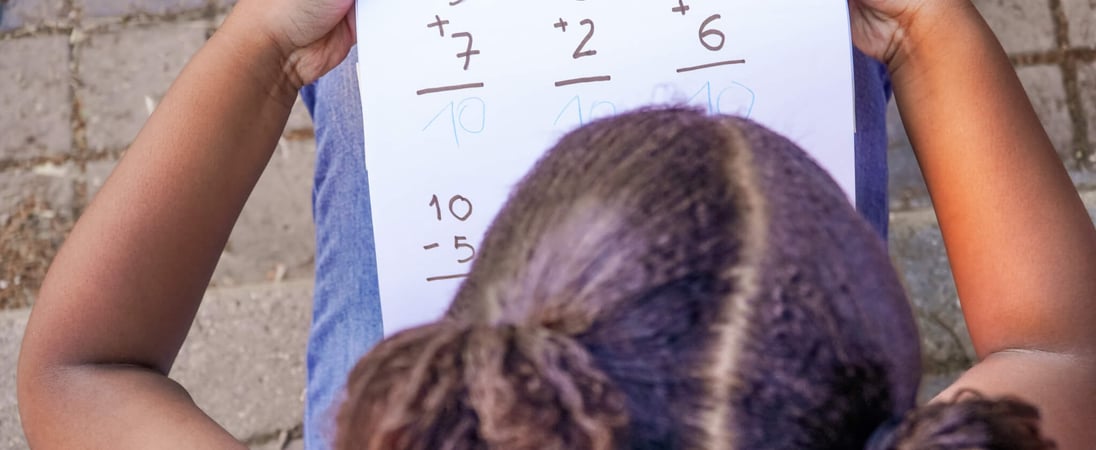
Number Day
Unleashing curiosity, sparking puzzles, and making numbers an exciting adventure ignites young minds, fostering a lifelong love for math.
The fun events and activities that occur on NSPCC Number Day are all centered around numbers, arithmetic and mathematics.
Participants in the day are encouraged to embrace the use of numbers and math in ways that are creative and enjoyable while raising funds for an important charity!
Number Day Timeline
c. 3200–3000 BCE
Earliest Known Written Number Systems
Sumerian scribes develop cuneiform numerals with place-value-like features, laying groundwork for written counting and arithmetic.
c. 3000–2000 BCE
Egyptian Numerals Support Trade and Engineering
Ancient Egyptians use hieroglyphic and hieratic numerals for accounting, taxation, and construction, showing numbers’ role in administration and building.
6th–7th century CE
Zero and Place Value Mature in India
Indian mathematicians such as Brahmagupta formalize zero as a number and refine the base‑10 place‑value system that underpins modern arithmetic.
1202
Fibonacci’s Liber Abaci Brings Hindu‑Arabic Numerals to Europe
Leonardo of Pisa’s book promotes Indo‑Arabic digits and practical arithmetic for merchants, helping Europe transition away from Roman numerals.
19th century
Arithmetic Becomes a Core Subject in Mass Schooling
As public education expands in Europe and North America, basic arithmetic and numeracy are formalized as compulsory subjects in primary schools.
How to Celebrate Number Day
Foster a love for numbers and math while supporting a good cause at the same time! Number Day is a fun time for everyone in the community to get connected through some of these plans and activities:
Host a Number Day Event
Community groups, schools, workplaces and others can join in on the fun activities of Number Day and show support for the NSPCC at the same time.
Schools might offer a Dress Up for Digits Day where children are allowed to wear a costume and make a donation to the charity. Other folks might choose to put on a walk/run for charity where math challenges are included all throughout the race.
Whatever the event, those who are in the UK can officially join in by registering and signing up for tools and resources from the NSPCC website that can be used for the day.
Make Math and Numbers Fun!
Kids who struggle with math can get even more stressed out by the amount of pressure that is put on at school.
One way to take the pressure off is to try to make learning fun. And math is no exception! Number Day is an excellent opportunity for teachers and parents to remove the stress and just make numbers fun.
Check out the NSPCC website for educational tools that can be used in the classroom for Number Day and all year round.
Create a Number Day Playlist
Enjoy Number Day even more with a playlist of tunes that have been cued up to the theme of the day. Check out some of these songs to get started with curating a playlist:
- Eight Days a Week by the Beatles (1964)
- I’m Gonna Be (500 Miles) by The Proclaimers (1988)
- 50 Ways to Leave Your Lover by Paul Simon (1975)
- 25 or 6 to 4 by Chicago (1969)
History of Number Day
The National Society for Prevention of Cruelty to Children (NSPCC) is a UK charitable organization that dates back to the Victorian era when its earliest expressions can be traced back to Liverpool, England in the 1880s.
Started by the NSPCC in 1999, Number Day began as a fun and educational way for the organization to raise funds for their charity and encourage more people across the UK to get involved.
Since that first celebration, Number Day has grown nationwide and become an annual event that children and adults of all ages look forward to each year!
While Number Day can certainly be celebrated by anyone and anywhere, in the UK it is a day for individuals, schools and other organizations to come together to participate in activities around the topic of math.
This might include math competitions and events, bake sales, dress-up days and so many other creative ideas. It’s all about having fun with numbers and raising financial support for the children impacted by the NSPCC.
Number Day FAQs
How does a positive attitude toward math affect children’s learning in the long term?
Research suggests that children who feel confident and enjoy math are more likely to persist with challenging problems, choose advanced courses later on, and perform better academically overall; positive experiences with numbers can reduce anxiety, strengthen working memory use during problem‑solving, and are associated with better educational and career opportunities in STEM and non‑STEM fields alike.
What are some of the main causes of math anxiety in school‑age children?
Studies link math anxiety to repeated negative experiences such as timed tests, public embarrassment when answering in front of peers, highly pressurized or competitive classroom climates, and adults (teachers or parents) expressing their own fear of math; stereotypes about who is “good at math” and early gaps in basic number understanding can also contribute.
Which evidence-based strategies help reduce math anxiety and build confidence?
Experts recommend replacing speed‑focused activities with untimed problem‑solving, encouraging growth‑mindset messages that emphasize effort over innate talent, using concrete materials and visual models, allowing collaborative work, and giving frequent low‑stakes practice; explicitly teaching coping skills like self‑talk and brief relaxation techniques before math tasks has also been shown to lessen anxiety and improve performance.
Why are numeracy skills so important for everyday adult life?
Basic numeracy underpins many daily tasks, from comparing prices and understanding interest rates to interpreting medical information and risks; large‑scale surveys show that weak number skills are associated with poorer employment prospects, greater vulnerability to problem debt, and more difficulty managing health decisions, whereas stronger numeracy supports better financial stability and well‑being.
What kinds of real-world situations actually use the math children learn in school?
School mathematics appears in everyday contexts such as calculating discounts, checking pay and taxes, reading utility bills, measuring for cooking or home projects, understanding timetables and travel times, analyzing graphs in news reports, and evaluating probabilities in areas like insurance or medical screening; even basic topics like fractions, percentages, and ratios recur frequently in adult decision‑making.
How can parents and caregivers support a child who says they are “not a math person”?
Psychologists advise avoiding negative comments about one’s own math ability, praising effort and strategies instead of “being smart,” and normalizing mistakes as part of learning; caregivers can weave numbers into everyday activities—such as cooking, shopping, games, and sports statistics—to show that everyone can develop math skills with practice rather than relying on inborn talent.
What is the difference between numeracy, math achievement, and financial literacy?
Numeracy is the ability to use and understand numbers in real‑life contexts, math achievement usually refers to performance on school curricula and tests, and financial literacy focuses specifically on applying number and reasoning skills to money matters such as budgeting, saving, borrowing, and investing; someone may pass school exams yet still struggle with practical numeracy or money decisions if these skills are not explicitly developed.
Also on ...
View all holidays
National Bubble Gum Day
Chewy, colorful, and bursting with flavor, this sweet treat is perfect for blowing bubbles and bringing a smile to your face.



National Give Kids a Smile Day
Ensuring little ones sport bright smiles by nurturing their toothy grins, it's about fostering habits that keep those pearly whites shining.
We think you may also like...

Children’s Mental Health Week
Nurturing the minds of the youngest among us, fostering well-being and emotional strength, ensures a brighter future for our children.

National Parent Teacher Home Visits Week
Building bridges through educator and family interactions, strengthening support networks to nurture student growth and achievement.

Children’s Mental Health Awareness Day
Nurturing young minds, ensuring they flourish and find inner peace, is a solemn duty, for the strength of our future lies in their well-being.