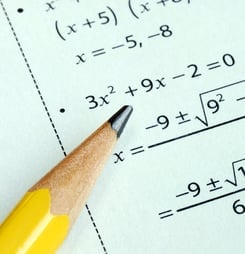

National Numeracy Day UK is an annual campaign designed to help people recognize how deeply numeracy shapes everyday life and to encourage practical steps toward feeling more confident with numbers. Rather than treating math as something that only belongs in classrooms, it spotlights the real-world moments where a little number sense can make choices clearer, budgets calmer, and goals more achievable.
This day emphasizes the role that numbers play across the board, from personal tasks like comparing prices, understanding bills, and managing savings to workplace skills like measuring, estimating, interpreting charts, and making informed decisions from data.
It also speaks to something that rarely gets discussed openly: many adults carry anxiety or embarrassment about math, even when they are capable. National Numeracy Day UK invites people to replace that dread with curiosity, practice, and a sense of progress.
How to Celebrate National Numeracy Day UK
Here’s how you, too, can enjoy National Numeracy Day UK:
Explore Mathematical Puzzles and Games
Dive deeper into National Numeracy Day UK by organizing a “Math Game Night” with friends, roommates, coworkers, or family. The goal is not to show off, but to make numbers feel friendly again, the way they can when they show up in a puzzle instead of a pop quiz.
Include a variety of puzzles and let everyone choose their difficulty level. Classic Sudoku builds pattern recognition and logic; KenKen and Kakuro add arithmetic without feeling like worksheets.
For a cooperative option, try logic grid puzzles where the group solves clues together. For younger learners, quick games involving counting, matching, or simple probability keep attention high while quietly reinforcing foundational skills.
Math-based board games can also do heavy lifting while everyone thinks they are “just playing.” Strategy games that involve resources, trading, or calculating outcomes gently exercise estimation and decision-making.
Settlers of Catan encourages probability thinking and resource planning. Power Grid pushes players to manage money, compare costs, and plan ahead. Even card games can help: games that involve scoring, odds, or pattern building sneak in math practice in a low-pressure way.
To keep the tone supportive, consider a house rule: no teasing about wrong answers and no rushing. Numeracy confidence grows when people have time to think, ask questions, and try again without feeling judged.
Participate in Workshops or Webinars
Seek out community organizations, libraries, adult education programs, universities, or educational nonprofits that may offer numeracy workshops. These events often focus on real-world math, the kind people actually use: calculating percentages, understanding interest, reading graphs, converting units, or checking whether a deal is truly a deal.
A good workshop makes abstract ideas tangible. For example, instead of “fractions,” participants might compare recipe quantities, split a restaurant bill, or adjust measurements for a different serving size. Instead of “statistics,” they might examine a chart from the news and talk about what it really shows, what it might be missing, and how averages can be misleading.
Webinars can be especially convenient because they allow learning from home and often include interactive elements like quizzes, problem-solving demos, and Q&A. The best part is that many sessions are built around confidence, not just content. If someone has been avoiding math for years, a supportive webinar that normalizes mistakes can be more valuable than a fast-paced lecture.
If organizing a workshop personally, consider inviting a teacher, tutor, or data-minded professional to lead a session built around everyday scenarios: budgeting, shopping comparisons, home projects, or interpreting health information like dosage instructions and nutrition labels.
Use Technology to Learn
Explore apps and websites that offer structured courses in mathematics and numeracy skills, especially ones that break learning into short, manageable lessons. Many platforms now focus on progress and confidence, not perfection. They include interactive exercises, immediate feedback, and visual explanations that can help concepts click in ways a textbook never managed.
Look for tools that match specific goals. Someone who wants to feel calmer with money might focus on percentages, interest rates, and budgeting. Someone returning to school might focus on foundational arithmetic and algebra readiness. Someone working with data might focus on charts, averages, and basic probability.
Progress tracking can be highly motivating because it turns learning into a series of small wins. For people who think they are “bad at math,” seeing improvement over time helps rewrite that internal story. It can also help to choose tools that encourage estimation and number sense, not just memorization. Being able to sanity-check an answer is one of the most powerful real-world numeracy skills.
For families, learning tools can become a shared activity. A short daily routine, like a five-minute challenge after dinner, helps normalize practice and makes “working on math” feel as ordinary as brushing teeth.
Organize a Community Math Fair
Work together with schools, community centers, youth groups, libraries, or workplaces to create a math fair that feels more like a celebration than an exam. The most engaging math fairs are interactive and inviting, with stations where people can explore, create, and have fun.
Set up hands-on booths with puzzles, logic challenges, and pattern-based activities. Include experiences like building geometric figures, experimenting with symmetry, or designing tessellations using paper or tiles. A simple “estimation station” can draw a lot of interest: guessing items in a jar, estimating weight, or answering quick “how many” questions helps people develop approximation skills used in everyday situations.
Add a practical math section as well. Offer short demonstrations focused on daily numeracy:
- Comparing unit prices to identify the best deal
- Reading a utility bill and spotting key figures
- Understanding a payslip and typical deductions
- Measuring and scaling for home projects or crafts
Invite professionals such as teachers, accountants, engineers, nurses, tradespeople, or data analysts to give short, engaging talks. When people see how different careers rely on numbers, math begins to feel like a useful life tool rather than just a school subject. If possible, include a “confidence booth” where visitors can share a small math success, like finally understanding percentages or feeling confident splitting costs.
Create Math-Inspired Art
Organize an art activity or exhibition that shows how naturally math exists within creativity. Math and art have long been connected, and this is a great way to make that relationship visible.
Encourage participants to create artwork based on ideas like the golden ratio, symmetry, spirals, tessellations, or fractal patterns. They can design mosaics, folded paper art, string art, or collages using repeated shapes and measurements. Even simple grid drawing, where an image is recreated square by square, strengthens understanding of proportion in a hands-on way.
For group activities, try creating collaborative murals built from repeating patterns. Another idea is a “data art” wall, where people turn simple information into visual designs, such as transforming favorite snacks into colorful charts or abstract patterns. This builds confidence in visualizing information, an essential part of modern numeracy.
Workshops can also explore how math appears in music and rhythm, knitting and quilting patterns, architecture, or photography composition. The aim is not to force math into art, but to show that it has always been there in the background.
Use Numbers in Everyday Life
Make a conscious effort to include math in daily routines in a way that feels practical rather than overwhelming. A simple “Math Challenge of the Day” can mean choosing one real-life situation and working through the numbers instead of guessing.
For example:
- Grocery shopping: compare unit prices and estimate the total cost before paying
- Cooking: double or reduce a recipe and adjust measurements
- Fitness: understand pace, distance, and averages instead of relying on general impressions
- Home projects: measure carefully, calculate space, and estimate materials
- Time management: calculate how long tasks take and plan more realistically
Money often motivates people to engage with numbers. Numeracy supports financial wellbeing by helping you understand interest, identify hidden fees, compare payment options, and interpret offers like “25% off” or “buy one, get one.” A useful challenge could involve planning a travel budget, organizing monthly expenses, or calculating how long it takes to reach a savings goal.
It also helps to practice “number talk,” which means explaining your thinking out loud. This makes it easier to spot mistakes and build confidence. Families can do this together by discussing prices while shopping or estimating time before an event.
Math-Themed Scavenger Hunt
Turn a scavenger hunt into a fun way to practice numeracy without making it feel like work. Clues can involve simple calculations, patterns, measurements, or estimation. The best hunts keep tasks short, enjoyable, and easy to follow, even with hints.
Adjust clues based on age and confidence level. Younger participants can count objects, match shapes, or solve basic sums to move forward. Teenagers and adults can tackle clues involving percentages, coordinates, or logic. For mixed groups, include optional “bonus clues” that are more challenging but not required.
For a community version, partner with local businesses or organizations to host clue stations. Each location can include a small numeracy task, such as reading a chart, comparing prices, measuring something, or solving a location-based puzzle. Making it a team activity helps reduce pressure, as people often solve problems more easily together.
To keep it inclusive, allow different ways to succeed. Provide hints, permit calculators when needed, and focus on teamwork and creative thinking rather than speed.
National Numeracy Day Timeline
Coining of the term “numeracy”
The word “numeracy” was introduced in the UK Crowther Report on 15–18 education, defining it as the mathematical counterpart to literacy and highlighting the need for everyday competence with numbers.
Cockcroft Committee was established to review mathematics teaching
The UK government appoints Sir Wilfred Cockcroft to lead a comprehensive review of school mathematics, with a remit that includes how well pupils develop practical numerical skills for daily life.
Cockcroft Report emphasizes practical mathematics
The Cockcroft Report “Mathematics Counts” is published, stressing that all students need enough practical mathematics to function in adult life and work, and urging better teaching of basic number and problem‑solving skills.
Moser Report exposes scale of adult innumeracy
The UK report “A Fresh Start,” chaired by Sir Claus Moser, reveals that up to half of adults have numeracy skills at or below those expected of an 11‑year‑old, framing poor numeracy as a major social and economic issue.
National Numeracy Strategy launched in England
The National Numeracy Strategy was introduced for primary schools in England, bringing structured daily numeracy lessons and mental arithmetic practice aimed at raising basic mathematical attainment.
OECD defines numeracy in international adult surveys
In preparing the Adult Literacy and Life Skills Survey, the OECD adopts a broad definition of numeracy as managing situations involving quantitative information, helping to standardize how countries measure adults’ practical number skills.
PIAAC highlights international adult numeracy gaps
The OECD’s first PIAAC results show wide differences in adults’ numeracy across countries and report that many adults in the UK and elsewhere struggle with everyday quantitative tasks, reinforcing numeracy as a key policy concern.
History of National Numeracy Day UK
National Numeracy Day began in 2018, building on earlier efforts by National Numeracy, a UK nonprofit founded in 2012. The campaign started from a clear concern: many adults feel uncomfortable with numbers, and that discomfort can limit opportunities, affect financial decisions, and reduce everyday confidence.
National Numeracy set out with a clear mission to improve numeracy across the population by changing attitudes toward math and promoting simple, achievable ways to build skills. A key idea is that numeracy is not just about correct answers. It is also about confidence, resilience, and the willingness to engage with numbers instead of avoiding them.
This focus on mindset is important because difficulties with numeracy are often linked to emotions. Many people are capable of learning but feel held back by past experiences or the belief that they are “not good at math.” National Numeracy Day UK was created to challenge that belief. It offers a chance to reset one’s relationship with numbers, take small learning steps, and see that improvement is possible at any stage of life.
The campaign also highlights how often numeracy appears outside school. Everyday life involves constant interaction with numbers, from interest rates and energy bills to workplace data, health information, and news visuals. Becoming more comfortable with numbers supports better decisions, clearer communication, and greater confidence in daily life.
Over time, National Numeracy Day UK has grown into a recognized annual initiative, supported by learning resources and community involvement. Its purpose remains the same: to help people feel confident with numbers, make math approachable and relevant, and encourage lasting progress beyond a single day.
Key Facts About World Product Day
From its origins in the 1930s to modern agile practices, product management has evolved into a dynamic discipline that shapes how successful products are built and delivered.
These facts highlight the history, challenges, and innovations that continue to define the world of product development today.
Numeracy Gaps Affect Millions of UK Adults
Large-scale surveys have found that poor numeracy is widespread among adults in the United Kingdom.
An analysis by the charity National Numeracy reports that around half of working-age adults in the UK have numeracy levels roughly equivalent to those expected of primary school children, which can limit their ability to manage everyday tasks such as understanding pay slips, comparing prices, or interpreting simple charts.
Low Numeracy Is Linked to Lower Earnings
Research in several OECD countries has shown a clear relationship between numeracy skills and wages.
Analyses of the OECD Survey of Adult Skills (PIAAC) indicate that adults with stronger numeracy skills earn significantly more on average than those with weak skills, even after accounting for factors like age and education, suggesting that numerical competence is valued independently in the labor market.
Numeracy Skills Influence Everyday Financial Decisions
Studies of financial behavior consistently find that people with lower numeracy are more likely to pay higher interest on credit, incur extra bank charges, and struggle with long-term planning such as saving for retirement.
In contrast, higher numeracy is associated with better budgeting, more appropriate use of financial products, and a greater likelihood of building savings and pension wealth.
Poor Numeracy Can Undermine Health Decisions
Health researchers have found that many medical choices, from understanding risks of surgery to taking medication correctly, depend on basic numeracy.
Patients who struggle with percentages, probabilities, and ratios are more likely to misinterpret test results, misunderstand treatment risks, and have difficulty following dosage instructions, which can contribute to poorer health outcomes and less effective use of healthcare services.
Math Anxiety Has Measurable Real-World Costs
Psychological research shows that “math anxiety” is not just a dislike of numbers but a stress response that can impair working memory and performance whenever calculations are required.
Adults with high math anxiety may avoid tasks involving numbers, such as comparing mortgages or checking bills, which in turn can limit career choices, reduce confidence at work, and reinforce low numeracy over time.
Numeracy Shapes How People Perceive Risk
Numerical skills affect how people judge everyday risks, from evaluating insurance offers to interpreting news about disease outbreaks.
Experiments have found that individuals with higher numeracy interpret statistical information about risks and probabilities more accurately and are less susceptible to framing effects, meaning they are less likely to be swayed simply by whether numbers are presented in a positive or negative way.
Early Numeracy Predicts Later Academic Success
Longitudinal studies following children from early primary school into adolescence have shown that early numerical understanding is a strong predictor of later academic achievement, sometimes even more so than early reading skills.
Children who grasp number concepts and basic arithmetic earlier tend to perform better not only in mathematics but across other school subjects and are more likely to continue in education for longer.