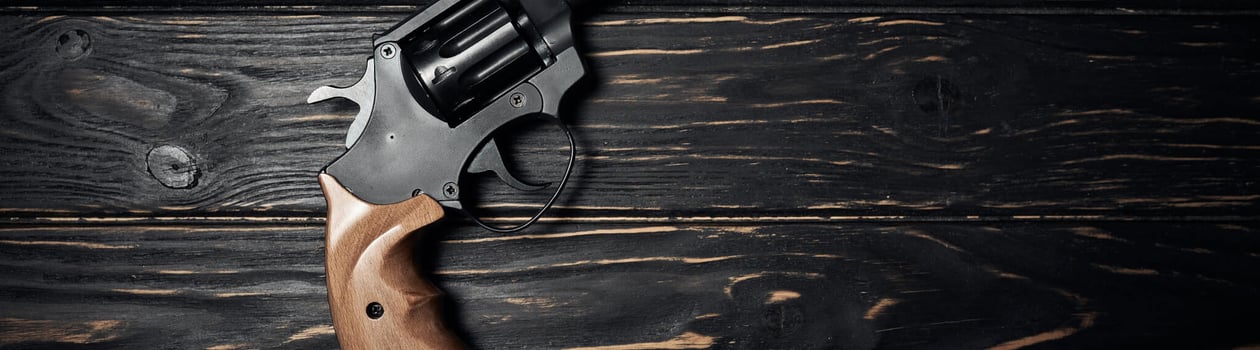
Pistol Patent Day is a lively celebration that honors a significant milestone in firearm history. This day commemorates the moment when Samuel Colt received his patent for the first revolver.
The invention revolutionized the world of firearms, allowing multiple shots to be fired without reloading each time.
This breakthrough not only changed the mechanics of guns but also had a lasting impact on both the military and civilian sectors.
Pistol Patent Day Timeline
Early Horse Pistols in Europe
Short, large-bore firearms designed to be fired from horseback appear in Europe, and the French term “pistolet” comes into use for these early handguns.
Percussion Cap Ignition Invented
The invention of the percussion cap by Rev. Alexander Forsyth and others provides a reliable new ignition system that makes practical repeating pistols and revolvers possible.
Samuel Colt’s U.S. Revolver Patent
On February 25, Samuel Colt receives a United States patent for a revolving-cylinder pistol, establishing the basic mechanism of the modern revolver and helping launch mass-produced handguns.
Bored‑Through Cylinder and Metallic Cartridge Revolvers
Rollin White patents the bored‑through revolver cylinder in 1855, and Smith & Wesson license it to introduce the Model 1 in 1857, one of the first successful metallic cartridge revolvers.
Colt Single Action Army Introduced
Colt begins production of the Single Action Army revolver, chambered for metallic cartridges, which becomes one of the most iconic pistols of the American West and U.S. military service.
Browning Designs the First Successful Semi‑Automatic Pistols
John Moses Browning patents early semi‑automatic pistol mechanisms in the late 1890s, culminating in the Colt Model 1911, which is adopted by the U.S. Army on March 29, 1911.
Rise of Modern Service Pistols
Law enforcement and military forces worldwide increasingly adopt high‑capacity, double‑stack 9 mm semi‑automatic pistols, exemplified by designs like the Glock 17, reshaping standard sidearm technology.
How to Celebrate Pistol Patent Day
Visit a Gun Range
Heading to the local shooting range sounds like a blast! Rent a pistol and practice your aim. You might discover a hidden talent or simply enjoy the thrill of hitting the bullseye.
Remember to brush up on gun safety rules before firing away.
Host a Western Movie Marathon
Cowboy hats, popcorn, and classic westerns make for a perfect evening. Gather friends for a movie marathon featuring legendary gunslingers.
Films like “The Good, the Bad and the Ugly” can set the mood. It’s a fun way to immerse in the Wild West spirit.
Create a Pistol Blueprint
Feeling creative? Sketch your own unique pistol design. Imagine an innovative twist on the classic revolver. Who knows, you might invent the next big thing in firearms. Use this day to channel your inner inventor.
Explore Firearm History
Dive into the fascinating world of firearms history. Read books, articles, or watch documentaries about Samuel Colt and his revolutionary inventions.
It’s a day to appreciate the technological advances that shaped modern firearms.
Share on Social Media
Spread the word about Pistol Patent Day by posting fun facts, historical tidbits, or your own pistol designs on social media.
Engage your friends and followers in the celebration. Use hashtags to connect with other enthusiasts and make the day a trend!
Why Is the Pistol Patent Day Celebrated?
People celebrate Pistol Patent Day for several reasons. First, it acknowledges Colt’s innovative spirit and his contributions to modern engineering.
The day encourages admiration for inventors who push the boundaries of technology. Additionally, it highlights the importance of patents in protecting and promoting creativity, ensuring that inventors receive recognition and reward for their hard work and ingenuity.
Another reason to celebrate this day is that it inspires future creators. Reflecting on Colt’s achievements and struggles motivates people to pursue their own inventive ideas.
It also reminds us of the value of perseverance and creativity in overcoming challenges and achieving success.
History of Pistol Patent Day
Pistol Patent Day began in the 1980s to commemorate Samuel Colt receiving the first patent for his revolver.
This patent, awarded on February 25, 1836, marked a significant advancement in firearm technology, allowing multiple shots without reloading. This day celebrates not only Colt’s invention but also the spirit of innovation that it represents.
Samuel Colt, an American inventor and businessman, changed the landscape of firearms with his revolver design.
He patented his invention in the United States after securing a British patent in 1835. The revolver’s ability to fire six shots rapidly without reloading made it a game-changer, especially in the military and for settlers in the American West.
The origin of Pistol Patent Day remains unclear, though it likely emerged from efforts by firearm enthusiasts or organizations like the NRA to honor Colt’s contribution.
This day highlights the importance of patents in encouraging and protecting innovation, recognizing the impact of Colt’s revolver on both history and modern technology.
Pistol Patent Day FAQs
How did Samuel Colt’s revolver design change handgun technology compared to earlier pistols?
Colt’s 1836 revolver patent introduced a rotating, multi‑chamber cylinder that indexed automatically when the hammer was cocked, allowing several shots to be fired in succession without manually reloading after each one.
Earlier single‑shot pistols typically required the user to load powder, ball, and priming for every shot and often relied on less reliable ignition systems.
Colt’s design also incorporated a positive cylinder locking system and partitions at the rear of the cylinder to reduce the risk of accidental discharge between chambers, which together made repeating handguns more practical, durable, and safer than most predecessors.
What is the practical difference between a revolver and a semi‑automatic pistol?
A revolver stores ammunition in a rotating cylinder, with each chamber aligned mechanically with the barrel as the hammer is cocked or the trigger is pulled.
A semi‑automatic pistol stores ammunition in a removable magazine and uses the energy from firing each round to cycle the slide, eject the spent case, and chamber a new cartridge.
In practice, revolvers are often praised for mechanical simplicity and reliability with a wide range of ammunition, while semi‑automatic pistols typically offer higher capacity, faster reloading with magazines, and slimmer profiles, which is why many modern military and police forces have shifted toward semi‑autos.
How did Colt’s early manufacturing methods influence modern industry beyond firearms?
Colt’s Hartford armory became an influential model of industrial production because it embraced the large‑scale use of interchangeable parts and organized, step‑by‑step assembly.
Workers specialized in particular tasks using precision machine tools so that any part of a revolver could fit any other, which greatly simplified repair and mass output.
This approach was studied and adapted by other manufacturers in sectors such as sewing machines, bicycles, and later automobiles, helping to spread the “American system of manufacture” that underpins many modern assembly lines.
Did Colt’s revolver immediately transform military tactics, or was adoption gradual?
Adoption was gradual. Early on, some military officials viewed the revolver as complex and unproven, and Colt’s first company struggled to secure government contracts.
Field use by groups like the Texas Rangers during the 1840s Mexican–American War highlighted the tactical advantage of multiple rapid shots, especially in cavalry engagements, which helped shift opinion.
Over time, as reliability improved and battlefield reports spread, revolvers became widely issued sidearms, influencing close‑quarters tactics and contributing to a broader move away from single‑shot pistols.
What are some common misconceptions about the accuracy and power of early revolvers?
A common misconception is that early revolvers were both extremely accurate and overwhelmingly powerful from the start.
In reality, black‑powder percussion revolvers like Colt’s early models produced significant smoke, fouling, and variable ballistics, which limited sustained accuracy and made maintenance crucial.
Their power and effective range were comparable to or only modestly better than many contemporary single‑shot pistols; the main advantage was repeat fire, not raw power.
Modern smokeless‑powder revolvers and cartridges are far more consistent and generally more capable than 19th‑century designs.
How has the role of handguns like pistols and revolvers shifted in modern military forces?
In modern armed forces, handguns are usually secondary or personal defense weapons rather than primary combat arms.
Rifles and carbines carry most of the fighting load, while pistols are typically issued to officers, vehicle crews, some special operations units, and personnel whose main duties make carrying a long gun impractical.
Revolvers largely disappeared from front‑line service in the 20th century as semi‑automatic pistols offered greater capacity and faster reloads, though revolvers still see limited specialist or ceremonial use in some militaries and law‑enforcement agencies.
What are generally recommended safety practices when handling pistols and revolvers?
Major safety organizations consistently emphasize a few core rules: always treat every firearm as if it is loaded, always keep the muzzle pointed in a safe direction, keep fingers off the trigger until ready to shoot, and be sure of the target and what is beyond it.
They also urge users to store pistols and revolvers unloaded and locked, with ammunition stored separately, and to seek formal training before using a handgun.
These practices are promoted globally by groups such as the National Shooting Sports Foundation and many national police agencies to reduce accidental injury.



You may also like

National Automatic Door Day
You might never have thought about it, but automatic doors play a significant role in daily life. National Automatic Door Day celebrates these modern marvels that make entering and exiting buildings feel effortless, even when hands are full, mobility is limited, or the weather is doing its worst. Automatic doors are...
- Canada
- International
- United Kingdom
- and 1 more

Purple Up! Day
Celebrating unity and support by donning purple in solidarity with children whose parents serve in the military.
Plimsoll Day
The man who made sure ships stayed afloat, revolutionizing safety at sea with his ingenious mark, ensuring journeys were safer for all.

Amateur Radio Military Appreciation Day
Amateur Radio Military Appreciation Day unites hams and communities to honor military, veterans, and first responders with live on-air messages of gratitude.
National days and holidays on February 25 2027

National Clam Chowder Day
It's like a warm, creamy ocean hug for the taste buds, rich with the essence of the briny deep, bringing comfort in every spoonful.

Real Bread Week
Real bread is a joy to behold! Made with natural ingredients and baked to perfection, each bite is a heavenly experience.

Let’s All Eat Right Day
Let’s All Eat Right Day encourages everyone to focus on nutrition and healthy eating habits. It’s a friendly nudge to pay attention to what ends up on the plate, not with perfection in mind, but with a little more intention. Food fuels work, play, rest, and everything in between, and...
- Australia
- Canada
- International
- and 2 more

Ramadan
During this holy month, Muslims fast from sunrise to sunset, focusing on spiritual reflection and community. Ramadan is a time for self-improvement and bringing people together in celebration of faith.
Seize Every Day
Sign up to get reminders, recommendations and guides.