There comes a moment in almost everyone’s life when the mind drifts toward the slightly eerie, slightly intriguing realization that, eventually, every story reaches its final line.
Plan Your Epitaph Day takes that uneasy thought and turns it into something surprisingly empowering: an opportunity to choose what the final public “caption” might be once the rest of the biography is no longer in the writer’s control.
An epitaph is the brief inscription written in memory of someone who has passed away, usually carved into a headstone or memorial marker. It is intentionally short, which is precisely what makes it such an engaging challenge.
In just a few words, it can capture a personality, highlight a passion, deliver a clever joke, offer comfort, or quietly prompt a passerby to reflect on their own life. It does not have to be somber. In fact, some of the most unforgettable ones are playful.
Your epitaph may become the single thing remembered about you by people who never met you. Many remarkable epitaphs have been engraved into stones that stand in cemeteries, both ancient and modern. Some lean toward humor, like the famous line attributed to Johnny Yeast: “Here lies Johnny Yeast, pardon me for not rising,” a pun that continues to amuse readers who appreciate a little bread-related wordplay.
Others emphasize a defining achievement. Ludolph van Ceulen, a mathematician celebrated for calculating pi to an extraordinary number of digits, had those digits engraved on his tombstone, transforming a grave marker into a tribute to persistence and curiosity.
That variety reveals the deeper purpose of this day: an epitaph can be whatever feels right. It may be witty, poetic, sincere, or deeply personal. It might even be practical. In many cemeteries, headstones include the basics—name and dates—and the epitaph becomes the single discretionary line that offers strangers a glimpse of who someone was.
The secret to a memorable epitaph is that it works on two levels. It honors the life of the person remembered, but it also speaks to the living reader standing nearby—perhaps grieving, perhaps curious, perhaps simply wandering through the grounds.
That reader arrives with their own mood, beliefs, and sense of humor. A thoughtfully chosen inscription can resonate with many people without becoming vague.
The nature of one’s epitaph and the words chosen for it, deserve careful thought. It may remain for as long as the headstone itself survives, offering a quiet message to those walking the path of life behind you. Consider this classic example:
Consider, friend, as you pass by:
As you are now, so once was I.
As I am now, you too shall be.
Prepare, therefore, to follow me.
This inscription, often attributed to an old Scottish tombstone, is direct, rhythmic, and impossible to ignore. It also reflects another long-standing tradition of epitaphs: addressing the passerby. Many historic inscriptions speak to “friend,” “stranger,” or “reader,” creating a brief conversation that stretches across time.
When planning an epitaph, it can help to begin with a few simple questions:
- Who is the epitaph for? It commemorates the deceased, but it is read by the living—family members, friends, descendants, and complete strangers.
- What tone feels right? Humor can comfort some people, while others may prefer warmth, wisdom, or quiet simplicity.
- How might it feel in different moments of grief? A joke may land differently on a difficult day than at a family gathering, while a gentle line may offer lasting comfort.
- What should the epitaph highlight? Values such as kindness or curiosity, relationships like devoted parent or loyal friend, a profession, a passion, or a guiding philosophy.
It is also wise to keep the practical side of stone carving in mind. Longer inscriptions require more space, cost more to engrave, and may be harder to read. Brevity is not a limitation but part of the form itself. Like a haiku or a sharp one-liner, a strong epitaph conveys more meaning than its few words suggest.
Many people find it helpful to draft several possibilities instead of searching immediately for a single perfect line. One might be heartfelt, another humorous, another purely factual. Over time, one version usually rises above the rest. Even if it changes later, the process itself clarifies what matters most.
Plan Your Epitaph Day Timeline
Earliest Egyptian Coffin Inscriptions
Some of the oldest known epitaphs appear on Old Kingdom Egyptian coffins and sarcophagi, combining names, titles, and prayers that the deceased be remembered and protected in the afterlife.
Greek “Epitaphios” and Funeral Orations
In classical Athens, the epitaphios logos, or funeral oration, such as Pericles’ speech recorded by Thucydides, helps shape the Greek idea of public remembrance for the dead and influences later notions of commemorative words.
Roman Funerary Inscriptions Standardize the Epitaph
Across the Roman Empire, stone grave markers commonly record the deceased’s name, age, status, and short phrases to the passerby, establishing a factual, formulaic style that later informs early Christian and English epitaphs.
“Epitaph” Enters the English Language
The word “epitaph,” meaning an inscription on a tomb or monument, appears in Middle English, reflecting the growing Christian custom in Europe of marking graves with written memorials.
Christianization Changes Anglo‑Saxon Burials
In Anglo‑Saxon England, the adoption of Christianity led to new burial customs centered on churchyards and formal graves, laying the groundwork for later medieval gravestones and written epitaphs in parish cemeteries.
Elaborate Tombs and Memorial Texts in Catholic Europe
Late medieval Catholic Europe develops a rich “material culture of death,” including carved tombs, effigies, and inscribed prayers, as memorials shift from simple markers to more personalized and text‑heavy monuments.
From Formal Praise to Personal Voices on Stones
Cemetery studies show that 19th‑ and early‑20th‑century epitaphs increasingly move from stiff, factual praise of the deceased toward language that expresses the emotions and perspectives of the bereaved, paving the way for more individual, sometimes humorous inscriptions.
History of Plan Your Epitaph Day
Plan Your Epitaph Day is a relatively modern observance encouraging people to take ownership of a detail that is often left to family members or reduced to standard phrasing. The idea is commonly attributed to Lance Hardie, a special events producer for public radio, who promoted the concept as a way to inspire people to think about the words they would want on their memorial marker.
The underlying message is simple: if individuals shape their life stories while they are alive, why not shape the final sentence as well?
The day is sometimes connected with two different points on the calendar, linking it symbolically with long-standing traditions of remembering the dead. One version coincides with Día de los Muertos, when families celebrate and honor loved ones who have died.
Another association appears in some sources with Qingming, or Tomb-Sweeping Day, when families visit ancestral graves to clean and care for them. Even without adopting those cultural traditions, Plan Your Epitaph Day shares its spirit: remembrance can be thoughtful, loving, and even joyful, rather than purely fearful.
Although the observance itself is modern, epitaph writing is an ancient practice. Across many cultures and centuries, people have left messages carved into markers, monuments, and memorials. Styles have changed over time.
In some periods, inscriptions emphasized the stark facts of mortality, using plain language such as “here lies.” In other eras, epitaphs focused on virtues, family roles, peaceful rest, or comforting sentiments for those left behind. Some markers resemble miniature biographies. Others are so brief they feel like whispers.
Epitaphs also reveal much about the societies that created them. Language evolves, phrases fall in and out of fashion, and carved symbols reflect cultural values. Even small details such as occupations, nicknames, or spelling choices offer glimpses into the past.
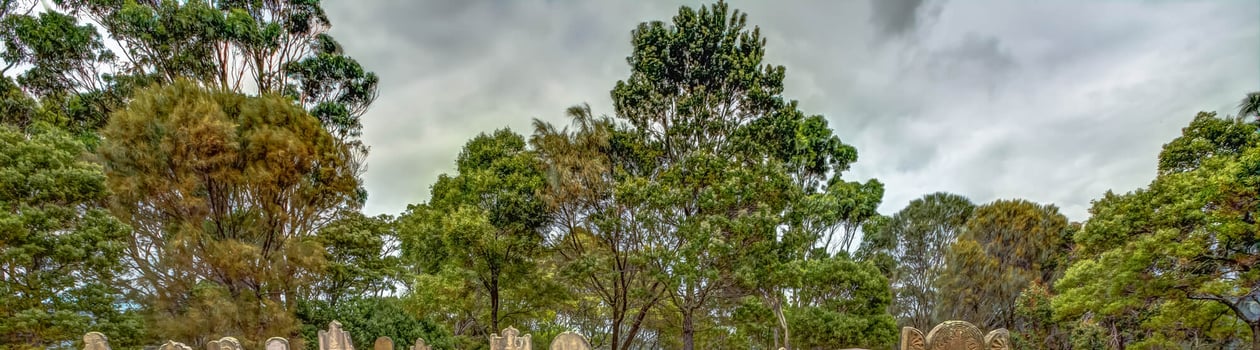
Walking through an old cemetery can feel like turning the pages of a history book—except the chapters are written in stone.
Plan Your Epitaph Day draws from this long tradition but shifts the perspective inward. Rather than viewing epitaphs as something chosen after death, the day encourages people to see them as a creative, personal decision.
For some, it becomes a simple writing exercise. For others, it opens the door to broader reflections on legacy: how they wish to be remembered, what stories they hope will endure, and which values they want to echo into the future.
How to Celebrate Plan Your Epitaph Day
One way to observe the day is to visit a cemetery and look for inspiration among the markers of those who lived before. Reading epitaphs in person has a different impact than seeing them in books or online. The setting itself adds meaning. A short inscription can feel surprisingly powerful when encountered in quiet surroundings, carved into stone beside dates that span entire lifetimes.
A respectful visit can be simple:
- Walk slowly and read inscriptions from a distance.
- Stay on paths where possible and watch for uneven ground.
- Avoid touching fragile or weathered markers.
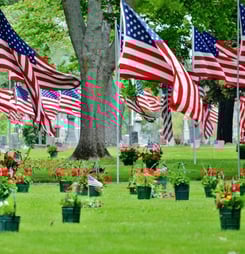
- Leave flowers, flags, and personal items exactly as they are.
- Speak quietly, especially if other visitors or services are present.
While exploring, notice patterns. Some epitaphs highlight relationships, such as “Beloved mother” or “Devoted friend.” Others describe identity: “Teacher,” “Storyteller,” “Forever curious.” Some offer comfort, while others carry humor or gentle mischief. This variety can relieve the pressure to sound profound. Often the most effective epitaph is simply the most honest.
Draft an epitaph like a writer and an editor
Writing an epitaph is a bit like crafting the headline of a life story. A helpful strategy is to begin freely and refine later.
- Start with a brainstorm. Write down favorite sayings, personality traits, hobbies, and the small stories friends tell about you.
- Choose a central theme. Humor, gratitude, love, peace, accomplishment, or a message to readers.
- Write three different versions. Trying multiple tones helps reveal what feels authentic.
- Read the lines aloud. If they sound stiff when spoken, they may feel stiff in stone.
- Edit carefully. Remove extra words and keep the strongest ones.
It can also help to imagine how family members might feel reading the inscription many years later. An epitaph can remain personal without becoming confusing. Inside jokes may be fun now, but if they require a long explanation, future readers may miss the point.
Make it practical, not just poetic
Some people use Plan Your Epitaph Day as an opportunity to address a few practical details alongside the writing process. This might include:
- Noting preferred name formats, nicknames, or initials.
- Recording the preferred spelling or language for the inscription.
- Listing values, roles, or achievements that matter most.
- Sharing draft ideas with a trusted person for clarity.
The goal is not to dwell on mortality but to reduce uncertainty later and ensure the final inscription reflects the person it represents.
Grave rubbings have long been a pastime for people interested in collecting historic inscriptions. They can reveal details that have become difficult to read with the naked eye. However, modern preservation guidelines often discourage this practice, especially on fragile or historic stones. Rubbing can accelerate wear and damage surfaces that are already weathered. Many cemeteries now restrict or forbid it altogether.
Anyone interested in trying it should first obtain permission from cemetery management and only work with sturdy markers where the activity is allowed.
When done carefully, the traditional method involves placing a sheet of paper over the inscription and gently rubbing charcoal or a soft crayon across the surface to capture the raised lettering. The keyword is gently—excess pressure can cause harm.
For those who prefer a safer approach, several alternatives provide similar enjoyment without touching the stone:
- Photography, taken respectfully and according to cemetery rules.
- Hand transcription of inscriptions into a notebook.
- Sketching the lettering style or decorative designs.
Another possible activity is gathering with friends to discuss and draft epitaph ideas together. Some people enjoy quiet picnics in cemeteries where such visits are permitted. Before planning one, it is important to check local rules, since some cemeteries welcome peaceful visitors while others prefer strictly memorial activities.
If allowed, the best approach is simple: bring a small blanket, keep food contained, clean up carefully, and treat the space with the same respect as a library.
Working with friends can make the process less intimidating. People often see each other’s defining qualities more clearly than they see their own. A friend might say, “You were always the one who showed up,” or “You made everyone laugh when things were hardest,” and suddenly the epitaph becomes obvious.
If you live near a cemetery where poets, artists, or notable figures are buried, their inscriptions may offer another form of inspiration—not only for what they say, but for how they say it. Some epitaphs rhyme. Some rely on a single vivid image. Others use plain language and allow sincerity to speak for itself.
Plan Your Epitaph Day ultimately invites reflection on mortality, legacy, and the quiet power of a few carefully chosen words carved into stone. People live most vividly in the memories of those who knew them, yet strangers often encounter a life through a single inscription on a marker.
That line might be a warning, a comfort, a joke, a declaration of love, a guiding motto, or a final introduction. Taking the time to consider what it might say encourages reflection on the journey so far and the message one might wish to leave for those who come next.
Ancient Traditions That Shaped the Meaning of Epitaphs
Long before witty one-liners appeared on modern gravestones, epitaphs served as powerful cultural messages about memory, identity, and the afterlife.
Across civilizations such as ancient Egypt, Greece, and Rome, inscriptions on tombs were carefully crafted to preserve a person’s story, honor their role in society, and speak directly to the living.
From sacred texts meant to guide the soul to poetic reflections addressed to passersby, these early epitaphs reveal how different cultures understood death, remembrance, and the enduring human desire to leave a meaningful final message.
Greek Roots of the Word “Epitaph”
The English word “epitaph” comes from the Greek adjective “epitaphios,” which literally means “funerary” or “happening on a grave.”
In classical Greek, epitaphios could describe funeral orations as well as objects or rites associated with the tomb, and that linguistic root still shapes how modern societies think of epitaphs as words that properly belong at or on the grave.
Ancient Egypt’s Tomb Texts as Early Epitaphs
Some of the earliest known epitaphs are found on ancient Egyptian coffins and sarcophagi, where inscriptions recorded a person’s name, titles, and ritual formulas asking gods or passersby for offerings.
Rather than witty last words, these texts were designed to secure the deceased’s status and well-being in the afterlife, showing that epitaphs originally blended biography with religious function.
Greek Epitaphs as Short Poems to the Living
In ancient Greece, epitaphs were often crafted as brief, literary poems, frequently in elegiac couplets, and many spoke directly to the passerby.
These inscriptions might mourn a young life cut short, praise courage in battle, or offer a philosophical reflection on fate, revealing that epitaphs were not just labels on graves but a form of public literature aimed at moving and instructing the living.
Roman Gravestones and the Rise of Biographical Epitaphs
Roman epitaphs typically emphasized concrete facts such as a person’s name, age, social status, and family relationships, sometimes capped with a terse moral or emotional line.
This practice turned gravestones into compact biographical records that preserved social identity after death and helped historians reconstruct details of everyday Roman life from thousands of such inscriptions.
From “Here Lies” to Messages for the Mourners
A historical survey from Lakewood Cemetery notes that 19th‑century epitaphs in many Western cemeteries focused on the dead themselves, listing names, dates, and virtues with formulaic openings such as “Here lies the body of….”
By the late 1800s and early 1900s, some monuments began to mention who erected the stone and how deeply the deceased was missed, marking a shift toward inscriptions that also speak about, and for, the survivors.
Religious Faith as a Dominant Theme in Historic Epitaphs
An interpretive tour of gravestones at St. Paul’s Church National Historic Site in New York shows that religious faith dominates many older epitaphs in that churchyard.
Inscriptions commonly invoke God, salvation, and the hope of resurrection, illustrating how Christian belief shaped not only burial practices but also the language used to frame death and console the living.
Modern Epitaphs Have Become More Personal and Relational
Lakewood Cemetery’s analysis of epitaphs over time observes a broad trend from factual, status‑oriented inscriptions toward more intimate, relational messages.
Contemporary gravestones are more likely to highlight roles such as “beloved mother” or include phrases expressing how much the person is missed, which shifts the focus from summarizing a life for strangers to comforting the specific family and friends left behind.