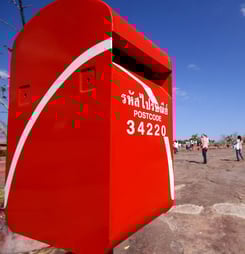

Before inboxes, instant messages, and streaming, there was the satisfying clunk of a mailbox lid and the quiet choreography of people moving letters from hand to hand, town to town, and eventually door to door. Postal workers have long been the connective tissue of everyday life, helping everything from heartfelt notes to critical documents reach the right place. National Postal Workers Day is a chance to notice the work that usually happens in the background and to thank the people who keep it all moving.
How to Celebrate National Postal Workers Day
Showing appreciation does not have to be complicated. Postal work is a blend of logistics, customer service, physical labor, and serious responsibility. A small, sincere gesture can go a long way, especially when it recognizes the full range of work involved, not just the moment a carrier reaches the front porch.
It also helps to keep in mind that many postal employees are public servants and may have rules around gifts. In some places, cash and cash equivalents are not allowed, and any physical gift may need to be modest. When in doubt, stick with gratitude that cannot be mistaken for a tip: a note, a compliment to management, or a public word of thanks.
Write a Thank You Card
A thank you note is wonderfully old-school, which makes it perfect for a day celebrating the mail.
When the postal worker comes to pick up the mail, slip a little personalized thank you note right into the box, or hand it to them personally if possible. A simple message is enough, but it can be even more meaningful when it includes a detail that shows the sender pays attention, such as appreciation for careful handling of packages, reliability, or kindness toward neighbors.
If adding something extra, keep it simple and appropriate for someone on the move. Individually wrapped snacks or a sealed bottle of water can be a practical choice. If anything edible is offered, it helps to avoid homemade items, since ingredients and food allergies can be hard to manage on a route.
Those who are dropping off or picking up a package at the post office can also give an extra thank you to the staff at the counter. Window clerks and retail associates field a steady stream of questions about postage, tracking, forms, customs declarations, and the mysteries of “Why did my package take that route?” A kind word to the counter staff recognizes a part of the postal system many people only notice when they are in a hurry.
For an extra-thoughtful approach, send a compliment through official channels when that option is available. A short message praising a carrier’s professionalism or a clerk’s helpfulness can reach supervisors and become part of an employee’s record of good performance.
Share on Social Media
Use social platforms to publicly thank postal workers. Share stories or images that highlight their commitment, using hashtags like #NationalPostalWorkerDay to join the broader conversation.
To make the post more than a generic shout-out, share a quick anecdote about something the mail made possible: a care package that arrived safely, documents delivered on time, a long-distance friendship kept alive by postcards, or a small business order that turned into a repeat customer. These details help people remember that postal work supports real lives and livelihoods.
If sharing photos, it is considerate to avoid close-up images of employees on the job without permission, and to keep addresses and tracking labels out of view. A mailbox with a thank-you note, a neatly stacked pile of outgoing letters, or a favorite stamp collection can carry the message without putting anyone’s privacy at risk.
Visit the Post Office
Stop by a post office to personally thank the staff. A face-to-face expression of gratitude can make a significant impact and help strengthen the feeling of community that local service brings.
For people who want to take it one step further, use the visit as a reminder of how much postal counters do beyond selling stamps. Many locations help with mailing options for time-sensitive items, signature-required delivery, holding mail during travel, and guidance on packaging. Asking a staff member what they wish more customers understood can be surprisingly illuminating, and it shows respect for their expertise.
A practical way to honor postal workers is to be an “easy customer.” Come prepared with addresses written clearly, packages sealed properly, and forms filled out when possible. Courtesy and preparedness lower stress in a workplace built around lines, time targets, and precision.
Educate Children
Teach children about the vital role postal workers play. Encourage them to draw pictures or write notes of thanks, fostering appreciation from a young age.
Turning appreciation into an activity can make the postal system feel real rather than abstract. Kids can learn the basic path of a letter: collected, sorted, routed to the correct region, sorted again, and delivered on a specific route. They can also learn why careful handwriting and complete addresses matter, and why including a return address is like giving a letter a safety net.
A fun extension is to start a supervised letter exchange with relatives or friends. It teaches patience, communication, and the delight of receiving something tangible. Children can help choose a stamp, decorate an envelope, and learn that tiny pieces of paper have carried enormous amounts of human news through the world.
Display a Yard Sign
Place a sign expressing thanks to postal workers. This visible acknowledgment can boost morale as they make their rounds.
A sign works best when it is simple, readable from the street, and focused on gratitude. It can also be paired with something that makes the route easier: making sure the house number is clearly visible, trimming plants that block the mailbox, or keeping the path to the door safe and unobstructed.
Practical support is a form of appreciation that postal workers feel every day. A secure, well-maintained mailbox and clear labeling help prevent misdeliveries and save precious minutes on a route. That is not flashy, but it is deeply useful.
National Postal Workers Day Timeline
Franklin Becomes Joint Colonial Postmaster General
Benjamin Franklin is appointed joint postmaster general for the British colonies, where he surveys post roads, reorganizes routes, and professionalizes early postal work for riders and postmasters.
Postal Service Act Creates the U.S. Post Office Department
Congress passes and President George Washington signs the Postal Service Act, formally creating the Post Office Department and expanding the corps of federally supervised postal employees.
Free City Delivery Establishes the Urban Letter Carrier
The Post Office Department launches free city delivery in selected cities, hiring uniformed letter carriers to walk fixed routes and deliver mail directly to homes and businesses.
Rural Free Delivery Begins in West Virginia
The first official Rural Free Delivery routes start in Jefferson County, West Virginia, sending rural carriers over long country roads to bring mail directly to farm families’ mailboxes.
Rural Free Delivery Becomes a Permanent Service
Rural Free Delivery is made a permanent part of the postal system, greatly expanding the number of rural carriers and firmly establishing door‑to‑door delivery as a core postal job.
Black Railway Clerks Found the National Alliance of Postal Employees
Thirty‑five African American railway mail clerks meet near Chattanooga, Tennessee, to form the National Alliance of Postal Employees, organizing against discrimination and for better conditions.
Great Postal Strike Spurs Modern Labor Rights
More than 200,000 postal workers join an unprecedented strike over low pay and conditions, leading to the Postal Reorganization Act and collective bargaining rights for the modern USPS workforce.
History of National Postal Workers Day
Postal work has existed for as long as organized communities have needed a dependable way to move information and goods. In the United States, the roots of the national postal system reach back to the country’s earliest years. In 1775, the Continental Congress appointed Benjamin Franklin as the first Postmaster General, formalizing a mail network that could support communication across the colonies.
That early system was not just about convenience. Mail helped people share news, coordinate business, and maintain relationships across long distances, often under difficult travel conditions. Reliable routes and scheduled deliveries gave scattered communities a shared rhythm, and the postal workforce became an essential part of daily civic life.
In 1792, the Postal Service Act strengthened the structure of the postal system and set clearer expectations around how mail would be carried, protected, and delivered. Over time, the reach of the mail expanded alongside transportation, from stagecoaches to rail networks and later to air transport. Each shift changed the pace and scale of delivery, and it also expanded the range of jobs needed to keep things running. Carriers delivered the final mile, while clerks, mail handlers, drivers, mechanics, and sorters kept the broader system accurate and secure.
Modern mail operations look different than they once did, but the core promise remains similar: items are accepted, processed, routed, and delivered with care. Barcodes, tracking, automation, and sophisticated logistics have raised expectations for speed and visibility, but people still handle exceptions, solve addressing problems, answer questions, and complete deliveries that require judgment and attention. When something is fragile, urgent, awkwardly shaped, or addressed imperfectly, human experience often makes the difference.
National Postal Workers Day began in 1997, created by a postal worker in the Seattle area to recognize the dedication of fellow postal employees. The idea was straightforward: set aside a moment to thank the people whose work is easy to overlook precisely because it happens so consistently. While the observance has a U.S. origin, its message translates anywhere mail is carried. Postal workers, whatever the local system is called, share a similar mission and a similar set of challenges.
As communication habits have changed, the role of postal workers has shifted rather than disappeared. Fewer personal letters does not mean less responsibility. People still rely on mail for official notices, ballots where applicable, legal and financial documents, prescriptions, identity materials, and packages sent by friends and businesses. Many postal employees also assist customers with services like PO boxes, proof-of-mailing options, and guidance for international shipping rules.
National Postal Workers Day highlights that the mail is not an abstract system. It is people: someone sorting accurately on a tight schedule, someone maintaining a vehicle so a route can run, someone answering questions at a counter, someone walking up steps with a package, and someone doing it again and again in all kinds of conditions. The day’s purpose is simple appreciation, offered in a way that respects the work and the worker.
Learn Fun Facts About the Post Office
One way to celebrate National Postal Workers Day might be to learn (and share!) a few bits of trivia to raise awareness for the day. Begin the fun with some of these interesting pieces of information:
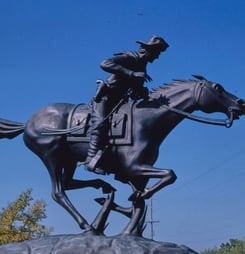
While sometimes linked together, the Pony Express only functioned from 1860–1861 and was never part of the US Postal Service.
The first post office in the colonies was started in 1639 and it was located in a tavern.
In the early years of the US, the postal service was the only way to send money, which motivated people to steal the mail.
The postal act of 1792 imposed the harshest of penalties on mail thieves – up to death for a second offender.