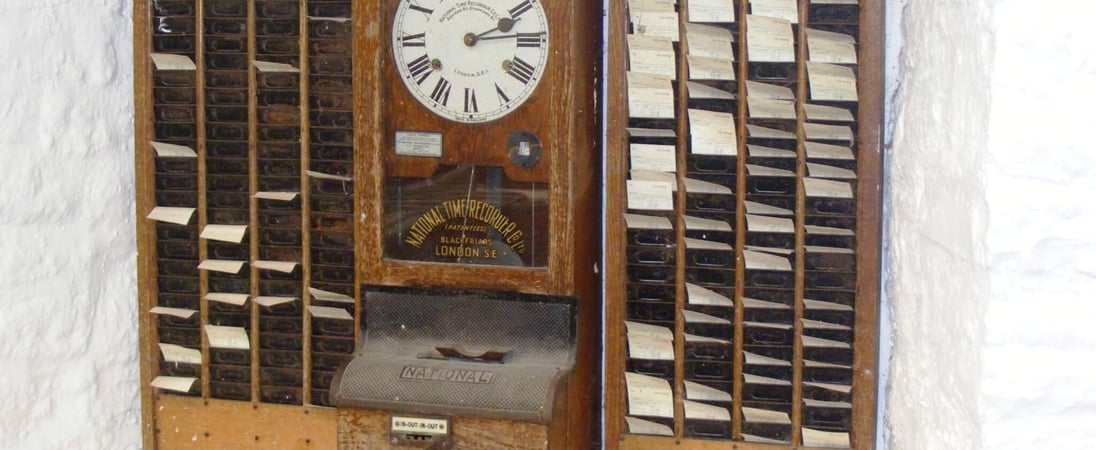
Punch the Clock Day
Efficiently tracking work hours, these devices signal the day's bookends, ensuring time's rhythm and fair compensation.
Whether a person loves their job or hates it, they want to make sure they get paid everything they are owed for the work they do!
Show some workplace love and be grateful for the technology that originally allowed for accurate paychecks through the use of a punch clock machine.
Because that’s really what Punch the Clock Day is all about!
History of Punch the Clock Day
Some people may wonder why the concept of punching a clock is really that important, wondering if it even deserves to have its own Punch the Clock Day.
But these folks may not realize how this simple little machine made a huge difference in the world of workplaces.
It was only recently in the history of time, well into the 19th century, that average people even started to have clocks in their homes. Before that time, everything was simply done in relation to the sun going up and down or in connection with nature.
But as the Industrial Revolution developed, workers were expected to keep production running on a tight time frame in the factories where they worked. The system of bells and whistles that was used in factories was somewhat effective but still inefficient.
And, this system still relied on a human clerk to organize and keep track of all of the administrative details of the employee’s working records.
In 1888, the time punch clock was patented by a jeweler and business owner from New York City, Willard Le Grand Bundy. Bundy had also been an inventor of other mechanical items for his business, including an electric cash register and accounting machine, which he also held patents for.
Following the invention, Willard’s brother, Harlow, organized a company that could manufacture the clock, and Bundy Manufacturing was born. In Australia, the word “bundy clock” or simply “bundy” may be used in conjunction with a punch clock, as a nod to the inventor and his company.
The invention of the punch clock brought a new way of doing things when it came to employees getting paid for time worked. The machine would allow bosses and workers to be sure that everyone was kept accountable and paid fairly without foul play.
Of course, with the advent of new computer technology, the function of time clocks has evolved and now they are often electronic, sometimes even working through an app on the employee’s smartphone.
But however the time clock works these days, Punch the Clock Day is here to show appreciation for and celebrate the important technological advancements that were made specifically related to hourly workers and their fair pay!
Punch the Clock Day Timeline
1888
Patent of Time Clock by Willard Bundy
Willard Le Grand Bundy patents a mechanical device crucial for monitoring and managing work hours in industrial settings, representing a step forward in labor management.
1919
International Labor Organization Formed
Following concerns about labor conditions, the ILO is established, advocating for improved labor conditions including regulated working hours, tying into historical timekeeping practices and labor reform.
1945
Post-WWII Standardization of Work Hours
Post-war labor reforms solidify the 8-hour workday, enhancing systematic approaches in labor timekeeping including the use of time clocks, further influencing workplace efficiency standards.
1960s
Electronic Timekeeping Innovation
The advance from mechanical to electronic time tracking systems in the 1960s modernizes time discipline, laying groundwork for eventual digital solutions.
2000-Present
Digital Transformation in Time Tracking
With the rise of software and apps, time management systems continue to evolve, integrating into global workplace practices, moving beyond traditional timekeeping to flexible, digital services.
How to Celebrate Punch the Clock Day
Wondering about some different ways it is possible to get involved with and observe Punch the Clock Day? Grab some friends and get creative, or check out some of these ideas to get started with:
Get to Work
Those who truly want to live in the world of Punch the Clock Day likely need to get out of bed early and get to work!
Or, even better, take this as a special time to call out for a personal day. Folks who used to punch a time clock when they were younger but no longer have to might want to take some time to consider how much better (or worse!) their life living on a salaried income is.
And managers or supervisors can celebrate the day by trying to take it a bit easy on those clock-punchers who are their responsibility!
Celebrate with a Punch the Clock Day Playlist
There is hardly anything that can’t be made at least a little bit better with music.
And Punch the Clock Day is really no different! In honor and celebration of this day, it’s possible that getting some tunes together and making a playlist would be a surefire way to make it through the daily grind.
Head over to Spotify, Apple Music, or some other online music platform to add some songs or albums. For instance, Elvis Costello and the Attractions released an entire album in 1983 that went by the title Punch the Clock.
Get started with some of these ideas for songs about work to add (this collection is particularly focused on classics from the early 1980s):
- Working for the Weekend by Loverboy (1981)
- 9 to 5 by Dolly Parton (1980)
- Workin’ for a Livin’ by Huey Lewis and the News (1982)
- Bang the Drum All Day (I Don’t Wanna Work) by Todd Rundgren (1982)
Looking for more days throughout the year that feature celebrations about the workplace? Check out International Fun at Work Day in April, National Work Like a Dog Day in August or Bring Your Manners to Work Day in September.
Facts About Punch the Clock Day
The Birth of Time Management Tools
The introduction of systematic timekeeping devices can be traced back to 1888 with Willard Le Grand Bundy’s invention of the first time clock.
This innovation marked the beginning of a new era in industrial work practices, allowing for the accurate calculation of wages and the efficient organization of labor.
Timekeeping and Technological Progression
From mechanical punch clocks to sophisticated digital systems, the evolution of timekeeping technology has continually adapted to meet the efficiency demands of modern workplaces.
The transition to electronic systems in the late 20th century significantly reduced administrative burdens and improved payroll accuracy.
Global Labor Standards and Time Recording
Accurate timekeeping has been fundamental in the development of global labor standards, ensuring fair compensation and working conditions. It played a critical role in labor movements that advocated for standardized work hours and benefits.
Cultural Perceptions of Time
Time management practices, including punch clocks, have shaped cultural perceptions of work and efficiency.
Since their inception, these tools have made punctuality and time management critical components of workplace culture and performance evaluation.
Technological Innovations Beyond Labor
The principles of time tracking established by early punch clocks have influenced broader technological innovations beyond labor, including project management tools and productivity software that leverage time data to enhance organizational performance.
Punch the Clock Day FAQs
What does the phrase “punching the clock” mean?
“Punching the clock” means to go to work every day and work for an hourly wage.
When was the punch clock in use?
The first automated machine to work as a time punch clock was patented in New York in 1888.[1]
How does a punch clock work?
A manual punch clock makes a physical timestamp on an employee time card, while a computerized system does it electronically.
What is a time card?
A time card is a cardboard ticket an employee uses to keep track of their time worked, often by “punching” it in the clock.[2]
Also on ...
View all holidays
National Chocolate Cake Day
Indulge in this delectable cocoa-based dessert, make the original pioneering recipe or put a modern twist on this classic by adding flavors like matcha.

National Geographic Day
Explore the world without leaving your couch! Stunning photos, captivating stories, and amazing discoveries await you in this iconic publication.


National Plan for Vacation Day
Established in 2017 by the U.S. Travel Association, National Plan for Vacation Day acts as an annual reminder that people have vacation days to use – and they should be using them!
We think you may also like...

World Photography Day
A beautiful way to tell a story, express emotions, and preserve the beauty of the world around us. Start capturing your own story today!

Cycle to Work Day
Residents of the UK, hop on your bikes and join many other commuters in cycling to work. Global citizens can join in too, or find a cycling event.