Reading Is Funny Day
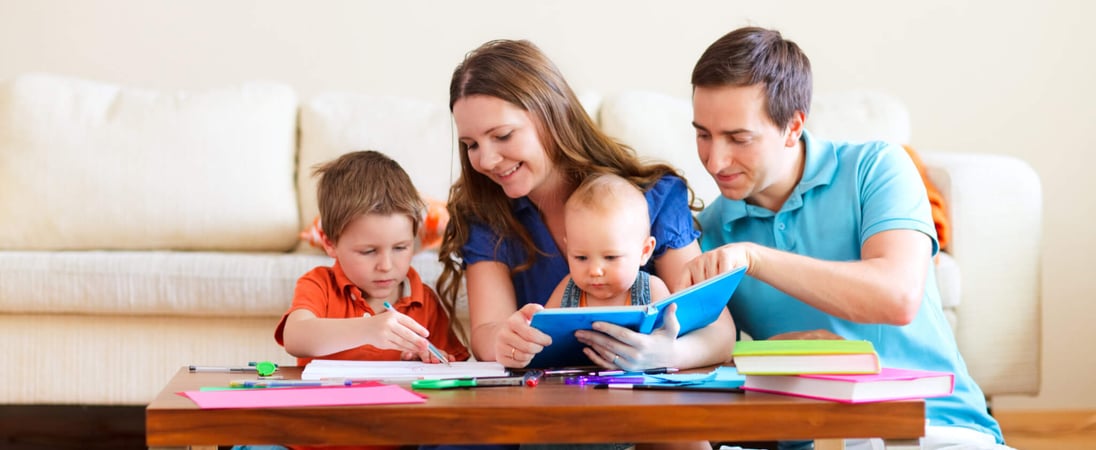
By reading books of riddles, jokes, and comedy, help kids see how reading can be just as fun and funny (if not moreso) as video games, tv, or the internet.
If you have ever tried and failed at getting your child to put down the video games and pick up a book, this might be the day for you!
Reading is Funny Day aims to show children that reading can be just as fun as more modern entertainment, whether it be with jokes, riddles, or funny stories.
Reading Is Funny Day Timeline
c. 1900 BCE
Earliest Recorded Verbal Joke
A proverb from ancient Sumer, recorded on a cuneiform tablet around 1900 BCE, is widely cited by scholars as the oldest known written joke, showing that wordplay and humor have long been part of human culture.
c. 1600 BCE
Ancient Egyptian “Bored Pharaoh” Gag
A fragmentary papyrus from New Kingdom Egypt includes a risqué quip about entertaining a bored pharaoh, often described by historians as one of the world’s oldest surviving written jokes.
4th–5th Century CE
Philogelos, One of the First Joke Books
The Greek collection Philogelos (“Laughter-Lover”) is compiled, preserving about 260 short jokes and providing one of the earliest known examples of a book made purely for written humor.
1430s–1450s
Printing Press Spurs Early Jest Books
Johannes Gutenberg’s movable-type printing in mid‑15th‑century Europe allows humorous chapbooks and jest books to be reproduced more cheaply, helping jokes and comic tales spread to wider reading audiences.
1744
First Commercial Children’s Book in English
London publisher John Newbery issues A Little Pretty Pocket-Book, often cited as the first modern children’s book, blending moral lessons with playful rhymes and games that paved the way for humorous children’s reading.
1865
Nonsense and Wordplay in Alice’s Adventures in Wonderland
Lewis Carroll publishes Alice’s Adventures in Wonderland, packed with absurd situations, riddles, and puns that transform children’s literature by showing how sophisticated humor can captivate young readers.
1957
Dr. Seuss Makes Learning to Read Funny
The Cat in the Hat by Dr. Seuss appears, using rhyme, slapstick situations, and a limited vocabulary to help beginning readers discover that decoding words on a page can be exciting and very funny.
How to Celebrate Reading Is Funny Day
Read with a Child
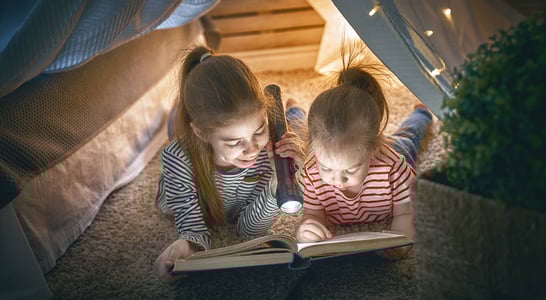
Take the opportunity on this day to show your children how fun reading can be.
Download riddles from the internet to get your children engaged, go to the local library to check out a few funny books, or even spend the day making up funny stories of your own!
Setting this day aside to concentrate on having fun reading can be a real eye-opener to the children of today and may even encourage them to start to read on their own on other days of the year!
Make a Funny Book
You and your little one could also try to make your own book on Reading Is Funny Day. This is a great activity to enjoy on this day, and it will help to progress your child’s development as well.
Plus, we are sure it is the sort of activity that your little one is going to get excited about. You can find lots of different examples of activities like this online if you’re looking for a fun way to engage your child and teach them about the value of a good book.
Get Some Funny Books
You could purchase some children’s books in preparation for the day. Alternatively, you could go to the library together and pick out some funny books.
This is a great way to spend some time together and it gives your child the chance to explore the sort of books they like.
If you’re wondering where to start when it comes to funny books for kids, there are lots of great suggestions out there! I’m Bored by Michael Ian Black is a good choice!
It is a book about confronting the age-old child mantra “I’m bored.” In this book, a bored little girl is excited to meet a talking potato, that is until the potato declares that he finds children boring! The book follows the girl trying to change his mind, and it is assured to make both you and your child laugh.
Another book that comes highly recommended is Interrupting Chicken by David Ezra Stein. In this book, a little chicken wants her dad to read her a bedtime story.
However, she keeps interrupting the book at every opportunity because she can’t bear that her beloved fairy tale characters continue to make errors! The book shows that children being an active participant in storytelling can be very funny and exciting too.
Whatever you do on Reading is Funny Day, make sure it’s fun! Let us know if you read any books that get you and your little one in fits of giggles!
Learn About Reading Is Funny Day
Reading Is Funny Day has been created for the purpose of showing young readers that reading a book can be just as enjoyable and entertaining as other forms of entertainment, for instance, playing a video game or watching the television.
In order to ensure that books are as appealing as possible to younger children, this day focuses on books that are funny. Good examples include books of riddles, comedy books, and joke books.
A lot of parents experience the struggle to trying to get their children away from the computer screen. This is only becoming more and more difficult, as computers become more popular and ingrained in everyday life.
However, you want your child to have varied forms of entertainment, and that’s why Reading is Funny Day is important.
It gives you the perfect opportunity to pry your child away from the computer and to get them to embrace another form of enjoyment. By making them laugh and showing them how fun books can be, you can encourage your child to read books throughout the year.
History of Reading Is Funny Day
To understand the history of Reading Is Funny Day, we need to understand the history of a joke. We are sure you have heard plenty of jokes throughout your life, some good and some bad!
From riddles to knock-knock jokes, there are certain formats that stick with us and give us the basis for a good joke. We’re sure you have heard plenty of jokes that ask why a chicken (or any other type of animal) crossed the road!
The oldest joke that has been saved is an ancient Sumerian proverb, which comes from 1900 BC. The second oldest can be dated to 1600 BC and it comes from the ancient Egyptians.
This shows that throughout the ages, and no matter the differences in our cultures and way of life, one thing that we have enjoyed doing for as long as time is having a good laugh!
You may be wondering what sort of jokes the ancient Egyptians found funny. Well, the joke from 1600 BC is as follows:
“How do you entertain a bored pharaoh? You sail a boatload of young women dressed only in fishing nets down the Nile and urge the pharaoh to go catch a fish”.
This joke was found scrolled onto papyrus and it is thought to be a dig at the Pharoah that was in charge at the time!
It was not until the 4th or 5th century AD that we started to see collections of jokes. What is so fascinating is that we still use a lot of these jokes today, such as those referring to people with bad breath and the absent-minded professor.
At the time, the book was intended so that you could read it and then repeat the joke whenever the opportunity came about.
When the printing press was invented in the 15th century, you probably already know that one of the first books to be printed was the Bible. But did you know that one of the other first books to be printed was the collection of jokes we’ve just referred to?
It did not take long for joke books to take off either. Their popularity has been unquestioned ever since. In fact, one joke book that was released in 1470 was so popular that there were roughly 20 editions of the book generated in the 15th century alone!
There are many books today that don’t get anywhere close to having 20 editions published!
Joke books today are still as popular as they ever have been. The way that they are consumed may be different, as a lot of people read online content and e-books, yet it’s unlikely we will ever see the day whereby jokes aren’t popular. Who would want to live in such a dull world?
Facts About Reading Is Funny Day
Humor Can Boost Children’s Reading Motivation
Studies following children over time have found that humorous books can be especially powerful for “reluctant readers,” because laughter increases enjoyment and persistence with texts that might otherwise feel challenging.
In one longitudinal study of more than 1,000 10‑year‑olds in the United Kingdom, children who said they enjoyed reading were more likely to prefer funny books and comics, and this enjoyment predicted better reading performance one year later, even after controlling for background factors.
Jokes Exercise Complex Language Skills
Understanding jokes is not just “fun and games” for the brain. Psycholinguistic research shows that getting a punchline often requires children to track multiple meanings of a word, interpret figurative language, and revise their first interpretation of a sentence in a split second, which are many of the same skills needed for strong reading comprehension.
For example, experiments with homophone and pun-based jokes have shown that children who can appreciate these jokes tend to perform better on measures of vocabulary and inferencing.
Laughing Together While Reading Builds Closer Relationships
Shared laughter during story time appears to strengthen the emotional bond between adults and children, which in turn supports children’s attitudes toward books.
Observational studies of family reading have found that when parents and children laugh together over funny stories, they show more positive affect and spend longer periods engaged with the book, and parents are more likely to continue similar reading routines over time.
These warm, playful interactions are associated with better language development in early childhood.
The World’s Oldest Surviving Joke Book
The oldest known surviving joke book, the Philogelos (which means “The Laughter-Lover”), dates to about the fourth or fifth century A.D. and contains 265 jokes written in ancient Greek.
Many of its gags rely on stock characters, including absent-minded professors and people with bad breath, showing that certain comic types and situations have been making readers laugh for at least 1,500 years.
Early Printed Jest Books Were Bestsellers
Soon after Gutenberg’s printing press spread across Europe, short collections of jokes and comic anecdotes, known as “jest books,” became some of the most popular printed works.
In England, titles like “A Hundred Merry Tales” and later “Merry Jests of George Peele” circulated widely in inexpensive editions, suggesting that humorous reading matter was a staple for ordinary readers who might not have been able to afford large, serious volumes.
The First Commercial Children’s Books Mixed Instruction and Amusement
John Newbery, often called the “father of children’s literature,” published “A Little Pretty Pocket-Book” in London in 1744, one of the first books explicitly marketed for children.
It blended short rhymes, moral lessons, and playful material, and was sold with a toy (a ball or pincushion), reflecting an early awareness that children are more likely to engage with reading when fun and rewards are involved.
Humor Helps Children Cope With Anxiety
Child psychologists have found that humor in stories can help children process worries and stressful experiences by presenting them in a safe and exaggerated way.
Clinical and school-based studies report that children who are encouraged to use humor, including through funny books and cartoons, often show lower levels of anxiety and better social adjustment, because joking about minor frustrations gives them a sense of control.
Reading Is Funny Day FAQs
Why do many educators and librarians recommend funny books to reluctant readers?
Educators and librarians often use humorous books because laughter lowers anxiety and helps children feel less pressured by reading, which can make them more willing to pick up a book and stick with it.
Research on humor in children’s literature notes that incongruity, surprise, and absurd situations grab attention and support cognitive engagement, while publishers such as Scholastic highlight that funny stories can improve reading comprehension, social‑emotional skills, and overall motivation to read.
How does humor in children’s books support reading comprehension rather than distract from it?
Humor in stories often depends on children noticing something that “doesn’t fit” and mentally resolving it, which exercises the same inference and prediction skills used in reading comprehension.
Studies of humor in picture books show that jokes built on incongruity, exaggeration, or wordplay require children to connect clues in text and images and to understand cause and effect, so the joke only “works” if they are following the story closely.
At what age are children typically ready for riddles and wordplay jokes in books?
Developmental research on children’s humor suggests that very young children first enjoy physical and visual humor, then nonsense words and simple mislabeling, and only later understand double meanings.
Wordplay riddles and jokes that hinge on multiple meanings of a word usually begin to make sense around early school age, roughly 5 to 7 years old, when children’s language and abstract thinking have developed enough to track two meanings at once.
Is there any evidence that sharing funny books or jokes can strengthen parent‑child bonds?
While studies rarely focus on joke books alone, broader research on shared reading and humor with children finds that laughing together can act as a form of “emotional glue.”
Joint reading of enjoyable material encourages eye contact, physical closeness, and warm conversation, which supports attachment.
Reviews on using humor with children report that shared joking and playful talk can foster trust, improve communication, and make children more likely to open up about their feelings.
Do funny stories and joke books help with children’s social and emotional development?
Humor can help children practice social skills, manage emotions, and build resilience.
Reviews of humor in work with children indicate that joking can support self‑esteem, provide a safe outlet for feelings, and help children cope with everyday stress.
In peer settings, humorous play and shared jokes also give children chances to read social cues, take turns, and understand other people’s perspectives, which are key parts of social‑emotional learning.
What kinds of humor are most appropriate for preschoolers versus older elementary children?
Preschoolers usually respond best to visual silliness, physical comedy, and simple incongruities, such as animals wearing clothes, objects used in funny ways, or playful nonsense words.
As they approach school age and beyond, children gradually appreciate more complex language‑based humor, including puns, riddles, and jokes involving double meanings or logical twists.
Developmental overviews of children’s humor recommend matching joke complexity to a child’s cognitive level so the humor feels accessible rather than confusing.
Can humor in books benefit children who struggle with anxiety or learning difficulties?
Literature reviews on using humor with children suggest that appropriate joking and funny stories can ease tension, make challenging tasks feel less intimidating, and help children feel safer about making mistakes.
For some children with learning or attention difficulties, humorous material can increase engagement and persistence, though it works best when the jokes do not ridicule the child and when adults keep the humor supportive rather than teasing.
Also on ...
View all holidays
Fun Day
Carve out some time for yourself to laugh, play, and unwind from the high-speed stress of everyday life by doing something that brings you joy and happiness.


We think you may also like...

National Tell A Story Day
Join a library or group for a reading, crack open a book to read to friends or family, or make up a story of your own to entertain and spend quality time together.
National Young Readers Week
Fostering young minds' love for stories and expanding horizons through the magic of books; opening doors to imagination.
Children’s Book Week
Spark the joy of exploration in young minds through tales that open doors to realms of endless fascination and growth.