
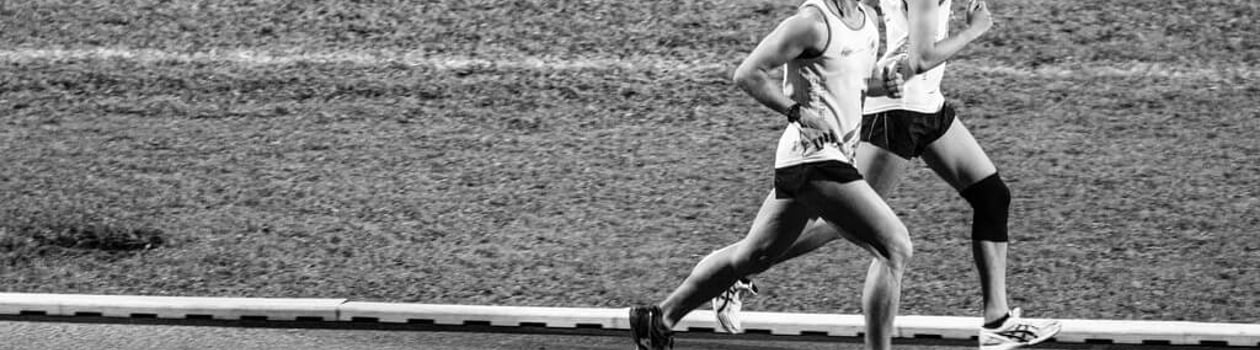
The pavement under your feet, the crisp snap of early morning air, the pounding rhythm as you run the distance one long flowing stride at a time.
Sweat trickling down your neck, the sun on your skin, your lungs burning with joyous exaltation as your heart beats a rapid but steady staccato in time with your running legs.
This is the joy of running, and every year millions of people all over the world find themselves out on the open road experiencing the joy, the thrill, and the pain, of recreational running.
Global Running Day celebrates these intrepid souls and their dedication to health and exercise, we should all join them!
How to Celebrate Global Running Day
Really, the only way to celebrate Global Running Day is by getting out and starting to run. Whether you’ve run before or have never tried in your life, simply put on your running shoes, get out of the house and begin.
Distance doesn’t matter, neither does walking when you need to catch your breath – running is a flexible sport that can be scaled up or down to suit all ages and abilities – the only important thing is that you begin.
If it’s your first run then, don’t overdo it, just start with a slow jog to begin with and take as long as you need to travel the distance. As you start feeling more confident you may want to up your pace or lengthen your run.
Consider Benefits of Running
You don’t need to be a scientist to know that running is good for you. In the most basic sense, running is a great form of exercise, getting your blood pumping and your heart rate up, burning calories and improving your physical health.
But running won’t only help you to lose weight and get fit, it can help your mental health too, by working as a form of meditation in motion, reducing stress and lowering anxiety.
Get Better at Running
If you’ve tried running before and were shocked at how hard you find it then this isn’t an excuse to give up altogether.
Marathon runners weren’t born able to run marathons, and so if you’ve never run before then you need to manage your expectations.
Why not start with some guidance from an App like the Couch to 5K, where you will slowly build up your stamina by walking and running in short intervals until eventually, you can run a full 5 kilometers without stopping.
Learn Tips to Help with Running
- Invest in good footwear
Running puts a lot of pressure on your feet, so be sure to buy a good pair of running trainers that will give you the required arch and ankle support. The right trainers will give you more spring in your step and will stop you from getting nasty blisters. - Always warm-up and cool down
Woah, hold your horses, you can’t just run off into the sunset without doing a proper warm-up. The good news is that warming up is easy, simply start your run with a brisk walk, get your heart rate up and after 5 minutes, off you pop. - Alternate between running and walking
There’s this misconception that to be a runner you can’t stop, but this is just unrealistic. Until you can run longer distances, set yourself targets to run for 60 seconds then walk for 60 seconds, increasing the running time when you need more of a challenge.
Global Running Day Timeline
First Marathon-Inspired Run in Ancient Greece
According to Herodotus and later writers, the Greek messenger Pheidippides is said to have run long distances related to the Battle of Marathon, inspiring later stories that shaped the idea of the modern marathon race.
Running at the First Ancient Olympic Games
The earliest recorded Olympic Games in Olympia include the stadion footrace as the only event, cementing competitive running as a central feature of ancient Greek athletics and religious festivals.
Early Running Clubs Formalize Recreational Running
The Thames Hare and Hounds club was founded near London and became one of the first organized cross‑country and distance running clubs, helping turn running into a structured recreational and social activity.
Marathon Introduced in the Modern Olympic Games
At the first modern Olympics in Athens, organizers created the marathon race in homage to ancient Greek messenger runs, popularizing long‑distance road racing around the world.
Boston Marathon Begins as an Annual Road Race
Inspired by the 1896 Olympic marathon, the Boston Marathon is held for the first time and becomes the world’s oldest annual marathon, anchoring distance running as an enduring urban sporting tradition.
Bill Bowerman’s “Jogging” Sparks a Fitness Running Boom
University of Oregon coach Bill Bowerman co-authored the book “Jogging,” which promotes easy running for health and helps ignite the recreational running and jogging movement in the United States.
Frank Shorter’s Olympic Win Fuels Mass-Participation Running
American runner Frank Shorter won the marathon at the Munich Olympics, widely credited with inspiring a mass running boom in the 1970s and encouraging ordinary people to take up distance running for fitness.
History of Global Running Day
Running describes a particular gait of movement where, in general, both feet leave the ground at some point during the stride.
That’s not to say that running always happens at the same speed, as gaits can change from person to person. Jogging and Sprinting are both considered forms of running but it doesn’t matter what speed you travel, if you’re out running you’re a runner!
Believe it or not, humans couldn’t always run. Admittedly, it was a long time ago when that was the case. When Australopithecus (our first upright ancestor) was evolving almost 4.5 million years ago, we gained the ability to have a long-striding run nearly.
This stride was vital to our existence because as a species, we engaged in what is known as ‘persistence hunting’, where catching our prey often involved days of hunting on foot in order to track and wear the animal down until it could no longer flee, and would collapse from pure exhaustion.
Millions of years on, and a long time since we needed to chase down our prey, we’ve never lost our ability to run and instead we made it a competition.
Global Running Day celebrates the entire history of running, what it meant to our ancestors, and what it still means to us today and is designed to bring together those people who absolutely love running and to encourage those who have yet to give it a try to put on their running trainers and to give it a go.
This day was originally called National Running Day, and it started in 2009. By 2016, the day had gone global and was sponsored by New York Road Runners, with millions of people participating from at least 177 countries.
Global Running Day Facts
Running Helped Shape the Human Body
Anthropologists argue that humans evolved as endurance runners, not just walkers, based on anatomical features such as long legs, large gluteal muscles, elastic tendons, and a highly efficient cooling system through sweating.
These traits, which differ sharply from those of great apes, suggest that early Homo species were adapted for long-distance running that supported persistence hunting and scavenging on the African savanna.
Even Small Amounts of Running Cut Premature Death Risk
A large pooled analysis of more than 230,000 adults from six prospective cohorts found that runners had a 27 percent lower risk of all-cause mortality compared with non-runners, even when they ran as little as once per week and for less than 50 minutes total.
Interestingly, the mortality benefit appeared to plateau at relatively modest running doses, suggesting that consistency may matter more than very high mileage.
Running May Protect the Brain as Well as the Heart
Long-term observational studies in older adults have linked regular aerobic exercise, including running, with better cognitive performance and a reduced risk of dementia.
Researchers think this effect is mediated by improved cerebral blood flow, reduced vascular risk factors, and increased levels of brain-derived neurotrophic factor (BDNF), which supports the growth and survival of neurons.
Modern Marathons Grew Out of 19th-Century “Pedestrianism.”
Before organized road races existed, “pedestrianism” was a popular 19th-century sport in Britain and the United States, where professional walkers and runners competed in multiday distance events in front of paying crowds.
This spectacle culture helped lay the groundwork for amateur distance running and ultimately for the revival of the marathon as an Olympic event in 1896, which later inspired mass-participation city marathons around the world.
Urban Running Has Become a Global Mass Phenomenon
Recreational running has expanded dramatically since the 1970s, with city marathons and road races now attracting hundreds of thousands of entrants each year worldwide.
Major events like the New York City Marathon routinely receive far more applications than available spots, and running participation has spread into regions with little historical tradition of road racing, aided by urbanization, rising middle classes, and global sports marketing.
Running Injuries Are Common but Often Related to Training Errors
Epidemiological studies estimate that between 20 and 80 percent of recreational runners experience some form of running-related injury in a given year, most often to the knee, lower leg, or foot.
Research suggests that sudden increases in training volume or intensity, rather than running itself, are key risk factors, and that gradually progressing mileage and including rest days can significantly reduce overuse injuries.
Comfort, Not Cost, Matters Most in Running Shoes
Biomechanics research has found no consistent evidence that expensive, highly cushioned running shoes prevent injuries better than simpler models.
Instead, studies support the “comfort filter” concept, where the shoe that feels most comfortable to an individual runner tends to promote a more natural stride and lower impact loading, which may help reduce injury risk regardless of price or marketing claims.
Global Running Day FAQs


You may also like
National Recreational Sports and Fitness Day
Elevating well-being and joy in active pursuits — embracing vitality through diverse, invigorating activities that harmonize mind and body.
- Australia
- Canada
- United Kingdom
- and 1 more
Finisher’s Medal Day
Finisher’s Medal Day is a special occasion that celebrates the determination and hard work of individuals who complete races. It shines a spotlight on a small object with a big job: the finisher medal, a keepsake that represents early alarms, sore legs, training plans scribbled on calendars, and the decision...
- Australia
- Canada
- International
- and 2 more
World Run Day
Feel that rush — heart pounding, wind in your face — as you conquer mile after mile, pushing your limits with each stride.

National Rocky Road Day
Celebrate National Rocky Road Day by savoring chocolate, marshmallow, and nut-filled treats, from classic ice cream to homemade desserts and smoothies.
- Canada
- United Kingdom
- United States
National days and holidays on June 3

Vivid Sydney
Vivid Sydney is a dazzling celebration that transforms the city into a vibrant playground of lights, music, and creativity. For weeks, iconic landmarks and urban spaces glow with stunning light installations and 3D projections, captivating both locals and tourists. This festival draws millions of visitors each year, offering an enchanting...
- Australia

World Cider Day
Celebrate World Cider Day by exploring crisp apple ciders, learning their rich history, visiting orchards and cideries, and toasting this beloved drink.
- Australia
- Canada
- France
- and 5 more
Mabo Day
Discover Mabo Day, honoring Eddie Koiki Mabo, Indigenous land rights, and the fight against terra nullius with storytelling, culture, and community action.
- Australia

National Repeat Day
Celebrate National Repeat Day by replaying favorite moments, revisiting special places, and finding joy in doing beloved experiences all over again.
- United States
Seize Every Day
Join free for personalised recommendations, email reminders and exclusive guides. Never miss a day.