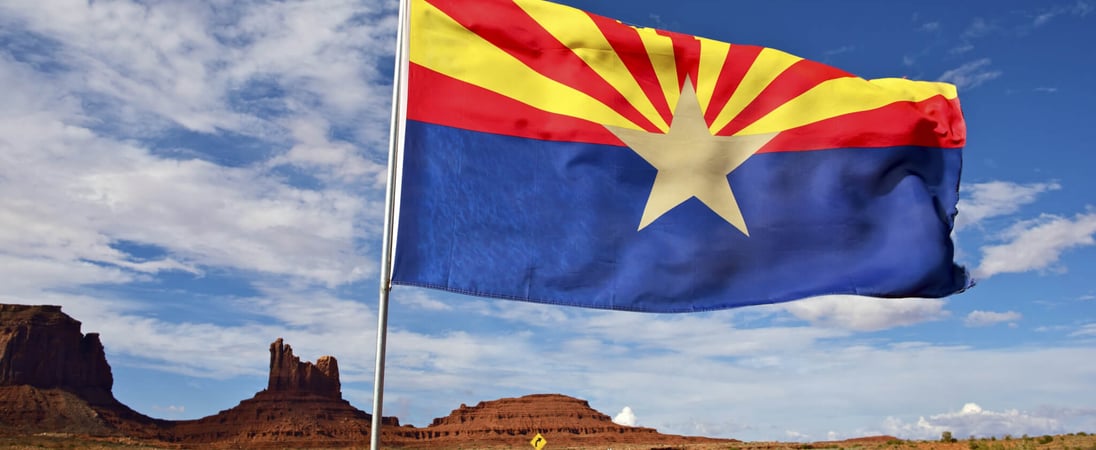
Statehood Day in Arizona
Statehood Day in Arizona is a lively celebration filled with pride and joy. Arizonans come together to honor their state’s official inclusion in the United States.
It’s a day that brings everyone together, highlighting Arizona’s unique culture and history. This festive occasion showcases the spirit of the Grand Canyon State, with communities taking pride in their shared heritage.
How to Celebrate Arizona Statehood Day
Hit the Trails
Strap on those hiking boots and hit the Arizona trails. From the Grand Canyon to the Arizona Trail, there’s no shortage of breathtaking scenery.
Trek through deserts, forests, and mountains, celebrating the diverse landscapes of this beautiful state.
Explore State History
Head to a local museum or historical site. Places like the Arizona Historical Society and the state capitol offer rich insights into Arizona’s unique journey to statehood and its cultural heritage.
Feast on Local Flavors
Celebrate with a feast of Arizona’s local cuisine. Try dishes like Sonoran hot dogs or Navajo tacos.
Visit a local farmers’ market for fresh, regional ingredients and support local producers while indulging in delicious flavors.
Attend a Local Event
Join in the fun at local events and parades. Many towns and cities host celebrations featuring music, crafts, and food. These events bring communities together in joyous celebration of Arizona’s statehood.
Starry Night Camping
Pack up the camping gear and head out for a night under the stars. Arizona’s clear skies are perfect for stargazing. Experience the natural beauty and tranquility of the desert night.
Take a Scenic Drive
Hop in the car and take a scenic drive through Arizona’s picturesque landscapes. Routes like the Apache Trail and Route 66 offer stunning views and charming stops. Discover hidden gems and enjoy the open road.
Support Local Artists
Visit galleries and craft fairs to support local artists. Arizona boasts a vibrant arts scene. From pottery to paintings, find unique pieces that capture the spirit of the state.
Celebrate creativity and take home a piece of Arizona.
Host a Statehood Day Party
Throw a festive Statehood Day party. Decorate with Arizona-themed items, serve local food, and play regional music. Invite friends and family to join in the celebration and share what they love about Arizona.
Statehood Day in Arizona Timeline
c. 1450–1500
Rise of Major Prehistoric Cultures in the Region
Complex societies such as the Hohokam, Ancestral Puebloans (Anasazi), and Mogollon flourished in the area that would become Arizona, building irrigation canals, cliff dwellings, and trade networks.[1]
1540
Coronado Expedition Enters Present-Day Arizona
Spanish explorer Francisco Vázquez de Coronado leads an expedition through the region in search of the fabled Seven Cities of Cíbola, marking the first well-documented European exploration of Arizona lands.
1821
Arizona Becomes Part of Independent Mexico
With Mexico’s independence from Spain, the Arizona region transitions from Spanish colonial rule to Mexican governance as part of Alta California and later the northern Mexican frontier.[2]
February 2, 1848
Treaty of Guadalupe Hidalgo Cedes Northern Arizona to the U.S.
The treaty ending the Mexican–American War transfers much of northern Arizona to the United States, laying the groundwork for future territorial organization.[3]
December 30, 1853
Gadsden Purchase Completes Arizona’s Southern Boundary
The United States acquired additional land from Mexico in the Gadsden Purchase, adding southern Arizona and fixing the modern U.S.–Mexico border in the region.
February 24, 1863
Arizona Territory Created by the Organic Act
President Abraham Lincoln signed the Arizona Organic Act, separating the western half of the New Mexico Territory to form the Arizona Territory with boundaries that largely match the modern state.[4]
February 14, 1912
Arizona Admitted as the 48th State
After a hard-fought campaign and revision of its constitution to satisfy President William Howard Taft, Arizona is formally admitted to the Union as the forty-eighth state.[5]
History of Statehood Day in Arizona
Arizona Statehood Day celebrates the moment Arizona officially became the 48th state of the United States. This significant event happened on February 14, 1912. President William Taft signed the statehood bill, marking the end of a long journey for Arizona.
The push for statehood started years earlier. Initially, Arizona was part of the New Mexico Territory. In 1863, the western half was designated as the Arizona Territory.
Over time, Arizonans worked hard to gain recognition and achieve statehood. They faced many challenges, including debates over combining Arizona and New Mexico into one state, which they strongly opposed. Their efforts finally paid off when Arizona was admitted as its own state.
Statehood Day in Arizona was first celebrated soon after the official declaration. The festivities marked a new chapter for the residents, highlighting their pride and joy.
Celebrations have continued every year, with notable milestones such as the centennial in 2012. This day is not just a historical marker but also a time for Arizonans to celebrate their unique culture and contributions to the nation.
The celebration recognizes Arizona’s rich natural resources, diverse landscapes, and vibrant cultures. It marks the state’s long journey to becoming the 48th state in the Union.
This day also emphasizes the importance of Arizona’s contributions to the nation, from its stunning national parks to its significant historical sites. People celebrate by appreciating the state’s beauty and remembering its unique path to statehood.
Statehood Day is more than just a historical marker. It promotes Arizona’s cultural and economic achievements, drawing attention to its tourism, arts, and business sectors.
The festivities encourage both residents and visitors to explore and appreciate what Arizona has to offer. It’s a day of unity, where the past meets the present, and everyone looks forward to a bright future for the state.
Facts about Statehood Day in Arizona
Statehood Day in Arizona marks the moment the territory officially became the 48th state of the United States. Observed each year in February, it reflects a long journey shaped by desert life, Indigenous ingenuity, railroads, mining, and a remarkably progressive constitution. The day offers a chance to look beyond the date itself and explore how Arizona’s identity was formed.
-
Desert Democracy: Arizona’s Progressive Constitution
When Arizona finally drafted a state constitution, voters approved one of the most progressive charters in the nation, including direct election of U.S. senators, the initiative and referendum, and mechanisms for recall of elected officials.
President William Howard Taft initially vetoed Arizona’s bid for statehood in 1911 because the constitution allowed recall of judges, forcing Arizonans to remove that provision, only to restore judicial recall by popular vote soon after admission.
-
Railroads and the Making of a State
By the time Arizona joined the Union, it was already crisscrossed by rail. The Southern Pacific reached Tucson in 1880, and a second transcontinental line was completed across northern Arizona by 1883; by 1912, nearly 1,700 miles of track laced the territory.
These lines transformed remote desert settlements into market towns, moving copper, cattle, and cotton out and drawing migrants and investment in, helping convince Congress that Arizona was economically viable as a state.
-
From Frontier Camps to Copper Giant
Arizona’s copper industry evolved from scattered frontier diggings into an industrial powerhouse before statehood.
Major deposits discovered near Bisbee and Jerome in the late 19th century led to large-scale underground mines and smelters, and by the early 1900s, Arizona consistently ranked among the top U.S. copper producers. This mineral wealth earned it the nickname “Copper State” and made copper one of the “Five Cs” (copper, cattle, cotton, citrus, climate) that underpinned its early state economy.
-
Irrigation Empires in the Desert
Long before modern dams, Indigenous farmers such as the Hohokam engineered extensive canal systems along the Salt and Gila rivers, supporting agriculture in the Sonoran Desert for centuries.
In the early 20th century, settlers revived and expanded this irrigation tradition under federal reclamation policies, forming organizations like the Salt River Valley Water Users’ Association (1903) to finance dams and canals that would later support Phoenix’s explosive growth as a state capital.
-
A Population Boom on the Eve of Statehood
Arizona remained sparsely populated through much of the 19th century, but its numbers surged as railroads, ranching, and mining expanded.
Between 1870 and 1910, the territory’s population jumped from under 10,000 to just over 204,000 residents, with white settlers arriving in especially large numbers to work in cattle, copper, and railroad construction.
This rapid demographic shift from a predominantly Indigenous region to a predominantly Anglo territory was a key argument used to show Congress that Arizona was ready for full statehood.
-
Women’s Voting Rights Arrive Months After Statehood
Although Arizona entered the Union without women’s suffrage in its constitution, that changed almost immediately.
In November 1912, just months after admission, male voters approved a statewide initiative granting women full voting rights, making Arizona one of the earliest U.S. states to enfranchise women at the state level.
This swift reform reflected the same populist, Progressive-era currents that had shaped the constitution and direct democracy provisions.
Hispanic Migration and a Changing Cultural Landscape
Arizona’s modern Hispanic population largely traces to migration waves that accelerated after 1900, rather than the small number of Spanish and Mexican settlers present during the earliest U.S. territorial years. The Library of Congress notes that most people of Hispanic descent living in Arizona today immigrated from Mexico in the 20th century, especially as railroad jobs, mining work, and irrigated agriculture expanded—transforming the state’s cultural and linguistic landscape well after formal statehood.
Statehood Day in Arizona FAQs
How did Arizona’s geography shape its path from territory to state?
Arizona’s arid climate, rugged mountains, and remote deserts made it costly to govern and slow to develop, which contributed to federal hesitation about granting statehood.
At the same time, its rich mineral deposits, ranching potential, and strategic location on rail and military routes increased national interest in formalizing control and investing in infrastructure, gradually strengthening the case for admission as a state. [1]
Why was there so much debate over combining Arizona and New Mexico into one state?
Proposals in Congress to admit Arizona and New Mexico as a single state were driven by political calculations, including concerns about the balance of power between parties and regions.
Many residents in Arizona opposed joint statehood because they feared their interests would be overshadowed by the more populous New Mexico Territory and wanted to preserve their distinct political and cultural identity under a separate constitution and government. [2]
What role did Arizona’s constitution play in delaying its admission to the Union?
Arizona’s 1910 constitution included progressive provisions such as the recall of judges, which President William Howard Taft considered a threat to judicial independence.
Congress required the recall clause to be removed before statehood was approved; Arizona complied to secure admission, then voters restored the recall provision after becoming a state, illustrating an early tension between federal expectations and local political priorities. [3]
How did Arizona’s population and economy change after statehood?
When Arizona became a state in 1912, it had roughly 200,000 residents and an economy dominated by mining, ranching, and agriculture.
Over the 20th century, large-scale irrigation projects, air conditioning, and improved transportation spurred rapid population growth and urbanization, gradually diversifying the economy into services, tourism, and technology while mining and agriculture remained important symbols of the state’s identity. [4]
Why is copper such a prominent symbol in Arizona’s state identity?
Copper appears at the center of Arizona’s state flag because large copper deposits made mining a foundational industry during the territorial and early statehood periods.
By the early 20th century, Arizona was one of the leading copper-producing regions in the United States, and the metal became closely associated with the state’s economic development and its image as part of the resource-rich American West. [5]
How does Arizona’s admission as the 48th state fit into the broader history of U.S. expansion?
Arizona’s admission in 1912 completed the map of the contiguous United States, coming shortly after neighboring New Mexico became the 47th state.
Its relatively late statehood reflects the long process of U.S. expansion into former Mexican territory, the challenges of settling and governing arid lands, and national debates over how many western states to create and how they would affect political power in Congress. [6]
Did Arizona’s early leaders use symbols like the flag and seal to communicate a particular vision for the new state?
Arizona’s leaders adopted a state flag and seal that foreground mining, agriculture, ranching, and water control to project an image of economic promise and stability.
The copper star and sunburst on the flag, along with the miner, grazing livestock, irrigated fields, and dam on the seal, were intended to show that the new state could harness its natural resources and manage its harsh environment, reinforcing arguments that it was ready for full membership in the Union. [7]
How did Arizona’s statehood affect its economy?
Statehood spurred economic growth in Arizona. It attracted investments in mining, agriculture, and infrastructure.
The establishment of military bases during World War II further boosted the economy, leading to urbanization and development.
Were there any unique statehood celebrations in 1912?
In 1912, Arizonans celebrated statehood with parades, speeches, and community gatherings.
Phoenix hosted a grand parade featuring floats representing various industries. These festivities reflected the pride and optimism of the new state.
How has Arizona’s statehood influenced its cultural identity?
Statehood allowed Arizona to develop a distinct cultural identity. It blended Native American, Hispanic, and Anglo influences.
This fusion is evident in the state’s art, cuisine, and festivals, creating a rich and diverse cultural tapestry.
Also on ...
View all holidays
National Organ Donor Day
The selfless act of giving the gift of life can bring hope and healing to those in need. It's a remarkable legacy that transcends time and spreads compassion.



National Cream-Filled Chocolates Day
Indulge in the luxurious taste of smooth and rich chocolate with a delightful surprise waiting for you inside every bite.