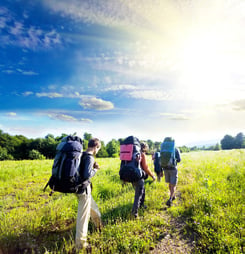
There’s a past-time that brings adventure no matter where you do it, and that past-time is hiking. Each year millions of people take to the great outdoors, hiking paths new and old in search of themselves and the love of nature.
National Trails Day celebrates these intrepid souls and all the unexplored areas of the world where nature still reigns supreme. Hiking is good for the soul, and for your health, getting into the great outdoors has been proven to aid in non-clinical depression and an overall sense of well-being.
How to Celebrate National Trails Day
There are, of course, plenty of ways to celebrate Trails day, so try out a few of these ideas to get started:
Get Out on the Trails
The most obvious is to get out there on the trails and start hiking!With thousands of miles in the US alone, there are new places to see and new sites to discover for everyone.
Volunteer for National Trails Day
If you are already an enthusiast who wants to help maintain the trails we have in the world, you can either volunteer with one of many organizations that help to maintain them, like the Appalachian Trail Conservatory.
Take Your Favorite Pup
Another fun way to celebrate the day is to do so with your dog. There are now thousands of miles of trails in practically every locality, and the vast majority of them admit your furry friend. Spending a day on the trails with your pooch can be an excellent way for both of you to bond and get exercise.
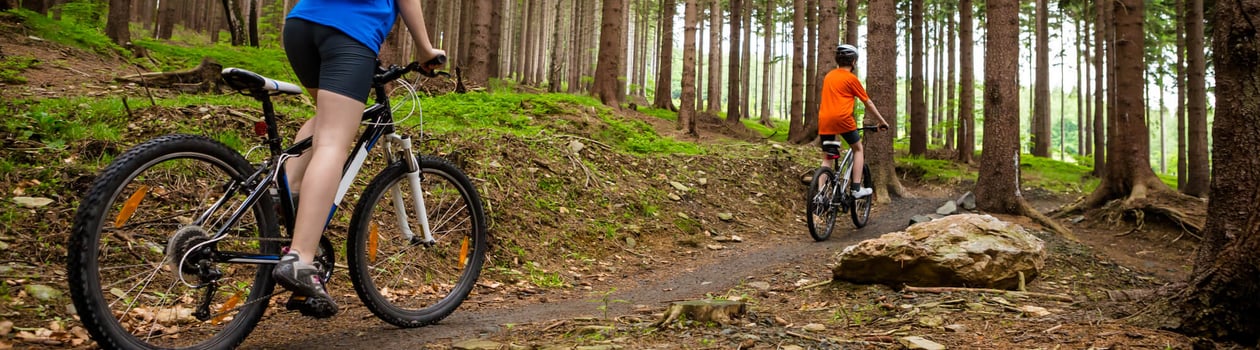
If hiking isn’t your thing, you can ride the trails instead on a decent off-road bicycle. Dogs love running alongside pedal-powered owners, and it can provide them with excellent exercise.
Share with Others
Are you more of a social media fiend? If so, then you can highlight the benefits that trail hiking brings to society on your social media account. You could also live-stream your adventures, getting other people interested in all the fun to be had out in nature.
Host a Trail Care Party
Finally, you might want to take part in an impromptu trail maintenance party. These are where trail enthusiasts gather together to maintain trails. Remember, trails don’t last forever. People like you must join with teams of volunteers to help keep them in good condition for enthusiasts to use in the future.
So get your bags packed and head on out into the great beyond on National Trails Day, who knows what beauty you’ll discover? Everyone deserves a little inner peace, and you can discover yours on the trails!
National Trails Day Timeline
Silk Road Emerges as a Major Trade Route
A network of caravan trails later known as the Silk Road develops between China and the Mediterranean, showing how long-distance land routes can link cultures, commerce, and ideas across vast landscapes.
Inca Road System Reaches Its Peak
The Inca Empire completed an extensive network of stone-paved trails and rope bridges, including what is now called the Inca Trail, to move armies, goods, and messages efficiently through the Andes.
First Known Recreational Hiking Club Founded
The world’s first recorded hiking club, the British Alpine Club, is founded in London, helping to shift mountain and trail travel from purely utilitarian purposes toward organized recreation and exploration.
Appalachian Trail Concept Proposed
Forester Benton MacKaye publishes “An Appalachian Trail: A Project in Regional Planning,” proposing a continuous footpath along the Appalachian Mountains, which becomes a model for modern long-distance hiking trails.
Appalachian Trail Is First Hiked End to End
Volunteers complete the continuous route of the Appalachian Trail from Georgia to Maine, demonstrating how citizen stewardship can create and maintain a long-distance recreational trail system.
National Trails System Act Signed Into Law
President Lyndon B. Johnson signed the National Trails System Act, formally creating a framework for national scenic, historic, and recreational trails and recognizing trails as important public resources.
Railbanking Spurs Rails-to-Trails Movement
Congress amends the National Trails System Act to allow “railbanking,” letting disused railroad corridors be preserved and converted into multiuse trails, which accelerates the growth of community trail networks.
History Of National Trails Day
This celebration was organized by americanhiking.org with the intent of bringing together all muscle-powered trail sports enthusiasts and raising awareness of them to bring in even more.Thousands of events are hosted all over the country attracting new hikers and old alike and helping to organize people to take care of the trails so that they can remain open for everyone to enjoy.
There are more than 200,000 miles of trails in America alone, and it takes the combined efforts of enthusiasts everywhere to keep them active and clear for people to enjoy.
Getting out into the wilderness is a great way to find new adventures, with beautiful natural discoveries being made by those who get out there.Whether you’re hiking, biking, or horseback riding, National Trails Day is the perfect opportunity to get back out onto the trails.
Trails can vary in range from under a mile to the 2,200-mile-long trail that is the Appalachian National Scenic Trail, known among enthusiasts as merely A.T. 31 trail clubs work to maintain this trail, along with multiple partnerships and organizations including the National Park Service and the United States Forest Service.
The history of National Trails Day stretches back more than fifty years. Historically, there were no government-mandated trails.
Starting in October 1968, however, President Lyndon B. Johnson signed the Trails Act into law, which established a network of trails that people could use for tourism and recreation. Over the years, the system developed, and local authorities added new sections, boosting outdoor pursuits.
Nearly a decade later, in 1976, the Hiking Society became an official organization and began hosting board meetings.
In the following years, there were a series of additional initiatives designed to expand the number of trails available to people, encouraging more of them to get out and explore them.
By 1987, a Presidential task force concluded that there was still a need for more government commitment to expand the network of trails to safeguard the environment. The federal authorities, the report stated, needed to make more funds available so that local officials could develop the pathways and protect their natural resources.
The issue of trails soon developed into something of a political hot potato. By 1990, the Trails Agenda Project borrowing from the President’s Commission on Americans Outdoors recommended that the country embark on a “trails for all project.” There needed to be outdoor recreational options for everyone, they concluded.
In 1991, the Hiking Society met to discuss how to improve the trails’ network and what they could do. They came up with the idea of developing a scheme to encourage volunteers to join the trail maintenance network and highlight the issue of trails in the public consciousness.
Two years later, in 1993, the society launched the first National Trails Day, and it has been running ever since. Thanks to the incredible enjoyment that trails provide people, they are worth celebrating. More than 157,000 people took part in the 20th anniversary trails day celebration.
National Trails Day Facts
Ancient Footpaths Shaped Trade and Empires
Long-distance trails have been central to civilization, functioning as arteries for trade, diplomacy, and cultural exchange.
The Silk Road, actually a network of caravan routes more than 4,000 miles long, enabled the movement of silk, spices, religions, and technologies between East Asia, the Middle East, and Europe for over a millennium, while Indigenous trade and communication networks such as the Great Inca Road System in South America linked highland and coastal communities across nearly 25,000 miles of engineered routes.
The U.S. National Trails System Protects Far More Than Footpaths
The 1968 National Trails System Act created a framework not just for scenic hiking routes but for preserving historic corridors that trace the nation’s story.
As of the 2020s, the system includes more than 88,000 miles of national scenic, Historic, and recreational trails, ranging from the Appalachian and Pacific Crest Trails to routes like the Selma to Montgomery National Historic Trail that follow pivotal civil rights marches.
Rail-Trails Turn Defunct Railroads into Green Corridors
Across the United States, thousands of miles of abandoned railroad corridors have been transformed into multiuse trails, creating long, flat routes ideal for walking and cycling.
The Rails-to-Trails Conservancy reports that more than 25,000 miles of rail-trails are now open, repurposing industrial infrastructure into greenways that connect neighborhoods, conserve linear wildlife habitat, and provide safe, car-free transportation routes.
Hiking in Green Spaces Can Significantly Reduce Rumination
Spending time on natural trails can have measurable mental health effects beyond simple relaxation.
In a controlled study, people who walked for 90 minutes in a natural setting showed reduced activity in a brain region linked to rumination and depression compared with those who walked along a busy urban street, suggesting that exposure to green environments may help interrupt negative thought patterns.
Trail Networks Support Urban Public Health
Even in cities, trails and greenway systems function as important public health infrastructure.
Research on urban greenways has found that people who live near connected trail networks are more likely to meet physical activity guidelines, and that access to these corridors is associated with lower rates of obesity and cardiovascular risk, especially when trails are linked to parks and everyday destinations.
Pilgrimage Trails Blend Spirituality, Culture, and Tourism
Around the world, historic pilgrimage routes are now used both for religious devotion and secular hiking.
The Camino de Santiago network in Spain and France, for example, drew more than 400,000 registered pilgrims in 2022, many walking weeks at a time, and has been recognized by UNESCO for preserving medieval routes, village economies, and traditions tied to hospitality and shared wayfinding symbols like the scallop shell.
Trails Can Serve as Wildlife Highways and Barriers
Trails influence animal behavior in complex ways, sometimes fragmenting habitat and sometimes creating movement corridors.
Studies have shown that some mammals, such as coyotes and foxes, may use lightly traveled trails as efficient routes through dense habitat at night, while other species, including certain ground-nesting birds, avoid areas close to heavily used trails, which is why many land managers design buffers and seasonal closures to balance recreation with conservation.