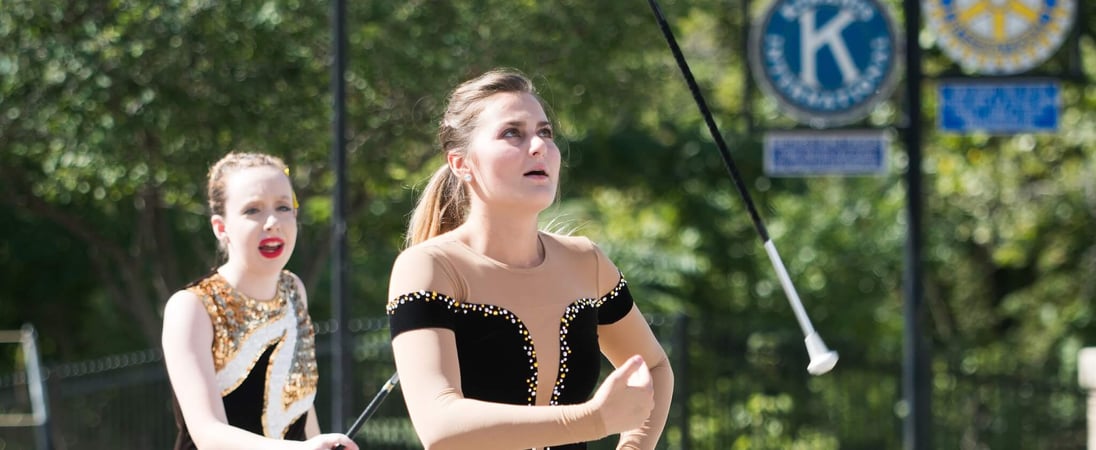
World Baton Twirling Day
Experience the mesmerizing artistry of rhythmic performance, where precision and flair intertwine in captivating displays of movement.
To raise awareness for and draw attention to the artistic sport of baton twirling, World Baton Twirling Day invites people to notice the skill, training, and creativity behind those spinning batons.
It is a chance for longtime twirlers to show what they love, for newcomers to try something new, and for everyone else to learn that baton twirling is far more than a parade add-on. It is a sport with technique, athleticism, performance polish, and a surprisingly rich community.
World Baton Twirling Day Timeline
Late 19th – Early 20th Century
From Military Baton to Parade Majorette
Baton twirling evolved from military signal batons and maces used by drum majors in European marching bands, gradually becoming a featured visual element in civilian parades and festivals.
1900s–1920s
Rise of the Majorette Tradition in the United States
American marching bands begin adding female majorettes who perform choreographed routines with batons, blending elements of dance, gymnastics, and military drill to entertain parade crowds.
1930s
Modern Baton Design and Technique Take Shape
Manufacturers in the United States refine the modern steel shaft baton with rubber tips, making it easier to toss and catch, while performers develop more intricate spins, flips, and releases.
1940s–1950s
Baton Twirling Becomes a Popular School and Community Activity
After World War II, baton twirling gained momentum in American high schools and colleges, with majorette squads and halftime shows turning the twirling routine into a staple of local sports culture.
1958
Founding of the National Baton Twirling Association in the U.S.
The National Baton Twirling Association (NBTA) is established to organize competitions, certify judges, and promote baton twirling as a disciplined sport that combines artistry and athleticism.
1960s–1970s
International Competitive Baton Twirling Expands
National federations in Europe, North America, and Asia begin holding structured championships, codifying compulsory moves, time limits, and scoring systems that transform baton twirling into a global sport.
1980
First World Baton Twirling Championships
The inaugural World Baton Twirling Championships take place in Seattle, bringing together top athletes from multiple countries and marking a new era of international standardization and visibility for the sport.
History of World Baton Twirling Day
The background of the World Baton Twirling Championships can be traced back to 1980, when the inaugural event was held in Seattle, Washington. This was just three years after the official organization, the World Baton Twirling Federation (WBTF), was founded to encourage, develop, and bring standardization to the sport of baton twirling.
That push for standardization matters in a sport where progress can be hard to measure without shared language. Baton twirling blends dance, rhythmic movement, and object manipulation, which means that “good” can look like a lot of things.
One routine might focus on clean, fast finger twirls and crisp angles. Another might lean into big aerial tosses and acrobatic elements. Without clear categories and judging expectations, comparing performances would be like comparing a figure skating program to a gymnastics floor routine and trying to score them with the same checklist.
Organizations such as the WBTF helped define competitive events, skill levels, judging criteria, and safety expectations so athletes could train with clearer goals and compete on a more level field.
In recent years, the WBTF combined with the World Federation of National Baton Twirling Associations (WFNBTA) to create the International Baton Twirling Federation (IBTF), which has hopes to standardize this sport even more so that it might eventually be on a path toward the Olympics.
That kind of international coordination is also about making the sport easier to access and understand. Baton twirling exists in many forms: in marching bands, in majorette traditions, in standalone competitive clubs, and in performance teams that mix baton with dance or color guard-style staging.
A shared federation gives these communities a way to connect while still leaving room for local styles. Standardization does not mean turning every routine into the same routine.
It typically means agreeing on definitions and boundaries, such as what counts as a legal catch, how difficulty is credited, how artistry is assessed, and how age or skill divisions are structured. When athletes travel to compete, they can expect familiar event formats and consistent judging principles, which raises confidence in results and encourages broader participation.
World Baton Twirling Day is one of the efforts of these organizations to shine a light on the unique opportunities of this creative and artistic sport that combines grace and beauty with athletic strength, flexibility, and acrobatics. So grab a baton and get to twirling because it’s time for World Baton Twirling Day!
The day also functions as a friendly reminder that baton twirling is a training-based discipline. Behind the sparkle and showmanship are hours of repetition: learning to keep a baton’s spin tight to the thumb and index finger, drilling wrist turns so they stay clean at speed, and practicing tosses until the body learns exactly where the baton will land.
Twirlers build coordination across both sides of the body, develop timing that matches music phrasing, and improve spatial awareness so a high toss can be thrown and caught confidently without wandering across a performance floor.
Many routines require stamina too, especially those that layer travel steps, dance breaks, and multiple toss sequences. When the sport is seen only in quick glimpses, it can be easy to underestimate. World Baton Twirling Day makes that hidden work visible.
Baton Twirling Blends Military Precision, High-Speed Skill, and Modern Sports Engineering
Baton twirling may look graceful and playful, but behind the performance lies a fascinating mix of history, athletic skill, and carefully designed equipment.
The activity evolved from a blend of military drill traditions, cultural dance practices, and parade performances before developing into a competitive sport with its own techniques and standards.
Today, baton twirling combines speed, coordination, and engineering, showing how an art form rooted in tradition has transformed into a demanding modern discipline.
-
Early Baton Twirling Grew Out of Military and Folk Traditions
Modern baton twirling developed in the early 20th century from a mix of European rifle drill, Asian staff and stick-dance traditions, and American drum-major routines.
Historical accounts describe how Italian and Swiss drum majors once spun and tossed ornate maces, while in Japan and Southeast Asia, performers used sticks in ceremonial and festival dances.
As marching bands became central to American parades and football games in the 1930s and 1940s, these influences gradually merged into the codified sport of baton twirling, with standardized equipment and technique replacing improvised sticks and maces.
-
Elite Baton Routines Can Spin Faster Than a Household Fan
Competitive baton twirlers are trained to generate very high rotational speeds when they release a baton.
Sports science studies that analyze video of elite routines have measured tosses where the baton rotates more than 15 times per second, a rate comparable to the lower settings on some household fans.
To maintain control at these speeds, athletes must use precise hand placement, consistent release angles, and refined kinesthetic awareness so they can predict exactly where and when to catch the baton without watching it continuously.
-
Modern Competition Batons Are Precisely Engineered Tools
Unlike the simple, often wooden batons used in early parades, modern competitive batons are usually made of hollow steel shafts with rubberized ball and tip ends designed to balance perfectly at the center.
Manufacturers list lengths in one‑inch increments to match the athlete’s arm span, and even small variations in weight distribution can affect how the baton behaves in high aerials and rolls.
This engineering focus allows athletes to perform complex tricks, such as multiple spins during a single toss, with a level of predictability that would be impossible using improvised sticks or batons from earlier decades.
-
Baton Twirling Is Classified as a High-Skill, Aesthetic Sport
Sports scientists group baton twirling with activities like rhythmic gymnastics and figure skating as “aesthetic” or “artistic” sports, where athletes are judged on both technical difficulty and artistic impression.
Research on judging systems describes how routines are scored for precision, speed, body difficulty, originality, and musical interpretation, often using detailed code-of-points documents similar to those used in Olympic gymnastics.
This dual focus means athletes must train not only for strength, flexibility, and coordination, but also for choreography, musicality, and stage presence.
-
Injuries Often Resemble Those Seen in Gymnastics and Overhead Sports
Clinical surveys of baton twirlers show that overuse and acute injuries are common, with patterns resembling those in gymnastics, dance, and overhead sports such as tennis.
Frequent problems include ankle sprains from landings, lower‑back pain from repeated hyperextension, and shoulder and wrist issues from sustained spinning and catching motions.
One study of collegiate twirlers found that a majority reported at least one significant injury during their careers, highlighting the physical demands behind what many spectators initially perceive as purely a performance art.
-
Baton Twirling Has Established Competitive Structures on Multiple Continents
While it remains a niche sport in many places, baton twirling has grown into a structured international activity with organized federations and world championships.
The International Baton Twirling Federation and its predecessor bodies report member organizations from more than 20 countries across North America, South America, Europe, Asia, and Oceania, including Canada, Japan, France, Italy, Australia, and Brazil.
This federation system provides shared rules, training standards, and pathways for athletes to progress from local clubs to national and international competition.
-
Japanese Baton Twirling Helped Popularize the Sport in Asia
Japan is widely recognized as one of the strongest countries in baton twirling, with a history of highly disciplined school and university programs.
The Japan Baton Twirling Association, established in the 1960s, helped systematize instruction in schools and clubs, and Japanese athletes became consistent medalists at international championships.
Their success influenced neighboring countries to start their own federations and adopt Japanese coaching methods, which emphasized technical precision, synchronized group work, and long-term athlete development from childhood.
How to Celebrate World Baton Twirling Day
Consider some of these fun and interesting activities to get started with participating in World Baton Twirling Day:
Twirl a Baton
Whether you are picking it up again after it sat in the closet for a while or practicing a new routine with your team, World Baton Twirling Day is the perfect excuse to give the baton another spin. With spring in the air, practicing outdoors can feel refreshing. If the weather does not cooperate, a gymnasium or open indoor space works just as well for practicing spins, tosses, and catches. Baton twirling provides both exercise and enjoyment.
For those feeling unsure about that first spin, it helps to approach baton twirling the same way as any skill: begin with the basics and progress gradually. A standard baton usually features a metal rod with rubber tips, designed to stay balanced in the hand. Beginners can focus on simple movements that build control without needing a large area.
A few beginner-friendly moves that many twirlers start with include:
- Horizontal spins: Grip the baton near its center and practice rotating it level. Focus on smooth, steady motion rather than speed. This helps the hands guide the baton naturally.
- Figure-eight pathways: Moving the baton in a sideways “8” pattern builds coordination and rhythm, especially when paired with easy steps.
- Thumb rolls: Rolling the baton across the thumb is a classic foundational move. When done smoothly it looks effortless, while also strengthening finger control and a relaxed grip.
- Two-hand toss and catch: Toss the baton gently upward and catch it with both hands. This builds confidence in tracking the baton with your eyes while keeping your body steady.
Setting up a safe practice space makes the experience more enjoyable. Twirling in an open area with plenty of ceiling height and no fragile objects nearby helps avoid accidental damage. Comfortable athletic shoes and a non-slippery surface improve balance. When practicing tosses, start low. A toss does not need to go very high to look impressive when the catch is smooth and confident.
Even experienced twirlers can use World Baton Twirling Day as a reminder to return to the basics. Technique can shift over time, especially with finger spins and rolls. A short review session can sharpen control, reduce drops, and make advanced tricks appear cleaner. Coaches often emphasize that difficult skills shine only when the fundamentals stay solid.
Those who do not yet own a baton can treat the day as an invitation to borrow one, join a local class, or attend an open practice session. Baton twirling is commonly learned through clubs, schools, or community recreation programs. Trying it once may be enough to discover a new appreciation for the combination of music, movement, and carefully timed risk.
Learn the World Baton Twirling Day Routine
Each year, to celebrate this special day, the International Baton Twirling Federation shares an official routine that anyone can learn online through YouTube. This tradition helps people connect with the worldwide baton twirling community, bringing together participants who share the same enthusiasm for the sport.
Besides watching the routine video, the IBTF also provides free online clinics for anyone interested in learning the routine directly from professionals. Checking the federation’s social media pages can help participants find information about these learning opportunities.
Learning a shared routine offers more than just a fun challenge. It also demonstrates how baton twirling communicates beyond language barriers. The same counts, body positions, and catch points can be practiced anywhere in the world. This shared structure allows twirlers to feel connected to a global community, even when they normally train with a small group.
To make learning a routine easier, many twirlers break the process into stages:
- Counts first, baton second: Practice the footwork and timing without holding a baton. This helps the body understand the rhythm before adding complexity.
- Baton pathways: Practice the baton movements separately while standing still. This improves accuracy and consistency, especially for rolls and flourishes.
- Combine slowly: Put the footwork and baton together at a slower tempo. Clean movements at half speed are more valuable than rushed movements at full speed.
- Add performance quality: After the routine feels comfortable, focus on expression, posture, and clarity. Baton twirling is appreciated not only for difficulty but also for how clearly the performer presents the routine.
Clinics can also provide helpful corrections that improve performance. Coaches may suggest relaxing the elbows to avoid stiff arms, focusing on the baton during a toss, or using finger control instead of the entire forearm for certain spins. Small adjustments like these can transform a routine from acceptable to polished.
Beginners can still participate in the official routine by adjusting difficult elements. A high toss can become a low toss, a multi-roll sequence can become a single roll, or traveling steps can be performed in place. The aim is participation, not perfection. Often the most rewarding moment comes from realizing that twirlers of all levels can perform the same routine in their own style.
Learning the routine together can also become its own celebration. Practicing with teammates, family members, or community groups creates a friendly atmosphere where dropped batons become moments of laughter and small successes feel meaningful. Baton twirling has always included a social aspect, and World Baton Twirling Day highlights that shared spirit.
Watch a Movie About Baton Twirling
Another fun way to celebrate World Baton Twirling Day is by watching a movie related to the sport. A made-for-TV film from 1981 focuses on baton twirling and features Lisa Whelchel, known for her role in the 1980s series The Facts of Life, along with Erin Moran, who played Joanie on Happy Days from 1974 to 1984. Tracking down the movie itself might be part of the adventure, but even searching for clips online can offer an entertaining tribute to baton twirling.
Watching a baton twirling film also provides an interesting look at how the activity has been portrayed over time. Earlier portrayals often highlighted the small-town pageant atmosphere, presenting baton twirling mainly as light entertainment.
While that image has its charm, it does not always reflect the modern reality of the sport. Today, baton twirling includes demanding training, detailed choreography, and competitive pathways that require serious athletic ability.
Turning the movie into a more interactive experience can make it even more enjoyable. Watching with a “twirler’s perspective” helps viewers notice details that might otherwise go unnoticed:
- Technique moments: Do the tosses look controlled? Are the catches secure? Does the baton stay aligned, or does it wobble?
- Performance choices: How does the performer use posture, expression, and musical timing? Baton twirling relies on presentation as much as skill.
- Costuming and staging: Outfits such as leotards, boots, gloves, and accessories all play roles in different twirling traditions. It can be fun to notice what feels timeless and what reflects its era.
- Training themes: Many sports movies include practice scenes and coaching advice. These moments often highlight repetition, persistence, and confidence building.
For twirlers, watching a film can also remind them why the activity remains so rewarding. There is a special satisfaction in mastering a move that once seemed impossible.
Baton twirling constantly presents small challenges: a smoother roll, a higher toss with the same control, a faster transition between steps, or a cleaner exchange from one hand to the other. Movies may dramatize the process, but the experience is familiar to anyone who practices the sport.
If the full movie is difficult to find, short clips can still provide an enjoyable way to celebrate. Pairing film scenes with modern twirling videos can highlight how technique and performance have evolved. The comparison is not meant to criticize earlier styles, but rather to appreciate how the sport continues to develop and inspire new audiences.
Another way to extend the activity is by turning the viewing into a small demonstration afterward. Participants might try a simple move they noticed in the film, or experienced twirlers could show how a similar skill appears in modern routines. Even a brief demonstration can transform entertainment into awareness, which is exactly what World Baton Twirling Day encourages.
Also on ...
View all holidays
National Hug Your Dog Day
Give that furry creature a special celebration by enjoying National Hug Your Dog Day with them.


National Siblings Day
Show your siblings you appreciate them, even if you sometimes want to kill them, or volunteer to adopt-a-sibling and enrich some else’s life on Siblings Day.

We think you may also like...
International Axe Throwing Day
Axe throwing is fun and for many a great way to blow off steam. See if any axe throwing locations near you are hosting a free event for Axe Throwing Day.

Mouthguard Day
From sports to nighttime teeth grinding, get yourself an updated mouth guard and protect those pearly whites from damage due to impact, grinding, and more.