
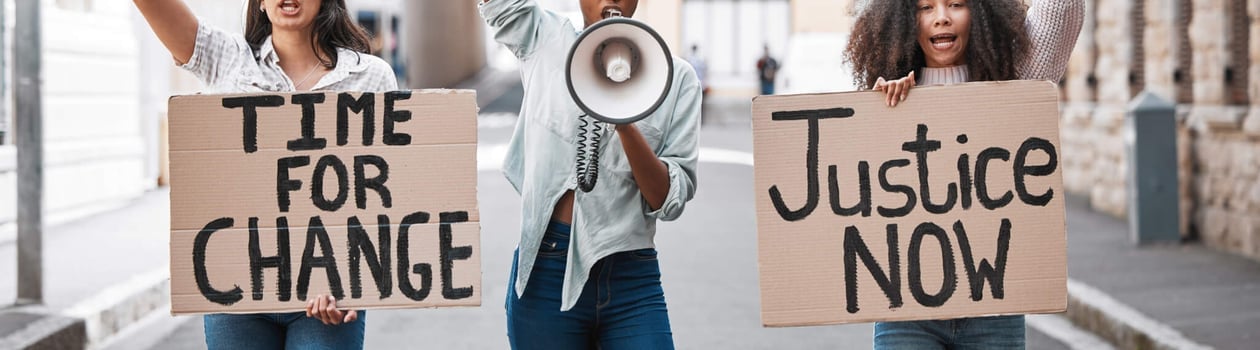
Every year the World Day of Social Justice is observed with the purpose of shining a spotlight on the need for fair treatment and equal opportunities for all people.
By focusing on issues like poverty, unemployment, and discrimination, the day encourages actions to create a more just society.
This day serves as a reminder of the collective responsibility to promote social justice and the importance of taking action to ensure a dignified life for every individual!
World Day of Social Justice Timeline
Taparelli Coins the Term “Social Justice”
Jesuit scholar Luigi Taparelli d’Azeglio introduces the phrase “social justice” in Catholic legal and moral philosophy, framing justice as a duty owed by society to its members.
Creation of the International Labour Organization
The Treaty of Versailles establishes the International Labour Organization, embedding the idea that lasting peace requires social justice in labor standards, working conditions, and workers’ rights.
Philadelphia Declaration Affirms Social Justice Principles
The ILO adopts the Philadelphia Declaration, asserting that “labor is not a commodity” and that all human beings have the right to pursue well‑being in conditions of freedom and dignity.
Universal Declaration of Human Rights Links Rights and Social Justice
The United Nations General Assembly adopts the Universal Declaration of Human Rights, recognizing rights to work, education, and an adequate standard of living that become core pillars of social justice debates.
International Covenants Enshrine Economic and Social Rights
The UN adopts the International Covenant on Economic, Social and Cultural Rights and the International Covenant on Civil and Political Rights, giving treaty force to many social justice–related guarantees.
World Summit for Social Development in Copenhagen
At the Copenhagen summit, 117 heads of state and government adopt the Copenhagen Declaration, committing to eradicate poverty, promote full employment, and foster social integration.
ILO Declaration on Social Justice for a Fair Globalization
The ILO unanimously adopts a new declaration that updates its mandate for the era of globalization, emphasizing decent work, social protection, social dialogue, and rights at work as foundations of social justice.
How to Celebrate World Day of Social Justice
The World Day of Social Justice is a beacon of hope and a call to action. It reminds us of our collective responsibility to advocate for marginalized people’s rights and challenge systems perpetuating injustice.
Celebrating World Day of Social Justice can be impactful and inspiring with these suggestions:
Dive into Social Justice Literature and Films
Consider exploring books and movies that address social justice themes. Watching movies that tackle issues from racial inequality to the fight for LGBTQ+ rights can also spark meaningful discussions.
Host a Community Panel or a Fundraiser
Bringing together diverse voices for a panel discussion can foster community engagement. Similarly, organizing a fundraiser for a social justice organization strengthens your impact by providing essential resources.
This is an important time for organizations, governments, and individuals worldwide to unite and work towards eradicating barriers that people face due to gender, age, race, ethnicity, religion, culture, or disability!
Participate in Local Initiatives
Engage with your community by volunteering or supporting local groups working towards social justice. Whether it’s addressing food insecurity through a food drive or advocating for equal rights, your involvement makes a difference.
Educate Yourself and Others
Use social media platforms to raise awareness about social justice issues and promote events or campaigns. Sharing knowledge and experiences can inspire others to join the cause and take action.
History of World Day of Social Justice
The World Day of Social Justice is profoundly significant in promoting equality worldwide. This special day was set by the United Nations General Assembly in 2007 to encourage people everywhere to work towards eradicating poverty, promoting full employment, gender equality, and access to social well-being for all.
The inaugural celebration of this day took place in 2009, marking a global effort to address issues such as poverty, exclusion, gender inequality, and unemployment.
The themes chosen each year for World Day of Social Justice highlight the urgent need to address disparities within societies around the world.
These themes often focus on poverty eradication, access to education and healthcare, gender equality, labor rights, and environmental sustainability. They serve as a call to action for governments, organizations, and individuals to collaborate toward creating a more inclusive world.
In countries like India, the day is observed with particular attention to local issues such as gender inequality, caste discrimination, and poverty.
Various government schemes and NGOs are working towards alleviating these challenges, using technology and other resources to empower marginalized communities.
The importance of World Day of Social Justice lies in its focus on four main principles: equity, access, participation, and rights.
These principles guide efforts to ensure that everyone can live in dignity, have access to basic needs such as healthcare and education, and participate fully in society.
Schools and media play a crucial role in spreading the message, with activities designed to educate and encourage participation in the movement towards a fairer world.
Facts About World Day of Social Justice
Rawls Helped Turn “Social Justice” Into a Modern Blueprint
While the phrase “social justice” appeared in 19th century Catholic thought, it was Harvard philosopher John Rawls who gave it a systematic, secular treatment in his 1971 book “A Theory of Justice.”
Rawls proposed judging social institutions as if people designed them from behind a “veil of ignorance,” not knowing their own future class, race, or talents, which led him to defend equal basic liberties and to allow inequalities only when they improved the position of the least advantaged, an approach that has shaped debates in law, economics, and human rights theory.
Copenhagen 1995 Put Social Justice at the Heart of Development Policy
At the 1995 World Summit for Social Development in Copenhagen, 117 heads of state and government adopted the Copenhagen Declaration, explicitly linking social justice and social development to global peace and security and committing to eradicate poverty, expand productive employment, and foster social integration.
The summit marked a shift toward treating these goals as obligations rooted in human rights rather than discretionary aid, and it continues to guide UN development strategies.
One in Ten People Still Lives on Less Than $2.15 a Day
World Bank estimates for 2019 indicate that about 650 million people, roughly 8.4 percent of the global population, live on less than $2.15 per day in 2017 purchasing power parity, the institution’s benchmark for extreme poverty.
Most of those in extreme poverty are in Sub-Saharan Africa and parts of South Asia, and they are disproportionately children and rural residents, showing how growth alone has not eliminated deep income deprivation.
The Top 10 Percent Take Over Half of Global Income
According to the World Inequality Report 2022, the richest 10 percent of people receive about 52 percent of global income, while the poorest half of the world’s adults share only around 8.5 percent.
The report notes that income concentration has risen in many regions since the 1980s, and that high inequality is often associated with weaker social mobility, making it harder for people born into poverty to improve their economic position even when they work full time.
Decent Work Links Labor Rights, Social Protection, and Development
The International Labour Organization’s Decent Work agenda, introduced in 1999 and reinforced by the 2008 ILO Declaration on Social Justice for a Fair Globalization, defines decent work as combining productive employment, rights at work, social protection, and social dialogue.
This framework is now used by many governments and international bodies to assess labor markets, including informal work and platform-based jobs, and it is embedded in the UN Sustainable Development Goals through SDG 8 on decent work and economic growth.
Billions Lack Access to Essential Health Services
The World Health Organization estimates that around 4.5 billion people, more than half of the world’s population, were not fully covered by essential health services in 2021, and that about 2 billion people faced catastrophic or impoverishing out-of-pocket health spending.
These gaps in coverage and financial protection show how illness and injury can still push households into long-term poverty even when national economies are growing.
Hundreds of Millions of Children and Youth Are Out of School
UNESCO data indicate that about 250 million children and youth of primary and secondary school age were out of school in 2021, with the largest numbers in Sub-Saharan Africa and Central and Southern Asia.
Poverty, conflict, gender discrimination, disability, and child labor all contribute to this exclusion, which limits young people’s chances of obtaining decent work and participating fully in civic and political life.



You may also like

International Day of Conscience
Imagine a world illuminated by the light of conscience, where every thought and action aligns with peace, love, and understanding. International Day of Conscience is a day that shines bright like a beacon, reminding us of our collective journey towards a harmonious world! How to Celebrate International Day of Conscience Celebrating the...

Social Justice Sunday
Ever wanted to make a real difference in your community? Social Justice Sunday gives you that chance! It’s a day dedicated to reflecting on fairness, promoting equality, and taking action to support those in need. Social Justice Sunday is a key day observed in Australia, inspiring action and reflection on...

International Women’s Day
Commemorating achievements in the ongoing struggle for gender equality, acknowledging progress while recognizing the road ahead.
- Australia
- Canada
- United Kingdom
- and 1 more

War on Poverty Day
Providing job training, access to education, and basic necessities can go a long way in creating a brighter future for all.
National days and holidays on February 20 2027

Lantern Festival
Amidst the dark winter sky, glows a world of wonder, an ancient Chinese tradition of sparkling lights and colors to warm the heart and ignite the soul, the lantern festival awaits!
- China
- Hong Kong SAR China
- Malaysia
- and 2 more

National Nest Box Week
If you want to invite more birds to your yard, consider putting up some cozy little homes for these feathered friends!

World Pangolin Day
Imagine a day dedicated to celebrating one of the planet's most unique creatures - the pangolin! It is fascinating to hear that the scaly, shy, and utterly fascinating pangolins have their own special day on the calendar. World Pangolin Day rolls around annually as a highlight for animal lovers everywhere...
- China
- Indonesia
- International
- and 2 more

National Love Your Pet Day
Nurturing an unbreakable bond with your furry companion, a profound connection that enriches life with boundless affection and joy.
- Australia
- Canada
- United Kingdom
- and 1 more
Seize Every Day
Join free for personalised recommendations, email reminders and exclusive guides. Never miss a day.