
For those who experience the weather and climate each day, no matter what part of the world they live in, World Meteorological Day is a unique and interesting time to raise awareness for and pay attention to the importance of the weather!
How to Celebrate World Meteorological Day
Looking for interesting ways to get involved with celebrating World Meteorological Day? Get started with some of these ideas to take part in the day:
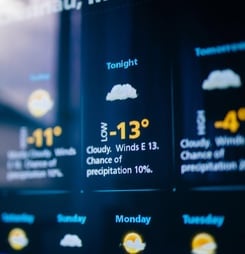
Pay Attention to the Weather Report
Whether looking it up online on the weather channel or watching the weather forecast on the news on television, World Meteorological Day is the perfect time for taking a look at the weather forecast! In addition to just seeing what it is like outside at the moment, perhaps it would be interesting to take a deeper look at the weather.
Try to understand what some of the specialized terms are, such as Doppler technology, or high pressure and humidity. Learn a little bit along the way!
Submit a Photo for the WMO Calendar
Each year, the WMO hosts a calendar competition that allows anyone to submit a photo. This calendar competition was started in 2014 and has been growing in status and volume since that time. Winners of the WMO Calendar Competition will not only have their photos featured on the calendar for the year, but they will also have their artwork placed on the website.
To participate in the competition, photos should be artistic and of high quality, featuring images that capture the power and beauty of the elements of the Earth’s atmosphere, specifically related to weather, climate and water. This includes photos that represent the concept of protecting people from the forces of nature, as well as protecting nature from the activities of humans.
Learn More About Meteorology
World Meteorological Day is a great time to brush up on interesting information about the Earth’s atmosphere and its impact on the world around us. One way to make the day fun, and raise awareness by sharing with others, might be to learn some tidbits of trivia about the planet, weather, climate and more. Get started with some of these fun facts about meteorology:
Every sixty seconds, approximately 2,000 thunderstorms are raining down on the Earth’s surface!
Wildfires, which are typically caused by lighting and considered to be meteorological hazards or disasters, can create tornadoes that are made of fire. These are called fire whirls.
In the year 1984, it was so cold in the city of London, UK, that the River Thames froze for two months solid. This is certainly unusual weather for this area of the world.
Some places in the United States get pink snow! The pink color is tinted by a specific algae called Chlamydomonas nivalis, which is a red-tinged algae that only lives in certain cold climates, like Colorado and northern California, and can leave the snowfall with a pink tinge.
Access Resources from WMO
School teachers, community leaders and others who want to encourage the celebration of World Meteorological Day can find a variety of interesting and useful resources on the WMO web page. Here, it is possible to gain more information about the upcoming year’s WMD theme as well as other useful media to help with communication and events.
Attend World Meteorological Day Events Virtually
Each year, in honor of the World Meteorological Day, the WMO hosts events and ceremonies. Events include official addresses from members of the United Nations, panel discussions, educational speakers and much more. Following the event, those who are interested can catch the live-stream recording of the happenings on the WMO YouTube channel in English.
World Meteorological Day FAQs
World Meteorological Day Timeline
Aristotle writes “Meteorologica”
The Greek philosopher compiled systematic observations and theories about weather, clouds, winds, and other atmospheric phenomena, laying a foundation for later meteorological thinking.
Invention of the mercury barometer
Evangelista Torricelli built the first mercury barometer in Italy, allowing scientists to measure air pressure and giving meteorologists a key tool for understanding storms and weather patterns.
Luke Howard names and classifies clouds
English pharmacist and amateur meteorologist Luke Howard proposed the Latin-based cloud classification system (cumulus, stratus, cirrus, etc.), creating a common language for describing the sky worldwide.
First International Meteorological Conference
An international conference in Brussels, called by U.S. Navy officer Matthew Fontaine Maury, brings maritime nations together to coordinate weather and ocean observations for safer shipping.
Founding of the International Meteorological Organization
Directors of national meteorological services meet at the First International Meteorological Congress in Vienna and create the International Meteorological Organization to exchange weather data globally.
Richardson publishes the numerical weather prediction idea
British scientist Lewis Fry Richardson describes how to forecast weather by solving atmospheric equations by hand, introducing the concept that would later underpin computer-based forecasting.
The World Meteorological Organization was formally established
The Convention of the World Meteorological Organization entered into force on March 23, transforming the old IMO into an intergovernmental body that coordinates global weather, climate, and water observations.
History of World Meteorological Day
The study of the Earth’s atmosphere has been a fascination of scientists for thousands of years, though the progress of this discipline wasn’t significant until the 18th and 19th centuries. Weather observation networks began developing and the 20th century brought computers that made advancements in meteorology grow at a much faster pace.
In 1873, the International Meteorological Organization was formed in order to encourage those studying the science of the Earth’s atmosphere to share information between governments, cultures and geographical locations. As developments and scientific discoveries grew over the years, the people involved in tracking and learning about weather knew that collaboration was essential for gaining a full perspective beyond countries or boundaries.
After several decades, the IMO decided that they would be better able to function with the support of the governments they represented. By the late 1940s, plans were in the works to create a branch that would work as part of the United Nations, which would become the World Meteorological Organization (WMO).
World Meteorological Day was founded to celebrate the start of the World Meteorological Organization that took place on March 23, 1950. For more than 70 years, the World Meteorological Organization has been a specialized agency of the United Nations (UN) that is dedicated to cooperation and coordination between countries.
The purpose of the World Meteorological Organization is to better understand and measure the way the atmosphere of the Earth behaves, how it interacts with the oceans and lands, and the climate, weather and water distribution that results from this. And World Meteorological Day is the celebration of this group and the science behind it that impacts every human every day!
Since 1961, World Meteorological Day has worked toward raising awareness and making a difference, implementing a new theme each and every year. Some of the interesting themes over the past years have included:
- Climate and Water: Count Every Drop, Every Drop Counts
- Hotter, Drier, Wetter: Face the Future
- Powering Our Future with Weather, Climate and Water
- Weather and Climate: Engaging Youth
These and other themes have been part of the WMO’s sponsorship of World Meteorological Day which seeks to bring light and attention to the ways that weather and the environment are vital to life. And that is absolutely world celebrating!when waw