
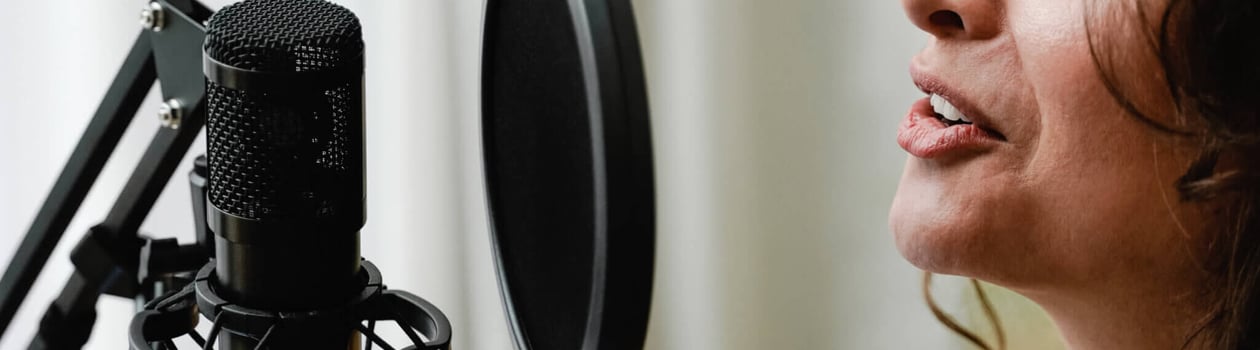
Did you know there’s a special day that celebrates the power of your voice? World Voice Day shines a spotlight on the incredible role our voices play in daily life.
Whether you’re chatting with friends, singing in the shower, or giving a presentation, your voice helps you connect and express yourself. This global event encourages everyone to appreciate and care for their unique vocal abilities.
Your voice is more than just sound; it’s a vital tool for communication and self-expression. World Voice Day reminds us to pay attention to our vocal health, especially if we rely on our voices for work or personal interactions.
By understanding how to protect and maintain our voices, we can ensure they remain strong and clear. So, take a moment to think about your voice—it’s one of your most powerful assets.
World Voice Day Timeline
Early Anatomical Theories of Voice
Ancient Greek physicians such as Hippocrates and later Galen describe the larynx and trachea, proposing that the voice is produced when air from the lungs passes through structures in the throat, an idea that anchors later anatomical study of vocal function.
Invention of the Modern Laryngoscope
Spanish singer and voice teacher Manuel García demonstrates the first practical laryngoscope using mirrors and sunlight, allowing physicians and scientists to observe the living vocal folds directly and launching modern laryngology and voice science.
Helmholtz Explains the Acoustics of the Voice
Physicist Hermann von Helmholtz publishes “On the Sensations of Tone,” applying acoustic science to the human voice and showing how vocal tract resonances shape vowels, which becomes foundational for both vocal pedagogy and speech science.
Oertel Introduces Laryngeal Stroboscopy
German physician Maximilian Oertel develops laryngeal stroboscopy, using intermittent light to make the rapid vibration of the vocal folds appear in slow motion, greatly improving clinical diagnosis of voice disorders.
Birth of the American Academy of Ophthalmology and Otolaryngology
The formation of this combined medical academy, which later separates into today’s American Academy of Otolaryngology–Head and Neck Surgery, formalizes otolaryngology as a specialty that includes medical and surgical care of the larynx and voice.
Lee Edward Travis Founds the First Speech Clinic in the U.S.
Psychologist Lee Edward Travis establishes a speech clinic at the University of Iowa, helping launch speech-language pathology as a profession that includes assessment and treatment of voice disorders alongside other communication problems.
Rise of Multidisciplinary Voice Clinics
Hospitals and universities begin creating specialized voice clinics where otolaryngologists, speech-language pathologists, and voice teachers collaborate to treat professional voice users and patients with vocal disorders, shaping modern approaches to vocal health and rehabilitation.
How to Celebrate World Voice Day
Warm Up Your Voice
Begin with gentle humming or lip trills to prepare your vocal cords. These simple exercises can help prevent strain and improve vocal flexibility.
Think of it as a light stretch before a workout, setting the tone for the day.
Stay Hydrated
Sip water throughout the day to keep your throat moist. Avoid caffeinated or alcoholic beverages, as they can dry out your vocal cords.
A well-hydrated voice sounds clearer and feels more comfortable.
Explore New Sounds
Challenge yourself by trying different vocal styles, such as singing a new genre or practicing a monologue.
Experimenting with various sounds can enhance your vocal range and confidence. It’s a fun way to discover the versatility of your voice.
Share Your Voice
Record a short message or song and share it on social media. Use hashtags like #WorldVoiceDay to join the global conversation.
Expressing yourself publicly can inspire others to appreciate their voices.
Learn About Vocal Health
Take time to read articles or watch videos about maintaining a healthy voice. Understanding proper vocal care can prevent issues and improve your speaking or singing abilities.
Knowledge is a powerful tool for vocal longevity.
History of World Voice Day
World Voice Day began in Brazil in 1999. Doctors, speech experts, and singing teachers from the Brazilian Society of Laryngology and Voice joined forces to create a national day focused on vocal health.
Their goal was to raise awareness about the importance of taking care of one’s voice. This initiative quickly gained attention beyond Brazil. Countries like Argentina and Portugal embraced the idea, turning it into an international event.
In 2002, the American Academy of Otolaryngology officially recognized the celebration, and it became known as World Voice Day. Since then, the day has been observed globally, highlighting the significance of vocal health and communication.
In 2012, a group of voice researchers from Sweden, Austria, and Portugal expanded the celebration’s reach. They established an international website to coordinate events and share resources about vocal health.
Today, World Voice Day is celebrated in over 50 countries, with hundreds of events promoting the importance of the human voice.
These gatherings include workshops, concerts, and educational seminars, all aimed at encouraging people to appreciate and care for their voices.
Facts About World Voice Day
Voice Disorders Are Surprisingly Common
Voice problems affect a large share of the population, especially people who rely heavily on speaking for work.
Studies in the United States have found that about 6.6 percent of adults report a voice disorder in a given year, and teachers are among the most affected, with some research showing that more than half experience voice-related symptoms during their careers due to high vocal load, background noise, and limited recovery time.
The Larynx Is Both Instrument and Airway Guard
The human voice is produced in the larynx, where two small folds of tissue vibrate as air passes through them, but the structure’s primary evolutionary role is to protect the airway.
The larynx closes reflexively when swallowing to prevent food and liquid from entering the lungs, and only secondarily has been adapted for finely controlled phonation that supports speech and singing.
Hydration Changes How Vocal Folds Vibrate
Keeping the body and throat well hydrated is more than a comfort issue; it changes the way the vocal folds move.
Laboratory and clinical studies show that dehydration increases phonation threshold pressure, which means more effort is needed to start and sustain sound, while adequate systemic and surface hydration allows the folds to vibrate more freely and can reduce perceived vocal fatigue.
Teachers Face Occupational “Vocal Load” Similar to Athletes
Voice scientists sometimes compare professional speakers to endurance athletes because of the intense and repetitive demands placed on their vocal mechanism.
Classroom teachers can speak for several hours a day at relatively high intensity, and research using voice dosimeters has shown they may phonate more than 20 percent of the workday, which significantly increases the risk of hoarseness, nodules, and other voice disorders without proper technique and rest.
Reflux and Smoking Physically Alter the Vocal Folds
Gastroesophageal and laryngopharyngeal reflux expose the larynx to stomach acid and enzymes that can inflame and thicken the vocal folds, while cigarette smoke irritates the delicate mucosa and alters blood flow.
Over time, these insults increase the risk of chronic laryngitis, polyps, Reinke’s edema, and even laryngeal cancer, all of which can permanently change a person’s voice quality.
The Brain Coordinates Voice in a Split Second
Producing a single spoken word requires near‑instant coordination among multiple brain regions, including the primary motor cortex, supplementary motor area, basal ganglia, cerebellum, and auditory cortex.
These areas work together to plan the sequence of movements, drive the tiny laryngeal and articulatory muscles, and then monitor the sound through hearing so that speakers can adjust pitch, loudness, and clarity in real time.
Traditional Cultures Use Voice to Preserve History
Long before widespread literacy, many societies relied on the human voice to carry law, history, and spiritual tradition across generations.
In West African griot storytelling, Homeric epic recitation in ancient Greece, and Indigenous songlines in Australia, trained performers memorized vast bodies of knowledge and used rhythm, melody, and formulaic phrases to make oral transmission accurate and durable.



You may also like

National Voice Over Day
National Voice Over Day celebrates the unique world of voice acting, shining a spotlight on the voices that bring characters, commercials, and narratives to life! How to Celebrate National Voice Over Day Celebrating National Voice Over Day invites everyone to recognize the unsung voices that bring our favorite media to life...
- Australia
- United Kingdom
- United States

International Day for Countering Hate Speech
Discover the International Day for Countering Hate Speech, promoting education, media literacy, and global action to protect human rights, dignity, and inclusion.
- Australia
- Canada
- United Kingdom
- and 1 more

National Speech and Language Pathologist (SLP) Appreciation Day
Experts in communication development, these professionals empower individuals to express themselves with clarity and confidence.
- Canada
- United Kingdom
- United States
National Mechanical Dry Eye Day
Mechanical Dry Eye Day spots a lesser-known eye issue. It’s about the extra folds of conjunctiva pressing between the eyelid and the eye. That pressure interrupts tear flow. Tears pile up or dry quickly. This condition is common in people over age 60, but many do not receive the correct...
- United States
National days and holidays on April 16

World Semicolon Day
Sometimes, a tiny mark can carry a huge message. That’s the idea behind World Semicolon Day. Instead of ending a sentence, a semicolon lets it keep going, just like people do after tough times. The day uses this symbol to highlight the strength it takes to live with mental health struggles...
- United States

National Dog Bite Prevention Week
It is hard to think something as loyal as a dog could ever harm someone. But even the sweetest pup may react when afraid or stressed. National Dog Bite Prevention Week brings this truth into focus. It reminds people that bites often come from everyday situations—startling a dog, grabbing its toy...
- United States

Selena Day
Selena Day honors the life, voice, and lasting cultural spark of Selena Quintanilla, the artist widely celebrated as the Queen of Tejano music. It is a day for turning up the volume, sharing stories, and appreciating how one performer’s charisma and craft helped reshape what mainstream audiences expected from Latin...
- Mexico
- United States

National Healthcare Decisions Day
National Healthcare Decisions Day is an important event that encourages people to discuss and document their healthcare wishes. At its core, the day is about clarity. Medical emergencies can arrive with zero warning, and serious illness can make it hard to speak up in the moment. National Healthcare Decisions Day invites...
- United States
Seize Every Day
Join free for personalised recommendations, email reminders and exclusive guides. Never miss a day.