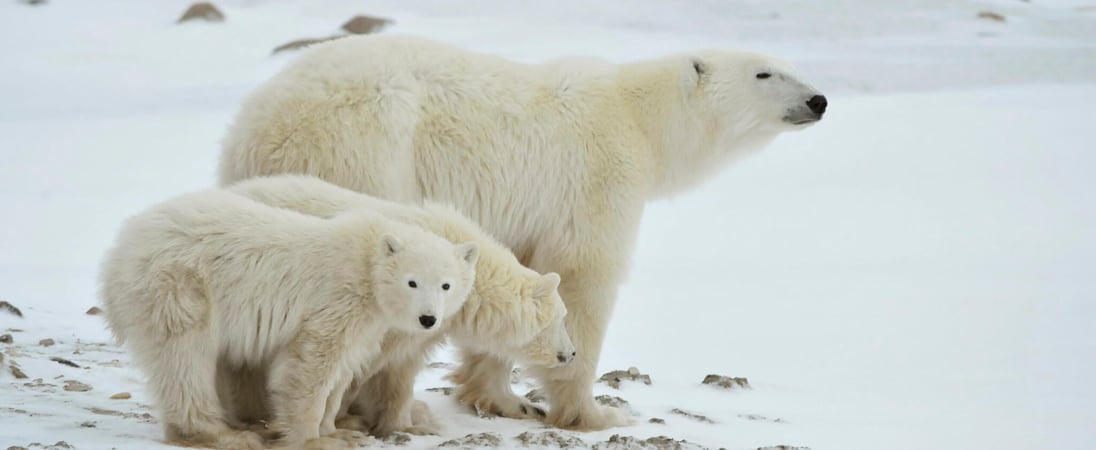
International Polar Bear Day
A symbol of strength and resilience in the face of adversity, these arctic creatures have a thick, white coat and can swim long distances.
Polar bears are furry and majestic beasts that roam across the cold Arctic ice. However, in the past few decades, sea ice in the Arctic has been melting at an alarmingly fast rate, leading the polar ice cap to shrink over time. Because of this, polar bears have been losing their habitats, their sources of food and, ultimately, dying from starvation and exhaustion.
International Polar Bear Day aims to raise awareness of the issues threatening these creatures and encourage change.
How to Celebrate International Polar Bear Day
We can all do our bit to help protect these vulnerable creatures and ensure that they thrive. To celebrate this special day, why not donate some money to the Polar Bears International organization to help fund its research into polar bears and their conservation?
You can also choose to adopt a polar bear, either for yourself or a loved one, through organizations such as the World Wide Fund for Nature (WWF).
If you’re lucky enough to live near one, visit a local zoo or polar bear sanctuary to get up close and personal with these amazing animals. These kinds of organizations also contribute to conservation and research, for example by caring for orphaned cubs, so it’s great to support them and their efforts. And any intrepid explorers out there can even encounter polar bears in the wild through careful and considerate ecotourism opportunities.
Polar Bears International hosts various live events in the run-up to and on International Polar Bear Day, so check out their website to see what’s on offer. You can also make use of their polar bear tracker, which allows you to follow real-life bears as they make their way across the Arctic landscape.
With climate change posing one of the biggest threats to wildlife and people everywhere, International Polar Bear Day is also a great time to commit to lifestyle changes that will benefit the planet and all its inhabitants. Talk with your friends, family and colleagues about what climate change is and share some facts you’ve learned about how it affects polar bears. Help reduce your carbon footprint by recycling more, using less water, bicycling to work or buying items from environmentally friendly companies.
Together, we can all work to create a brighter future for polar bears!
International Polar Bear Day FAQs
What is International Polar Bear Day?
Created to raise awareness about the plight of polar bears and their conservation status. The day encourages individuals to consider their impact on the planet to minimize the effect of global warming on these beautiful polar bears.[1]
Are Polar Bears endangered?
Polar Bears were categorized as “threatened” on the endangered species list in May 2008, due to the fact that global warming is causing their frozen habitat to be limited in size and seasons.[2]
When is International Polar Bear Day?
February 27 is celebrated as International Polar Bear Day each year.[3]
Are Polar Bears dangerous?
While they are not inherently vicious, Polar Bears are large enough to see humans as a threat or as an option for food. Plus, as their frozen habitat is diminishing, they may spend more time on land and be attracted to places where humans reside.[4]
How can I help Polar Bears?
With the knowledge the Polar Bears are at risk, many people wonder how to help. Feel free to join an event, help raise awareness, sign a petition and help reduce climate change.[5]
More About Polar Bears
Polar bears are the apex predators of the Arctic, perfectly adapted to the icy landscape and ocean. It’s thought that they diverged from the brown bear as far back as 6 million years ago – as they moved north, they gradually evolved to brave the formidable polar conditions.
With their thick fur and ample body fat providing plenty of insulation, along with their small ears and tails minimizing heat loss, these ice bears are often more at risk of overheating than they are of freezing! Pair this with their large, padded paws, which turn them into powerful swimmers as well as proficient Arctic explorers, able to spread their weight on thin ice and grip onto the slippery surface, and it’s no wonder these marine mammals dominate the food chain.
Polar bears are spread across the Arctic Ocean, from Alaska in the west to Russia in the east and with around two thirds found in Canada. They mainly eat seals, which they catch either by creeping up on them while they rest on the ice or more commonly through a method known as ‘still-hunting’, in which they lie in wait besides seals’ breathing holes, poised for their dinner to appear.
The Inuit and other Arctic peoples have a close relationship with these magnificent bears, showing them great respect in both their culture and their hunting techniques. Legends and folk tales depict the nanuq (the Inuit term for polar bear) as a wise and spiritual being with an affinity to humans. And when it comes to hunting, they make use of almost all parts of the bear for food, clothes, fuel and medicine, meaning nothing goes to waste.
History of International Polar Bear Day
Organized by Polar Bears International, International Polar Bear Day aims to raise awareness of the plight of polar bears and the threats they face, including disruption to denning and the effects of climate change.
Commercial activities such as oil and gas exploration, shipping, mining and tourism have been affecting the polar bear’s habitat and ability to survive, in particular by encroaching on the terrain that mother bears use to build dens and raise their cubs.
Alongside these industries competing for precious space in the Arctic, the polar ice cap on which the bears depend is also melting due to climate change. They live off of the sea ice, relying on it for hunting, traveling, breeding and denning. And it’s vital that they maintain sufficient fat reserves to protect against the cold. Depleted sea ice affects both their food source and their habitat, increasing the risk of starvation and making it harder to raise cubs.
As a result of these developments, polar bears have been classed as ‘vulnerable’ by the International Union for Conservation of Nature (IUCN), which means this beautiful species could decline by over a third within three generations and is potentially at risk of extinction if temperatures continue to increase.
International Polar Bear Day is therefore all about conservation. To celebrate, people take the time to learn about polar bears, their ecosystem and how our actions have been harming their existence. They also pledge to reduce their carbon footprint and to speak with others about the effects that climate change has on polar bears.
Fascinating Facts About Polar Bears
Polar bears are among the most extraordinary animals on Earth, uniquely adapted to survive in one of the harshest environments on the planet.
From their surprising biological traits to their reliance on Arctic sea ice, these facts highlight how closely their lives are tied to the ocean, extreme cold, and the rapidly changing climate.
-
Polar Bears Are Technically Marine Mammals
Although they seem like land animals, polar bears are classified as marine mammals because they depend on the ocean for almost all of their life needs.
They spend much of their time on sea ice hunting seals, can swim for hours across open water and pack ice, and rely on marine food webs rather than terrestrial prey, so biologists group them with whales, seals, and dolphins in many conservation laws and agreements.
-
Transparent Fur and Black Skin Help Trap Solar Heat
A polar bear’s coat looks white, but each hair shaft is actually transparent and hollow, scattering visible light so the bear blends into snow and ice.
Underneath, the skin is black, which absorbs heat from the sun; combined with a thick layer of blubber, this unusual combination helps the bear retain warmth in extreme Arctic cold and even makes overheating more of a problem than freezing.
-
Polar Bears Can Smell Seals Nearly a Kilometer Away
Polar bears have one of the most sensitive noses in the animal world, capable of detecting seal scent on wind currents from up to about a kilometer away and even smelling seals hidden beneath thick snow.
This extraordinary sense of smell allows them to locate breathing holes and dens in a largely featureless white landscape where visual cues are limited for much of the year.
-
Arctic Sea Ice Now Reaches Its Lowest Extent in Records Dating to 1979
Satellite data show that the area of Arctic sea ice at the end of summer has shrunk by about 12.2 percent per decade since 1979, relative to the 1981–2010 average.
The steep decline in the length and extent of the sea-ice season shortens the main hunting period for polar bears and forces them to swim and walk farther between remaining ice floes and coastal areas.
-
Some Polar Bear Populations Are Already Losing Body Weight and Cubs
Long-term studies in Western Hudson Bay have documented that polar bears are coming ashore in poorer condition and that pregnant females have fewer and smaller cubs when the sea-ice season is shortened.
As ice breakup has moved earlier by several weeks over recent decades, scientists have recorded declines in average adult body mass and lower survival rates for young bears in this region.
-
Inuit Knowledge Recognizes the Polar Bear as a Powerful Spiritual Being
For many Inuit communities, the nanuq (polar bear) is more than a source of meat and hides; traditional stories describe the bear as intelligent, almost human-like, with its own spirit and rules of respect.
Hunters historically followed strict protocols, such as offering water to a slain bear or carefully placing its skull, reflecting a belief that treating the animal properly would ensure future hunting success and maintain balance between people and bears.
-
Most of the World’s Polar Bears Live in Just Five Countries
Polar bears occur in 19 recognized subpopulations spread around the Arctic, almost all within the jurisdiction of Canada, Greenland (Kingdom of Denmark), Norway, Russia, and the United States.
Canada alone is estimated to host roughly two-thirds of all polar bears, which is why international conservation efforts must coordinate closely across these five range states to manage hunting, industry, and habitat protection.
International Polar Bear Day Timeline
1774
Polar Bears are first documented
The first to describe the existence of a Polar Bear, Constantine John Phipps makes a report about his trip to the North Pole the previous year.[1]
2004
Oldest Polar Bear fossil is found
Considered to be more than 100,000 years old, the jawbone fossil of a Polar Bear is found on Prince Charles Foreland, which is an island in Norway.[2]
2008
Polar Bears are listed as threatened
As their habitat on the icy seas continues to melt, Polar Bears are considered threatened under the Endangered Species Act.[3]
2011
First International Polar Bear Day is Observed
In an effort to encourage raising awareness of the plight of these threatened animals, International Polar Bear Day is created.[4]
2014
University of Saskatchewan commits to helping Polar Bears
In honor of International Polar Bear Day, the University of Saskatchewan commits to turning their thermostats up two degrees in the summer and down two degrees in the winter to do their part to limit global warming and save the Polar Bears.[5]
Also on ...
View all holidays
National Pokemon Day
Epic adventures with adorable creatures as you explore vibrant worlds, make new friends, and battle fierce opponents in this iconic game.

No Brainer Day
Breathe deeply, and focus on the present. Practicing this regularly can help reduce stress and increase happiness in everyday life.

National Strawberry Day
This juicy red fruit pairs well with chocolate, whipped cream, and champagne. Perfect for summer picnics and romantic evenings.