
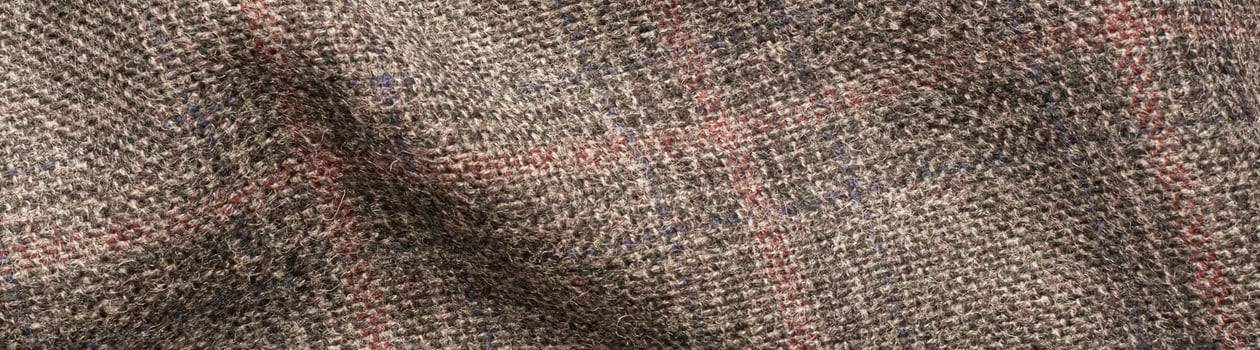
National Tweed Day is the perfect opportunity for people all over the world to enjoy everything to do with their favorite style of tweed. Whether it’s to do with the woolen fabric made in Scotland, or something else entirely, the celebration of all things tweed is meant for this special day!
How to Celebrate Tweed Day
The observance of Tweed Day can be enjoyed in a variety of clever and delightful ways. Try out some of these ideas or come up with your own:
Buy a New Tweed Jacket or Trousers
One perfect way to celebrate Tweed Day is by making a purchase of a new blazer, pants, vest or entire suit made of the woven wool fabric. Actually, tweed can even be made into a delightful hat!
Tweeds are usually made in light plaid or houndstooth patterns, often in neutral colors such as beiges, greens and grays. Whether choosing to buy a tweed item off the rack or having it custom made by a tailor, this is the best time to do it!
Wear Tweed to Work
Although in some climates, April might be a bit warm for wool, in many places the early spring weather is perfect for one final display of the tweed clothing before putting it away for the warmer summer weather.
Watch a Tweed Inspired Film
Looking for some way to be entertained on Tweed Day?
One Disney film could be the perfect way. The Fox and the Hound is a film that shows the character, Widow Tweed, who was the kindly lady who took care of Tod, the orphaned fox and one of the title characters. The other important characters were Amos, the grumpy neighbor, who took care of the hound dog, Copper.
Or, for the slightly older set, try watching some Sherlock Holmes films or shows which are certain to contain Mr. Holmes donning a tweed suit while smoking his pipe at 221B Baker Street in London.
Visit the Tweed Museum of Art
Who knew that there was a museum of art at the University of Minnesota, located in the city of Duluth. The museum was named after Alice Tweed Tuohy, who donated her house and an extensive art collection to create the museum. This could be the perfect thing to do to celebrate Tweed Day!
Go Fishing or Just Visit the River Tweed
See the river that tweed was mistakenly named after, located in southeastern Scotland. This river runs eastward for 97 miles in Scotland, for 17 miles along the border of Scotland and England, and for 2 miles the River Tweed flows through England until it empties into the North Sea.
National Tweed Day FAQs
History of Tweed Day
In some circles, there may be some confusion as to what exactly National Tweed Day is commemorating.
Could it be the corrupt American Democratic boss famous for running the Tammany Hall political machine, William M “Boss” Tweed, who also ran the “Tweed Ring” which stole between $30 to $200 million through political corruption in New York? Or is it the unique Scottish fabric, usually fashioned into suits, jackets and trousers in patterns such as houndstooth and herringbone?
Which of these two very different options could it be?
The obvious answer would probably be the options for the Scottish material, although there is no record of this particular date having any relevance to the origins of Tweed, the mistake that resulted in it being named Tweed, or even any founders’ birth or death dates as is often the case with days such as this.
On the other hand, April 3rd actually does have a special relevance to Boss Tweed though, since he was born April 3rd, 1823. So perhaps that’s a clue as to what the day is really all about?
In any case, it’s time to celebrate National Tweed Day!
National Tweed Day Timeline
Tweed makes an entrance but is called “tweel”
This version of woven fabric enters into the world with the name “tweel”, which is Scots for the word “twill” because it is woven into a twilled pattern rather than a plain one.
“Tweel” name changes to “tweed”
All by accident due to the misreading of handwriting, the word “tweel” is interpreted as tweed, the same as Scottish river Tweed, and the fabric’s name is forever changed.
William “Boss” Tweed takes control of New York City
A Democrat elected to the US House of Representatives, Tweed is a wealthy landowner with great influence who is eventually convicted for stealing tens of millions of dollars from NYC taxpayers.
“Tweed Days in St. Louis” article is published
Written by Lincoln Steffens, this article became famous as the first of several muckraking articles that exposed the corruption of urban politics.
The Harris Tweed Orb certification is created
As the original company to make tweed, Harris Tweed carries the oldest British mark of its kind.
Surprising Facts About Tweed and Its Cultural Legacy
Tweed is often associated with classic British style, countryside traditions, and timeless outerwear. However, the story behind this famous wool fabric is far more interesting than it first appears.
From its humble origins among rural workers to its legal protection and clever use as natural camouflage, tweed carries a rich history shaped by practicality, status, and craftsmanship. These facts highlight how a simple fabric became an enduring symbol of heritage and identity.
Estate Tweeds Were Invented as “Camouflage” for the British Countryside
In the 19th century, landowning families on Scottish Highland and northern English estates began commissioning their own “estate tweeds,” with colors and patterns carefully chosen to blend into local heather, bracken, and rock.
These muted cloths acted as a kind of early camouflage for stalking deer and game birds and became a hallmark of country sportswear for the British aristocracy.
From Peasant Workwear to Symbol of the Upper Classes
Tweed began as a rough, homespun wool fabric worn by Scottish and Irish peasants for outdoor labor, valued because it was warm, hard‑wearing, and shed rain and wind.
By the mid‑1800s, however, English industrialists and aristocrats buying Highland estates adopted tweed for hunting and fishing, transforming it from “poor man’s cloth” into a visual marker of country leisure and privilege.
The Only Fabric Protected by Its Own Act of Parliament
Harris Tweed holds a unique position in textile law: it is the only cloth in the world protected by a specific act of Parliament.
The Harris Tweed Act 1993 legally defines Harris Tweed and created the Harris Tweed Authority, giving it statutory powers to police misuse of the name and Orb trademark and to take legal action against counterfeits.
Strict Rules Govern What Can Legally Be Called Harris Tweed
Under the Harris Tweed Act, a fabric cannot bear the famous Orb stamp unless it meets a tightly drawn definition.
It must be made from pure virgin wool, dyed and spun in the Outer Hebrides, and then handwoven at the home of an islander in the Outer Hebrides.
If any part of that process takes place elsewhere or on power looms, the cloth cannot legally be sold as Harris Tweed.
A Rural Economy Built Around Looms in Island Homes
Because Harris Tweed must be woven in the homes of islanders, production is deeply intertwined with the crofting way of life in the Outer Hebrides.
Many weavers run a loom alongside small‑scale farming, and the Harris Tweed Authority is legally tasked with promoting the cloth as a means of livelihood for the islands’ population, making the fabric central to both cultural identity and local income.
Tweed’s Twill Weave Helps It Resist Weather and Wear
Most tweed is woven in a twill structure, where the weft threads pass over and under warp threads in a staggered pattern that produces the familiar diagonal ribs or herringbone.
Combined with the crimp and natural lanolin of wool fibers, this gives tweed its characteristic drape, abrasion resistance, and ability to repel light rain, which is why it became a staple for field sports and rough outdoor use.
Color Comes from Blending Dyed Fibers, Not Just Dyed Yarn
Unlike many modern patterned fabrics, traditional tweeds often achieve their heathered look not by printing or simple yarn dyeing but by mixing differently dyed wool fibers before spinning.
This fiber blending produces complex flecks and depth of color that echo moorland, sea, and sky, making each length of cloth appear subtly multicolored when viewed up close.



You may also like

National Tartan Day
Research the history and culture of the Scottish people, represented by the iconic Tartan pattern often seen on kilts, blankets, and other clothing.
- Argentina
- Australia
- Canada
- and 3 more

Scottish-American Heritage Month
Scottish-American Heritage Month is an annual celebration in which we pay tribute to the rich cultural contributions of Scottish immigrants and their descendants in America. This month-long observance is a living tribute to the ongoing contributions of Scottish Americans (or Scots Americans, if you prefer!) - past, present, and future. History...
- United States

Burns Night
Celebrate Burns Night with friends, whisky, and of course, haggis! Gather round and pay tribute to Scotland's beloved poet, Robert Burns, with traditional food, drink, and poetry readings.
- Australia
- Canada
- United Kingdom
- and 1 more

International Day of Action for Rivers
Every year, on March 14th, people around the globe observe the International Day of Action for Rivers. This day highlights the vital role rivers play in everyday life, from supplying drinking water and irrigating crops to supporting fisheries, recreation, and spiritual and cultural traditions. Rivers are not just moving water, either...
- Brazil
- China
- India
- and 2 more
National days and holidays on April 3

March Madness
Get your game face on for March Madness! This high-energy tournament is a slam dunk of excitement, passion, and heart-pumping action. So grab your team colors, gear up for the showdown, and let the madness begin!
- United States

Semana Santa
Semana Santa, or Holy Week, is a profound time of reflection and devotion in many Christian communities. Streets come alive with solemn processions, participants carry religious icons, and traditional music fills the air. This period focuses on the final days of Jesus Christ, drawing believers together in shared faith and contemplation...
- Guatemala
- Mexico
- Portugal
- and 1 more

Passover Begins
Among the most solemn and meaningful observances in the Jewish calendar, Passover marks the beginning of an eight-day journey. This holiday, known as Pesach in Hebrew, commemorates the Israelites' liberation from slavery in ancient Egypt. The term "Passover" refers to the divine act of sparing the Israelites during the final plague...
- Egypt
- Israel
- United States

Make Mine Chocolate
"Make Mine Chocolate" is a lively campaign urging people to think twice before giving live rabbits as Easter gifts. The campaign encourages people to opt for chocolate bunnies instead. This approach helps spread the message of responsible pet ownership while offering a sweet alternative that won't end up in shelters...
- United Kingdom
- United States
Seize Every Day
Join free for personalised recommendations, email reminders and exclusive guides. Never miss a day.