
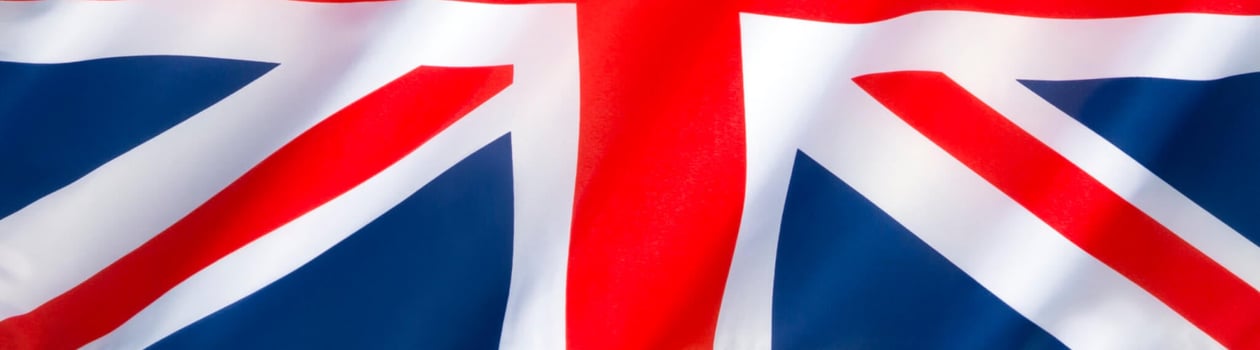
Did you know the UK has a special day to honor its military community? Imagine streets dressed up with bunting, the air buzzing with brass bands, and crowds applauding as uniforms, medals, and marching feet pass by. This isn’t just a random show of pageantry; it’s UK Armed Forces Day, a nationwide moment set aside to recognize the people behind the service, including those currently serving, reservists, veterans, cadets, and the families who hold things together back home.
It’s equal parts gratitude and community open house, inviting civilians to learn a little more about military life while offering a clear, simple message: support and thanks.
How to Celebrate UK Armed Forces Day
Ready to show support for UK Armed Forces Day in a fun and meaningful way? These ideas keep things upbeat while staying respectful. Some work best for neighborhoods and schools; others are perfect for a quiet, personal show of appreciation.
Host a mini-parade in the backyard (or down the driveway)
Invite friends and family to “march” with homemade flags and paper medals. Add a playlist of marching music and appoint a grand marshal to wave everyone onward.
For extra charm, give the parade a theme like “Service Through the Years” with different outfits representing the Navy, Army, Air Force, reserves, and cadets. Keeping it light helps younger kids participate without turning the day into a lecture.
Bake a cake decorated like the Union Jack or with a military theme
A sheet cake can become a red, white, and blue masterpiece with simple frosting. For a subtler nod, decorate cupcakes with tiny flag picks or color-coded icing. If baking feels too ambitious, a “mess hall snack table” works just as well: tea, cookies, sandwiches, and a big sign that says “Thank you for your service.”
Sharing food is one of the easiest ways to bring people together, and it mirrors the real-life role of meals in building camaraderie.
Craft thank-you cards and send them to service members or veterans
Handwritten notes land differently than a quick message on a screen. Encourage writers to be specific: “Thank you for serving” is nice, but “Thank you for the sacrifices you and your family make” shows thought. For children, a drawing plus a short line is perfect.
For adults, a brief, sincere note is best, avoiding personal questions. The goal is appreciation, not interrogation.
Organize a community sports day inspired by training exercises
Think “teamwork,” not “boot camp.” Tug-of-war, relay races, timed obstacle courses, and map-reading scavenger hunts can hint at the skills used in service without pretending to replicate them.
Add a “first aid station” game using toy bandages to teach basic safety. Keep everything inclusive with different difficulty levels so people of all ages can join in.
Wear red, white, and blue to show support
Color is a simple signal. A red T-shirt, a blue hat, a small pin, or a ribbon in patriotic colors can be enough. Schools and workplaces can go a step further with coordinated outfits or themed dress days.
The point is visible unity, not perfection. Even a small splash of color says, “This matters.”
Stream military band music during a barbecue or picnic
Military music is not just background noise; it is part of the tradition of ceremonial life. A playlist of marching tunes, pipe and drum selections, or formal band pieces sets a tone that feels celebratory without being rowdy.
Pair it with a picnic that includes family-friendly games, and it becomes a gathering that honors service while strengthening community bonds.
Light up the night with sparklers or a small fireworks display
If local rules and safety allow, sparklers can serve as a symbolic send-off: bright, brief, and memorable, like a collective “thank you” written in light. Keep a bucket of water nearby, supervise children closely, and consider glow sticks as a safer alternative that still feels festive.
Support service charities or local support efforts
Not every celebration needs confetti. A bake sale fundraiser, a sponsored walk, a donation drive for care packages, or a simple collection for a trusted service charity can turn good feelings into practical help.
Even better, pair fundraising with education: a short talk about what the funds support, such as family assistance, recovery programs, or veteran services, makes the effort more meaningful.
Learn and share, especially with kids
A short “meet the services” session can help demystify what the armed forces actually do. Talk about the difference between regular service and reserves, explain what cadet organizations are, and highlight non-combat roles like engineering, logistics, communications, and medical support.
The goal is understanding, not recruitment pitches. Curiosity and respect make for a good combination.
These approaches offer a mix of reverence and fun, helping people honor the armed forces community in ways that feel personal, practical, and welcoming.
Significance of UK Armed Forces Day
Picture communities coming together in a visible show of support: bunting on streets, flags in windows, and local events that range from big parades to small school assemblies. UK Armed Forces Day matters because it turns appreciation into something people can actually see and participate in.
At its heart, the day is about saying a clear “thank you” to the armed forces community. That includes:
- Serving personnel, who may be training, deployed, or working behind the scenes in roles that keep operations running.
- Reservists, who balance civilian jobs with military training and service commitments.
- Veterans, whose service may be long past but whose experiences continue to shape their lives and communities.
- Cadets, who learn skills like leadership, teamwork, and responsibility through structured youth programs connected to the services.
- Service families, who often carry extra burdens, including frequent moves, long separations, and the constant low hum of worry that can come with military life.
The day also helps bridge a gap that can form between military and civilian life. Many people never meet someone who serves, or they only encounter the armed forces through headlines and movies. Public events and community celebrations make the armed forces community more familiar and more human. People can hear stories, see demonstrations of skills and equipment, and ask basic questions in a friendly setting.
Just as importantly, the day recognizes that service is not a solo endeavor. A uniform may be worn by one person, but behind that person there are parents, partners, children, friends, and colleagues who adapt and support in a hundred quiet ways. UK Armed Forces Day creates space to acknowledge that network, not just the individual.
There is also a practical side to the significance. Many celebrations connect the public with organizations that support military families and veterans, highlighting needs that do not always disappear when service ends. For some, the day is a reminder to check in on a veteran neighbor. For others, it is the nudge that turns “Someone should help” into “I can help.”
Every cheer, handshake, and small display of color becomes part of a larger message: the armed forces community is seen, appreciated, and supported.
UK Armed Forces Day Timeline
Creation of the Navy Board
Henry VIII establishes the Navy Board to manage the administration of the English navy, laying early foundations for a permanent naval service later known as the Royal Navy. [1]
Formation of the New Model Army
Parliament creates the New Model Army during the English Civil War, a centrally organized, professional standing force that becomes a key precursor of the later British Army. [1]
Acts of Union and birth of the British Army
The Acts of Union unite England (including Wales) and Scotland into Great Britain, and the previously separate English and Scottish forces are combined into a single British Army. [1]
Battle of Trafalgar secures naval supremacy
A British fleet under Vice Admiral Horatio Nelson defeats a combined French and Spanish fleet off Cape Trafalgar, confirming Royal Navy dominance that underpins Britain’s global power.
Creation of the Royal Air Force
The Royal Air Force was formed by merging the Royal Flying Corps and Royal Naval Air Service, becoming the world’s first independent air force and adding air power to Britain’s armed services.
Introduction of peacetime National Service
A new National Service scheme comes into force, conscripting most able‑bodied men aged 17 to 21 and tying millions of citizens directly to the British Army, Royal Navy, and Royal Air Force. [1]
Modern Ministry of Defence unifies control
The Admiralty, War Office, Air Ministry, and earlier Ministry of Defense are amalgamated into a single Ministry of Defense, creating a unified civilian department over all British armed services. [1]
History of UK Armed Forces Day
UK Armed Forces Day is a relatively modern national observance, and that is part of what makes its story interesting. Rather than being a tradition stretching back centuries, it reflects a deliberate decision to create a dedicated public moment for recognition and support.
The event began in 2006 under the name Veterans’ Day. The idea was straightforward: provide a clear opportunity for the public to recognize those who had served. While remembrance events already existed in the national calendar, Veterans’ Day aimed for a different tone, less about solemn reflection and more about open appreciation and community connection.
In 2009, the observance evolved and was renamed Armed Forces Day. That change signaled a broader purpose. Instead of focusing only on veterans, the day expanded to celebrate the entire armed forces community, including currently serving personnel, reservists, cadets, and military families, alongside veterans.
The new name also made the day’s message more immediately obvious to the general public: this is about the armed forces as a living, active part of national life, not only a chapter in history.
UK Armed Forces Day is observed each year on the last Saturday of June. Placing it toward the start of summer supports its community-focused style. Many events are designed to be family-friendly and outdoors, with marches, performances, and public displays. Over time, it has grown into a nationwide celebration with a flagship national event hosted by different communities, alongside many local gatherings that put their own stamp on the day.
The “how” of the day has also become part of its identity. Armed Forces Day is not limited to formal ceremonies. It includes everything from civic parades and military band performances to educational activities that help civilians understand what military life looks like beyond the stereotypes. Some celebrations feature demonstrations of skills and equipment, which can spark conversations about the range of roles within the services, including technical trades, aviation, seafaring, medicine, and communications.
The day’s evolution reflects a broader shift toward visibility and connection. By inviting the public into celebrations, Armed Forces Day helps build familiarity, reduce distance, and create a shared space where gratitude can be expressed plainly and respectfully. It recognizes tradition and service, while still feeling like a living event shaped by the communities that host it.
UK Armed Forces Day Facts
Professional UK Forces Replaced Conscription Only In The 1960s
For most of the 20th century, Britain relied on conscription, known as National Service, to fill the ranks of its armed forces in wartime and during the early Cold War. The National Service Act 1948 required healthy young men to serve full‑time in the forces, first for 18 months and later for two years, before transferring to the reserves.
A 1957 defense review set the goal of ending conscription and creating smaller, fully professional forces, with the last conscripts called up in 1960 and the final National Servicemen discharged in 1963.
Since then, the British Army, Royal Navy, and Royal Air Force have operated as all‑volunteer services.
The British Armed Forces Are Unified Under Civilian Control
The British Armed Forces, formally His Majesty’s Armed Forces, are a single, unified military organization responsible for defending the United Kingdom, its Overseas Territories, and Crown Dependencies.
They consist of three main services: the British Army, the Royal Navy (including the Royal Marines), and the Royal Air Force.
All operate under civilian political authority via the Ministry of Defence, with the Secretary of State for Defence accountable to Parliament and the Chief of the Defence Staff exercising professional military command.
Modern UK Defense Policy Emphasizes Global Roles Beyond Combat
Contemporary UK defense doctrine defines the role of the armed forces as extending well beyond traditional warfighting.
In addition to deterring aggression and defending the UK, policy documents highlight “defence diplomacy,” support to wider British interests, and contributions to international security.
This includes peacetime security tasks such as protecting sea lanes, supporting NATO and other alliances, countering drug smuggling, and delivering humanitarian assistance and disaster relief, often far from the UK’s shores.
A Typical British Army Platoon Is Only About 25–30 Soldiers
On paper, modern armies often look immense, but at ground level British Army units are built from surprisingly small building blocks.
According to the National Army Museum, an infantry platoon usually contains only about 25 to 30 soldiers, commanded by a lieutenant or second lieutenant. Several platoons form a company, companies form a battalion, and battalions are grouped into brigades and divisions, so the large formations seen on operations are made up of many of these small, tightly knit teams.
The UK’s Volunteer Tradition Predated Mass Conscription
Although conscription dominated the World Wars and early Cold War, the British Army’s longer history is rooted in voluntary enlistment.
From its formal establishment after the Restoration in 1660 until the First World War, Britain relied mainly on long‑service volunteers for its regular forces, while using local militia and yeomanry units, sometimes raised by ballot, for home defense.
Large‑scale universal conscription was only introduced in 1916 during the First World War and again in 1939, which makes today’s all‑volunteer force a return to a much older tradition.
A Smaller Post‑Conscription Force Still Maintains Global Reach
Ending National Service in the early 1960s went hand in hand with a deliberate reduction in force size, but not in overseas commitments.
Academic studies of post‑war defense policy note that Britain shifted to fewer personnel who were more highly trained, professional, and deployable, focusing on alliance duties such as NATO, overseas garrisons, and expeditionary operations.
This professionalized model persists today, with thousands of sailors, soldiers, and aviators routinely deployed abroad on training, deterrence, peace support, and crisis‑response tasks at any given time.
Specialized Agencies Equip And Sustain The UK Armed Forces
Behind front‑line units is a large technical and logistical enterprise. Defence Equipment & Support (DE&S), a specialized organization within the Ministry of Defence, is responsible for buying, testing, and supporting most of the equipment used by the UK Armed Forces, from warships and aircraft to radios and protective clothing.
DE&S works with the services and global industry to manage complex, long‑term procurement programs, reflecting how modern militaries depend on industrial partnerships as much as on fighting units themselves.



You may also like

Navy Reserve Birthday
The Navy Reserve Birthday is a special occasion that honors the dedication and service of the Navy Reserve, a force built for flexibility, expertise, and readiness. This day celebrates the vital contributions of Reserve Sailors who support the active-duty Navy. These reservists step in to fill critical capability gaps, reinforce units...
- Australia
- Canada
- United Kingdom
- and 1 more

US Armed Forces Day
Discover the history, traditions, and ways to honor U.S. service members on Armed Forces Day, celebrating courage, sacrifice, and national pride.

Army Birthday
Honor the legacy and service of the U.S. Army, from its 1775 founding to today, with traditions, ceremonies, and ways to thank soldiers on Army Birthday.
National Vietnam War Veterans Day
National Vietnam War Veterans Day is a significant day in the United States, observed every year on March 29. This date marks the anniversary of the withdrawal of U.S. combat troops from Vietnam in 1973. The day honors the nearly three million service members who served in Vietnam, recognizing their...
National days and holidays on June 27

International Pineapple Day
Celebrate International Pineapple Day by enjoying tropical flavors, honoring its symbolism of hospitality and friendship, and exploring its rich history and health benefits.

National Sunglasses Day
Pop on your favorite sunglasses and protect your eyes from the harsh light of day, protect your forehead from squint-based wrinkles, and look cool doing it.

Multiculturalism Day
Celebrate Multiculturalism Day by honoring diverse cultures, traditions, and languages, promoting inclusion, mutual respect, and unity in everyday community life.

National Ice Cream Cake Day
Looking for a dessert that combines the creaminess of ice cream with the satisfying crunch of cake? This treat is perfect for you!
- Australia
- Canada
- United Kingdom
- and 1 more
Seize Every Day
Join free for personalised recommendations, email reminders and exclusive guides. Never miss a day.