
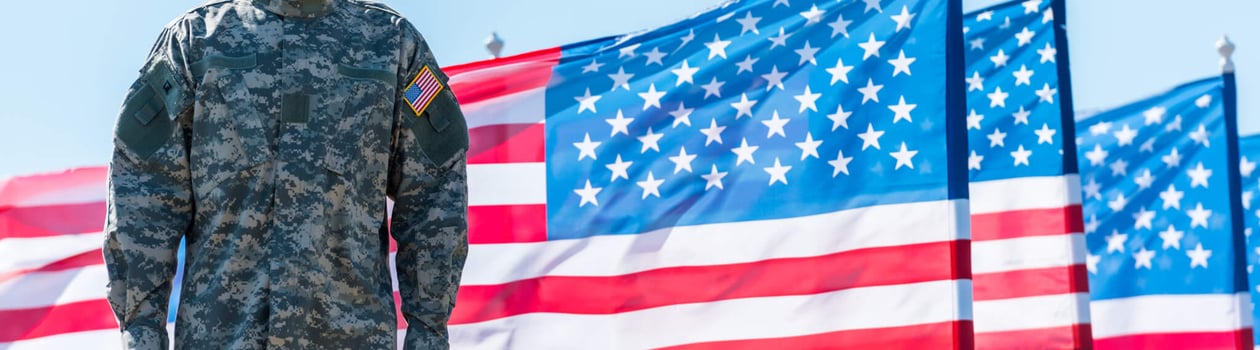
Armed Forces Day might be the best occasion to honor America’s finest men and women. But it’s bigger than just a day for Americans to pay homage to those serving in the Armed Forces.
It is also a time of national pride. And it’s a day for appreciating the bravery and sacrifices of all military personnel.
US Armed Forces Day Timeline
Continental Army Established
The Continental Congress creates the Continental Army to coordinate the military efforts of the Thirteen Colonies in their revolt against Britain, appointing George Washington as commander in chief and laying the foundation for the modern United States Army.
Birth of the Continental Navy
The Continental Congress authorizes the fitting out of armed vessels to intercept British supply ships, establishing the Continental Navy, which becomes the direct predecessor of the modern United States Navy.
United States Marine Corps Founded
Meeting in Philadelphia, the Continental Congress passes a resolution to raise two battalions of Marines, creating the Continental Marines to serve as shipboard security and amphibious assault forces and forming the basis of the United States Marine Corps.
Origins of the United States Coast Guard
Congress authorizes the construction of ten cutters for the Revenue-Marine, later known as the Revenue Cutter Service, to enforce customs laws, a service that will eventually merge with others to form the United States Coast Guard.
National Defense Act and the Modern National Guard
The National Defense Act of 1916 expands the Army and formally establishes the National Guard as the primary organized reserve force of the Army, defining its dual state and federal roles that continue into the present.
Creation of the United States Air Force
The National Security Act of 1947 takes effect and separates the Army Air Forces from the U.S. Army, establishing the United States Air Force as an independent branch equal to the Army and Navy.
Department of Defense Reorganization
An amendment to the National Security Act redesignates the National Military Establishment as the Department of Defense, strengthens the authority of the Secretary of Defense, and further unifies the Army, Navy, and newly independent Air Force under a single department.
How to Celebrate Armed Forces Day
Armed Forces Day is not another date on the calendar each year. Instead, it’s a day when all Americans should reflect on the values of courage and sacrifice that define their military.
Here are seven ways you might support our military members on Armed Forces Day:
Attend a Parade or Event
Many cities across the U.S. host parades and military displays. These events showcase the rich tradition and current capabilities of the Armed Forces.
They offer a fantastic opportunity to show support and allow Americans to learn more about military history and service.
Educational Exhibits and Military Museums
Visit a military museum or an educational exhibit. These places often have special Armed Forces Day activities. These allow you to gain more insight into the military’s history and achievements.
Write Thank You Letters to Active Duty Service Members
A personal and heartfelt way to show appreciation is to send a quick note to a service member. They will feel touched when you thank them for their dedication and sacrifices.
Support Through Social Media
Support the military via your favorite social platforms – Twitter, Facebook, or Instagram. There, you can spread awareness about Armed Forces Day.
Share posts, stories, or personal anecdotes about the U.S. military. Use the appropriate hashtags, like #ArmedForcesDay, to join the nationwide conversation.
Host a Military-Themed Movie Night
Organize a movie night with friends or family, streaming films that depict military stories. These movies both honor and remember the sacrifices of those who have served. Try these five options:
- Saving Private Ryan (1998) – This story shows the heartbreaking reality of World War II. It focuses on the D-Day invasion and a subsequent mission.
- Black Hawk Down (2001) – This movie tells the true tale of a 1993 U.S. military in Mogadishu.
- American Sniper (2014) – This biographical war drama features the life of U.S. Navy SEAL Chris Kyle.
- Platoon (1986) – This movie portrays the Vietnam War. It’s very interesting, as you watch the story from the POV of a young soldier.
- Full Metal Jacket (1987) – This film tells about the experiences of U.S. Marines during the Vietnam War.
Each of these films provides you with a fresh perspective on military life’s many complexities. They’re all powerful options for a military-themed movie night.
Volunteer for Veteran Causes
Engage in community service or volunteer for organizations supporting veterans or current service members.
Wear Patriotic Clothing on Armed Forces Day
Wearing the colors of the U.S. flag or military apparel shows your pride and support. Be sure to include a few statement accessories, such as bracelets or hats that support our troops, especially those deployed.
When we celebrate Armed Forces Day, we honor those who have served in our military. But we also show support for those who currently serve.
Armed Forces Day offers a wonderful opportunity for every American to express gratitude to their military heroes.
History of Armed Forces Day
President Harry S. Truman declared the first Armed Forces Day in 1949, and it was first celebrated the next year. He quickly saw the need for a united celebration for all military branches.
This necessity became clear after the formation of the United States Department of Defense. This special day became a key day for appreciating the U.S. military.
According to the DOD, the day pays tribute to the combined efforts of members of these branches:
- Army
- Air Force
- Navy
- Marine Corps
- Coast Guard
- National Guard
- Reserve Units
The back story of the U.S. Armed Forces is long. Besides that, its story is ever evolving. The United States Army dates back to George Washington’s Continental Army in 1775. This force fought against King George in the American quest for independence.
Since those early years, the U.S. Armed Forces have participated in major global events such as World War II. One thing is clear—the Armed Forces will be forever entwined with the American nation’s growth.
Facts About US Armed Forces Day
Unified Command Only Dates Back to World War II
For most of U.S. history, the military services operated separately under the War Department (Army) and Navy Department, often competing for budgets and influence.
A truly unified command structure only began during World War II with the creation of joint commands and was formalized afterward through the 1947 National Security Act and 1949 amendments that created the Department of Defense and the position of Secretary of Defense over all branches.
America’s All-Volunteer Force Is Relatively New
The modern U.S. military is staffed by volunteers, but that was not always the case.
The United States relied heavily on conscription during the Civil War, both World Wars, and the Cold War, with the last draft call issued in 1972.
The transition to an all-volunteer force began in 1973 and required major changes in pay, benefits, and recruitment strategies to attract enough personnel without compulsory service.
Reserve and Guard Forces Provide Nearly Half the Troop Strength
Although attention often focuses on active-duty troops, the Reserve and National Guard components make up a large share of U.S. military capacity.
In recent decades, they have shifted from a strategic “backup” to an operational force, routinely deploying alongside active units in conflicts such as Iraq and Afghanistan and providing key capabilities in logistics, medical care, and civil support during domestic emergencies.
The U.S. Military Is One of the World’s Largest Employers
Measured by personnel, the U.S. Department of Defense ranks among the largest employers on the planet, with over 2.8 million people when active-duty, Guard, Reserve, and civilian employees are combined.
This massive workforce underpins a global network of operations and also makes the military a major source of technical training and upward mobility for young Americans.
Military Research Helped Create the Internet and GPS
Two technologies that underpin modern life began as U.S. defense projects. The early internet grew from ARPANET, a Defense Department research network begun in the late 1960s to connect scientists and share computing power.
Global Positioning System satellites were developed by the U.S. military in the 1970s and 1980s to provide precise navigation and timing for forces worldwide, and only later did they open to full civilian use.
Combat Medicine Transformed Emergency Care at Home
Advances pioneered to treat battlefield injuries have reshaped civilian medicine in the United States.
Techniques like rapid tourniquet use, trauma triage systems, damage-control surgery, and helicopter evacuation were improved in conflicts from Vietnam to Iraq and Afghanistan and later used by civilian emergency medical services, which helped more people survive severe injuries.
The U.S. Navy Patrols a Vast Share of the World’s Oceans
The U.S. Navy operates a globally deployed fleet that regularly maintains a presence in key waterways such as the Western Pacific, the Persian Gulf, and the Mediterranean Sea.
By fielding most of the world’s operational aircraft carriers and a large share of high-end surface combatants and submarines, it plays a central role in keeping major sea lanes open for international trade and responding quickly to crises far from U.S. shores.
US Armed Forces Day FAQs



You may also like

Navy Reserve Birthday
The Navy Reserve Birthday is a special occasion that honors the dedication and service of the Navy Reserve, a force built for flexibility, expertise, and readiness. This day celebrates the vital contributions of Reserve Sailors who support the active-duty Navy. These reservists step in to fill critical capability gaps, reinforce units...
- Australia
- Canada
- United Kingdom
- and 1 more

Army Birthday
Honor the legacy and service of the U.S. Army, from its 1775 founding to today, with traditions, ceremonies, and ways to thank soldiers on Army Birthday.
- Canada
- United Kingdom
- United States

UK Armed Forces Day
Show support for the UK Armed Forces who serve their country and community, from fighting in wars to delivering aid to war or natural disaster-torn communities.
- United Kingdom

U.S. Coast Guard Reserve Birthday
The U.S. Coast Guard Reserve Birthday is a special day honoring the vital contributions of the Coast Guard Reserve. This day celebrates the dedicated individuals who support national security, maritime safety, and disaster response. Their work ensures that our waterways remain safe and that the Coast Guard can fulfill its mission...
- United States
National days and holidays on May 16

Preakness Stakes
The Preakness Stakes, staged at Pimlico Race Course in Baltimore each year, sits at the heart of American thoroughbred racing tradition. It is the middle jewel of the Triple Crown, which means it carries all the pressure of a “what happens next?” chapter: contenders arrive with big reputations, some chasing...
- United States

Cannes Film Festival
The Cannes Film Festival is one of the most glamorous and important events in the film industry. Held annually in the beautiful city of Cannes on the French Riviera, this festival draws the biggest names in cinema, from directors to actors. The red carpet is a dazzling display of style...
- France

National Barbecue Day
From hot dogs and hamburgers to pineapple and vegetables, there’s something for everyone at a barbecue. Gather your friends and family and get grilling.
- Australia
- Canada
- South Africa
- and 2 more

National Stationery Week
Sharpen your pencils and break out your fine pens, and take this excuse to use some fancy stationery. Write a loved one, find a pen pal, or even make your to-do list.
Seize Every Day
Join free for personalised recommendations, email reminders and exclusive guides. Never miss a day.