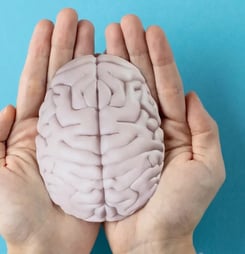

In recent years, the understanding of people who have diverse neurological profiles has continued to increase. As communities grow in the way that they accept and embrace one another, the hope is that people who are on the autism spectrum will be celebrated along with their achievements.
Autistic Pride Day is here to help folks do just that by putting autistic voices, autistic experiences, and autistic joy closer to the center of the conversation. It is less about asking autistic people to fit into a narrow idea of “normal” and more about recognizing autism as a natural part of human diversity, complete with strengths, challenges, and a whole lot of personality.
How to Celebrate Autistic Pride Day
Those who are looking for interesting ways to join in and participate with Autistic Pride Day can certainly get creative with ideas and activities. The best celebrations tend to be the ones that prioritize autistic comfort and preferences, whether that means a big community event or a quiet, satisfying day spent with a favorite interest. Check out some of these to get started with:
Enjoy Some Autistic Pride Day Events
On Autistic Pride Day, various events and activities are organized in cities and towns all throughout the globe. Community gatherings, art exhibitions, educational opportunities, workshops, social discussions and so many other activities take place for people to participate in.
Because autism is a spectrum, autistic-friendly events often look a little different than the average public gathering. Thoughtful hosts may build in features that reduce sensory overload and social pressure, such as:
- Clear schedules and predictable structure. Sharing start and end times, a basic run-of-show, and what to expect can be a big help for anyone who likes to plan ahead.
- Quiet spaces and break areas. A low-stimulation room or corner where people can decompress can turn an event from exhausting to actually enjoyable.
- Flexible participation. Some people love chatting, others prefer listening, and some communicate best through typing or writing. Events that welcome multiple ways to participate tend to feel more genuinely inclusive.
- Sensory considerations. Softer lighting, lower music volume, and a fragrance-free approach can make a huge difference. Even small changes like avoiding flashing lights or sudden loud noises can help attendees feel safe.
Community events also provide something that can be hard to find in everyday life: the experience of not having to explain autistic traits. Stimming, taking breaks, wearing headphones, avoiding eye contact, or opting out of small talk can be treated as ordinary, not “weird.” That simple shift in expectations is a powerful form of pride all by itself.
For those organizing a gathering, one helpful guideline is to make accommodations visible and normal. Instead of treating supports as special favors, they can be presented as part of the event’s design, like providing seating choices, clearly marked exits, and optional activities. That approach helps everyone relax, including people who are unsure whether they “count” as needing accommodations.
Show Support and Raise Awareness
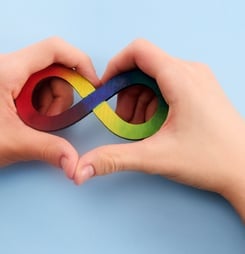
One way to make a small impact through Autistic Pride Day might be to wear a symbol that encourages conversation and shows some pride! This could be one of the infinity rainbow pins that have been adopted as a symbol of the day, which can be sourced in various places online.
The rainbow infinity symbol is popular because it represents endless variation and possibility, a nod to the many ways autistic people think, sense, communicate, and move through the world. It is also closely associated with the broader idea of neurodiversity, which frames neurological differences as natural human variation rather than defects.
Support and awareness can go beyond a pin, too. Autistic Pride Day tends to be most meaningful when support is paired with respectful action, such as:
- Amplifying autistic voices. Sharing posts, artwork, writing, or talks by autistic creators and advocates helps shift attention toward lived experience rather than outside interpretation.
- Using respectful language. Many autistic people prefer identity-first language (for example, “autistic person”) because autism is inseparable from how they experience life. Others prefer person-first language. The most respectful approach is simple: follow each individual’s lead.
- Challenging stereotypes in everyday moments. Autism is often misunderstood as one specific “look” or behavior. Speaking up when someone assumes autistic people lack empathy, cannot be social, or all share the same traits helps replace myths with reality.
- Making environments more accessible. Sometimes support looks like adjusting the lighting in a meeting room, sharing an agenda in advance, or allowing someone to participate without speaking.
For friends, family members, and allies, it also helps to remember that pride is not the same thing as pretending life is easy. Pride can coexist with real needs and real struggles. The goal is not to deny challenges, but to reject shame and low expectations.
Learn More About Autism
While the amount of education and awareness from the public on the subject of autism has increased in recent years, there is still a long way to go. In honor of Autistic Pride Day consider getting involved by doing some research, reading some stories, and connecting with local groups who can help with learning and growing in this area.
Learning about autism in a pride-focused way often means paying attention to topics that autistic people frequently bring up, including:
- Autistic communication styles. Some autistic people are highly verbal, some are minimally speaking, and some use AAC (augmentative and alternative communication) like typing or communication devices. Communication can also be affected by stress, fatigue, or sensory overload. A person’s ability to speak at a given moment is not a measure of intelligence or worth.
- Sensory processing. Many autistic people experience sensory input intensely, whether that means sound feels painfully loud, certain fabrics are unbearable, or bright lights cause headaches. Others seek sensory input and may rock, flap, hum, or fidget to regulate their nervous system. These behaviors, often called stimming, can be practical tools for self-soothing and focus.
- Masking and burnout. “Masking” refers to suppressing autistic traits to blend in, such as forcing eye contact, copying social behavior, or hiding stims. Masking can sometimes help a person navigate certain spaces, but it can also be exhausting and contribute to burnout. Pride-based learning often emphasizes reducing pressure to mask and increasing acceptance of autistic traits.
- Support needs and accommodations. Autism is not one single experience. Some autistic people live independently, others need substantial daily support, and many fluctuate depending on environment and stress. Pride and acceptance are compatible with support. A celebration of autistic identity does not erase the importance of accessible education, employment accommodations, healthcare understanding, and community services.
- Respectful participation in advocacy. Many autistic people emphasize the idea of “nothing about us without us,” meaning policies, programs, and public messaging about autism should include autistic leadership and input.
The Autistic Self-Advocacy Network (ASAN) might be a great place to start learning more from their resources as well as finding ways for more autistic people to get connected to others.
Autistic Pride Day Timeline
Bleuler coins the term “autism”
Swiss psychiatrist Eugen Bleuler first uses “autism” to describe extreme inwardness as a symptom in some people diagnosed with schizophrenia, introducing the word that later evolves into a separate diagnostic concept.
Kanner defines “early infantile autism”
Leo Kanner publishes his landmark paper on 11 children with distinct social and communication differences and repetitive behaviors, establishing autism as a specific childhood condition rather than a form of schizophrenia.
Asperger describes autistic “psychopathy”
Hans Asperger reports on boys with social difficulties, intense special interests, and relatively fluent language, a profile that later informs the notion of Asperger’s syndrome and widens understanding of autistic presentations.
First major autism prevalence study
Victor Lotter publishes an epidemiological study of children showing the behavior pattern Kanner described, giving one of the earliest prevalence estimates and helping researchers see autism as more widespread and varied.
DSM‑III recognizes autism as distinct
The third edition of the Diagnostic and Statistical Manual (DSM‑III) introduces “infantile autism” as its own diagnosis under pervasive developmental disorders, formally separating autism from childhood schizophrenia.
DSM‑IV expands the autism spectrum
DSM‑IV adds Asperger’s disorder, Rett syndrome, and childhood disintegrative disorder under pervasive developmental disorders, reinforcing the idea of a spectrum of autistic conditions with diverse profiles and support needs.
DSM‑5 creates Autism Spectrum Disorder
DSM‑5 replaces earlier subtypes such as autistic disorder and Asperger’s disorder with a single diagnosis, Autism Spectrum Disorder, using specifiers to capture individual differences and cementing the modern spectrum concept.
History of Autistic Pride Day
The first occurrence of Autistic Pride Day took place in 2005 when it was started by an organization called Aspies for Freedom. The group chose June 18 as the day to celebrate because it represented the birthday of the youngest member of the group at that time. The day originated from within, and continues to be led by folks who are members of the autistic community.
That “originated from within” detail matters. Autistic Pride Day developed as a response to public conversations that often framed autism mainly in terms of tragedy, burden, or “fixing” someone. Pride reframes the narrative: autistic people are whole people, with identities and communities, and they deserve respect, access, and the freedom to be themselves.
Over time, Autistic Pride Day became closely associated with the **neurodiversity movement**, which encourages society to recognize that brains come in many varieties. Under this lens, autism is not automatically viewed as something to eliminate. Instead, the focus shifts toward:
- Removing barriers in schools, workplaces, healthcare, and public life.
- Providing supports that improve quality of life.
- Valuing autistic contributions, including creativity, deep focus, honesty, pattern recognition, and specialized knowledge.
- Respecting autonomy, including the right to communicate in different ways and to participate in decisions that affect one’s life.
As the day gained visibility, it also picked up recognizable symbols, including the rainbow infinity sign often used in neurodiversity and autistic pride spaces. That symbol is widely favored by many self-advocates because it emphasizes diversity and completeness, rather than implying that autistic people are missing pieces.
Over the years since its inaugural celebration, Autistic Pride Day has grown to be celebrated by various groups, families, individuals and communities throughout the nation and even all over the world. The purpose of the day is to raise awareness about and show support for those who are on the autism spectrum, with the hope of bringing about positive changes in the broader society.
Those positive changes often show up in practical, everyday forms: teachers offering flexible ways to demonstrate learning, employers providing clear written expectations, friends respecting boundaries around touch, and event organizers building sensory-friendly options into public spaces. Pride is not only a feeling, it is also a push toward environments where autistic people can thrive without constant friction.
Those who are interested in getting involved with other celebrations around autism may want to participate in World Autism Awareness Day on April 2 and Autism Acceptance Month all throughout the month of April.
Facts About Autistic Pride Day
Autism Is Now Estimated to Affect About 1 in 36 Children in the United States
Surveillance data from the U.S. Autism and Developmental Disabilities Monitoring (ADDM) Network reported that about 1 in 36 eight‑year‑old children (2.8 percent) were identified with autism spectrum disorder in 2020, a marked increase from estimates earlier in the 2000s.
Researchers attribute most of this rise to better awareness, broadened diagnostic criteria, and improved screening rather than a proven surge in underlying incidence.
From “Separate Disorders” to One Spectrum
Earlier diagnostic manuals treated conditions like Autistic Disorder, Asperger’s Disorder, and PDD‑NOS as distinct “pervasive developmental disorders.” With DSM‑5 in 2013 and ICD‑11 soon after, these were brought together under a single autism spectrum disorder category, with specifiers for language, intellectual disability, and other features.
This shift reflects scientific recognition that autistic traits form a continuum rather than neatly separated diagnoses.
Autistic Sensory Experiences Differ for the Vast Majority of Autistic People
Studies suggest that between 93 and 96 percent of autistic individuals show significant sensory processing differences that affect daily life, such as being highly sensitive to sounds or seeking strong movement input.
Autism Has a Strong Genetic Component but No Single “Autism Gene”
Genetic research shows that autism is highly heritable, yet hundreds of different genes and genetic variants appear to contribute, each typically adding only a small increase in likelihood.
Environmental influences, especially those that affect early brain development, also play a role, so scientists describe autism as a complex, multifactorial neurodevelopmental condition rather than something caused by one gene or one exposure.
The Idea of Neurodiversity Emerged from Autistic and Disability Rights Activism
The term “neurodiversity” is widely credited to Australian sociologist Judy Singer, who used it in the late 1990s to describe a “politics of neurological diversity,” but later scholarship emphasizes that it grew out of collective work in autistic communities and disability rights groups.
Rather than seeing autism solely as a disorder, neurodiversity frames autistic, ADHD, and other neurotypes as natural variations that become disabling mainly when society fails to accommodate them.
Jim Sinclair’s 1993 Essay Helped Reframe Autism as an Identity, Not a Tragedy
Autistic activist Jim Sinclair’s speech “Don’t Mourn for Us,” first delivered in 1993, argued that autism is an integral part of an autistic person’s identity and should not be treated as the loss of a “normal” child.
Widely circulated in print and online, the essay became a foundational text for the autism rights movement and heavily influenced later neurodiversity thinking.
Autistic Brains Show Differences in Connectivity and Sensory Networks
Neuroscience studies using MRI and other imaging methods have found that autistic people often show atypical patterns of connectivity between brain regions, especially in networks involved in social communication and sensory processing.
These differences vary from person to person and are not diagnostic on their own, but they support the view that autism involves distinct ways of processing information rather than a simple lack of ability.