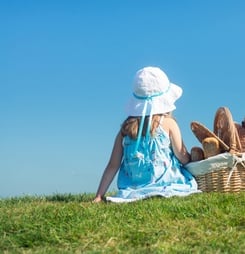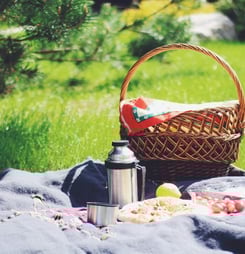

It’s often claimed that life is no picnic – but today it is! International Picnic Day is a chance to eat out in the open air with friends or family.
Placed conveniently in the middle of June, for many people this means that the weather should be fine and the sun shining (at least in the northern hemisphere).
But even if the weather doesn’t want to cooperate, an inside picnic can be a great substitute. Just spread a blanket out on the floor and enjoy a simple meal!
So get that picnic basket ready and get started celebrating International Picnic Day!
How to Celebrate International Picnic Day
Those who want to get in on the fun can find plenty of opportunities to celebrate this enjoyable day. Consider these creative ways of celebrating or come up with a list of your own:
Join a Picnic Day Event
Charity events, school picnics and all kinds of other group meals are organized to mark the occasion. Check with a community board or website to see if any picnics are planned locally. Look particularly at local parks or museums that often plan these types of events. If they are having one nearby, join in. If not–go ahead and organize it!
Have a Personal Picnic for Lunch or Dinner
A great way to celebrate International Picnic Day is to bike, walk or hike to a nearby beauty spot, or just take your sandwiches and cold hard-boiled eggs into the garden and enjoy an al fresco lunch. Those who are at work for the day can just take their normal lunch hour to head out to a patch of grass or park nearby.
Other ideas for piling foods into a picnic basket include:
- Sandwiches. Perhaps the perfect picnic food, sandwiches make everything easy. Just pile some meat, cheese, and vegetables on a couple of pieces of bread. Add a few condiments, such as mustard or mayonnaise, and it’s a great start for a picnic.
- Fruit. Most fruits come with their own natural packaging, making them the ideal food for a picnic. Grab some apples, oranges, bananas, or a giant watermelon to enjoy outside.
- Side Dishes. Easy salads, potato chips, or a tray filled with veggies will make a picnic super tasty!
International Picnic Day Timeline
“Pique-nique” Appears in French
The word “pique-nique” is recorded in France as a term for a shared social meal where guests contribute food or drink, laying the linguistic foundation for the modern idea of a picnic.
“Picnic” Enters English Society Talk
Lord Chesterfield uses “picnic” in English correspondence to describe a social gathering with shared food, drink, and cards, showing the French idea has crossed the Channel, though not yet tied to outdoor eating.
Pic Nic Society Popularizes Fashionable Feasts
In London, the Pic Nic Society of fashionable elites hosts lavish entertainment-and-supper events, helping turn the “picnic” into a fashionable, semi-potluck social institution in Britain.
Mrs Beeton Codifies the Victorian Picnic
Isabella Beeton’s “Book of Household Management” publishes a detailed “picnic for forty persons” menu of cold meats, pies, and drinks, crystallizing the elaborate Victorian country-house picnic in domestic culture.
Hare’s Patent Refrigerator Basket Keeps Food Cold
An American trade catalog advertises Hare’s Patent Refrigerator Basket by Conroy, Bissett & Malleson, an insulated, tin-lined “miniature refrigerator” that lets 19th‑century picnickers safely carry perishables in hot weather.
Pan-European Picnic Cracks the Iron Curtain
A peace demonstration styled as a picnic on the Austro‑Hungarian border briefly opens the frontier, allowing hundreds of East Germans to flee and becoming a symbolic turning point in the collapse of communist rule in Europe.
World’s Largest Picnic Sets Record
In Lisbon, Portugal, more than 20,000 people gather for an organized mass picnic, earning recognition from Guinness World Records and highlighting the enduring global appeal of communal outdoor eating.
History of International Picnic Day
The word “picnic” probably gets its origins from the French language, specifically from the word “pique-nique”.
It is believed that this type of informal outdoor meal became a popular pastime in France after the French Revolution in the mid-1800s when it was possible again to get out into the country’s royal parks. However, even if it began in France, it has become a lovely activity that has spread all over the world.
As fans of Jane Austen novels will know, 19th-century picnics in England became elaborate social occasions, with menus featuring a wide range of cold meats and pies that took days to prepare. Over the years, picnics have sometimes come to represent the gathering of the common people in political protest.
One of the more famous of these was the Pan-European Picnic that took place in the summer of 1989 at the border of Austria and Hungary. It was part of many protests against communism that year that led to the fall of the Iron Curtain.
More recently, in 2009, the Guinness Book of World Records made note of the record for the largest picnic in the world. It took place with more than 20,000 people in Lisbon, Portugal.
Today’s picnics might be a bit more casual, sometimes just a few pieces of bread and cheese thrown into a paper bag and eaten on a park bench will suffice. A picnic can be centered around just about anything the participants want it to be, including games and other outdoor activities.
International Picnic Day is celebrated in many countries–a simple opportunity to enjoy the beauty of eating outside!
Facts About International Picnic Day
Early Picnics Were Indoors, Not in the Grass
In 17th and 18th century France and Britain, a “pique-nique” or picnic was usually an indoor affair, often held in drawing rooms where well-off guests contributed food, drink, and sometimes musical entertainment or card games; the association with spreading a blanket on the grass and eating outside only became common in the 19th century.
French “Pique-nique” Began as a Potluck for the Elite
The earliest uses of the French word “pique-nique,” attested in the late 1600s, described a potluck-style gathering in which each invited guest brought a dish or bottles of wine to share, emphasizing shared contributions and witty conversation rather than fresh air or rustic scenery.
Royal Parks Opening Helped Turn Picnics into Mass Leisure
Historians note that after the French Revolution made former royal parks accessible to ordinary citizens, outdoor social meals became more visible and popular, helping to shift picnics from exclusive indoor entertainments for nobles to open-air leisure shared by a much broader public.
Victorian Picnics Could Take Days to Prepare
By the 19th century, British middle‑class and aristocratic picnics had become such elaborate productions that servants and cooks sometimes worked for days in advance to produce cold roast meats, pies, trifles, and ornamental jellies, all carefully transported to country houses, riverbanks, or race meetings.
Picnic Baskets Once Doubled as Miniature Refrigerators
In the late 1800s, manufacturers sold specialized “refrigerator baskets” for picnics, such as Hare’s Patent Refrigerator Basket advertised in an 1881 trade catalog; it had a tin-lined, boiler‑felt‑insulated body and a dedicated ice compartment so that food and drinks could stay cold on hot summer outings.
Car Culture Spawned Clamp‑On Picnic Hampers
As family car ownership grew in the mid‑20th century, companies began marketing picnic hampers designed specifically for motoring trips, including a 1953 American model that clamped over the back seat and opened into an integrated system of slide‑out trays and a small icebox for food on the road.
Outdoor Meals Carry Real Health Benefits from Green Space
Beyond the food itself, sharing a meal in a park or other green space can benefit health: a large systematic review of studies on greenspace exposure found links between access to greenery and better perceived general and mental health, as well as lower risks of several cardiometabolic conditions.