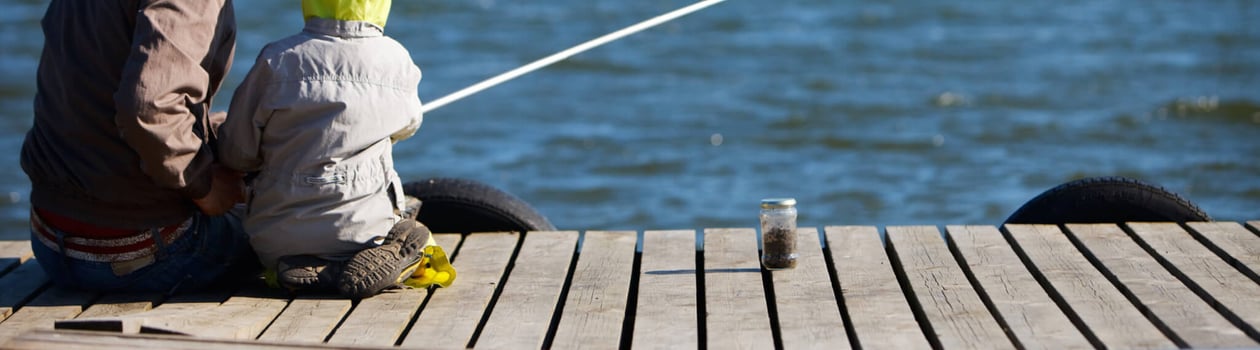
The sun is just beginning to rise over the horizon, painting the sky a vivid palette of reds and oranges. The quiet buzz of insects can be heard as they dance over the water’s surface, punctuated occasionally by the splash of a fish breaking the surface for its morning meal, unknowing that it is destined to become a meal itself.
National Go Fishing Day celebrates quiet, meditative moments like this and those individuals who find solace in the pursuit of this elusive prey!
How To Celebrate National Go Fishing Day
Go Fishing
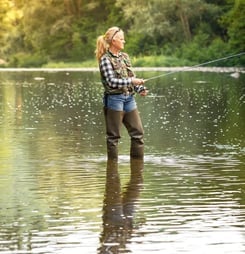
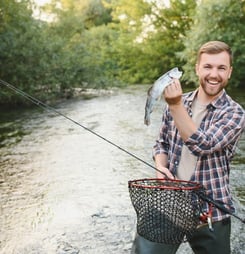
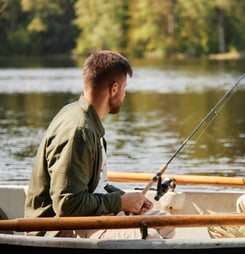
Get out there and go fishing! It’s as simple as that. Whether you prefer to go boat fishing and troll along with your bait and tackle trailing in the water behind you, or standing in hip waders while casting your fly over the top of the water, there’s a form of fishing that will appeal to everyone. Even if you don’t like fishing, you have to admit that sitting quietly on the edge of a lake with a fishing pole and a case of beer beats even the best day at work!
Enter a Fishing Competition
If you want to further your journey within fishing and you feel you’re ready for another step, then you can celebrate Fishing Day with entering into a competition. There are plenty around and there are often money prizes up for grabs! Now what better way to celebrate fishing than with a big win? Get involved and really start to enjoy what fishing has to offer, with its huge benefits! Time to learn a new skill, so let’s go fishing!
Get Creative
We have certainly all fished before. Fished for compliments, fished for some decent wine to go with our Sunday roast but the act of fishing is indeed considered an actual sport.
Whether you fish with the old fashion maggots, or whether you’ve progressed to the corn bait, you will find that fishing in general is a sport that requires both patience and strength. There are plenty of fish to choose from, depending on where you choose to fish and although some people fish for a living, this little hobby can develop into much more than just a Sunday morning pastime.
National Go Fishing Day Timeline
Earliest Known Fishhooks in Island Southeast Asia
Shell fishhooks from Jerimalai Cave on Timor show that early humans were already crafting specialized gear and catching pelagic fish such as tuna.
“The Treatyse of Fysshynge with an Angle” Printed in England
Included in The Boke of St. Albans, this is one of the first detailed English texts on rod-and-line angling as a gentlemanly pastime.
Izaak Walton Publishes The Compleat Angler
Blending practical tips, dialogue, and nature writing, Walton’s book helps establish angling as a reflective form of recreation rather than just subsistence work.
International Game Fish Association Founded
The IGFA is established to promote responsible sport fishing, standardize rules, and maintain world records for saltwater and freshwater game fish.
Recreational Fishing Recognized as Major U.S. Economic Driver
An American Sportfishing Association report estimates that U.S. anglers spend tens of billions of dollars annually, supporting hundreds of thousands of jobs.
History Of National Go Fishing Day
While fishing has served to feed civilization since near the dawn of time, and in modern days it is a major industry that has a yearly yield in the billions of dollars, National Go Fishing Day is dedicated to sport fishing, as well as those who fish as part of survival (known as subsistence fishing). Fishing is a great way to help add food to your table while having the satisfaction of knowing that you caught it yourself, as well as a wonderful bonding opportunity for friends and family.
While the most common forms of fishing are rod and reel fishing, fly fishing, and at a distant third bow-fishing, there are many other forms that are practiced around the world for survival and pleasure. Whatever your preferred method, fishing is a great experience and gets us back in touch with nature and ourselves.
Contrary to popular belief, fishing is far more than “One jerk waiting for another jerk at the end of the line.”, and instead is actually a result of luck combined with three important processes, the state of the fish, how it encounters the tackle, and the composition of that tackle.
The Ancient Greeks considered fishermen of very low status so they rarely depicted them in art. All civilizations that lived near the water have developed some forms of fishing over time and even relied on fish as a part of their diet to some extent. Eating our fishy rewards after a long fishing stint, seems immoral for some but it is practical for many.
Benefits Of Fishing
The benefits of fishing are plentiful. Now that isn’t just because of the great suntan you can get whilst sitting on the riverbanks or pondside whilst fishing, but because it is a sport that requires a lot of skill and diligence.
Some of the biggest benefits include: boosting the immune system! Yes that’s a fact, if you’re doing something that you love, then your body is healing and strengthening itself constantly. Add this to the muscular strength you need to reel in that tough carp that has bit the line and you’re really working your cardiovascular system also. Good start isn’t it?
Fishing also has the opposite effect also, it certainly helps promote relaxation and when you are sat out in nature, you are certainly getting your daily dose of fresh air and vitamin D that will make you feel good on the outside as well as on the inside! For those who have a little bit of a short temper, you could choose fishing as a way to tame that fiery temperament.
Fishing takes patience and promotes a calm nature, which is beneficial for you mentally and physically; it can lower blood pressure and allow you to feel more calm and ready to tackle life! It will help promote self-reliance and the ability to learn for yourself, and it’s a sport that can be enjoyed individually or with family.
Think of it as family bonding time! “Come on kids, let’s go catch some Chinook with old pap!” Don’t forget to stick on your ‘gone fishing’ plaque on the doorstep, so the neighbors know where to find you!
Facts about Fishing
Deep-Sea Fishing Is Over 40,000 Years Old
Archaeological excavations at Jerimalai Cave in Timor-Leste uncovered tens of thousands of fish bones from fast-swimming oceanic species such as tuna and sharks, along with some of the world’s oldest known fishhooks.
These finds show that humans were already capable of true deep-sea fishing at least 42,000 years ago, using boats and sophisticated gear to reach offshore waters far beyond the shoreline.
Early Shell Fishhooks Reveal Advanced Line Fishing
Among the Jerimalai Cave discoveries is a carefully shaped shell fishhook dated to around 23,000 years ago, providing the earliest firm evidence of line-and-hook fishing.
Its fine workmanship suggests that by the Late Pleistocene, people in Island Southeast Asia were already tailoring hook size and shape to target particular species, much as modern anglers choose their tackle for specific fish.
Fish May Have Fed Humans Nearly Two Million Years Ago
Zooarchaeological work in Africa indicates that hominins were exploiting freshwater fish long before Homo sapiens appeared.
A 2023 review of fossil sites notes evidence from the Lower Pleistocene, about 1.95 million years ago, where cut-marked fish remains suggest that early humans or their relatives were processing and eating fish from lakes and rivers, making aquatic resources part of the human diet far earlier than once thought.
Small-Scale Fisheries Support Hundreds of Millions of People
Globally, an estimated 58.5 million people were directly employed in fisheries and aquaculture in 2020, and more than 600 million people depend at least partly on these sectors for their livelihoods.
Most of this work occurs in small-scale coastal and inland fisheries, where catch is often used for household food and local markets rather than export, making fish a cornerstone of food security in many low- and middle-income countries.
Fish Provide About One-Fifth of the World’s Animal Protein
According to the United Nations Food and Agriculture Organization assessments, fish supply roughly 17–20 percent of the world’s intake of animal protein, and in some Small Island Developing States and coastal nations, that share can exceed 50 percent.
This dietary role is especially critical where other sources of animal protein are scarce or expensive, tying healthy fish populations directly to human nutrition.
Recreational Anglers Number in the Hundreds of Millions
A global review of recreational fisheries commissioned by the FAO estimates that more than 220 million people worldwide participate in recreational fishing.
In many wealthier countries, between 10 and 20 percent of the population fishes for recreation, and their spending on licenses, gear, travel, and services adds up to tens of billions of dollars annually while also funding conservation programs through license fees and dedicated taxes.
Fishing Can Measurably Reduce Stress Levels
Health research has started to quantify what many anglers report anecdotally: time on the water is calming.
A 2022 study of recreational fishers in the United Kingdom found that each additional hour of fishing per month was associated with a small but measurable decrease in perceived stress, with the most active anglers reporting stress scores up to about 15 percent lower than non-fishers after adjusting for other factors.