Casimir Pulaski Day, celebrated in Illinois, honors the bravery and contributions of Casimir Pulaski, a Polish-born hero of the American Revolution.
Known as the “Father of the American Cavalry,” Pulaski played a crucial role in organizing and leading cavalry units against British forces.
This day is significant in regions with large Polish populations, particularly Chicago, and serves as a reminder of Pulaski’s dedication and sacrifice for American independence.
Casimir Pulaski Day Timeline
Pulaski Joins the Bar Confederation
Casimir Pulaski emerges as a leading cavalry commander in the Bar Confederation uprising against Russian influence in the Polish–Lithuanian Commonwealth.
Exile After the First Partition of Poland
With the Bar Confederation defeated and Poland’s first partition underway, Pulaski goes into exile in Western Europe, seeking new ways to fight for liberty.
Pulaski Reaches America and Rides at Brandywine
Arriving on Benjamin Franklin’s recommendation, Pulaski joins the Continental Army and helps cover the American retreat at the Battle of Brandywine.
Pulaski’s Legion and the American Cavalry
Congress authorizes Pulaski to form an independent cavalry corps, Pulaski’s Legion, which becomes a model for more disciplined American mounted forces.
Death at the Siege of Savannah
Leading a bold cavalry charge against British lines, Pulaski is mortally wounded at Savannah, cementing his reputation as a Revolutionary War martyr.
Savannah’s Monument to Pulaski Completed
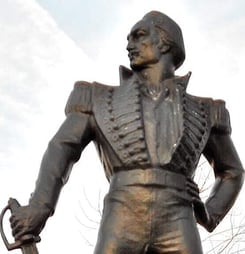
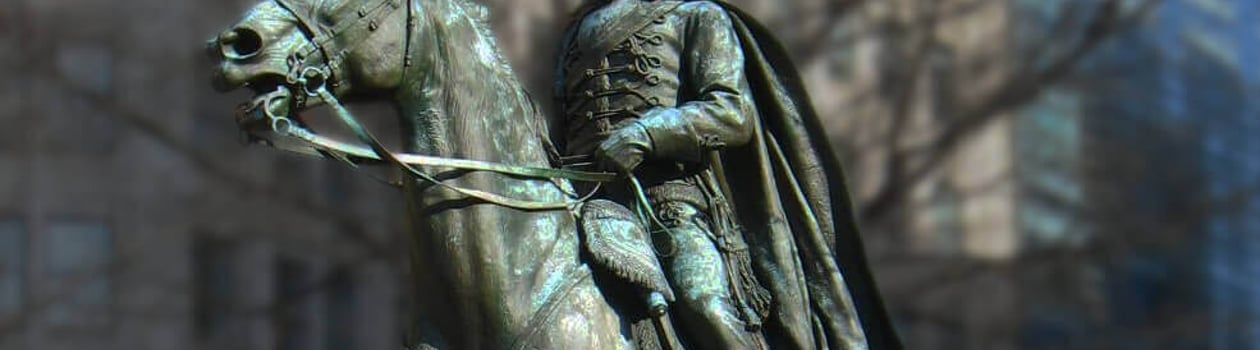
A towering monument honoring General Pulaski is finished in Monterey Square, Savannah, near the battlefield where he fell fighting for American independence.
Honorary United States Citizenship
The U.S. Congress and President Barack Obama grant Casimir Pulaski honorary American citizenship, formally recognizing his sacrifice for the new nation.
How to Celebrate Casimir Pulaski Day
Host a Polish Feast
Break out the pierogi and kielbasa! Casimir Pulaski Day is the perfect excuse to indulge in delicious Polish cuisine.
Try your hand at making traditional dishes like stuffed cabbage rolls and potato pancakes. Remember to share these treats with friends and family. Food always brings people together and celebrates heritage in the tastiest way possible.
Dive into History
Learn about Casimir Pulaski’s daring adventures and his role in the American Revolution. Read books or watch documentaries that highlight his life and military genius.
Visiting a local library or museum can also provide fascinating insights. Make it a day of discovery and appreciation for this brave hero’s contributions.
Parade with Pride
Join a local parade or organize your mini-march. Grab some Polish flags, dress in red and white, and celebrate in style.
Parades often include music, dancing, and colorful floats, making them a lively way to honor Pulaski’s legacy. It’s a fun and festive way to engage with the community and show some Polish pride.
Visit a Historical Site
If you’re near Chicago or another city with a rich Polish history, visit a monument or historical site dedicated to Pulaski.
These places offer a tangible connection to the past and make the hero’s story come alive. Even a virtual tour can be a great way to explore and learn.
Engage in Community Service
Celebrate Pulaski’s spirit of dedication by volunteering in your community. Organize a clean-up, help at a local food bank, or assist in community projects.
Giving back honors Pulaski’s legacy of service and makes a positive impact. Plus, it’s a fulfilling way to spend the day.
Host a Cultural Night
Throw a cultural appreciation night at home. Invite friends and family to enjoy Polish music, dance, and folklore.
You could even have a storytelling session about Pulaski’s life. This creates a cozy, educational, and entertaining atmosphere. Everyone will leave with a greater appreciation for Polish heritage.
Why Celebrate Casimir Pulaski Day?
Casimir Pulaski Day commemorates Pulaski’s legacy and his efforts in shaping the U.S. military. Pulaski’s military tactics and leadership were vital during the Revolutionary War. His dedication to liberty, despite not being born in America, highlights the inclusive spirit of American history.
Celebrating this day also honors the contributions of Polish Americans and their impact on the nation. By remembering Pulaski, the holiday promotes the values of freedom and bravery that are central to American identity.
History of Casimir Pulaski Day
Casimir Pulaski Day became an official holiday in Illinois in 1977. It honors the Revolutionary War hero, who is celebrated for his significant contributions to American independence. Born in Poland in 1745, Casimir Pulaski became famous for his military skills and bravery.
He fought against Russian domination in Poland before meeting Benjamin Franklin and joining the American cause. Pulaski’s military expertise helped shape the American cavalry, earning him the title “Father of the American Cavalry.”
The idea of honoring Pulaski in Illinois gained traction due to the state’s large Polish-American population. In 1973, Governor Dan Walker signed legislation creating a commemorative holiday.
The first official celebration took place in 1978. In 1985, Governor James R. Thompson elevated the day to a public holiday for schools and state offices.
This change was significant, as it reflected the deep respect for Pulaski’s contributions and the influence of the Polish community in Illinois.
Pulaski Day also symbolizes the broader immigrant experience in America. Pulaski, an immigrant himself, is celebrated not only for his military achievements but also for his commitment to the ideals of freedom and independence.
His legacy is a reminder of the diverse contributions that immigrants have made to the United States.
Facts About Casimir Pulaski Day
Pulaski Helped Pioneer American Cavalry Tactics
Casimir Pulaski arrived from Europe with advanced cavalry experience and reshaped how mounted troops operated in the Continental Army.
Commissioned “Commander of the Horse” in 1777, he drilled his men in rapid maneuver, shock charges, and tight discipline, then formed Pulaski’s Legion, a combined-arms unit of lancers and light infantry that became a prototype for later American light cavalry.
A Polish Freedom Fighter Before He Reached America
Years before joining the American Revolution, Pulaski was already a veteran insurgent in the Polish–Lithuanian Commonwealth.
As a leading cavalry officer of the Bar Confederation, he spent 1768 to 1772 fighting Russian forces and royal troops, defending Catholic and noble privileges and opposing foreign domination, which gave him the reputation of a defender of liberty in Europe.
A Daring Charge at Brandywine May Have Saved Washington
At the Battle of Brandywine in September 1777, Pulaski led a bold cavalry counterattack that helped cover a chaotic American retreat.
Contemporary accounts credit his quick decision to charge with delaying British forces long enough for George Washington and the main army to escape encirclement, cementing his value to the Continental command.
Pulaski’s Final Battle Was an International Assault on Savannah
Pulaski was mortally wounded leading a cavalry charge during the joint French‑American assault on British‑held Savannah in October 1779.
He commanded a mixed force of French and American horsemen in an attempt to break enemy lines, was struck by grapeshot, and died two days later, making him one of the most famous foreign volunteers to fall in the American cause.
Chicago Grew Into One of the World’s Largest Polish Communities
By the late twentieth century, the Chicago region had become one of the largest Polish diaspora centers on the planet, with Polish ranking among its most commonly spoken languages.
Estimates place nearly 2 million people of Polish ancestry in the metropolitan area, helping shape neighborhoods, churches, businesses, and cultural institutions across the city.
Polish Immigrants Helped Build Industrial Chicago
Large waves of Polish immigrants began arriving in Chicago in the late nineteenth and early twentieth centuries, drawn by meatpacking plants, steel mills, and railroads. They formed dense “Polonia” neighborhoods anchored by Catholic parishes and fraternal organizations, and their labor and institutions played a major role in turning Chicago into a booming industrial metropolis.
Pulaski’s Gender Has Been Reexamined by Modern Science
In the 1990s, researchers studying remains believed to be Pulaski’s noted features more consistent with a biologically intersex person than with typical male anatomy.
A later DNA study published in 2019 linked those remains to Pulaski’s family, suggesting that one of the Revolution’s best-known cavalry commanders may have been intersex, a finding that has prompted new discussion about gender in early American history.