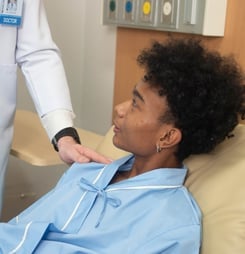

Doctor-Patient Trust Day is a special occasion dedicated to highlighting the crucial relationship between healthcare providers and their patients.
Trust is the quiet ingredient that makes medical care work. It helps a patient feel safe enough to share symptoms they might otherwise keep private, including the awkward, the scary, and the seemingly unrelated.
It also helps a clinician feel confident that the story they are hearing is complete, which matters because medicine is often detective work: small details can change a diagnosis, a medication choice, or the urgency of a next step.
This day spotlights the practical building blocks of that trust: clear communication, transparency about options and uncertainty, respect for a patient’s values, and consistent follow-through.
When trust is strong, patients are more likely to ask questions, disclose what they are actually taking or doing, and stick with a plan long enough to see whether it helps. When trust is shaky, even excellent medical advice can be ignored, misunderstood, or feared.
Doctor-Patient Trust Day serves as a reminder that this relationship is a two-way street, built visit by visit, conversation by conversation.
How to Celebrate Doctor-Patient Trust Day
Send a Heartfelt Note
A sincere message can do more than flatter a busy professional. A short note that names something specific, like “Thank you for explaining the pros and cons in a way I could understand,” reinforces the behaviors patients value most: patience, clarity, and respect.
A good note does not need to share personal medical details. It can focus on the experience of care: being listened to, having concerns taken seriously, or being included in decisions.
If sending a physical card feels too formal, a secure message through a clinic portal, a brief email to a practice manager, or a handwritten note dropped off at reception can still carry real weight.
Share Your Story
Positive stories help set expectations for what good care looks like. Sharing a respectful, privacy-minded story can encourage others to seek care earlier, ask better questions, and choose clinicians who communicate well.
A helpful story highlights process rather than personal details. For example, how a doctor invited questions, checked understanding, or offered a clear plan for what to do if symptoms changed.
If leaving a public review, it is wise to keep it general and avoid identifiable medical information. The goal is to celebrate trustworthy care without turning anyone’s health history into community gossip.
Plan a Health Check
A healthy meal is a surprisingly good trust metaphor: good outcomes usually come from small choices repeated consistently. A shared cooking session, even virtual, turns health advice into something practical and friendly instead of abstract and scolding.
It also invites conversations about realistic habits. People have budgets, schedules, cultural food preferences, allergies, and different cooking skills. A “healthy feast” can be as simple as building a balanced plate, reading labels together, or planning a week of easy meals. If inviting a doctor to cook feels too personal, the idea can be adapted by cooking with family or friends while using guidance from a clinician’s handout or a clinic’s nutrition tips.
Donate to a Good Cause
Donating to a healthcare-related charity is a way to honor the care patients receive while helping others access care, education, or support services. Donations can go toward:
- Patient transportation programs
- Community clinics
- Disease-specific support organizations
- Health literacy initiatives
- Mental health helplines and counseling services
For people who prefer non-monetary giving, volunteering time or donating needed items to a clinic-based pantry can also support health in very direct ways.
Read Up on Medical Ethics
Trust is not only personal chemistry. It is also institutional: patients need to know there are standards that shape how care is delivered. Learning about medical ethics helps patients understand why clinicians ask certain questions, why consent matters, and why privacy is treated as sacred.
Key ethics concepts worth exploring include:
- Informed consent: Patients should understand the benefits, risks, alternatives, and what happens if they choose to do nothing.
- Confidentiality: Health information is private, with limited exceptions designed to protect safety.
- Conflicts of interest: Clinicians are expected to disclose relevant financial relationships or biases that could affect recommendations.
- Professional boundaries: The relationship is caring, but it is not casual. Boundaries protect patients from pressure and keep decision-making focused on health.
- Shared decision-making: In many situations, there is more than one reasonable option, and the best choice depends on a patient’s goals and preferences.
Knowing these ideas helps patients feel more confident and encourages conversations that are collaborative rather than intimidating.
Host a Virtual Q&A
A Q&A session can turn “mystery medicine” into something approachable. It can also lower anxiety, which is a major barrier to seeking care. The most productive Q&As are general and educational, not personal medical consultations.
To keep it useful and safe:
- Collect questions in advance and group them by theme, like prevention, medication safety, or how to prepare for appointments.
- Encourage questions about communication, such as “What should a patient bring to a visit?” or “How can someone ask for clarification without feeling rude?”
- Remind participants not to share private health details in a group setting.
- Focus on what people can do, including when to seek urgent care and how to find reliable information.
This kind of event strengthens trust not just in one clinician, but in the idea that healthcare can be navigated with knowledge and support.
Decorate with Healthy Tips
A bulletin board or social media “tip wall” can be both quirky and practical, especially when the tips support trust-building habits. Instead of generic slogans, it can feature prompts that encourage better conversations, such as:
- “Bring your medication bottles or a photo of the labels.”
- “Ask: What are the benefits, risks, and alternatives?”
- “Repeat the plan back in your own words to confirm it.”
- “Share barriers honestly: cost, side effects, schedule, fear.”
- “If something feels off, ask for the reasoning behind the recommendation.”
If the board is displayed in a shared space, keep the tips universal and avoid anything that invites people to post personal diagnoses. The goal is to normalize healthy communication, not to create a public confession wall.
Significance of the Doctor-Patient Trust Day
Doctor-Patient Trust Day is celebrated for several reasons. First, it raises awareness about the ethical standards clinicians follow to earn and maintain patient trust. Patients need to feel confident that their clinicians are knowledgeable and compassionate. This trust encourages honest communication, which is vital for accurate diagnosis and effective treatment.
Trust influences nearly every step of care. A patient who trusts their clinician is more likely to:
- Describe symptoms fully, including sensitive topics like sexual health, mental health, substance use, or medication adherence.
- Mention alternative remedies or supplements, which can prevent dangerous interactions.
- Follow through with labs, imaging, referrals, or lifestyle changes.
- Return for follow-up instead of disappearing when a plan is not working.
On the clinician’s side, trust supports better care because it improves the quality of information and reduces misunderstandings. It also makes it easier to discuss uncertainty. Medicine is not always a neat “do this, cure that” story. Sometimes the best option is to watch and wait, try a medication and reassess, or run tests to rule things out. A trustworthy relationship allows room for nuance without panic.
Additionally, the day underscores the importance of empathy and understanding in healthcare, fostering a supportive environment where patients feel valued and heard.
Empathy in healthcare is not only kindness. It is a clinical skill. When a patient feels rushed or dismissed, they may hold back information or feel too embarrassed to ask for clarification. When they feel heard, they are more likely to say, “I did not understand that,” or “I cannot afford that medication,” which lets the clinician adjust the plan to something realistic.
Doctor-Patient Trust Day also highlights practical behaviors that build trust on both sides:
- Clear communication: Plain language, avoiding jargon, and checking understanding can prevent errors.
- Transparency: Explaining why a test is needed, what it can and cannot show, and what the next steps might be.
- Reliability: Following up on results, returning messages when promised, and documenting plans clearly.
- Respect for autonomy: Recognizing that a patient has the right to make decisions, even when the clinician disagrees, and working together to reduce risk.
- Cultural humility: Staying curious rather than assuming, and adjusting recommendations to fit a person’s context and values.
By focusing on these aspects, Doctor-Patient Trust Day aims to enhance the overall healthcare experience for both clinicians and patients.
Doctor-Patient Trust Day Timeline
Hippocratic Oath Articulates Physician Duties
Early versions of the Hippocratic Oath set expectations that physicians act for the good of the sick, avoid harm, and keep patient information confidential, forming a moral basis for trust in medical care.
Nuremberg Code Establishes Voluntary Consent
In response to abuses in human experiments during World War II, the Nuremberg Code requires voluntary, informed consent from research subjects, reinforcing respect for patient autonomy and laying the groundwork for modern informed consent in medicine.
Declaration of Helsinki Strengthens Patient Protection
The World Medical Association’s Declaration of Helsinki sets ethical principles for medical research involving humans, obligating physicians to prioritize the health, rights, and well-being of patients and research participants, which supports public trust in doctors.
Declaration of Lisbon Defines Rights of the Patient
The World Medical Association adopts the Declaration of Lisbon on the Rights of the Patient, affirming rights to free choice of physician, confidentiality, self‑determination, and dignity, and explicitly framing the doctor‑patient relationship around respect and trust.
U.S. Patient Self-Determination Act Promotes Autonomy
The Patient Self-Determination Act requires healthcare institutions receiving federal funds to inform adult patients of their rights to make decisions about their medical care, including advance directives, encouraging more open communication and shared decision-making.
HIPAA Protects Medical Privacy and Confidentiality
The U.S. Health Insurance Portability and Accountability Act establishes national standards for safeguarding personal health information, reinforcing patients’ expectations that sensitive details shared with clinicians will remain confidential and secure.
Rise of Shared Decision Making in Clinical Practice
Health systems increasingly adopt shared decision-making models that present evidence, discuss options, and incorporate patient preferences, shifting the doctor‑patient relationship from paternalism toward partnership and deepening trust through transparency.
History of Doctor-Patient Trust Day
Doctor-Patient Trust Day is observed as a day centered on the ethics and communication that underpin good medical care. While some holiday listings describe it as beginning in the early 2000s, the details of its founding are not widely documented. In practice, the day functions as a prompt to talk about what makes medical relationships work and how trust is earned over time.
The broader history of doctor-patient trust runs much deeper than any one observance. For centuries, medical care often followed a paternalistic model: the clinician spoke, the patient complied, and questions were limited. As medical science advanced, expectations changed.
Patients increasingly wanted not only treatment, but also explanations, options, and a voice in decisions. The shift was gradual, shaped by changes in education, ethics, and public expectations about individual rights.
Professional training and standard-setting also played a role. As medicine became more formalized, the public began to associate “trustworthy care” with competence that could be demonstrated and evaluated, not simply assumed.
Standards for licensing, hospital oversight, and continuing education helped move health care toward consistency, which is a foundation for trust even when patients never see the behind-the-scenes work.
Ethics evolved alongside science. Informed consent, privacy protections, and clearer guidance about conflicts of interest reinforced the idea that patients are not just cases, but people with rights and preferences.
Those principles also turned trust into something that can be supported by systems. A patient does not have to rely solely on a clinician’s personality when rules and professional expectations are designed to protect dignity, safety, and choice.
Technology added another layer. Digital records, patient portals, and electronic prescribing can reduce some errors and make it easier for people to review instructions after a visit.
At the same time, greater data sharing raises understandable concerns about confidentiality and who has access to sensitive information. Trust, in other words, is still personal, but it now depends in part on how well an entire organization handles communication, security, and follow-through.
Modern care is also more team-based. Many patients interact with nurses, pharmacists, therapists, medical assistants, and specialists, sometimes within the same course of treatment.
Doctor-Patient Trust Day fits this reality by emphasizing habits that work across the whole system: listening closely, documenting accurately, returning results, and treating patients as partners. When those habits are consistent, trust becomes less fragile and the whole experience of care becomes easier to navigate.
Building Trust: The Foundation of Better Care
Doctor–Patient Trust Day highlights how confidence, communication, and transparency shape healthcare outcomes.
The facts below explore how trust influences treatment success, why personal trust can differ from system-wide confidence, and how modern practices like informed consent have transformed the relationship between doctors and patients.
Trust Can Directly Affect Whether Treatments Work
Multiple large studies have found that patients who trust their physicians are more likely to follow treatment plans, leading to better blood pressure control, improved blood sugar levels, and fewer symptoms of depression.
In one review of 47 studies, higher trust in doctors was consistently linked with better adherence to medications and recommended health behaviors across many conditions.
Patient Trust Is Different From Trust in the Health System
Research distinguishes between trust in an individual doctor and trust in the broader healthcare system, and the two do not always move in tandem.
In an international comparison published in the New England Journal of Medicine, the United States ranked relatively low in overall trust in the medical system, despite many Americans still reporting high levels of trust in their personal physicians.
The Modern Idea of “Informed Consent” Is Only About 60 Years Old
While physicians have sworn versions of the Hippocratic Oath for centuries, the legal and ethical requirement that doctors obtain informed consent from patients is largely a product of the mid to late twentieth century.
Influential U.S. court cases in the 1950s and 1960s established that physicians must disclose risks, benefits, and alternatives in language patients can understand so that trust rests on shared information rather than blind faith.
Electronic Health Records Can Help and Hurt Trust
The spread of electronic health records has changed how doctors and patients interact in the exam room.
Careful use of the computer, such as sharing the screen and reviewing results together, has been shown to strengthen trust, but studies also find that when clinicians focus more on typing than eye contact, patients report feeling less heard and less confident in their care.
Trust Levels in Doctors Dropped Sharply During the COVID‑19 Years
A nationally representative U.S. survey that tracked attitudes over time found that the proportion of adults reporting high trust in physicians and hospitals fell from about 71.5 percent in April 2020 to 40.1 percent in January 2024.
The decline appeared across demographic groups and was linked with greater skepticism toward public health recommendations, including vaccination.
Communication Style May Matter as Much as Clinical Skill
Research on the doctor‑patient relationship shows that specific communication behaviors, such as listening without interrupting, using plain language, and inviting patients to help make decisions, strongly predict trust.
One meta‑analysis found that brief training programs in these skills for physicians and nurses led to measurable improvements in patient satisfaction, trust, and recall of medical information.
Cultural and Racial Experiences Shape Trust in Profound Ways
Studies in the United States show that historical discrimination and personal experiences of bias affect how different communities view medical professionals.
For example, national surveys report that Black Americans and some immigrant groups are less likely than white patients to say they “completely trust” their doctors, and those lower trust levels are associated with delays in seeking care and lower use of preventive services.