

Liberation Day on the Falkland Islands carries a particular kind of weight: part homecoming, part memorial, and part community promise. It marks the end of the Argentine occupation during the Falklands War and the return of the islands to the control they held before the conflict. For islanders, it is deeply personal. It recognizes not only military events offshore and on land, but also the lived reality of ordinary people whose routines, safety, and sense of self-determination were suddenly put at risk.
The day’s character is often described as two-sided in the best way. There is pride and relief in the word “liberation,” and there is also an unmistakable seriousness. Names are remembered. Service is acknowledged. The community takes a collective breath and says, in effect, that freedom is precious, peace is not automatic, and the cost of conflict is never abstract.
Liberation Day is also about continuity. It reinforces a shared identity that is tied to the islands themselves: the windswept terrain, the harbor, the tight-knit capital of Stanley, and the smaller rural settlements where everyone tends to know everyone. Visitors can sense it quickly. This is a day when the islands tell their own story, in their own voice, with gratitude for support received and respect for lives lost.
How to Celebrate Falkland Islands Liberation Day
Liberation Day observances often follow a rhythm that balances ceremony with community time. Even when events are formal, they tend to feel personal, with familiar faces in the crowd and a strong emphasis on respect. People participate in ways that fit them best: some attend every public moment, some choose a quieter act of remembrance, and some focus on sharing stories with family members who want to understand what the day means.
A thoughtful way to approach the day, whether participating on the islands or marking it from afar, is to keep three themes in mind: remembrance for those who did not return, appreciation for those who served and supported, and commitment to peaceful civic life. With those ideas as a guide, the day can be observed in ways that feel sincere rather than performative.
Visit Falkland Islands
For those able to travel, Liberation Day is most often experienced in and around Stanley, where the largest public gatherings take place. The central features commonly include a thanksgiving service at Christ Church Cathedral, a wreath-laying ceremony at the Liberation Monument, and a parade that brings together military personnel, veterans, community organizations, and onlookers.
Even as a visitor, it is important to approach the day as a guest at someone else’s remembrance. Quiet attention during services, giving space to veterans and families, and following local guidance about where to stand or when to move are small courtesies that matter. Many communities have an unspoken etiquette on days like this, and the simplest rule is to take cues from the people who live there.
Outside the main ceremonies, a visitor can learn a great deal by engaging with local museums, memorial displays, and community conversations that focus on personal experience rather than headlines. Liberation Day can be a starting point for understanding how a small population processes a major world event, and how memory is carried not only in speeches but also in everyday storytelling.
Morning March
A morning march or parade can set the tone for the day by putting community on display. Marching bands, drums, and bagpipes are a striking sound in a compact town, and the spectacle is more than pageantry. It is a visible reminder that people show up for each other. Organizations, uniformed services, and residents lining the route create a living picture of shared identity.
Those joining the march can treat it as a collective statement rather than a personal spotlight. Dressing in neat, respectful clothing, carrying a flag appropriately, and keeping a steady pace with the group all communicate the right spirit. For onlookers, it is an opportunity to support participants with attention and applause at suitable moments, especially when veterans pass.
Families often find this part of the day easiest to share across generations. Children may not grasp the history immediately, but they can understand the basics of standing together, honoring service, and recognizing a community tradition that matters.
Cathedral Celebration
The thanksgiving service at Christ Church Cathedral is often one of the most emotionally resonant parts of Liberation Day. A service like this tends to focus on gratitude for peace, remembrance for those who died, and reflection on resilience. The setting itself adds meaning: a familiar gathering place that has witnessed the community through calm years and crisis years alike.
Participating respectfully can be as simple as arriving on time, observing moments of silence, and listening closely to readings or addresses. People who are not religious can still approach the service as a civic act of remembrance, similar to a memorial ceremony. The tone usually invites reflection rather than triumphalism, which helps keep the focus where it belongs: on human lives and the hope of lasting peace.
For islanders, the cathedral gathering can also feel like a reunion of the community in its fullest sense. It is a moment when private feelings become shared, and when gratitude is expressed not only for military outcomes but for the return of ordinary life.
Monument Moments
Wreath laying at the Liberation Monument is a visual and ceremonial way of saying what words often cannot. Each wreath represents remembrance, but also a promise to keep remembering. Veterans, officials, serving personnel, and families may take part, and the sequence of wreath placements can reflect the many groups touched by the war.
This is typically the moment when the day’s solemn side is most visible. People stand still. They watch carefully. They notice names. Silence does a lot of work here, giving everyone room to grieve, honor, and reflect without pressure to speak.
Those observing can show respect by avoiding distractions, turning off phone sounds, and allowing participants to move through the ceremony without interruption. If attending with children, it can help to explain in simple terms that the wreaths are a way to say “thank you” and “we remember,” and that quiet is part of the tradition.
Picnic in the Park
After formal ceremonies, a picnic offers a shift into community warmth. Sharing food is a universal language, and on Liberation Day it can feel like a celebration of the everyday life that was disrupted during the occupation. A picnic does not erase the seriousness of the day. It complements it by emphasizing continuity: families, friendships, and normal pleasures that exist because peace holds.
A good Liberation Day picnic leans into togetherness. People can bring dishes that are easy to share, offer extra portions for neighbors, and make space for conversation. Games for children, casual sports, or simple walks can keep the tone light without becoming disconnected from the day’s meaning.
This is also a natural time for storytelling. Older residents and veterans may share memories in a way that feels safer and more human than formal speeches. Listening with care, and not pushing for details, honors both the speaker and the complexity of the subject.
Evening Extravaganza
Evening celebrations, including music and fireworks where they are held, often provide the day’s most outwardly joyful moments. Fireworks carry obvious symbolism: light breaking through darkness, a loud, bright finish to a day that began in quiet reflection. Live performances and dancing can serve a similar role, drawing people into a shared release after the intensity of remembrance.
A community celebration works best when it keeps the day’s tone in balance. Joy is not disrespectful when it is paired with gratitude. The point is not to glamorize conflict, but to celebrate the return of self-determination and the endurance of the community. When the music starts and the sky lights up, it can feel less like a party for its own sake and more like a communal exhale.
Those marking Liberation Day outside the islands can still borrow the spirit of the evening. Lighting a candle, gathering friends for a shared meal, or listening to music associated with remembrance and service can create a meaningful parallel, especially when paired with learning and reflection earlier in the day.
Falkland Islands Liberation Day Timeline
First Recorded British Landing
English captain John Strong sails between the two main islands, names Falkland Sound, and makes the first recorded British landing, later used to support British sovereignty claims. [1]
First Permanent European Settlement
French explorer Louis Antoine de Bougainville establishes Port Louis on East Falkland, creating the first permanent European settlement in the islands. [1]
Competing French, British, and Spanish Claims
Britain establishes Port Egmont in 1765 while France cedes its settlement to Spain in 1767; a Spanish expedition forces Britain out in 1770, nearly causing war before a 1771 agreement allows Britain to return. [1]
British Reassertion of Control
A British naval force expels the Argentine garrison at Port Louis and reasserts British control over the Falklands, beginning continuous British administration that Argentina later disputes. [1]
UN Resolution 2065 on Sovereignty Dispute
The UN General Assembly adopts Resolution 2065, formally recognizing a sovereignty dispute between Argentina and the United Kingdom over the Falkland Islands and inviting both states to negotiate a peaceful solution. [1]
Argentine Invasion of the Falklands
Argentine forces land on the Falkland Islands, overthrow the local British administration, and begin a ten‑week military occupation that triggers the Falklands War with the United Kingdom. [1]
End of Occupation and War
After a British amphibious and land campaign, Argentine forces in Stanley surrender on June 14, ending the occupation and major combat operations in the Falklands War and restoring local self-government under British rule. [1]
History of Falkland Islands Liberation Day
Falkland Islands Liberation Day is rooted in the events of 1982 and the end of the Falklands War. The conflict began when Argentine forces invaded the islands on April 2, 1982, initiating an occupation that reshaped daily life for local residents almost immediately. Communications, movement, and normal routines changed under the presence of a foreign military force, and the uncertainty of what would happen next became a constant backdrop.
In response to the invasion, the United Kingdom organized and dispatched a naval task force to the South Atlantic. The campaign that followed lasted roughly ten weeks and involved operations at sea, in the air, and on land. For many observers around the world, the war was understood through maps and news reports. For the people living on the islands, it was understood through curfews, restricted access, fear for friends and neighbors, and the strain of not knowing how long the occupation would last.
The fighting ended when Argentine forces surrendered on June 14, 1982. That surrender is the central historical marker behind Liberation Day. The word “liberation” reflects the experience of islanders who felt their freedom to govern themselves and live without military occupation had been restored. It also acknowledges the personnel who served in difficult conditions and the families who carried the worry of distance and uncertainty.
Liberation Day is not only about battlefield outcomes. It is also about sovereignty as a lived principle. For small communities, sovereignty is not an abstract policy term. It affects education, local laws, community safety, economic choices, and the everyday ability to plan a future without coercion. Liberation Day underscores the idea that self-determination is tied to daily life, not just flags and formal statements.
The commemoration also carries a clear remembrance of loss. The war resulted in significant casualties: 255 British military personnel, 649 Argentine military personnel, and three Falkland Islanders died as a result of the conflict. Liberation Day ceremonies make space for these realities. Wreaths, prayers, and moments of silence acknowledge that liberation came at a cost, and that the cost was carried by individuals with names, families, and unfinished lives.
Over time, Liberation Day has become a central civic observance on the Falkland Islands, recognized as a public holiday and maintained through a consistent set of public ceremonies. Its endurance speaks to the way communities preserve memory: not by repeating slogans, but by repeating actions. A service, a monument, a parade, and a gathering are simple structures, yet they allow each new generation to ask questions and to understand why the day matters.
Liberation Day also functions as a reminder of the broader lesson many societies learn after conflict: peace is not just the absence of fighting. It is a practice. It is built through community trust, stable institutions, and the willingness to keep remembering what happens when those foundations are threatened. On the Falkland Islands, Liberation Day keeps that lesson close, expressed through both solemn ritual and the unmistakable warmth of a community that values its freedom.
Facts About Falkland Islands Liberation Day
Landmines Left by the 1982 Conflict Turned Parts of the Islands into No-Go Zones
Argentine forces laid thousands of anti-personnel and anti-tank mines in dozens of minefields around settlements and likely landing sites during the 1982 war, leaving fenced strips of shoreline and pasture that remained off-limits to residents for decades after hostilities ended.
A Nearly Four-Decade Effort Was Needed to Declare the Islands Mine-Free
A UK-funded humanitarian demining program, carried out in several phases by specialist contractors, worked for years to clear the Falklands’ minefields, and in November 2020 the UK announced that all known landmines had been removed and that the territory had met its obligations under Article 5 of the Anti‑Personnel Mine Ban Convention.
Minefields Accidentally Created Refuges for Wildlife
Because mined beaches and dunes were fenced and closed to people and vehicles, some of these areas effectively became informal wildlife refuges, with studies noting that penguins, whose low body weight meant they were unlikely to trigger the mines, continued to use several contaminated coastal sites for breeding and moulting while human disturbance was minimal.
The Falklands’ Minefields Became a Case Study in War’s Lasting Mark on Landscapes
Researchers and demining specialists have used the Falkland Islands as an example of how leftover mine belts can shape land use long after a conflict, showing how fenced minefields altered grazing patterns, constrained road building and tourism access, and unintentionally shifted some zones toward conservation rather than agriculture or settlement.
Postwar Reforms Strengthened Local Self-Government
In the years after the conflict, constitutional changes increased the Falkland Islands’ internal self-government, with the Falkland Islands Constitution Order 2008 formally establishing an elected Legislative Assembly, setting out protections for self-determination, and clarifying that the United Kingdom remains responsible for defense and foreign affairs while day-to-day domestic matters are run locally.
A 2013 Referendum Showed Overwhelming Support for the Political Status Quo
On 10–11 March 2013, Falkland Islanders voted in a sovereignty referendum on whether to remain a self-governing Overseas Territory of the United Kingdom; turnout exceeded 90 percent and 99.8 percent of valid votes favored retaining the existing status, a result that the UK government said it fully accepted as an expression of the islanders’ right to self-determination.
Fisheries Licensing Transformed the Postwar Economy
After the conflict, the Falkland Islands introduced a fisheries conservation and management zone in the mid‑1980s and began licensing foreign vessels, especially for squid, turning fishing into the main source of government revenue and enabling major improvements in infrastructure, health, and education compared with the earlier wool‑dependent economy.
Falkland Islands Liberation Day FAQs
How did the Falklands War influence global pop culture?
The Falklands War inspired various cultural works worldwide. For instance, the conflict influenced songs like “Shipbuilding” by Elvis Costello, reflecting on the war’s impact on shipyard workers.
Additionally, films such as “An Ungentlemanly Act” depict the initial Argentine invasion, offering dramatic interpretations of the events.
These artistic expressions highlight the war’s profound effect on global culture.
Are there any myths or misconceptions about Liberation Day?
A common misconception is that Liberation Day celebrates only the British military victory.
In reality, the day honors both the liberation of the islands and the resilience of the local population during the occupation.
It’s a day of reflection and gratitude for the freedom regained, emphasizing the islanders’ role in preserving their way of life.
Do other countries observe similar liberation days?
Yes, several countries commemorate liberation from occupation. For example, South Korea observes Liberation Day on August 15th, marking independence from Japanese rule in 1945.
Similarly, Italy celebrates Liberation Day on April 25th, commemorating the end of Nazi occupation in 1945.
These days, like the Falklands’ Liberation Day, honor the restoration of freedom and national sovereignty.
How do the islanders’ unique traditions reflect their heritage on Liberation Day?
Islanders often incorporate local customs into the day’s events. Traditional music performances, featuring instruments like the accordion, are common.
Local foods, such as mutton pies and squid dishes, are prepared for communal gatherings. These traditions showcase the islanders’ rich cultural heritage and their pride in their identity.
What role did the media play during the Falklands War, and how is it remembered on Liberation Day?
Media coverage during the Falklands War was pivotal in shaping public perception.
Reports from correspondents provided real-time updates, though some coverage faced criticism for bias.
On Liberation Day, discussions often revisit these media portrayals, analyzing their impact on public opinion and wartime morale.
Are there any unique memorials or monuments associated with Liberation Day?
Beyond the main Liberation Monument, there are several lesser-known memorials.
For instance, the 1982 Liberation Memorial in Stanley honors those who served.
Additionally, memorials like the Falkland Islands Memorial Chapel in the UK serve as places of reflection for those affected by the conflict.
How has Liberation Day evolved over the decades since 1982?
Initially, Liberation Day focused on immediate remembrance and mourning.
Over the years, it has evolved to include celebrations of the islands’ development and future aspirations.
Educational programs and cultural exhibitions have become integral, highlighting progress and fostering a forward-looking perspective among the community.
What educational activities are organized for children on Liberation Day?
Schools often hold special assemblies where veterans share experiences.
Interactive history lessons, including reenactments, help children understand the significance of the day.
Art projects, such as creating peace-themed murals, encourage students to express their reflections on the importance of freedom and community resilience.
How do the Falkland Islanders’ dialect and language reflect their history, especially around Liberation Day?
The Falkland Islanders speak a distinct form of English, influenced by early settlers from Britain.
During Liberation Day, traditional songs and stories are shared in this unique dialect, preserving linguistic heritage.
This practice reinforces community bonds and connects younger generations to their ancestral roots.
What environmental initiatives are highlighted during Liberation Day celebrations?
In recent years, environmental conservation has become a focus. Activities include beach clean-ups and wildlife preservation workshops.
These initiatives honor the natural beauty of the islands and promote sustainable living, ensuring that the environment that was fought for remains protected for future generations.



You may also like
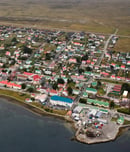
Falklands Day
Falklands Day is a vibrant celebration of the people of the Falkland Islands. This special day commemorates the first recorded sighting of the islands by English explorer John Davis. Islanders and visitors come together to honor this significant historical event, reflecting on the natural beauty and rich culture of the...

Transfer Day
Transfer Day marks the moment when the U.S. Virgin Islands officially became part of the United States. Each year, the day brings people together to remember a major shift in the islands’ story, from the way government worked to the flags flying over public buildings. Public events, flag ceremonies, and school...
Commonwealth Covenant Day
Commonwealth Covenant Day is a significant public holiday in the Northern Mariana Islands. It celebrates the unique political bond between the islands and the United States, marked by the 1976 Covenant Agreement. This agreement established the islands as a U.S. commonwealth, allowing them to govern themselves while maintaining strong ties...
Virgin Islands Day
Virgin Islands Day is when the funky beats of calypso melodies fill the air. It's also a day when the spicy bouquet of Caribbean cuisine tempts the taste buds. And the spirit of joy is as clear as the turquoise waters surrounding the British Virgin Islands. This annual extravaganza seamlessly...
National days and holidays on June 14

International Bath Day
Discover International Bath Day, celebrating relaxing soaks, self-care, and Archimedes’ legendary “Eureka” moment. Learn fun ways to enjoy bath time.
- Australia
- Canada
- United Kingdom
- and 1 more
Hawaii Flag Day
Discover the meaning behind Ka Hae Hawaiʻi on Hawaii Flag Day, honoring the state flag’s history, cultural roots, unity, and enduring island identity.
National New Mexico Day
Celebrate National Flag Day by honoring the Stars and Stripes, exploring its history, flying the American flag with pride, and enjoying creative patriotic activities.

National Pop Goes The Weasel Day
Celebrate National Pop Goes The Weasel Day by singing the playful rhyme, sharing nostalgic memories, and enjoying simple, fun activities for all ages.
Seize Every Day
Join free for personalised recommendations, email reminders and exclusive guides. Never miss a day.