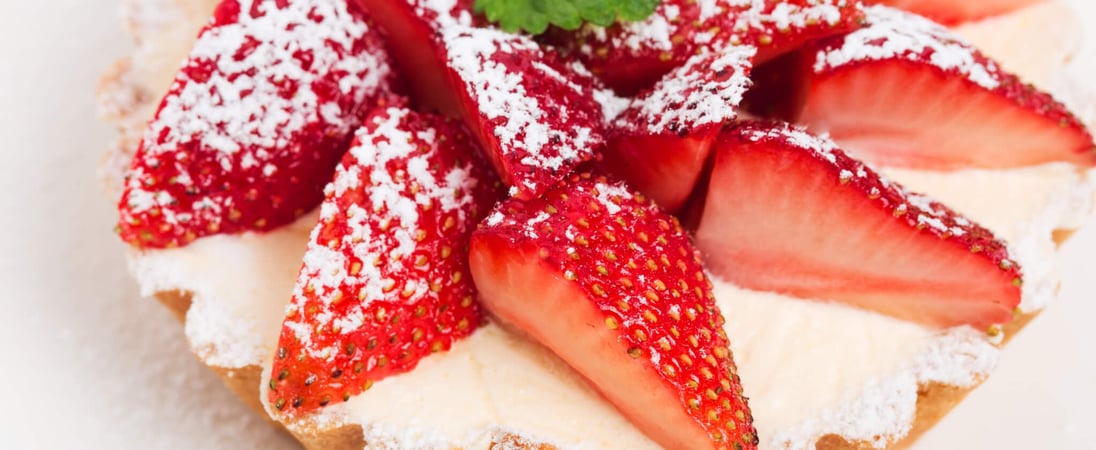
A delicious pile of red, ripe, juicy strawberries on a base of tender cake with a cloud of cream on top is the kind of dessert that makes people pause mid-conversation and say, “Hold on, let me get a real bite of this.”
National Strawberry Shortcake Day is all about showing appreciation for this simple but unforgettable combination, from the old-fashioned, biscuit-style versions to the modern, bakery-window beauties stacked high enough to require strategy.
How to Celebrate National Strawberry Shortcake Day
National Strawberry Shortcake Day is easy to celebrate because the assignment is pleasantly straightforward: enjoy strawberry shortcake in whatever form feels most joyful. Go classic, go fancy, go completely improvised. The point is to savor the contrast of sweet berries, rich cake, and cool cream.
Enjoy Eating Strawberry Shortcake
The most important factor in celebrating National Strawberry Shortcake Day is, naturally, to get a plate of strawberry shortcake and dig in.
For some, that means ordering it from a restaurant or bakery, where the shortcake might arrive as a neat layered dessert, a rustic split biscuit, or a towering slice of sponge cake with berries tucked between whipped cream swirls. For others, it is a nostalgic bowl assembled at home with whatever is on hand, which is arguably part of strawberry shortcake’s charm. It is a dessert that welcomes both precision and spontaneity.
To make the experience extra satisfying, a few small details can make a big difference:
- Look for ripe, fragrant strawberries. Strawberries do not get sweeter after they are picked, so berries that are already richly colored and aromatic tend to deliver the best flavor.
- Notice the texture of the base. Traditional shortcake is often closer to a sweet biscuit than a sponge cake. Some people prefer a sturdier base that can soak up juices without collapsing, while others love a softer, cakier crumb.
- Balance is everything. The best shortcake usually has a little tang from the fruit, a little richness from the cream, and just enough sweetness to feel like a treat instead of a sugar avalanche.
If a restaurant offers a seasonal strawberry shortcake special, that can be a fun way to compare styles and discover a new favorite. Some places lean into a buttery biscuit and lightly sweetened cream, while others go for a dessert-case version with extra layers, sauces, or even ice cream on the side.
Try Making Strawberry Shortcake at Home
Making strawberry shortcake at home is approachable, even for people who do not consider themselves bakers. The dessert is more of an assembly than a technical baking project, and there are several “levels” of homemade depending on time, confidence, and how many dishes a person feels like washing.
Start with the strawberries. Many classic preparations begin by slicing strawberries and mixing them with a bit of sugar, then letting them rest for a short time. This draws out their juices, creating a naturally syrupy strawberry topping. That juice is not a side effect; it is part of the magic. It seeps into the cake and turns each bite into something jammy and bright.
Choose a base that matches the desired vibe:
- Biscuit-style shortcakes: Often considered the traditional American approach, these are tender, slightly crumbly, and rich from butter or shortening. The word “short” in baking refers to that crumbly tenderness created when fat limits gluten development.
- Sponge cake or angel food cake: Light, airy, and a little springy. This style is common in many modern versions and can feel especially fresh and summery.
- Pound cake: Dense, buttery, and sturdy. It stands up well to juicy berries and travels nicely for picnics or potlucks.
- Store-bought shortcuts: Bakery pound cake, plain vanilla cupcakes, or even sweet biscuits can work beautifully. Strawberry shortcake is forgiving, and that is part of its long-lasting popularity.
Do not forget the cream. Freshly whipped cream is a classic finishing touch, and it can be made as simple or as dressed-up as desired. Some people keep it barely sweetened to let the berries shine. Others add vanilla for a dessert-shop flavor. For an even richer option, a spoonful of sour cream or yogurt folded into whipped cream creates a subtle tang that pairs especially well with very sweet berries.
Assemble with intention. A common method is to split the shortcake, spoon berries and juice onto the bottom half, add cream, then place the top half on like a little edible hat. Another method is the “messy bowl,” where cake chunks, berries, and cream are layered like a casual trifle. Both approaches are correct, and both disappear quickly.
For anyone who enjoys experimenting, strawberry shortcake also invites customization:
- Add lemon zest or a splash of citrus to brighten the berries.
- Mix in other berries if strawberries are not at peak flavor.
- Use a dairy-free whipped topping or coconut cream to accommodate different diets.
- Try a warm shortcake with cool berries and cream for extra contrast.
Attend a Strawberry Shortcake Festival
Strawberry shortcake is not just a dessert; it is also a community food. Strawberry festivals and strawberry shortcake events are popular fundraisers and seasonal celebrations, often featuring big trays of shortcake served to crowds who know exactly why they showed up.
Many communities host strawberry gatherings in late spring or early summer when berries are at their best. The appeal is easy to understand: strawberries have a short peak season in many regions, and serving them in shortcake form is a delicious way to mark that fleeting moment when they taste like sunshine.
A strawberry shortcake festival experience typically involves more than dessert. These events often include small-town entertainment, craft tables, games, raffles, live music, or other community activities. Strawberry shortcake acts as the edible centerpiece, the sweet reward at the end of a stroll around the festivities.
The article’s original examples include events such as those associated with Wainscott, New York, where strawberry gatherings have been documented historically and continue as community celebrations featuring strawberry shortcake. Local events vary widely, but the common thread is the same: strawberries, cake, cream, and a shared appreciation for a dessert that feels both special and comforting.
For anyone without a nearby festival, it is easy to create a “mini festival” atmosphere at home:
- Invite friends over for a make-your-own shortcake bar.
- Set out different bases, fruits, and creams.
- Include a simple vote for “best combination,” purely for bragging rights.
National Strawberry Shortcake Day Timeline
First Printed “Shortcake” Recipes in England
An English cookbook published in 1588 includes one of the earliest known recipes for “shortcake,” a rich, crumbly cake made tender with fat, laying the groundwork for later fruit-filled shortcakes.
Birth of the Modern Garden Strawberry
Growers in Brittany, France, intentionally and accidentally hybridize Fragaria virginiana from North America with Fragaria chiloensis from Chile, resulting in Fragaria × ananassa, the garden strawberry commonly found in modern desserts.
Duchesne Identifies the Strawberry Hybrid
French botanist Antoine Nicolas Duchesne publishes his work on strawberries and recognizes that the new garden strawberry is a hybrid of F. virginiana and F. chiloensis, clarifying the origins of the fruit behind strawberry shortcake.
Eliza Leslie’s “Strawberry Cakes” in America
Philadelphia author Eliza Leslie publishes a recipe for “Strawberry Cakes” in The Lady’s Receipt-Book, describing a rich short pastry split and filled with sweetened strawberries, an early American forerunner of modern strawberry shortcake.
Strawberry Shortcake Spreads Across the U.S.
American cookbooks and newspapers show strawberry shortcake becoming a popular summertime dessert, typically made from a biscuit-like shortcake layered with strawberries and sweetened cream or butter.
Strawberry Festivals and Shortcake Socials
Churches and communities across the United States host strawberry festivals as warm‑weather fundraisers, where strawberries with cream and strawberry shortcake become traditional centerpieces of the celebrations.
History of National Strawberry Shortcake Day
Strawberry shortcake has a delicious history that stretches back well beyond modern recipe cards and bakery menus. The dessert as people recognize it today grew out of older baking traditions, seasonal fruit habits, and a very practical desire to pair something juicy with something that can soak up the good stuff.
The “shortcake” part is key to understanding the dessert. In baking, “short” refers to a tender, crumbly texture created when fat is worked into flour. That technique appears in various forms throughout British and American baking history. Over time, shortcake evolved into the rich biscuit-like base commonly associated with traditional American strawberry shortcake.
By the mid-19th century, strawberry shortcake began appearing in American print in forms that look increasingly familiar. One of the early cited recipe references comes from the 1850s, including a recipe published in Miss Leslie’s Ladies’ New Recipe Book.
While older strawberry desserts existed before that, the mid-1800s are a turning point where strawberry shortcake becomes a recognizable named concept: a shortcake split and layered with strawberries, sugar, and cream or butter.
Some of the earliest versions were not exactly the neat, whipped-cream-topped dessert seen today. Historical references include variations where shortcake might be served warm, split and spread with butter, then layered with sugared berries and assembled again.
Another mid-19th-century printed description calls strawberry shortcake a “luxury,” which says a lot about how special fresh berries could feel when they were truly seasonal and local.
As baking powders and baking soda became more widely used, chemically leavened shortcakes and biscuit-style bases became easier to make consistently. That helped push strawberry shortcake into a more standard form: tender layers designed to cradle fruit and cream.
Over time, strawberry shortcake morphed into friendly, practical ways. In many kitchens, the base shifted from biscuit-style shortcake to sponge cake, angel food cake, or pound cake. That change is not just about taste; it is also about convenience and preference.
A sponge cake can be made ahead and sliced cleanly. Pound cake is sturdy and easy to buy. Biscuit-style shortcake feels rustic, buttery, and traditional. Strawberry shortcake does not insist on one “correct” foundation, which is probably why it has stayed so popular.
National Strawberry Shortcake Day fits right into this tradition of enjoying strawberries at their most glorious. In many growing climates, strawberries hit their sweetest stride in late spring and early summer, and the dessert has long been associated with that brief window when berries are intensely flavorful.
Although modern shipping makes strawberries available in many places for much of the year, strawberry shortcake made with ripe, peak-season fruit still tends to taste noticeably brighter and more fragrant.
Strawberry shortcake is also such an iconic American dessert that it inspired a beloved character: Strawberry Shortcake. Introduced as part of a children’s greeting card and merchandise phenomenon that expanded dramatically in the late 1970s and early 1980s, the character became a pop-culture fixture through dolls, animated specials, and plenty of lunchbox-worthy branding.
Her world of friends with dessert-themed names helped turn the phrase “strawberry shortcake” into something that felt playful and instantly recognizable, even to people who had not yet mastered the art of keeping whipped cream off their noses.
All of this history points to the same idea: strawberry shortcake endures because it is both simple and flexible. It can be dressed up or kept humble. It can be a carefully plated dessert or a joyful, slightly messy bowl. And it always comes back to that unbeatable trio: tender cake, ripe strawberries, and cream.
National Strawberry Shortcake Day Facts
Shortcake Started Out As A 16th‑Century English Treat
Long before anyone piled strawberries on top, “shortcake” referred to a rich, crumbly cake in England, with one of the earliest known printed recipes appearing in 1588 in an English cookbook by Elizabethan author Francesco de Hernando (often cited in modern food histories).
These early shortcakes were closer to a sweetened, biscuit‑like bread enriched with fat, and they helped establish the technique of using solid fat to “shorten” dough and create a tender, breakable crumb that later became ideal for pairing with fruit.
Native American “Strawberry Cakes” Preceded Modern Shortcake
Food historians point out that Native peoples in parts of North America made early strawberry “cakes” by mixing wild strawberries with cornmeal and baking the mixture, a tradition noted by several modern histories of strawberry shortcake and referenced by the Strawberry Association of Growers, Shippers and Allies (SAGSA).
While this was not the same as today’s biscuit‑based dessert, it shows that combining strawberries with a starchy base was part of North American food culture before 19th‑century printed shortcake recipes appeared.
The Garden Strawberry Is A Relatively Recent Hybrid
The strawberries piled onto shortcake today are usually garden strawberries (Fragaria × ananassa), a hybrid that originated in Europe in the 18th century when Chilean strawberry plants (Fragaria chiloensis) were grown near North American Virginia strawberries (Fragaria virginiana).
The two species naturally crossed, producing larger, more transportable fruit, and French botanist Antoine‑Nicolas Duchesne described this hybrid in the 1760s. That relatively recent botanical innovation is what made large, juicy strawberries widely available for desserts like shortcake.
Strawberries Are Technically Not Berries At All
Despite the name, a strawberry is not a botanical berry. The red portion eaten on shortcake is an “accessory fruit,” developed from the flower’s receptacle, and the tiny “seeds” on the surface are actually individual dry fruits called achenes.
Each achene contains a single true seed, so a single strawberry can carry hundreds of individual fruits embedded on its surface, a structure very different from true berries like blueberries or grapes.
“Short” In Shortcake Refers To Texture, Not Size
In historical English usage, “short” described baked goods made tender and crumbly by the presence of solid fat, such as butter or lard, which “shortens” gluten strands.
In a classic shortcake base for strawberries, the fat is rubbed or cut into flour before liquid is added, coating flour particles and limiting gluten development. When baked, the melted fat leaves tiny pockets and a delicate structure that breaks easily under a fork, making it perfect for soaking up strawberry juices.
Whipped Cream Is A Delicate Fat‑Stabilized Foam
The billowy topping on strawberry shortcake is more complex than it looks. Whipped cream is a foam in which partially solidified milk‑fat droplets surround and stabilize tiny air bubbles in a continuous liquid phase.
Scientific studies of whipped cream microstructure show that a fat content of around 30–40 percent and cold temperatures let the fat droplets partially coalesce into a network that traps air. Overwhipping pushes this network too far, expelling liquid and turning the foam toward butter.
Sugar Softens Strawberries Through Osmosis
When sliced strawberries are mixed with sugar for shortcake, the sugar draws water out of the fruit’s cells through osmosis, creating a glossy, syrupy juice.
Food science research notes that this high‑sugar environment lowers water activity at the surface, causing cells near the outside to lose firmness and pectic substances to solubilize, so the fruit becomes softer and more spoonable.
The resulting syrup readily seeps into the porous crumb of a shortcake, which is why macerated strawberries behave so differently from fresh, unsugared slices.