

Every year on this day, the United States of America commemorates the creation of its army, first established by the Continental Congress in 1775 as tensions with Great Britain boiled over into the American Revolutionary War. What began as a practical decision to unify colonial forces has grown into a long-running birthday tradition that mixes formal ceremony with the simple charm of a slice of cake.
Throughout its history, the U.S. Army has played a vital role in protecting the security and interests of the United States, both domestically and abroad.
Army Birthday offers a moment to recognize not only famous campaigns and leaders, but also the everyday work that rarely makes headlines: training, logistics, engineering, humanitarian support, and the steady discipline required to keep a large organization ready for whatever comes next.
How to Celebrate the Army’s Birthday
Thank an Army Person
Army Birthday is a natural opportunity to honor the bravery and sacrifice of those who serve and to recognize the commitment of families who share the weight of that service. A meaningful “thank you” does not need to be dramatic. In fact, the best ones usually are not.
If the person being thanked is currently serving, a note that recognizes their specific role can land better than a generic compliment. Many soldiers spend their days far from the movie version of soldiering, working in areas like communications, transportation, medicine, intelligence, administration, or maintenance and recognizing that the Army functions because of many specialties working together shows real understanding.
For veterans, the tone can be slightly different. Some enjoy swapping stories, while others prefer a quiet acknowledgment. A respectful approach is to keep it simple and let them steer the conversation: thanking them for their service, asking what they did in the Army if they are open to sharing, or expressing appreciation for the skills and perspective they brought back into civilian life.
It also helps to remember the broader circle. Partners, children, parents, and close friends often live with frequent moves, long training cycles, and time apart. A supportive message to the family can be a thoughtful Army Birthday gesture that is too often overlooked.
Join an Army Birthday Event
In the spirit of this day, Army-related organizations and communities host events ranging from formal ceremonies to relaxed gatherings. Public celebrations can include parades, picnics, luncheons, commemorative programs, speeches by military officials, historical exhibits, and the famously dressy Army Ball.
For someone attending an event for the first time, a little context makes the experience richer. Many ceremonies include a brief retelling of the Army’s founding, recognition of unit achievements, and acknowledgments of those who have served across generations. Music often plays a central role as well, and “The Army Goes Rolling Along” is commonly heard at Army functions, reflecting the service’s shared identity and tradition.
Community events sometimes spotlight the Army’s connection to civic life: displays of historical uniforms, equipment demonstrations, color guards, or educational booths that explain how soldiers train and what different career fields do.
These can be engaging even for those who know little about military life. They also make it easier to understand something that can feel abstract from a distance: the Army is made up of people with jobs, routines, and responsibilities, and the birthday celebration is partly about letting the public see that reality up close.
Some Army Birthday gatherings also include recognition moments, such as awards, reenlistment ceremonies, or acknowledgments for retirees and long-serving civilian employees. While the tone is celebratory, it is often grounded in the Army’s emphasis on duty and continuity.
Enjoy Some Birthday Cake!
Just like any other birthday celebration, cake plays a starring role. The long-standing tradition often features the longest-serving and youngest soldiers cutting the first slice together, sometimes with a ceremonial saber. It is a small, symbolic act that carries a big message: the Army’s experience is passed along, and the future is always arriving.
The cake itself is sometimes elaborate, decorated with unit crests, camouflage patterns, or the Army seal. In some settings, it is more modest, more “kitchen table” than showpiece. Either way, the shared ritual is what matters. It brings people together across rank and role, reminding everyone that an institution can be serious about its mission while still appreciating a warm, human tradition.
Those celebrating at home can borrow the spirit of the custom without needing a saber or a ballroom. A simple cake or dessert can be paired with a toast to someone’s service, a short reading about the Army’s founding, or a conversation about family history. The birthday works because it is flexible: it can be grand and formal, or simple and personal.
Army Birthday Timeline
Continental Army Established
The Second Continental Congress creates the Continental Army by adopting New England forces besieging Boston and authorizing rifle companies from Pennsylvania, Maryland, and Virginia, giving the colonies a unified national army.
From Continental Army to First American Regiment
After the Revolutionary War, Congress disbanded most of the Continental Army and formed the 1st American Regiment from the remaining troops, providing the small standing force that became the postwar United States Army.
War of 1812 Spurs Professionalization
Congress declares war on Britain, forcing the young U.S. Army to expand and improve training, logistics, and organization as it fights along the Canadian border and Atlantic seaboard, setting precedents for a more professional regular force.
National Defense Act Reshapes the Army
President Woodrow Wilson signed the National Defense Act of 1916, expanding the Regular Army, strengthening the National Guard as the primary reserve, and creating the Reserve Officers’ Training Corps to produce a larger pool of trained officers.
Army Buildup Before World War II
As war rages overseas, Congress authorizes a major increase in the Army’s enlisted strength, paving the way for mass mobilization; within a year, millions of soldiers are in uniform, preparing the Army for global conflict.
National Security Act Reorganizes U.S. Forces
The National Security Act of 1947 redesignates the War Department as the Department of the Army within the new National Military Establishment and creates an independent U.S. Air Force, reshaping the Army’s place in the defense structure.
Korean War Tests the Modern Army
rapid deployment of U.S. Army forces under United Nations command, marking the first large-scale test of the post–World War II, Cold War–era Army in high-intensity combat.
History of the U.S. Army
In 1775, as tensions rose between the American colonies and the British government, the Second Continental Congress authorized the enlistment of ten companies of riflemen. This decision did not emerge from a vacuum.
Colonial militias and local defense groups already existed, but the moment demanded coordination. The Congress moved to create a unified force that could operate across colonial lines, support the siege around Boston, and provide a military backbone to the political push for self-determination.
The Congress also created a committee to establish rules and regulations for the new Army. That might sound bureaucratic, but it was foundational. A fighting force needs more than bravery. It needs pay structures, supply processes, discipline, command authority, and standards for how units operate together. Those early administrative choices helped transform a patchwork of fighters into something closer to an institution.
Soon after, George Washington was selected to lead the effort. Command in those early days required more than tactics. It required building cohesion among troops from different colonies, confronting shortages of training and equipment, and maintaining morale through setbacks. The Continental Army’s early survival was as much a triumph of persistence and organization as it was of battlefield skill.
During the war for independence, the army was known as the Army of the United Colonies and, after the Declaration of Independence was signed in 1776, it changed its name to the Army of the United States.
The force expanded and adapted as the war unfolded, learning through hard experience what it meant to sustain troops in the field, coordinate large movements, and keep an army supplied over long distances. Those lessons would echo through later generations as the Army continued to develop professional standards.
After independence, the young nation faced a complicated challenge: it needed security, but it also worried about the dangers of a permanent standing army. The Army’s size and structure changed over time, growing during conflict and shrinking afterward, reflecting ongoing debates about national defense and civil authority. This rhythm of expansion and reduction became a recurring pattern across U.S. history.
It had an important role in the expansion of U.S. borders as settlement pushed westward. That period included the establishment of forts, exploration, and surveying, as well as conflicts involving Native American tribes and the painful displacement that accompanied national expansion.
Army engineers and topographers also contributed to mapping and infrastructure, producing surveys and routes that shaped travel and development. Even in eras dominated by combat narratives, the Army’s role in roads, bridges, and fortifications remained a quieter part of the story.
The Army engaged in the War of 1812 and later the Mexican-American War in the 1840s, conflicts that influenced the country’s growth and sharpened the Army’s operational experience.
Over time, the Army’s professional education and doctrine gradually developed, informed by both successes and mistakes. As weapons and transportation evolved, the Army also had to rethink how it organized and moved forces, a challenge that continues in every era.
In 1861, the Army found itself again at the center of another military conflict, the Civil War. The war demanded unprecedented mobilization and led to the largest loss of life of any conflict in U.S. history, with more than 600,000 soldiers killed.
Beyond the staggering human cost, the Civil War changed how the Army functioned. It accelerated developments in mass logistics, medical care, communications, and large-scale command. It also left a lasting mark on national memory, shaping how military service was understood for generations afterward.
During the late 19th and early 20th centuries, the U.S. Army was increasingly active in overseas conflicts, including the Spanish-American War, the Philippine-American War, and World War I. These conflicts pushed the Army to operate farther from home and in unfamiliar environments, testing its ability to deploy, supply, and coordinate with allies.
The demands of modern warfare, from trenches to machine guns to artillery, forced rapid adaptation and highlighted the importance of training and industrial support.
Although initially staying out of World War II, the U.S. Army played a crucial role in defeating Germany, Japan, and their allies. The scale of the war required massive coordination of people and resources, and it further expanded the Army’s responsibilities in engineering, transportation, intelligence, and medical care. It also accelerated technological change, including advances in communications and the growing role of aviation, which eventually contributed to the creation of the U.S. Air Force as a separate branch in 1947.
Over the past decades, the U.S. Army has continued to be involved in conflicts and missions around the world, including the Korean War, the Vietnam War, and the Gulf War, as well as the Iraq and Afghanistan Wars.
Just as importantly, it has participated in a wide range of non-combat missions: disaster response support, peacekeeping and stability operations, evacuation efforts, and large-scale logistics that often go unseen by the public. The modern Army balances readiness for combat with the practical reality that soldiers are frequently called on for complex, fast-changing assignments.
The Army’s identity is shaped by traditions as well as missions. Its official motto, “This We’ll Defend,” reflects a long-standing commitment to protection and service, and it appears on the Army emblem as a compact statement of purpose.
Music and ceremony also carry meaning. “The Army Goes Rolling Along,” adopted as the official song in 1956, is a familiar feature at many events and helps connect present-day service members to earlier generations.
Uniforms, too, tell a story. From the blue coats associated with the Continental era to modern camouflage patterns designed for varied environments, Army uniforms have evolved alongside technology, tactics, and the realities of where soldiers serve. While the style changes, the intent stays consistent: practicality, identification, and cohesion.
Currently, the U.S. Army has more than 480,000 active members and is among the largest armies in the world. That number represents far more than headcount. It reflects an enormous range of skills, from infantry and armor to cyber operations, aviation, engineering, medicine, and logistics, all supported by training systems and professional education designed to prepare soldiers for demanding work.
Army Birthday, at its best, is a reminder that the Army is both an institution and a collection of individual stories. It honors the long arc of history that began with a congressional vote in 1775, while keeping the focus where it belongs: on people, service, and the steady passing of responsibility from one generation to the next.
Army Birthday Facts
Army Engineers Quietly Mapped the Early United States
Long before there was a civilian mapping agency, Army officers in the Corps of Topographical Engineers produced many of the first detailed maps of the American West, charting routes like the Oregon and Santa Fe Trails and surveying proposed railroad lines, which in turn shaped patterns of settlement, commerce, and federal land policy.
Yellow Fever Breakthrough Changed Global Public Health
At the turn of the 20th century, U.S. Army physician Walter Reed led an Army commission in Cuba that proved yellow fever is transmitted by mosquitoes rather than direct contact, a discovery that enabled mosquito-control campaigns that helped make projects like the Panama Canal possible and transformed urban public health around the world.
Typhoid Vaccination Was Pioneered Inside the Army
Facing devastating outbreaks in the Spanish–American War, the Army adopted routine typhoid vaccination after physician Frederick F. Russell tested and implemented a vaccine for soldiers in the early 1900s, virtually eliminating the disease from the force and influencing civilian acceptance of mass vaccination programs.
A 1948 Executive Order Forced the Army to Desegregate
Executive Order 9981, signed by President Harry Truman in 1948, declared that all U.S. armed services must provide equal treatment and opportunity regardless of race, color, religion, or national origin, launching a years‑long process in which the Army dismantled segregated units and became one of the first large American institutions to integrate by federal mandate.
Women’s Army Corps Opened the Door to Full Integration
The Women’s Army Corps, created in World War II and formally absorbed into the regular Army in 1978, served as a bridge from limited, auxiliary roles to full integration; within a generation of its disestablishment, policy changes had opened infantry, armor, and other ground combat specialties to women across the Army.
Modern Army Ranks Reflect a Broad Slice of America
Recent demographic reports show that active‑duty Army soldiers are disproportionately drawn from middle‑income neighborhoods, with the middle three income quintiles overrepresented and the very poorest underrepresented, and that Southern states such as South Carolina and Georgia routinely supply recruits at significantly higher rates than their share of the national youth population.
Army Medical Research Helped Shape Modern Flu Response
In 1957, as a new “Asian influenza” strain emerged, virologist Maurice Hilleman at the Walter Reed Army Institute of Research identified its pandemic potential and pushed for rapid vaccine production, leading to tens of millions of doses being distributed in the United States and establishing a template for modern military–civilian cooperation on pandemic preparedness.
Army Birthday FAQs



You may also like
Army Day
Thank a veteran, donate to the cause, or volunteer to help the nation’s frontline, who often suffer PTSD, poverty, and loss for their sacrifices to their country.
- India
- Thailand
- United States
- and 1 more

Salvation Army Day
Salvation Army Day is a vibrant celebration dedicated to honoring The Salvation Army’s work and mission. This special day recognizes the organization’s long-standing commitment to helping people facing hardship, especially when life gets complicated fast and practical support matters most. The Salvation Army is widely known for its hands-on charity work...
- Canada
- United Kingdom
- United States
Air Force Reserve Birthday
The Air Force Reserve Birthday celebrates the essential role of the Air Force Reserve in the United States defense strategy and recognizes the contributions of Reserve Airmen who serve both domestically and internationally. They play a vital part in supporting the Air Force's mission to fly, fight, and win. The...
- United States

National Chocolate Cake Day
Indulge in this delectable cocoa-based dessert, make the original pioneering recipe or put a modern twist on this classic by adding flavors like matcha.
- United States
National days and holidays on June 14

International Bath Day
Discover International Bath Day, celebrating relaxing soaks, self-care, and Archimedes’ legendary “Eureka” moment. Learn fun ways to enjoy bath time.
- Australia
- Canada
- United Kingdom
- and 1 more
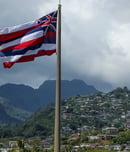
Hawaii Flag Day
Discover the meaning behind Ka Hae Hawaiʻi on Hawaii Flag Day, honoring the state flag’s history, cultural roots, unity, and enduring island identity.
- United States

National New Mexico Day
Celebrate National Flag Day by honoring the Stars and Stripes, exploring its history, flying the American flag with pride, and enjoying creative patriotic activities.
- United States

National Pop Goes The Weasel Day
Celebrate National Pop Goes The Weasel Day by singing the playful rhyme, sharing nostalgic memories, and enjoying simple, fun activities for all ages.
- United States
Seize Every Day
Join free for personalised recommendations, email reminders and exclusive guides. Never miss a day.