Father Damien Day honors a life that reads like a blueprint for practical compassion. It remembers a Belgian priest who stepped away from an ordinary ministry and chose to live among people affected by Hansen’s disease who had been separated from the wider community.
The focus is not on grand speeches or distant admiration, but on what steady, hands-on care looks like when it is offered day after day.
He didn’t treat the settlement at Kalaupapa on Molokai as a place to “visit” and then leave behind. He made it home. He helped build shelters and gathering places, organized basic routines, tended to the sick, and sat with people who were lonely or frightened.
He dressed wounds and dug graves. He also advocated for supplies and fair treatment, pushing back against the neglect that often follows stigma.
Over time, Father Damien contracted Hansen’s disease himself. Even then, he continued working and living alongside the people he served. His story endures because it is specific and concrete: a person using his skills, stamina, and presence to restore dignity to others.
In places that know his legacy well, his image is treated with affection rather than formality. A statue of him at the Hawaii State Capitol is often draped with flower garlands, a gesture that says, in a language everyone understands, “You are remembered.”
More broadly, Father Damien Day invites communities to reflect on what it means to show up for people who are overlooked, to replace fear with understanding, and to put human connection ahead of comfort.
How to Celebrate Father Damien Day
Father Damien Day offers a chance to reflect on compassion, service, and community. Here are several meaningful ways to mark the occasion.
Share a Meal with Someone in Need
Sharing food sounds simple because it is, and that is exactly why it fits this day so well. Father Damien’s care was not limited to spiritual comfort. It included the everyday basics that help people feel human again: a shared table, a familiar routine, and someone noticing whether they have eaten.
A meal can take many forms. It might be a home-cooked dish dropped off with dignity and discretion, a grocery bag packed with staples that are easy to prepare, or a small gift card paired with a note that says the recipient matters.
For those who prefer to volunteer rather than give directly, helping serve at a community kitchen offers the same spirit of companionship. The goal is not to perform generosity, but to reduce someone else’s burden tangibly and, when appropriate, share a moment of conversation that treats them as a neighbor.
Thoughtfulness matters as much as the food. Consider dietary needs, packaging that keeps food safe, and an approach that protects privacy. The best kind of giving is the kind that doesn’t ask someone to trade their dignity for help.
Write a Letter of Encouragement
Father Damien’s work reminds people that care is often delivered in words as well as actions. A letter of encouragement can be especially meaningful for someone isolated, recovering, grieving, or living with a chronic condition. It is also a powerful practice for the writer: slowing down long enough to choose kind, specific words builds empathy.
A good letter does not need to be long. It can include a sincere compliment, a shared memory, or a simple acknowledgment that someone’s situation is hard. Avoid empty cheerleading. Instead, aim for presence: “I’m thinking of you,” “I’m here,” “You are not forgotten.”
If the recipient appreciates it, add something grounding like a favorite quote, a short poem, or a small photo that sparks a pleasant memory.
For a community approach, groups can coordinate letter-writing for residents of nursing homes, rehabilitation facilities, or support programs that welcome mail. Even a stack of handwritten notes can change the emotional temperature of a place, turning it from merely functional to genuinely caring.
Learn About Hansen’s Disease
Learning is an underrated form of service because it reduces fear and prevents harm. Hansen’s disease has carried a long history of stigma, and that stigma has often caused more suffering than the illness itself. Education helps separate myth from medical reality and encourages language that respects people rather than defining them by a diagnosis.
A thoughtful learning session can include three parts: what Hansen’s disease is, how it has been treated historically, and what modern medicine understands about it. Many people are surprised to learn that the disease is not easily spread and that it is treatable with antibiotics when diagnosed. Understanding this helps dismantle the reflexive “othering” that has followed people affected by the disease for generations.
It also helps to learn about the human impact of isolation policies. Communities like Kalaupapa were shaped not only by illness but by decisions made out of fear and incomplete scientific knowledge. Studying that history encourages more compassionate responses to illness and disability in general, including the importance of access to care, accurate information, and social inclusion.
When discussing the topic, it is worth practicing respectful phrasing. Putting the person first, such as “people affected by Hansen’s disease,” keeps the focus on humanity rather than labels. That shift may seem small, but small shifts are how cultures change.
Plant a Tree in His Memory
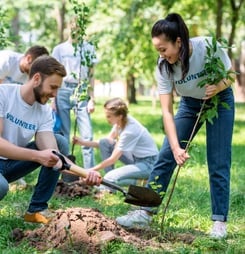
Planting a tree makes a fitting tribute because it turns remembrance into something that keeps growing. Trees offer shade, cleaner air, and habitat, and they also serve as quiet reminders that care can be both practical and lasting.
This idea can be scaled to any setting. A backyard tree works, as does a community planting project through local parks or neighborhood groups. When planting is not possible, tending an existing tree or starting a container garden can carry the same symbolism. The action is what matters: choosing to nurture life over time, not just in a single dramatic moment.
A meaningful addition is to pair the planting with a small dedication, even if it is just a personal note stored in a journal. Consider writing down the kind of compassion one hopes to practice in the year ahead: checking on a neighbor, volunteering regularly, learning more about public health, or offering support to someone who lives on the margins. The tree becomes a living prompt to keep those commitments.
Support a Local Shelter
Planting a tree makes a fitting tribute because it turns remembrance into something that keeps growing. Trees offer shade, cleaner air, and habitat, and they also serve as quiet reminders that care can be both practical and lasting.
This idea can be scaled to any setting. A backyard tree works, as does a community planting project through local parks or neighborhood groups.
When planting is not possible, tending an existing tree or starting a container garden can carry the same symbolism. The action is what matters: choosing to nurture life over time, not just in a single dramatic moment.
A meaningful addition is to pair the planting with a small dedication, even if it is just a personal note stored in a journal.
Consider writing down the kind of compassion one hopes to practice in the year ahead: checking on a neighbor, volunteering regularly, learning more about public health, or offering support to someone who lives on the margins. The tree becomes a living prompt to keep those commitments.
Father Damien Day Timeline
Kalaupapa Leprosy Settlement Established
The Hawaiian government designates Kalawao and later Kalaupapa on Molokai as an isolated settlement for people with leprosy, formalizing a strict policy of segregation that shapes the community Father Damien will later serve.
Father Damien Arrives in Molokai
Belgian priest Jozef De Veuster, known as Father Damien, volunteers to serve at the leprosy settlement on Molokai, where he begins living among patients, organizing housing, sanitation, and pastoral care.
Hansen Identifies Cause of Leprosy
Norwegian physician Gerhard Armauer Hansen discovered Mycobacterium leprae, the bacterium that causes leprosy, providing the first scientific basis for understanding the disease that afflicted the community Damien served.
Death of Father Damien at Kalawao
After years of close contact and care for residents, Father Damien dies at Kalawao on Molokai from complications of leprosy, cementing his reputation worldwide as a champion of people living with the disease.
Sulfone Therapy Begins Transforming Treatment
Clinical use of dapsone and related sulfone drugs starts to offer effective treatment for leprosy, gradually reducing the need for lifelong isolation of patients such as those once confined at Kalaupapa.
End of Mandatory Isolation in Hawaii
The State of Hawaii officially ends compulsory isolation of people with Hansen’s disease at Kalaupapa, reflecting new treatments and changing attitudes toward the rights and dignity of those affected.
WHO Recommends Multidrug Therapy
The World Health Organization endorses multidrug therapy for Hansen’s disease, a regimen that makes the disease curable in most cases and further reduces the stigma long associated with communities like Molokai’s.
History of Father Damien Day
Father Damien Day began as a tribute to a man who gave everything to help people who were cast aside. The Hawaii State Legislature made it official in 1969, choosing to remember the day Father Damien passed away on April 15, 1889.
Born Jozef De Veuster in Belgium, he joined the Catholic mission in Hawaii and later volunteered to serve on Molokai, an isolated island where many with Hansen’s disease lived. He worked hard to build homes, plant gardens, and create a real community. People who once had no hope found comfort through his care.
His actions touched hearts far beyond Hawaii. Father Damien didn’t just help with medicine; he stayed with the sick, lived among them, and fought for their dignity. He even caught the same illness, but continued his work until he died.
In 2009, the Catholic Church declared him Saint Damien, recognizing his life of deep compassion. Today, his bronze statue stands at the Hawaii State Capitol, where people cover it with fresh flower garlands every year.
Schools, churches, and families take this day to honor his spirit. Father Damien Day reminds everyone that kindness, courage, and selflessness can leave a lasting mark on the world. His story still moves many to action.
Father Damien’s story sits at the intersection of faith, public health, and human rights, which is part of why it continues to resonate. In the 19th century, Hansen’s disease was poorly understood, and fear shaped policy.
People suspected of having the disease were often forcibly separated from their families and sent to remote settlements. Kalaupapa, on the island of Molokai, became one of the most well-known of these places. Its isolation was geographic, but also social. Once someone arrived, the outside world frequently treated them as if they had disappeared.
When Father Damien volunteered to serve there, he stepped into a community that had been denied many basics, including consistent medical attention, adequate housing, and the comfort of ordinary social life. His work was notable not only for its intensity but for its breadth.
He did not limit himself to one role. He was a pastor, a builder, an organizer, and an advocate, responding to needs as they appeared: repairing structures, arranging burials, tending sores, and helping people create routines that made life more bearable.
Just as important was his willingness to share the conditions of the people around him. He did not set himself apart as untouchable. He ate with residents, touched them, listened to them, and made himself part of daily life.
In a setting where many had been treated as dangerous or unclean, that choice was radical. It sent a message that their lives were still worthy of closeness and respect.
Over time, Father Damien’s direct contact with the community and the realities of the settlement took a physical toll. When he developed Hansen’s disease, the story gained another layer of symbolic power, but it is crucial not to reduce it to symbolism alone.
His legacy is grounded in actions that improved living conditions and challenged a culture of abandonment. Contracting the illness did not end his service. He continued, even as his health declined, which further cemented the image of a person committed not to a project, but to people.
Father Damien Day, as recognized in Hawaii, reflects both local pride and a broader admiration for humanitarian service. It is a day that can hold multiple meanings at once. For some, it is rooted in religious respect.
For others, it is an example of ethical courage: the choice to move toward suffering rather than away from it. For many, it is a reminder that the most vulnerable members of society should never be treated as disposable.
The continued tradition of honoring his statue with flower garlands captures that blend of respect and warmth. Garlands are celebratory and tender, not stiff or bureaucratic. They signal that remembrance can be alive, communal, and even beautiful.
Schools and community groups that observe the day often use it as an opportunity to talk about service, stigma, and the importance of seeing people fully, especially those who have been pushed to the edges.
Father Damien’s canonization in 2009 strengthened his visibility around the world, but Father Damien Day does not require a particular religious perspective to feel meaningful. At its core, it points to a universal idea: communities are judged by how they treat people who cannot easily return the favor.
His life offers a practical template for what that treatment can look like, including the less glamorous work of persistence, humility, and learning to be present in uncomfortable places.
In that sense, Father Damien Day is less about nostalgia and more about responsibility. It asks what it means to build a community where illness does not automatically equal isolation, where fear is replaced by accurate information, and where compassion is measured in consistent, ordinary acts.
The day keeps his story in circulation not as a legend sealed in bronze, but as a challenge that still applies wherever people are left behind.
The History, Stigma, and Medical Progress of Hansen’s Disease
Hansen’s disease, once feared and deeply misunderstood, has shaped policies, communities, and medical history in profound ways.
From forced isolation laws that lasted over a century to modern scientific breakthroughs that transformed treatment, its story reveals both the consequences of fear-driven decisions and the power of medical progress.
Today, greater understanding continues to challenge old myths and highlight how far global health care has come.
Kalaupapa’s Isolation Law Lasted More Than a Century
In 1865, the Kingdom of Hawaiʻi passed the “Act to Prevent the Spread of Leprosy,” which authorized the forced removal and lifetime isolation of people with Hansen’s disease to the remote Kalaupapa Peninsula on Molokaʻi.
This segregation policy, carried on under subsequent governments, was not formally ended until 1969, meaning that compulsory isolation in Kalaupapa legally lasted for 104 years and affected more than 8,000 people over its history.
Hansen’s Disease Is Far Less Contagious Than Once Believed
For centuries, leprosy was thought to be highly contagious, which drove harsh isolation laws and deep social stigma.
Modern research has shown that about 95 percent of humans have natural immunity to Mycobacterium leprae, the bacterium that causes Hansen’s disease, and that prolonged close contact over months with untreated patients is usually required for transmission.
This scientific shift has undercut the medical justification for exile-style policies while highlighting how much of the harm arose from fear and misunderstanding.
A Simple Drug Combination Transformed Leprosy Care Worldwide
Until the mid‑20th century, people with Hansen’s disease often faced lifelong confinement because there was no reliably curative treatment.
In the 1980s, the World Health Organization promoted multidrug therapy, typically combining dapsone, rifampicin, and clofazimine, which kills the bacteria and prevents resistance.
This regimen can cure most cases in 6 to 12 months, and its widespread adoption has led to a dramatic global decline in the number of registered patients and rendered isolation colonies medically unnecessary.
Kalaupapa’s Residents Built a Functioning Community in Exile
Despite being sent to Kalaupapa against their will, many people with Hansen’s disease forged families, churches, clubs, and even self-governing councils over time.
Residents organized bands, sports teams, and hula performances, and they cultivated taro and other crops, turning an isolated settlement into a community with its own internal culture and traditions, even as outside society continued to stigmatize them.
Religious and Lay Caregivers Were Central to Early Leprosy Care
Long before modern public health systems, much of the organized care for people labeled with leprosy came from religious orders and lay volunteers who founded “leprosaria” and hospitals.
Catholic, Anglican, and Protestant missions, along with local community groups, ran facilities across Africa, Asia, the Pacific, and the Americas, often providing food, shelter, and basic medical care when governments offered little more than segregation.
Their involvement helped push for more humane treatment and later integration of patients into general health services.
Hansen’s Disease Still Affects Hundreds of Thousands Each Year
Although effective treatment exists, Hansen’s disease has not disappeared. The World Health Organization reports that more than 200,000 new cases are detected globally each year, with the highest burdens in countries such as India, Brazil, and Indonesia.
Many patients are among the rural poor, and delays in diagnosis can lead to preventable disabilities, showing that the disease today is as much a marker of social inequality and limited healthcare access as it is a medical condition.
Kalaupapa Is Now Both a National Historical Park and a Living Community
In 1980, the United States established Kalaupapa National Historical Park to preserve the landscape and history of the former isolation settlement and to honor those who were exiled there.
A small number of surviving former patients chose to remain in their homes with state support, making Kalaupapa both a protected heritage site and a living community where residents’ privacy and autonomy are central to park management decisions.