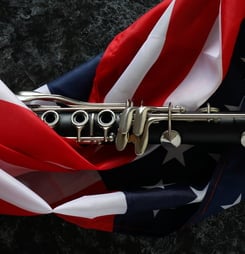

It’s time to rally round. Whether it’s a huge Stars and Stripes flapping from a porch, a small flag tucked into a flowerpot, or a simple lapel pin, National Flag Day offers a chance to pause and appreciate a piece of cloth that carries a lot of history. The American flag is instantly recognizable, endlessly replicated, and surprisingly full of rules, stories, and symbolism once a person looks a little closer.
Pay some respect to this notable national flag of the United States of America on National Flag Day!
How to Celebrate National Flag Day
Show some support for the meaning of the US Flag by celebrating National Flag Day with a variety of activities, including some of these:
Display an American Flag
One of the most classic ways to observe National Flag Day is also the simplest: fly the flag. That might mean mounting a flag on the outside of a home, raising it on a freestanding pole, placing a small version on a desk, or carrying one in a community event. Even a modest display tends to catch the eye, because the flag’s design is bold on purpose. The stripes are high contrast, the blue field frames the stars neatly, and the whole thing reads clearly from a distance.
For people who like doing things properly, this is also a good day to brush up on U.S. Flag Code etiquette. The Flag Code is widely treated as a guide for respectful handling, and it covers details that many people only half remember. A few of the most practical tips include:
- If the flag is flown outdoors on a stationary staff, it is traditionally raised in the morning and taken down at sunset. If it is displayed at night, it should be illuminated.
- The flag should not touch the ground. That includes during raising and lowering. Keeping it from dragging is one of those small gestures that signals care.
- When the flag is displayed flat against a wall or in a window, the union (the blue field of stars) goes in the upper left from the observer’s point of view.
- When displayed with other flags on separate staffs, the U.S. flag is typically placed in the position of honor, which often means the highest point or the viewer’s left.
National Flag Day can also be a nudge to check the condition of an old flag. Sun and weather can fade colors and weaken stitching. If a flag is worn out, the Flag Code encourages retiring it in a dignified way. Many communities and civic organizations hold retirement ceremonies, and some people choose a quiet, private retirement at home.
Finally, a thoughtful twist on “displaying a flag” is learning what is being displayed. The fifty stars represent the states, and the thirteen stripes represent the original colonies. The design has been updated over time as new states joined, but the stripes stayed fixed at thirteen, a constant reminder of the country’s earliest formation.
Visit the Betsy Ross House
The story goes that a woman named Elizabeth Griscom Ross, a Philadelphia seamstress who came to be known as Betsy Ross, was the person who made the first flag, commissioned by George Washington and colleagues. In the popular version, she not only sewed it, she helped refine the design, including a famous suggestion about using five-pointed stars that could be cut efficiently.
The Betsy Ross House is often treated as a physical doorway into that legend. Visiting a historic home connected to the early years of the United States can make the flag’s story feel less like a textbook and more like real life: hand tools, fabric work, cramped workspaces, and the constant background hum of a city in a revolutionary era.
It is also worth appreciating the legend for what it represents, even as historians debate details. Flags in the late 1700s were not mass-produced. They were made by hand, often by people with practical skills in sewing, sailmaking, and textile work. Whether or not one individual can be crowned “the first flag maker,” the broader truth is that early flags were crafted objects, and their creation required precision. Stars had to be arranged consistently, stripes aligned, seams strong enough to survive wind, and colors vivid enough to be seen.
A visit to a site like this also opens up bigger questions that suit National Flag Day well: How do national symbols get created? Who gets remembered for them? How do stories become traditions? The Betsy Ross narrative has lasted for generations because it is memorable, human-scaled, and easy to picture, which is exactly how legends tend to stick.
Try Making Some American Flags
One interesting activity to enjoy in celebration of National Flag Day is to make a flag-inspired creation. It can be serious or silly, perfectly measured or charmingly lopsided. The goal is not to replace the real thing, but to engage with the design and notice how it is put together.
For adults, creating a handmade flag can be a surprisingly satisfying design exercise. The pattern is structured, but still leaves room for creativity in material and technique. Options include:
- Painting on canvas, paper, or wood, with careful masking tape for crisp stripes.
- Fabric crafts such as quilting, embroidery, crochet, or appliqué, which echo the flag’s origins as a sewn object.
- Baking and cooking projects that interpret the colors and shapes, such as berry-and-cream “stars” or striped treats, for people who enjoy edible art.
- Gardening or floral displays using red and white blooms with a blue container or background.
Parents and teachers can help school-aged children or preschoolers with flag-themed crafts using popsicle sticks, perler beads, paper plates, construction paper, or other safe materials. Younger kids often enjoy stamping projects, like potato prints or sponge painting, because it turns the stars and stripes into a playful pattern exercise.
As crafts get more advanced, the activity can become a mini lesson in proportion. The U.S. flag has specific measurements for official manufacturing, but even without a ruler, replicating the balance of the canton and the rhythm of the stripes can sharpen observation skills. It also prompts good conversations about symbolism: why stars, why stripes, why those colors, and what it means for a flag to represent a group of people rather than a single person.
For classrooms, clubs, or teams, a collaborative flag project works well. Each participant can create one star, one stripe, or one panel, and the final piece becomes a shared artifact. National Flag Day is especially fitting for that kind of group effort, because the flag itself is a “many become one” design.
National Flag Day Timeline
Flag Resolution Establishes the First Official U.S. Flag
The Second Continental Congress resolves that the flag of the thirteen United States shall have thirteen red and white stripes and a union of thirteen white stars in a blue field, creating the first official “Stars and Stripes.”
Flag Act of 1794 Increases Stars and Stripes to Fifteen
Congress passes and President George Washington signs a law providing that from May 1, 1795, the national flag will bear 15 stars and 15 stripes to represent the admission of Vermont and Kentucky.
Flag Act of 1818 Fixes Thirteen Stripes and Expanding Stars
Congress restores the number of stripes to thirteen to honor the original colonies and decrees that the number of stars will equal the number of states, with each new star added on the July 4 following a state’s admission.
Taft Standardizes Proportions and Star Arrangement
Responding to many different star patterns in use, President William Howard Taft issues Executive Order 1556, prescribing official proportions of the U.S. flag and a uniform arrangement for its 48 stars.
First National Flag Conference Drafts a Civilian Flag Code
Representatives of dozens of civic and veterans’ organizations meet in Washington, D.C., and adopt a National Flag Code that sets out uniform guidelines for civilian display and respect for the U.S. flag.
Congress Adopts the U.S. Flag Code into Federal Law
During World War II, Congress enacts the Flag Code as Public Law 77-623, codifying customary rules for display and treatment of the flag and later placing them in Title 4 of the U.S. Code.
Eisenhower Defines the Modern 50-Star Flag
President Dwight D. Eisenhower issues Executive Order 10834, specifying the exact arrangement of fifty stars and other details of the design, which becomes the official flag when first raised on July 4, 1960.
History of National Flag Day
This important day can trace its roots back more than 100 years when United States President Woodrow Wilson, on May 30, 1916, issued a presidential proclamation declaring June 14 to be National Flag Day.
Honoring the flag that now bears fifty stars and thirteen stripes, this day commemorates June 14, 1777, when the Second Continental Congress approved a resolution establishing a national flag. The wording set the basic idea that remains recognizable: thirteen stripes in red and white, and thirteen white stars on a blue field, representing “a new constellation.” The poetry of that phrase helps explain why the flag became such a durable national symbol. It was meant to suggest something new in the political sky, something that would be noticed.
Though National Flag Day is not an official federal or government holiday, it has been formally recognized in U.S. law as a commemorative observance. A later act of Congress designated June 14 each year as National Flag Day and requested that the president issue an annual proclamation encouraging its observance. In other words, it is an invitation rather than a mandate: a recurring reminder that the flag is part of civic life, not just decoration.
Of course, the flag has gone through a few different iterations over the years. Originally containing thirteen stars and thirteen stripes, it changed as the country expanded. For a long time, the pattern of stars was not fully standardized, which led to early flags featuring circles, rows, and other arrangements depending on who made them and where. That variety is a useful reminder that the flag was a living symbol long before it became a strictly regulated graphic.
Eventually, the stars became the flexible element, while the stripes stayed at thirteen to honor the original colonies. Each new state meant an additional star, and Americans sometimes experienced that change as a quiet historical marker. A new star in the canton is a small design tweak, but it represents a major political shift: a new state joining the union, a larger national map, and a changing idea of what “the United States” includes.
The most recent change took effect on July 4, 1960, when the current fifty-star flag was introduced following the admission of Alaska and Hawaii as states. The shift to fifty stars is one reason many people carry a mental image of the flag that feels timeless. Several generations have grown up seeing the same arrangement of stars, which has helped cement the design as a stable emblem.
National Flag Day also connects naturally to the broader system of flag etiquette, ceremonies, and civic education. Many communities use the occasion to teach proper display, the meaning of the colors and symbols, and the respectful handling of a flag in different settings. Some organizations host raising ceremonies, bands play patriotic music, and speakers reflect on shared civic values. Even when the observance is modest, it tends to be intentional: a flag placed carefully, a moment of reflection, a classroom lesson that explains why the stripes do not change.
While Independence Day has become an all-around celebration of national founding, National Flag Day has often kept more of a local character, with traditions rooted in a town, a county, a city center, or a state capitol. It lends itself to group participation, too. A team, club, scout troop, or class can treat it as a hands-on civic moment, especially because a flag is something that can be raised, carried, folded, or displayed together.
In many places, people are invited to discover their inner Betsy Ross and create their own versions of Old Glory in everything from stained glass to potato prints to rows of flowers. The men who adopted the first flag in 1777 could hardly have imagined the scale of reproduction that would follow, from uniforms and spacecraft to sports crowds and tiny pins.
Still, the core purpose remains refreshingly straightforward: to recognize the flag as a symbol that has traveled through wars, protests, celebrations, tragedies, parades, and everyday front porches. National Flag Day sets aside space for appreciation of the design, the history that shaped it, and the civic ideals it is meant to represent, one crisp stripe and one bright star at a time.
Facts About National Flag Day
A Civil War Decision Kept All the Stars on the Flag
During the Civil War, the U.S. government chose not to remove stars from the flag for Confederate states that had seceded, so the national flag continued to show a full constellation of states even as the Union was fractured.
This policy, maintained throughout the war, reinforced the idea that secession was illegitimate and that the Union remained legally intact, and it helped cement the flag’s later meaning as a symbol of national unity rather than just a roster of current loyalties.
Old Glory’s Colors Are Defined by a Textile Standard, Not by Pantone
The familiar “Old Glory Red” and “Old Glory Blue” are not officially defined in consumer color systems such as Pantone; for government-use flags they are specified by reference to The Standard Color Reference of America, a textile color system maintained by the Color Association of the United States.
Federal flag specifications use that closed, professional standard to control dye lots and ensure consistent cloth colors across manufacturers, particularly for flags purchased by federal agencies.
The Flag Code Is Advisory, While Design Specs Are in Separate Documents
The United States Flag Code in Title 4 of the U.S. Code describes the flag in general terms and lays out etiquette for respectful display, but it does not contain the fine-grained engineering details of how a flag must be built.
Those technical elements, such as exact canton dimensions, star size, and stitching requirements for government-purchased flags, live instead in procurement specifications like Federal Specification DDD‑F‑416, which operate as contract standards rather than universal law.
Federal Law Sets the Flag’s Outline but Not a Single Public Manufacturing Standard
By statute, the U.S. flag must have 13 horizontal stripes, alternating red and white, and a union of white stars on a blue field, but Congress has never passed a law that forces all civilian manufacturers to follow one detailed construction blueprint.
Instead, the highly detailed rules on proportions, materials, and star layout apply mainly to flags bought by federal agencies under procurement specifications, while commercial makers are free to deviate as long as they respect basic legal features and labeling rules.
The Official “Old Glory” Dimensions Were Only Standardized in 1912
For much of U.S. history, flags varied in star arrangement and proportions because Congress had specified only the number of stars and stripes, not how to lay them out.
That changed in 1912, when President William Howard Taft issued an executive order establishing the flag’s proportions and fixing the 48 stars in six rows of eight with one point of each star upward, creating the first nationwide, legally recognized template for the flag’s geometry.
The U.S. Flag Code Grew Out of a 1923 National Flag Conference
The civilian Flag Code that Americans recognize today traces back to a National Flag Conference held in Washington, D.C., on June 14, 1923, where veterans’ groups and civic organizations first hammered out a unified set of display and etiquette rules.
Congress did not adopt a version of this code as federal law until 1942, during World War II, so for roughly two decades the guidance that shaped everyday flag use existed only as a voluntary civic standard.
From Hand-Sewn Wool to High-Strength Synthetics
Early U.S. flags were typically hand-sewn from wool bunting or cotton and, by the late 19th century, assembled on treadle sewing machines, which still produced relatively fragile cloth compared with modern materials.
Today, government-specification and premium commercial flags are usually made from durable nylon or polyester with reinforced fly ends, lock-stitched seams, and embroidered or appliqued stars, reflecting how advances in industrial textiles and stitching technology have reshaped what a “standard” American flag looks and feels like.