
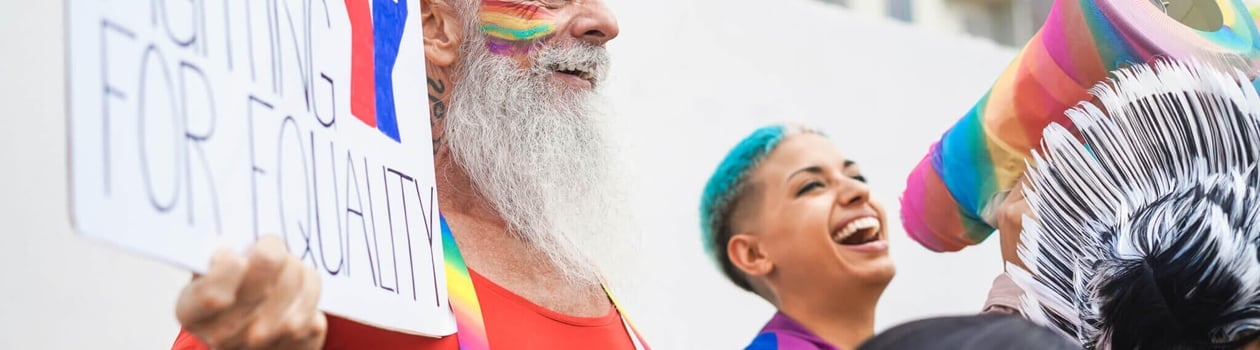
Honor Our LGBT Elders Day celebrates the lives and contributions of older LGBTQ+ individuals, many of whom spent decades learning when to speak, when to stay quiet, and how to build joy and community anyway.
It is a chance to recognize people who did not just “live through history,” but helped shape it, often while facing laws, workplaces, healthcare systems, and social expectations that treated them as invisible at best and illegal at worst.
These pioneers faced significant challenges, yet they stood firm, paving the way for the rights and acceptance many experience today. Some were the first in their families to come out, the first in their friend groups to demand respect, or the first to show up and stay in the room when being LGBTQ+ was treated as a scandal.
Their stories of courage and authenticity can be thrilling, heartbreaking, and funny in the same breath, and they offer a reminder that progress is not automatic. It is built by people who keep going, even when it is exhausting.
Recognizing LGBT elders emphasizes the importance of community and intergenerational connections. Many older LGBTQ+ adults have “chosen family” as much as, or more than, biological family. That means aging can look different: it might include deep networks of friends, or it might come with extra risks of isolation when friends move away, pass on, or lose mobility.
Honor Our LGBT Elders Day invites younger generations to show up, not as tourists in someone else’s past, but as respectful listeners and reliable neighbors.
It offers an opportunity to listen to their experiences, learn from their journeys, and express gratitude for their sacrifices. It also encourages attention to practical needs. Aging can bring new layers of vulnerability, and older LGBTQ+ adults can face barriers to supportive healthcare, safe housing, and respectful services.
This day nudges communities to celebrate resilience while also asking an honest question: what would it look like for elders to feel consistently safe, included, and valued, not only on one designated day but all year long?
How to Celebrate Honor Our LGBT Elders Day
Celebrating Honor Our LGBT Elders Day is about showing gratitude, listening deeply, and strengthening the ties between generations. It can be as simple as a phone call or as involved as organizing a community gathering, but the heart of it stays the same: respect, curiosity, and follow-through.
Thoughtful gestures can make a lasting impact and remind elders that their voices still matter. A meaningful celebration also avoids treating elders like historical artifacts. Many are still advocating, creating art, mentoring, parenting, working, flirting, volunteering, and making plans.
The most supportive approach honors their past while recognizing their present. Here are a few ways to make this day meaningful.
Listen and Learn Over a Conversation
Spending time with an LGBT elder can be one of the most powerful ways to celebrate. Sit down for a heartfelt talk, ask about their experiences, and truly listen.
Consider questions that invite stories rather than yes-or-no answers, such as: What helped you find your people? What do you wish younger you had known? Who supported you when it mattered? What has changed for the better, and what still needs work?
A good conversation also makes room for boundaries. Some elders may not want to revisit painful chapters involving family rejection, violence, or discrimination. Let them lead. If they do share difficult memories, listen without rushing to “fix” the feelings.
Sometimes the most respectful response is simply, “Thank you for telling me.” And if the elder is open to it, ask about their current life too, including hobbies, relationships, health goals, and what support would feel helpful.
For those who cannot meet in person, a video call, voice message, or even a long email exchange can still be deeply connective. What matters is presence and attention, not perfection.
Write a Letter of Gratitude
A handwritten note can mean more than words spoken in passing. Express appreciation for their courage, resilience, and contributions. Let them know their legacy continues to inspire and that their journey has made a difference.
Specificity makes gratitude feel real. Instead of a general “thank you for everything,” name what is being honored: the way they showed up for friends, the risks they took to live openly, the kindness they offered to younger people, or the perseverance it took to keep building a life in a world that did not always make room.
If writing feels intimidating, keep it simple:
- Acknowledge the obstacles their generation faced.
- Share one thing learned from them or from LGBTQ+ elders as a group.
- Offer a warm wish for their well-being, comfort, and joy.
Letters can also be paired with practical offers: a ride to an appointment, help with technology, or an invitation to a low-key meal. Gratitude gets extra power when it comes with continued care.
Support LGBT Elder Organizations
Many older adults in the community face isolation, financial struggles, or limited access to affirming healthcare. Donating to organizations that provide resources, advocacy, or companionship helps strengthen the safety net.
Support can take several forms. Financial donations are useful, but so are volunteer hours, professional skills, and everyday advocacy. Someone who is good at organizing can help coordinate meal trains or check-in calls.
Someone with tech skills can help elders set up secure passwords, learn video calling, or avoid scams. Someone with healthcare knowledge can help explain forms or prepare questions for appointments.
Communities can also support LGBTQ+ elders by improving ordinary systems: encouraging senior centers and care facilities to use inclusive language, ensuring staff training includes respectful communication, and pushing for policies that protect residents from harassment.
Even small improvements, like asking for a person’s pronouns or honoring a long-term partner as next of kin, can profoundly affect an elder’s sense of dignity.
Create a Shared Experience
Plan a meaningful outing, whether it’s a visit to a museum, a community event, or simply a walk in the park. Sharing time and experiences fosters connection and reminds elders that they are valued and included.
The best shared experiences are accessible and comfortable. Consider mobility needs, hearing or vision differences, energy levels, and sensory preferences. A loud venue might be fun for some and exhausting for others. A quiet café, a movie with comfortable seating, a craft afternoon, or a small potluck can be just as celebratory.
A shared experience can also be collaborative. Invite an elder to teach a skill, share a favorite recipe, recommend books or music, or show photos from earlier decades. These exchanges are not one-way charity; they are real relationships. When possible, include multiple generations in the same space, so connection becomes part of community culture rather than an occasional special project.
Pass Their Stories Forward
Documenting their journeys through writing, video, or audio preserves their voices for future generations. Sharing their stories in community spaces, schools, or online platforms ensures their history continues to educate and inspire.
Story preservation works best when it is consent-based and respectful. Ask what they want recorded, what should remain private, and how they would like the story to be shared, if at all. Some elders may want anonymity. Others may want their full names and chosen names celebrated boldly. Let them decide.
Consider a simple oral history approach:
- Record a conversation (audio is often less intimidating than video).
- Capture key milestones: early identity, first community, first love, major turning points, chosen family.
- Ask about culture as well as activism: favorite music, bars or gathering places, fashion, slang, books, and traditions.
Passing stories forward can also be less formal. Share quotes in a community newsletter, create a small photo exhibit at a local center, or host an intergenerational storytelling night. The goal is not to make elders perform their trauma for educational purposes. The goal is to preserve wisdom, humor, creativity, and the full complexity of lives well lived.
Honor Our LGBT Elders Day Timeline
Publication of “Lesbian/Women and Gay Men in the Midlife and Later Years”
One of the earliest scholarly articles on lesbian and gay aging appears in the journal Social Work, drawing attention to the distinct experiences and needs of older sexual minorities.
Founding of SAGE, a Pioneering LGBT Elder Organization
Services & Advocacy for GLBT Elders (SAGE) is founded in New York City, becoming the first U.S. organization dedicated specifically to improving the lives of older lesbian and gay people.
NNAF Conference Centers “The Aging Homosexual”
The National Network on Aging and the Elderly holds a landmark conference session on aging sexual minorities, signaling growing professional recognition of LGBT elders within gerontology and social services.
First White House Conference on Aging Session Addressing LGBT Older Adults
Advocates successfully secure space at the decennial White House Conference on Aging to discuss the concerns of lesbian and gay elders, helping to introduce their issues into federal aging policy conversations.
National Gay and Lesbian Task Force Releases “Outing Age”
The policy report “Outing Age: Public Policy Issues Affecting Gay, Lesbian, Bisexual and Transgender Elders” compiles research on discrimination, health, and economic insecurity among LGBT older adults in the United States.
“Caring and Aging with Pride” National Study on LGBT Older Adults
The first federally funded, large-scale study of LGBT aging in the U.S. documents higher rates of discrimination, social isolation, and health disparities among LGBT elders compared with their non-LGBT peers.
Obergefell v. Hodges Extends Marriage Equality to Older Same-Sex Couples
The U.S. Supreme Court legalizes same-sex marriage nationwide, granting many LGBT elders critical protections in areas such as inheritance, Social Security survivor benefits, and hospital visitation. [1]
History of Honor Our LGBT Elders Day
Honor Our LGBT Elders Day started in 2015. Nate Sweeney, director of SAGE at Chase Brexton Health Care in Baltimore, Maryland, created it. He wanted to recognize the contributions of older LGBT individuals and highlight the challenges they face.
The day was designed as both celebration and spotlight: a reminder that the movement for LGBTQ+ equality did not start with recent headlines, and that many of its most important builders are still here, still deserving of support and recognition.
Many in this community spent years fighting for rights, often without the support of family, society, or the law. Older LGBTQ+ adults grew up in eras when being out could mean losing a job, being denied housing, being targeted by law enforcement, or being labeled mentally ill. In many places, simply gathering in LGBTQ+ spaces carried risk. That reality shaped how people formed relationships, found community, and protected one another.
Their efforts paved the way for a more accepting world, but that path was not smooth or guaranteed. LGBT elders witnessed and participated in waves of change: quiet organizing, loud protest, legal battles, cultural shifts, and everyday acts of bravery like showing up to a family event with a partner, signing a lease as a couple, or insisting on respectful treatment in a doctor’s office.
Many also carried the weight of multiple identities, facing racism, sexism, ableism, or class barriers alongside homophobia and transphobia. Honoring elders means recognizing that the “LGBT elder” experience is not one story, but many.
This day encourages people to show gratitude to those who endured discrimination yet kept pushing forward. It also sheds light on the struggles many still experience, including loneliness, financial hardships, and limited access to affirming healthcare.
Aging can amplify problems that were already present. For example, someone who spent a lifetime facing workplace discrimination may have less retirement savings. Someone who stayed closeted for safety may have a smaller support network. Someone who relied on chosen family may not have legal paperwork in place, which can complicate healthcare decisions and end-of-life planning.
As LGBT elders age, they often face unique difficulties that younger generations may not realize. In healthcare and senior living settings, some feel pressure to “go back into the closet” to avoid mistreatment. Others worry that staff will dismiss a spouse or partner, misgender them, or ignore their identity altogether.
Even when policies are inclusive, day-to-day comfort often depends on whether individuals in the room are respectful. The emotional toll of constantly assessing safety can be heavy, especially when a person is already navigating health challenges.
At the same time, LGBT elders are not defined by hardship. Many have built vibrant lives, nurtured communities, and developed deep resilience and creativity. They have carried traditions forward, from social clubs to informal mutual aid, and they have mentored younger people in ways that do not always make the history books. Honor Our LGBT Elders Day makes space for pride in that survival and for appreciation of that cultural inheritance.
Organizations, communities, and individuals across the United States now observe this day. They honor the resilience of LGBT elders through events, discussions, and acts of appreciation. Some communities host intergenerational gatherings where elders can share stories in their own words.
Others focus on service, such as creating visitor programs or delivering meals. Some center education, using the day as a reason to train staff at senior centers or to start conversations about inclusive caregiving.
Whether through storytelling, advocacy, or simply reaching out, people take time to recognize the impact these trailblazers have had. Their lives hold lessons that continue to inspire and guide future generations: how to build family with intention, how to find humor under pressure, how to organize when resources are scarce, and how to keep insisting on dignity.
Honoring them helps ensure that their voices, struggles, and victories are not reduced to footnotes, and that respect for LGBTQ+ elders is expressed in both celebration and concrete care.
Facts About Honor Our LGBT Elders Day
Stonewall Generation Faced Lifelong Legal and Social Exclusion
Many of today’s LGBT elders came of age when homosexuality was criminalized in every U.S. state and classified as a mental disorder by the American Psychiatric Association until 1973.
This meant they risked arrest, involuntary psychiatric treatment, loss of employment, and family rejection simply for living openly, which shaped a lifetime of concealment, mistrust of institutions, and limited access to secure careers and benefits.
Higher Rates of Poverty and Economic Insecurity in Later Life
Studies show that LGBT older adults are more likely to live in poverty than their heterosexual peers, especially older lesbians and transgender people.
Lifelong employment discrimination, denial of spousal benefits before marriage equality, and a higher likelihood of estrangement from family mean many LGBT elders have less retirement savings and weaker financial safety nets in old age.
LGBT Elders Are More Likely to Live Alone and Be Socially Isolated
Compared with non‑LGBT peers, LGBT elders are significantly more likely to live alone, to be single, and to have no children, which reduces the informal caregiving many older adults depend on.
Research has found elevated levels of loneliness and social isolation among LGBT older people, factors that are linked to poorer physical and mental health outcomes in later life.
Historic Role in the Early Gay Rights Movement and AIDS Activism
Many LGBT elders today were directly involved in pivotal moments such as pre‑Stonewall organizing, the 1969 Stonewall uprising, and the first wave of AIDS activism in the 1980s and 1990s.
Older gay men, lesbians, bisexual and transgender people not only protested police harassment and discrimination but also created early support networks, hospice-style care, and advocacy organizations when governments largely ignored the AIDS crisis.
Fear of Discrimination in Long-Term Care Settings
LGBT elders frequently report fear of discrimination or mistreatment in nursing homes, assisted living, and home‑care services, leading some to hide their identities again after living openly for years.
Surveys have documented concerns about harassment from staff or other residents, being denied appropriate care for same‑sex partners, or not having their gender identity respected in facility policies and daily routines.
Health Disparities and Delayed Care Among LGBT Older Adults
Older LGBT adults have been found to have higher rates of disability, poor physical health, and depression than non‑LGBT elders, yet are also more likely to delay or avoid medical care.
Histories of stigma in healthcare, prior attempts to “cure” homosexuality or suppress gender variance, and a lack of culturally competent providers contribute to mistrust that can worsen chronic conditions in later life.
Intergenerational LGBT Programs Improve Well-Being for Both Youth and Elders
Structured programs that connect LGBT youth with LGBT elders, such as storytelling circles and mentoring projects, have been shown to reduce isolation among older adults and strengthen resilience and identity affirmation among younger participants.
These intergenerational exchanges help preserve community history while giving elders opportunities to contribute and youth access to lived experience that is rarely reflected in traditional school curricula.
Honor Our LGBT Elders Day FAQs
What unique challenges do many LGBT elders face as they age?
Many LGBT elders face higher rates of social isolation, discrimination in health and long‑term care settings, and economic insecurity compared with their heterosexual and cisgender peers.
They are more likely to live alone, less likely to have children, and may feel unsafe being open about their identity in senior housing or care facilities.
Past discrimination in employment, housing, and marriage often leaves them with fewer savings and reduced access to pensions or spousal benefits in later life.
How does social isolation affect the health of LGBT older adults?
Social isolation has been linked to higher risks of depression, anxiety, cognitive decline, and even earlier mortality among older adults, and LGBT elders are at particular risk.
Experiences of stigma, family rejection, or the need to hide their identity can make it harder to form or maintain support networks.
Research shows that strong social ties and affirming community spaces help protect mental and physical health for LGBT older adults.
Why might LGBT elders be reluctant to disclose their identity in care settings?
Many LGBT elders grew up in periods when same‑sex relationships were criminalized and gender diversity was pathologized, and some experienced harassment or violence when their identity was known.
As a result, they may fear poor treatment, denial of services, or abuse in hospitals, nursing homes, or home‑care programs if they are open about who they are.
This can lead them to hide important parts of their lives, which in turn can compromise the quality and safety of their care. [1]
How can families and friends support the mental well‑being of LGBT older adults?
Supportive families and friends can help by staying in regular contact, listening without judgment, and affirming the person’s identity and relationships.
Including LGBT elders in family events, helping them connect with community groups or senior centers that are explicitly LGBT‑inclusive, and advocating for respectful treatment in health or housing settings can all reduce loneliness and stress.
Simple actions like checking in, offering practical help, and acknowledging their life history can significantly boost their mental well‑being.
What does inclusive healthcare for LGBT elders look like in practice?
Inclusive healthcare for LGBT elders involves providers who are trained in sexual and gender minority health, use respectful language, and do not make assumptions about partners or identities.
Clinics and long‑term care facilities can adopt nondiscrimination policies, collect sexual orientation and gender identity data sensitively, and ensure that visitation and medical decision‑making respect older adults’ chosen families.
Creating visible signs of inclusion, such as staff training certificates and inclusive intake forms, helps elders feel safer disclosing information that is important for their care.
Why are “chosen families” especially important for many LGBT elders?
Because many LGBT people have experienced rejection or strained relationships with relatives, they often rely on networks of close friends, partners, and community members as “chosen family.”
In later life, these people may be the ones who provide emotional support, help with daily tasks, or act as caregivers.
Recognizing and legally respecting chosen family in hospital visitation, caregiving decisions, and bereavement policies can be crucial for the safety and dignity of LGBT elders.
How can younger LGBTQ+ people build stronger intergenerational connections with elders in their community?
Younger LGBTQ+ people can seek out community centers, pride organizations, or mentoring programs that intentionally connect generations, then volunteer or participate in events that include older adults.
They can invite elders to share their stories, ask about past movements and community spaces, and offer practical help such as tech assistance or transportation.
Consistent, mutual relationships that respect elders’ autonomy and lived experience help preserve community history while reducing isolation for older adults and giving younger people role models and perspective.



You may also like

Queer Youth of Faith Day
Embrace the empowering journey of LGBTQ+ young individuals finding strength within their faith community's accepting embrace.

LGBTQ+ History Month
LGBTQ+ History Month lights up October with a burst of color, celebration, and reflection. This special month shines a spotlight on the rich history and achievements of the lesbian, gay, bisexual, transgender, and queer community. It's a time to honor the trailblazers who have fought for equality and to remember...
- Australia
- Canada
- United Kingdom
- and 1 more
Zero Discrimination Day
Imagine a world where everyone is free to be themselves without fear of being judged or treated unfairly. Sounds amazing, right? Zero Discrimination Day points toward that world by encouraging people to notice where bias shows up, learn what dignity looks like in everyday life, and take practical steps that...
- Canada
- India
- International
- and 3 more

Letter to an Elder Day
Letter to an Elder Day is a special time set aside each year to show love and respect to our elders. Celebrated annually, this day encourages us to reach out to seniors who might feel lonely with handwritten letters full of love and encouragement. The idea is simple but powerful. A...
- Canada
- International
- United Kingdom
- and 1 more
National days and holidays on May 16

Cannes Film Festival
The Cannes Film Festival is one of the most glamorous and important events in the film industry. Held annually in the beautiful city of Cannes on the French Riviera, this festival draws the biggest names in cinema, from directors to actors. The red carpet is a dazzling display of style...

National Barbecue Day
Celebrate National Barbecue Day with smoky flavors, backyard grills, and global BBQ traditions that bring friends, family, and communities together.
- Australia
- Canada
- South Africa
- and 2 more

Drawing Day
Celebrate Drawing Day by unlocking creativity, exploring famous sketches, drawing with kids, and sharing art as therapy, community, and self-expression.

National Stationery Week
Sharpen your pencils and break out your fine pens, and take this excuse to use some fancy stationery. Write a loved one, find a pen pal, or even make your to-do list.
Seize Every Day
Sign up to get reminders, recommendations and guides.