
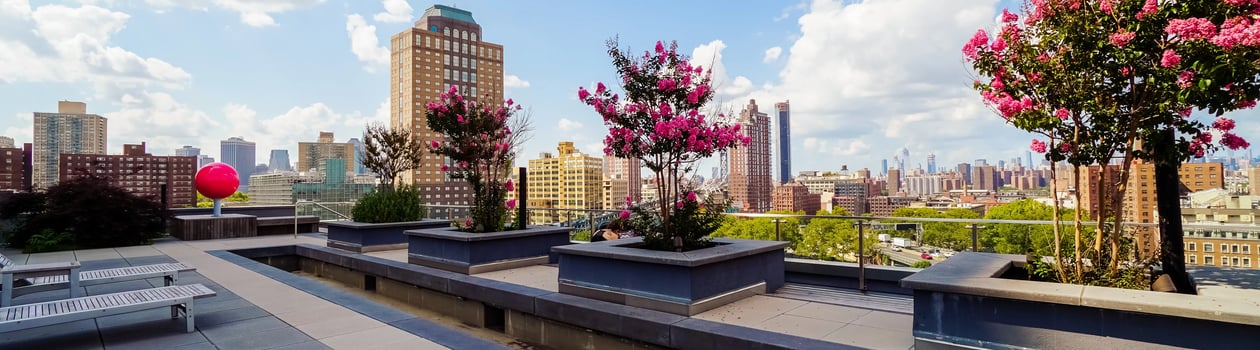
Have you heard of World Green Roof Day? If not, you’re missing out!
Towns and cities all over the world are going green to clean up their carbon footprint and adapt to climate change.
How to Celebrate World Green Roof Day
Get your cameras ready and start snapping. Use social media to discuss the green roof you have going on, or your favorite roof-top gardens you’ve seen while out-and-about.
Tell your town pages, your city billboards and your local politicians why you think green roofs are important.
If you haven’t seen anyone talk about them in your area, it’s up to you shout it from the proverbial green rooftops!
Rmember the Benefits of Green Roofs
A green roof is also known as a living roof. It’s a roof space that facilitates shrubs, trees, vegetation and pretty spaces designed to be colourful and aid the environment.
Green roofs are very popular in urban areas, so when it comes to World Green Roof Day, it’s important to know the benefits of having a green roof. Let’s dive in!
- Replacing Green Spaces. When you live in a city or built-up area, you notice pretty quickly that the rise of high-rises and concrete is rapidly overtaking green spaces.With much of this green space reducing in size and frequency, green roofing has become the next best option. We need vegetation and greenery, trees and better oxygen.With the spaces gone, green roof gardens can replace some of the lost greenery that we rely on. Our birds, insects and other wildlife rely on them, too.
- Monitoring Rain. Roof gardens retain rainwater and it’s easier to manage storm water as a result. Urban areas have hard slabs and concrete as the major materials, and as such, rainwater run-off can cause flooding.Without proper management, this water becomes a hazard in urban places. Green roofs can reduce the load and retain that water.
- A Peaceful Place. A rooftop garden is one of the best things to come out of urban areas. It’s a place that provides tranquillity and calm and it’s a jewel in the crown of a city. Green roofs provide a great space in which to relax, and they offer the perfect escape from the hustle and bustle of the city.
- Aesthetics. Grass and plants always make a home look better, and a lush garden on top of a roof just makes the house look beautiful. It works for an office building, too, and a green roof works to brighten up an otherwise grey space. Green roofs can be big or small and they work to improve air quality, cool the urban environment and insulate the buildings. They work to boost the wellbeing of others, too!
Learn Fun Facts About Green Roofs
Did you know…?
- The Central Activity Zone of London (the fancy word for “heart of the city”) had green roofs covering 290,000 m2 as of 2017!
- Green roofs can reduce the flow of storm water from a roof by up to 65%.
- Protected from ultraviolet radiation and changes in temperature, green roofs can last two to three times longer than standard roofs.
- 42% of the total market in the UK for green roofs is in London. The more dense the urban environment, the more greenery up top you can expect!
Why Celebrate World Green Roof Day
We are in a climate emergency, and we can’t get away from that fact. Green roofs are going to be a big part of the solution.
Green roofs are not a new concept, but they may be newly received from those who aren’t aware of what it all means for them.
The very first green roof policy came about in 1979 in Germany. Green roofs are particularly popular among those in urban planning in Europe, but the rest of the world needs to catch on – fast – if we are to do something about the current climate crisis.
In the bigger cities in the US and the UK, rooftop gardens and greenery are becoming more and more popular, with London leading the charge in green rooftop oasis spaces.
There is a great deal of value and environmental benefits in green roofing, and cities across the world should take them up to ensure that they are helping the rest of the world, too.
There are different types of green roof design, from intensive and biodiverse to extensive. Some green roofs are domestic and others commercial, some on flat roofs and others pitched.
The chance for amazing design is huge and you can improve air quality, collect and control rainwater runoff and deliver improvements and value to each building. There are huge benefits to having a green roof, so let’s check those out!
Not only do green roofs benefit everyone, they benefit small wildlife, and that’s something that we should all be celebrating! This celebration of green roofs is a global thing, and whether you are in business or not, you can still celebrate going green.
Whether it’s a bike shed or a bus stop, the roof of your new extension or your home office, you can still enjoy a beautiful green roof and celebrating it is going to be more than encouraged.
Every World Green Roof Day, people the world over are encouraged to look out of their window and check for roofs that are perfect candidates for going green!
World Green Roof Day Timeline
Ancient Roof Gardens in Mesopotamia
Texts describing the fabled Hanging Gardens of Babylon and excavations at Nineveh and Babylon point to terraced structures with deep planted beds and irrigation, showing that engineered roof gardens have roots in ancient Mesopotamian architecture.
Scandinavian Sod Roof Traditions
In rural Norway and other Nordic regions, houses and farm buildings were topped with birch bark and thick sod, creating vegetated roofs that provided insulation and protection from weather centuries before modern green roof technology.
Modern Green Roof Research in Germany
Postwar German architects and horticultural researchers began systematic experiments on lightweight, layered green roof systems, developing waterproofing, root barriers, and drainage concepts that became the basis of contemporary “extensive” green roofs.
First Municipal Green Roof Policy in Germany
The city of Linz am Rhein introduced one of the earliest local policies promoting vegetated roofs, signaling a shift from experimental projects to formal planning tools that used green roofs for stormwater management and urban ecology.
Chicago City Hall Green Roof Demonstration
Chicago installed a 20,000‑square‑foot green roof atop City Hall as a high‑profile pilot to study temperature reduction, energy savings, and stormwater retention, helping to popularize green roofs in North American cities.
Toronto Adopts the First Mandatory Green Roof Bylaw in North America
The City of Toronto passed a bylaw requiring most new large buildings to include green roofs, establishing detailed coverage and design standards and positioning green roofs as mainstream urban infrastructure.
Vancouver Convention Centre Becomes a Flagship Living Roof
The Vancouver Convention Centre West opened with a 6‑acre living roof planted with native species, designed to manage stormwater and provide habitat, becoming one of the largest non‑industrial green roofs in North America.
History of World Green Roof Day
World Green Roof Day was founded in 2020 by Chris Bridgman & Dusty Gedge, who are veterans of the sustainable living roof arena.
Each year, they’re devoted to helping World Green Roof Day educate others on the benefits of green roofs to our climate, cities and wellbeing.
The founders are also board members of the Green Roof Organisation, a UK trade body that’s responsible for the green roof code of practice.
By celebrating green roofs, there is hope across the globe that we can all come together and enjoy green spaces and all they have to offer. We need to continue to act to ensure that they are well-maintained, and World Green Roof Day allows you time to celebrate the efforts put in by all and the benefits that green roofs bring us.
Facts About World Green Roof Day
Ancient Precedents for Modern Green Roofs
Vegetated roofs are not a modern invention. Archaeological and historical evidence points to early examples such as the terraced, irrigated roof gardens of ancient Mesopotamia often associated with the Hanging Gardens of Babylon, as well as traditional sod roofs in Scandinavia that used layers of birch bark and turf for waterproofing and insulation.
These systems demonstrated that layered roofing assemblies could support plants while protecting the structure below, a principle echoed in contemporary green roof design.
Germany’s 1970s Policies Sparked a Global Green Roof Industry
Contemporary green roofs took off in West Germany in the 1970s, when rising environmental awareness and research into lightweight substrates led cities such as Stuttgart to introduce incentives and regulations for vegetated roofs.
By the early 2000s, Germany had millions of square meters of green roof, and municipal planning requirements in some cities effectively turned green roofs into a standard building component, influencing codes and practices across Europe and beyond.
Quantified Cooling: How Green Roofs Cut Building Energy Use
Field studies in North America and Europe show that green roofs can significantly reduce summer heat gain in buildings.
For example, research compiled by the U.S. Environmental Protection Agency reports that vegetated roofs can lower roof surface temperatures by 30–40°F (about 17–22°C) compared with conventional roofs, which in turn cuts air‑conditioning demand and stabilizes indoor temperatures, especially in upper floors.
Urban Heat Island Relief at the City Scale
When enough rooftops are vegetated, the effect extends beyond individual buildings to the surrounding neighborhood.
Modeling work cited by the EPA and studies in dense cities like Toronto and Chicago have found that widespread green roof adoption can lower average ambient air temperatures, helping to reduce the urban heat island effect, improve outdoor thermal comfort, and lessen smog formation driven by high heat.
Stormwater Retention Comparable to a Sponge
Green roofs function as living sponges that intercept rainfall before it hits urban drainage systems.
A synthesis of monitoring studies by the U.S. Environmental Protection Agency notes that vegetated roofs can typically retain 50–80 percent of annual precipitation that falls on them, depending on depth of the growing medium, plant type, and climate, which helps reduce peak runoff flows and combined sewer overflows during storms.
Refuges for Pollinators and Rare Urban Species
Biodiversity surveys on green roofs in cities such as London, Basel, and Zurich have documented surprisingly rich communities of invertebrates and plants, including species of bees, spiders, and ground‑nesting insects that are rare at street level.
Research published through organizations like the Green Roofs for Healthy Cities network shows that designing roofs with varied substrates, microhabitats, and native plant species can turn them into valuable “stepping stones” for wildlife moving across fragmented urban landscapes.
Mitigating Air and Noise Pollution Over Busy Streets
Vegetated roofs provide modest but measurable improvements in urban environmental quality beyond temperature control.
Studies reviewed by the National Research Council of Canada and other institutions have found that green roofs can capture airborne particulates on leaf and soil surfaces, slightly improving local air quality, and can also attenuate sound by several decibels compared with hard roofing, which is especially valuable along busy transport corridors.



You may also like

Plant Something Day
Plant Something Day invites everyone to dig in and add a touch of green to their surroundings. Whether it's a flowerpot on a windowsill or a tree in the yard, each plant contributes to a healthier environment. This day encourages individuals to connect with nature, fostering a sense of accomplishment...
- United States
National Roof Over Your Head Day
Extending a hand and awareness to those in need, embodying compassion and warmth to mend lives touched by the trials of homelessness.
- United States
National Public Gardens Week
National Public Gardens Week shines a spotlight on the incredible beauty and significance of public gardens. Held each year in early May, it's a week-long celebration designed to highlight the vital role these gardens play in our communities. From fragrant flower displays to serene landscapes, they offer more than just...
- Canada
- United States

National Gardening Day
Gardening is a magical escape to a world of color, scents and textures. Planting a seed and watching it grow is a reminder of life's wonders.
- Australia
- Canada
- International
- and 2 more
National days and holidays on June 6

Vivid Sydney
Vivid Sydney is a dazzling celebration that transforms the city into a vibrant playground of lights, music, and creativity. For weeks, iconic landmarks and urban spaces glow with stunning light installations and 3D projections, captivating both locals and tourists. This festival draws millions of visitors each year, offering an enchanting...
- Australia
The Big Lunch
The Big Lunch is a beautiful day filled with community spirit. This annual event is like an enormous block party, where the tantalizing fragrances of home-cooked delicacies mingle with music and laughter. The event means sharing meals. It also means making new - or renewing - heartwarming connections. As...
- United Kingdom

National Applesauce Cake Day
Celebrate National Applesauce Cake Day with moist, spice-kissed applesauce cake, creative baking, and shared slices that honor a comforting, historic dessert.
- United States

National Yo-Yo Day
Celebrate National Yo-Yo Day by exploring tricks, parties, contests, and history that honor this classic toy, its culture, and its surprising global legacy.
- United States
Seize Every Day
Join free for personalised recommendations, email reminders and exclusive guides. Never miss a day.