Is your belly rumbling at the reminder of National Donut Day? We wouldn’t be surprised if it was, as most of us love these most scrumptious foods!
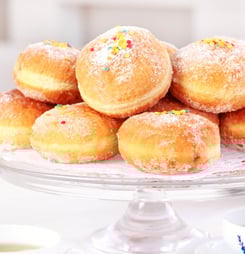
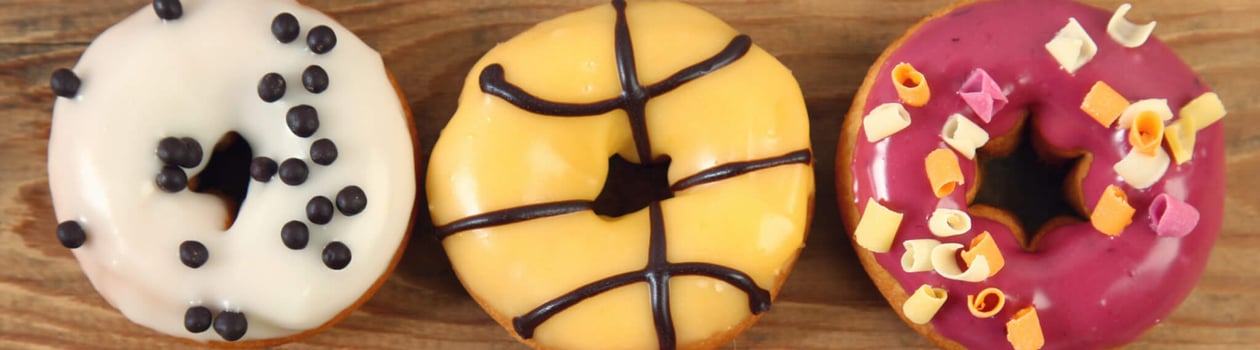
There are many varieties of doughnuts outside of that most commonly known, including twist donuts, fritters, and the hugely varied and popular filled donut.
National Donut Day Timeline
First Recorded “Doughnut”‑Like Recipe in Europe
An early English cookbook, “The Boke of Cokery,” includes recipes for sweet, deep‑fried doughs that resemble later doughnuts and other fritters.
Hanson Gregory and the Doughnut Hole Legend
American sailor Hanson Gregory later claimed that in 1847 he punched a hole in the center of fried cakes to eliminate uncooked middles, creating the classic ring shape.
Rise of Doughnuts in American Cookbooks
By the late 19th century, recipes labeled “doughnuts” and “fried cakes” appeared widely in U.S. cookbooks, cementing them as a familiar home‑baked treat.
Adolph Levitt’s Doughnut Machine Debuts
Russian‑Jewish immigrant Adolph Levitt created an automated doughnut machine in New York City, enabling mass production and drawing crowds to watch the process.
Doughnuts Featured at Chicago World’s Fair
Levitt’s automated doughnut machines were showcased at the Century of Progress Exposition in Chicago, promoting doughnuts as a modern, efficient American food.
Founding of Dunkin’ Donuts
William Rosenberg opened the first Dunkin’ Donuts shop in Quincy, Massachusetts, helping to standardize coffee‑and‑doughnut culture across the United States.
Global Spread and Style Variations
Fast‑food chains and local bakeries popularized doughnuts worldwide, inspiring regional styles from filled Berliners in Europe to mochi doughnuts in East Asia.
How To Celebrate National Donut Day
So, what could you do to celebrate National Donut Day? Try out a few of these ideas:
Enjoy Eating Donuts
Well, you could buy yourself a box of Krispy Kremes for starters, and indulge yourself on your favorite flavors.
Make it a Charity Event
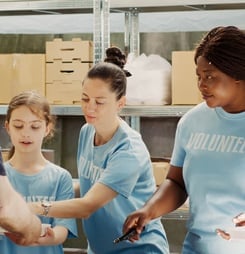
You could celebrate the charitable spirit of the day that brought National Donut Day to fruition! Consider raising funds for the Salvation Army or another charitable group that works with our armed forces, or you could volunteer your time.
If you are going to raise funds, then you might want to learn how to create your own donuts, and then sell them to the people who live around you. You could also make donuts for any members of ex-members of the Forces within your friends and family, and serve them up a tasty treat.
You might consider showing your charitable side in any other way, be that by donating money to a cause that means something to you, or by volunteering your time to help, perhaps on a regular basis.
So, think about what you could do this National Donut Day. Whether you eat them, share them, or use them as a means to do good in the world, celebrate this day in your own particular style.
Why Celebrate National Donut Day
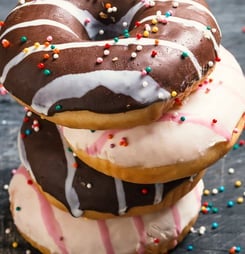
Filled doughnuts come in a huge variety, including the very popular Devil Dog, a chocolate covered delight filled with a rich cream. Glazed doughnuts filled with all sorts of delicious fruit are equally popular, with raspberry being a runaway favorite throughout the world.
There’s something about that delicious deep-fried treat that brings a smile to everyone’s face.
National Donut Day celebrates this wonderful treat, it’s history and the ladies who did something very special with these delicious goodies during World War I. To learn more about this special and tasty day, read on to learn more about this wonderful tradition.
History of National Donut Day
Of course, we don’t need a reason to celebrate National Donut Day. For some people, we are betting that they wish every day was in honor of this special treat.
However, this day has special significance, and this goes all the way back to the events of the First World War!
There wasn’t a lot for our soldiers to cheer about when they risked life and limb on a daily basis, but National Donut Day came to pass in 1938, in part, due to the efforts of a doctor in the military in the first World War who sought to brighten the day of the wounded soldiers he worked on.
On his first day to the Military Base, he purchased 8 dozen doughnuts and gave one to each soldier he worked on. After giving one to Lieutenant General Samuel Geary, who received it with great mirth and appreciation for the doctors work, Samuel decided to start a fundraiser, letting the young doctor, Morgan Pett, to continue to provide doughnuts to his patients.
This fundraiser began working together with the Salvation Army who, after a fact-finding mission, determined that many needs of the soldiers could be met by creating social centers that would provide all sorts of amenities, including the doughnuts.
The Salvation Army sent 250 volunteers to France to help put these huts together, which soon became a mainstay of military life. One record of a day in the huts recorded up to 300 doughnuts and 700 cups of coffee being served as part of their service.
Due to the majority of the workers being female, the Salvation Army workers started to be known as “Doughnut Dollies.”
Back at home, in honor of the work that had been created for the brave soldiers on the front line, people used ‘National Donut Day’ to raise awareness about the war, and to raise funds for the Salvation Army. This tradition to raise money for the organization still happens today.
History of the Donut
So, that is the history of National Donut Day, but what about the history of the humble doughnut itself, we hear you ask (probably with a mouth stuffed full of one of those tasty treats)?
The history of the doughnut isn’t clearly known, but what is known is that their iconic look started making an appearance in the United States in the mid-19th century. Rumor has it that Elizabeth Gregory, a New England ship captain’s mother, made a delicious deep-fried dough treat to feed her son Hanson Gregory and his crew.
She made them as they could easily be stored onboard, and it was thought that the goodies she produced could help ward off colds and the prospect of scurvy.
Elizabeth put walnuts in the center where the dough couldn’t cook through, and she (quite rightfully so), named them “doughnuts”. The term has since been shortened in its spelling to “donuts”.
The origin of the hole, or say legend says, is when Harrison, out of a distaste for the undercooked centers and greasiness of the existing shapes and options, punched a hole in the center with a tin pepper box. And voila, the traditional shape of the dessert you crave and love today was born. Allegedly.
Donuts didn’t become widely available for public consumption until the 1920s when inventor, Adolph Levitt, created a gadget to mass-produce doughnuts from his bakery.
Word go out and by 1934 at the Chicago World’s Fair, donuts had become poster material. People the world over soon began to fall in love with these tasty offerings.
Facts About Donut Day
The First Doughnut Machine Changed Breakfast Forever
In 1920, Russian-born immigrant Adolph Levitt built what is often credited as the first automatic doughnut machine in his New York City bakery, producing consistent, ring-shaped doughnuts at high speed and drawing crowds to watch through the shop window.
The machine’s success led to the founding of the Doughnut Corporation of America, which sold equipment and mixes nationwide and helped transform doughnuts from a handmade bakery item into a standardized, industrially produced staple across the United States.
Fried Dough Traditions Date Back to Ancient Civilizations
While modern doughnuts are relatively recent, the idea of frying bits of dough in fat can be traced to ancient cultures such as the Greeks and Romans, who made small honey-soaked fritters like loukoumades.
Medieval European cooks later developed their own versions of deep-fried pastries, often enriched with eggs and spices, which laid the groundwork for later ring-shaped and filled doughnuts that emerged in the 18th and 19th centuries.
A Jewish Holiday Helped Popularize Jelly-Filled Doughnuts
In many Jewish communities, sufganiyot, which are round, jelly-filled doughnuts fried in oil, became a central food of Hanukkah in the 20th century, especially in Israel.
The use of oil in frying commemorates the Hanukkah miracle of the oil that lasted eight days, and state-backed labor organizations in early Israel promoted sufganiyot as a festive alternative to homemade potato latkes, helping cement the doughnut-like pastry in national holiday culture.
Pre-Lenten Feasts Turned Rich Doughnuts into a Last Indulgence
In parts of Central and Eastern Europe, rich, egg- and fat-laden doughnuts such as Polish pączki and German Berliner Pfannkuchen became associated with the last days before Lent, when Christians traditionally used up luxury ingredients before the fasting period.
In Poland, “Tłusty Czwartek,” or Fat Thursday, is still marked by bakeries selling millions of pączki in a single day, reflecting a centuries-old custom of indulgence on sweet fried dough before religious restraint.
A World War I “Doughnut Dugout” Helped Shape Soldier Morale
During World War I, Salvation Army volunteers, many of them women, set up small huts near the front lines in France where they cooked and served doughnuts, coffee, and other comforts to American troops.
Letters and diaries from soldiers describe waiting in long lines for the treats, and historians note that the simple act of eating fresh fried dough in muddy, dangerous conditions became a powerful symbol of home, boosting morale far beyond the food’s nutritional value.
Steam, Starch, and Oil Physics Give Doughnuts Their Texture
The characteristic light interior and crisp exterior of a yeast-raised doughnut result from a balance of dough hydration, gluten development, and hot oil temperature that causes rapid steam expansion.
As the dough hits oil at roughly 350–375°F (about 175–190°C), moisture turns to steam and inflates gas cells while starches gelatinize and proteins set, creating a tender crumb, and any significant drop in temperature can cause the dough to absorb excess fat and turn greasy.
Frying Creates Acrylamide, a Heat-Formed Contaminant
Like many carbohydrate-rich foods cooked at high temperatures, doughnuts can contain acrylamide, a chemical that forms when sugars react with the amino acid asparagine during frying, baking, or roasting.
Food safety agencies monitor acrylamide because high doses in animal studies have been linked to cancer, and researchers have found that lowering frying temperatures, adjusting recipe formulations, and avoiding over-browning are practical ways to reduce acrylamide levels in fried dough products.