International Irish Whiskey Day
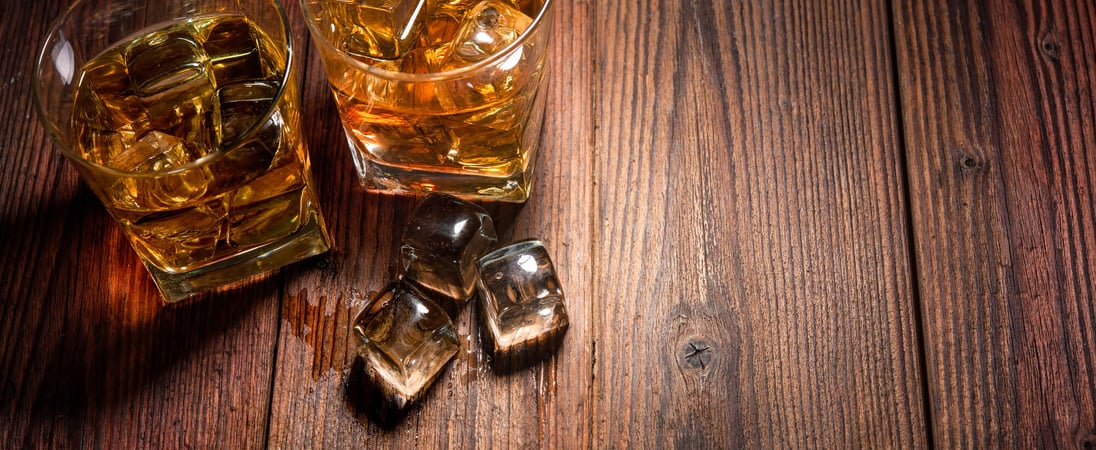
Savoring that smooth, amber-hued spirit with a rich heritage, evoking the warmth of tradition and the charm of Irish culture.
Situated exactly two weeks to the day before St. Patrick’s Day, International Irish Whiskey Day is a perfect time to raise awareness — and to raise a glass in a toast to this fascinating liquor.
International Irish Whiskey Day Timeline
1405
First Written Record of Irish Whiskey
The Annals of Clonmacnoise record the death of chieftain Richard Magrannell after drinking “uisce beatha,” providing the earliest known written reference to Irish whiskey.
1608
Royal License to Distill in County Antrim
King James I grants Sir Thomas Phillips a license to distill “in the countie of Colrane, otherwise called O Cahanes countrey,” later associated with the Bushmills distilling tradition.
1823
Excise Act Encourages Licensed Distilling
The UK Excise Act of 1823 reduces duties and formalizes distilling licenses, encouraging legal large‑scale production and aiding the growth of Irish and Scotch whiskey industries.
Mid‑19th Century
Irish Whiskey Dominates Global Markets
By the mid‑1800s, large Irish distilleries such as John Jameson & Son in Dublin help make Irish whiskey the most widely consumed whiskey in the world, especially across the British Empire and North America.
1908
Royal Commission Broadens “Whisky” Definition
A British Royal Commission on Whisky and Other Potable Spirits concludes that whisky need not be solely pot still spirit, legitimizing grain‑based blends and weakening the competitive position of traditional Irish distillers.
How to Celebrate International Irish Whiskey Day
Sure, this day is a great time to raise a dram, but there’s much more to it than just drinking! More options for celebrating this momentous day include:
Join an Online or Live Event
Today, Irish Pubs and Whiskey Clubs located all over the world host global online and in-person Irish Whiskey tastings, lectures, talks, visits and other fun and educational Irish Whiskey activities each year on March 3rd.
The idea of these events is to educate and inform their patrons and members from all over the world on the wonder and joy of Irish Whiskey, just in time to share their newfound Irish Whiskey knowledge and appreciation with their own friends two weeks later on 17 March St. Patrick’s Day.
In fact, any Pub, Restaurant or Irish Whiskey friendly venue can create a free event and map listing for their March 3rd Irish Whiskey Day Event, no matter where in the world they are located.
Irish Whiskey Tasting Party
Grab a few friends with discerning tastes (five to seven is perfect) and invite them to an Irish Whiskey tasting. Provide 4-5 varieties of Irish whiskey. Choose from:
- Tullamore D.E.W. Original
- Jameson Irish Whiskey
- Bushmills Original
- Redbreast 15 year
- Teeling Single Grain Irish Whiskey
- Knappogue Castle Single Malt 16 Year
It will be necessary to have enough tulip-shaped tasting glasses for each guest to try each type of whiskey. Have a friend bring some along or borrow from a neighbor if there might not be enough on hand.
Make sure there’s enough room temperature bottled water on hand to dilute the drinks as well as for people to drink between tastings. Also provide a few snacks as a palate cleanser, such as oatcakes or crackers.
Make sure each guest has a notepad so they can keep track of their findings when tasting. Aficionados will know to use the terms Nose, Taste and Finish. People who are newer to whiskey tasting can simply write down what they think.
Irish Whiskey in Entertainment
While Scotch whiskey shows up in many films, Irish Whiskey may be just a bit more discerning. Still, for the person who is paying attention, Irish spirits can often be found making Cameo appearances in various films and shows, which are perfect for watching when celebrating International Irish Whiskey Day, such as:
- Mad Men, American drama series (2007-2015). Jameson Irish Whiskey makes an appearance with Don Draper (played by John Hamm), set in the 1960s.
- Kill the Irishman, a 2011 biographical crime film. Bushmills Irish Whiskey is shown passing through the lips of the main character, Danny Greene (played by Ray Stevenson), a few times throughout the film.
- Out of Africa, an epic romantic film (1985). Jameson Irish Whiskey makes a cameo appearance in this film depicting the 1937 autobiographical novel of the same name, by Isak Dinesen.
- Blown Away, a 1994 action thriller where Jeff Bridges and Tommy Lee Jones are shown tipping back a few drams of Bushmills Irish Whiskey.
With a growing online audience each year, International Irish Whiskey Day is playing it’s own small part in building a sustainable lifelong tribe of new Irish Whiskey drinkers and aficionados. Join in the celebration!
History of International Irish Whiskey Day
Irish Whiskey Day was created by international whiskey writer Stuart McNamara. Although Stuart writes about whiskey (sometimes spelled “whisky”) from all over the world, his Irish upbringing means that he has a special love and respect for Irish Whiskey in particular.
This led to him becoming the editor of IrishWhiskey.Com, the Irish Whiskey Trail and the Dublin Whiskey Trail.
Stuart became concerned at the way that Irish Whiskey was being marketed outside Ireland by irresponsible marketers as a shots type drink.
It bothered him that people partook of the precious drink without any recognition of the amazing degree of science, art, history, heritage, nature and culture which is the backbone of every single glass of Irish Whiskey or Uisce Beatha in Irish Gaelic.
Of particular worry to Stuart was the lack of respect for Irish Whiskey outside of Ireland on that most Irish of days that occurs each year – St Patrick’s Day, which is celebrated on the 17th of March.
So, Stuart created the special day and the very first International Irish Whiskey Day was celebrated more than ten years ago. And the date chosen was particularly significant in relation to many factors.
Significance of Irish Whiskey Day
The numeral 3 has always been of special importance in Ireland, for a variety of reasons. The symbol of Ireland (the Shamrock) has three leaves. The Irish flag contains three colours (green, white and orange). And there are three types of Irish Whiskey – Single Malt, Single Grain and the uniquely Irish Single Pot Still.
In keeping with the lucky number 3, Irish Whiskey is also unique in that by tradition, it is triple distilled. Plus, this spirit must be matured for 3 years in order to be considered “whiskey”, adding to the fortuitous nature of the number three.
And so, the 3rd of March or 3/3 became the obvious choice of date for our annual Irish Whiskey Day.
Facts About Irish Whiskey Day
Triple Distillation Is Tradition, Not Law
Irish whiskey is widely associated with triple distillation, but Irish and EU regulations do not actually require it.
The legal definition focuses on production in Ireland, use of cereals, distillation strength, and at least three years of maturation in wooden casks, while leaving the number of distillations to the producer.
Some Irish whiskeys, such as Connemara and certain Cooley-origin brands, are only double distilled, yet still fully comply with the Irish whiskey standard.
Single Pot Still Whiskey Grew Out Of A Tax Loophole
Ireland’s signature single pot still style, made from a mix of malted and unmalted barley in a pot still, originated in part as a response to 18th and 19th century British taxes on malted barley.
Distillers began substituting a portion of unmalted grain to reduce their tax burden, and the resulting oily, spicy character became so distinctive that “pot still whiskey” was legally defined as a separate Irish category more than a century later.
Irish Whiskey Once Dominated Global Spirits Trade
In the late 19th century, Irish whiskey was one of the world’s most coveted spirits and accounted for a major share of global whiskey exports.
Dublin houses such as John Jameson, John Power, John Jameson & Son, and George Roe operated huge “Irish whiskey distilling triangle” complexes that exported millions of gallons annually, before a combination of trade wars, Prohibition in the United States, the rise of blended Scotch, and domestic political turmoil nearly destroyed the industry in the early 20th century.
A Category That Nearly Vanished Has Rebounded Dramatically
By the mid‑1980s, Ireland had only two operational whiskey distilleries, and Irish whiskey was viewed as a niche spirit.
Since the 1990s, however, it has become the fastest‑growing major spirits category in the world, with the number of Irish distilleries climbing from just a handful in 2010 to more than 40 licensed distilleries today and exports multiplying several times over in markets such as the United States and continental Europe.
A Protected Spirit Under European Law
“Irish whiskey” is a protected geographical indication under European Union law, which means it must be produced and matured on the island of Ireland and meet a detailed product specification.
The GI protects traditional methods such as batch distillation in copper pot stills and continuous distillation in column stills, and it also controls labeling terms like “single malt,” “single grain,” and “single pot still,” helping prevent misuse of Irish place names on foreign‑made spirits.
The Old Bushmills Claim To 1608 Is Based On A Royal License
Bottles of Bushmills often reference the year 1608, but that date does not mark the founding of the present distillery.
It comes from a license granted by King James I to Sir Thomas Phillips to distill “uisce beatha” in County Antrim. The Bushmills distillery itself traces continuous operation to the late 18th century, yet the 1608 license has become a powerful symbol of how long distillation has been practiced in the region.
Irish Whiskey’s Earliest Written Mention Dates To 1405
One of the first known written references to Irish whiskey appears in the Annals of Clonmacnoise, which record the death in 1405 of a chieftain who “died of taking a surfeit of aqua vitae.”
Historians generally regard this “uisce beatha” or “water of life” as an early form of distilled Irish whiskey, suggesting that distilled grain spirits were already significant in Gaelic society by the early 15th century.
International Irish Whiskey Day FAQs
Why does Irish whiskey have an “e” in it, unlike Scotch whisky?
Irish whiskey and Scotch whisky differ not just in taste but also in spelling!
The “e” in Irish whiskey emerged in the 19th century. Irish distillers added it to distinguish their smoother product from harsher Scotch whiskies, hoping to attract the American market.
Since then, Irish distillers kept the “e,” while the Scots skipped it. This distinction also influenced American whiskey producers, who also spell it with an “e.”
Are there any Irish whiskey superstitions?
Yes! Irish folklore ties whiskey to good fortune.
For example, some people say that spilling whiskey in your house brings luck, while refusing a shot of Irish whiskey could offend “The Good People” (faeries), bringing misfortune.
Even in Irish pubs, leaving a little whiskey at the end of a bottle or glass is believed to honor ancestors and spirits.
How do people celebrate International Irish Whiskey Day outside of Ireland?
In the U.S., some bars offer tastings featuring unique Irish whiskey brands and special flights, paired with traditional Irish foods.
In Japan, fans combine whiskey with local flavors, mixing Irish whiskey cocktails with yuzu or matcha.
Some Canadian pubs hold “whiskey bingo” and games tied to whiskey trivia, making the celebration both informative and fun!
Is there a famous toast or saying used on Irish Whiskey Day?
One popular Irish toast goes, “May the roof above us never fall in, and may we friends beneath it never fall out.”
This timeless saying captures the spirit of camaraderie, shared laughter, and friendship that Irish whiskey embodies.
Other toasts often use the word “sláinte,” meaning “health,” showing that every sip is about celebrating life.
Is whiskey really the ‘water of life’?
Yes! The term “uisce beatha,” meaning “water of life,” describes Irish whiskey in Gaelic.
Early monks in Ireland adapted distillation to create medicinal spirits, calling it “aqua vitae” in Latin. When translated, it became “uisce beatha,” which eventually morphed into “whiskey.”
Are there any myths about how Irish whiskey is made?
One myth suggests that Irish whiskey is always triple-distilled for smoothness. While many Irish brands do triple distill their whiskey, some don’t.
For example, Connemara Irish whiskey only uses double distillation, adding a bit more bite.
This debunks the myth that all Irish whiskey must follow the same distillation pattern!
Did any historical figures drink Irish whiskey for ‘inspiration’?
Yes, the legendary playwright James Joyce was a fan of Irish whiskey, particularly Powers whiskey.
He mentioned whiskey in his famous works, saying, “The light music of whiskey falling into a glass…” Irish whiskey’s warming effect inspired him and other writers like Brendan Behan and Flann O’Brien, all fans of this “creative fuel.”
What’s the oldest known bottle of Irish whiskey?
The oldest known bottle of Irish whiskey is an 1868 George Roe whiskey, held by Dublin’s National Museum.
George Roe was one of the most famous distilleries in 19th-century Ireland before closing in 1926.
This rare bottle offers a glimpse into the rich past of Irish whiskey, long before its revival in the modern market.
What’s a quirky Irish whiskey cocktail that’s not an Irish coffee?
Try a “Gaelic Flip!” This historic cocktail combines Irish whiskey, port, sugar, and a whole egg for a creamy, rich drink.
The “flip” style became popular in the 1800s, and the Irish loved making it their own with local whiskey.
This is a unique, often-overlooked treat that captures Irish whiskey’s flavor in a dessert-like twist.
Why do some people think Irish whiskey “tastes lucky”?
The phrase “tastes lucky” comes from Irish whiskey’s famous smoothness and earthy notes.
Many drinkers say the spirit gives a “warm, golden” feel, linked to Ireland’s rolling green landscapes.
Some say that whiskey distilled near sacred Irish sites carries a bit of “fairy magic,” adding to its lucky reputation.
Also on ...
View all holidays
World Wildlife Day
Nature's untamed wonders are always captivating, from the majestic beasts of the savanna to the tiny creatures in your backyard.
World Hearing Day
Discovering the key to lifelong well-being: nurturing and safeguarding your hearing for a vibrant and connected life.
Lantern Festival
Amidst the dark winter sky, glows a world of wonder, an ancient Chinese tradition of sparkling lights and colors to warm the heart and ignite the soul, the lantern festival awaits!
We think you may also like...
Global Champagne Day
Bubbly, often used for celebrations, with a touch of elegance and effervescence, it's the classic way to toast to good times.
World Passion Fruit Martini Day
A delightful concoction, blending exotic flavors into a captivating elixir—a sensory journey beyond the ordinary, and a symphony of taste.