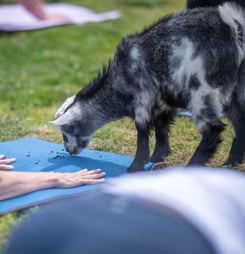

International Kids Yoga Day, celebrated each year on April 8th, spotlights the numerous benefits of yoga for children.
This special day encourages little ones from all corners of the globe to participate in yoga activities, emphasizing the positive effects on their physical and mental well-being.
The event has influenced hundreds of thousands of children, parents, and teachers to incorporate yoga into their daily routines.
International Kids Yoga Day Timeline
Classical Texts Describe Foundational Paths of Yoga
The Bhagavad Gita and later the Yoga Sutras of Patanjali describe yoga as a discipline of mental focus, ethical conduct, and self-control that forms the philosophical basis for many modern yoga practices, including those adapted for children.
Vivekananda Introduces Yoga Philosophy to the West
At the World’s Parliament of Religions in Chicago, Swami Vivekananda presents key ideas of Indian Vedanta and yoga to large Western audiences, helping spark interest that eventually leads to yoga classes in community centers, studios, and schools.
Modern Postural Yoga Develops in Mysore
In Mysore, T. Krishnamacharya and his students promote a dynamic, posture-focused style of yoga that emphasizes strength, flexibility, and breath, shaping the physically oriented forms of yoga that later become common in family and children’s classes.
“Yoga for Health” Pilot Program Reaches U.S. Students
A report titled “Yoga for Health: A Program for Children and Adults” documents an early school-based yoga initiative in American public education, describing how postures and breathing exercises were used to support students’ physical fitness and classroom focus.
Randomized Trial Tests School-Based Yoga for Anxious Children
A pilot randomized controlled trial published in the Journal of Abnormal Child Psychology finds that a brief school-based yoga program for children with anxiety disorders can improve some coping skills, contributing empirical evidence for yoga in child mental health settings.
How to Celebrate International Kids Yoga Day
Celebrate with Family Yoga
Roll out those mats and get the family together! Parents can lead a fun session of yoga at home with their kids.
Why not make it more interesting by turning it into a story adventure where each pose leads to the next chapter?
Yoga Pose Parade
Gather some friends and their little yogis for a pose parade! Everyone can take turns showcasing their favorite yoga poses.
This can be a playful competition, where the pose with the most creative expression wins a prize.
Creative Yoga Crafts
Why not mix some art with your asanas? After some stretching and bending, kids can craft yoga pose bookmarks or maybe even decorate their own yoga mats.
All you need are some markers, stickers, and lots of imagination!
Yoga Outdoors
Take the mats outside and breathe some fresh air! Organizing a yoga session in a local park or backyard can make the practice feel new and exciting.
It’s a great way for everyone to connect with nature while doing their stretches.
Virtual Yoga Session
In this digital age, why not host a virtual yoga meet-up? Invite friends and family to a live-streamed yoga session led by a favorite instructor or even an ambitious parent.
This way, friends and family from different locations can join the fun!
Why Celebrate International Kids’ Yoga Day?
The significance of this day lies in its focus on making yoga accessible and enjoyable for children, regardless of their age, experience, or background. It’s designed to foster a lifelong appreciation for the wellness and mindfulness that come with regular yoga practice.
On this day, families engage in yoga together. It strengthens familial bonds and improves emotional connections between parents and their children.
The celebration of International Kids Yoga Day goes beyond mere exercise. It’s a movement aimed at instilling valuable life skills such as focus, relaxation, and self-esteem in young participants.
Schools and communities around the world host events and activities, including workshops and interactive yoga sessions, to spread awareness and encourage a healthy, balanced lifestyle among the youth.
History of International Kids Yoga Day
International Kids Yoga Day began in 2016, created by Teresa Power, a recognized children’s yoga expert. Power’s vision was to share the benefits of yoga with children globally and to encourage their physical, mental, and emotional well-being through yoga practice.
The day is celebrated annually and involves children from various countries participating in yoga activities designed to be fun and accessible for all ages and abilities.
It is marked by events and activities that include yoga sessions, mindfulness exercises, and educational workshops aimed at teaching children, parents, and educators about the benefits of yoga.
These activities introduce yoga to children in an engaging way and foster a lifelong interest in this healthful practice. The ultimate goal of International Kids Yoga Day is to promote wellness and positive life skills among young participants worldwide.
Since its inception, this initiative has had a significant impact. It has reached children across various continents and demonstrated yoga’s benefits.
As the event continues to expand, more children are doing yoga to improve physical health, enhance focus, and reduce stress.
Facts About International Kids Yoga Day
Yoga Helps Children Regulate Stress Hormones
Clinical research suggests that yoga can influence the stress response system in children by lowering levels of cortisol, the primary stress hormone.
A randomized trial of a school-based yoga program for 4th- and 5th-graders found that students who participated in yoga and mindfulness activities showed reductions in negative affect and stress compared to controls, indicating that simple breathing and movement practices may help young people manage physiological stress more effectively.
School-Based Yoga Can Improve Attention and Behavior
Several studies of classroom yoga programs report improvements in attention, self-control, and behavior among elementary and middle school students.
In one controlled study in an urban school, children who took part in an 8-week yoga curriculum showed better attention and fewer disciplinary issues than peers in traditional physical education, suggesting that structured poses and mindful breathing may translate into more focused, calmer classroom conduct.
Yoga May Ease Anxiety and Depression Symptoms in Youth
Systematic reviews of yoga for children and adolescents have found that regular practice is associated with reductions in symptoms of anxiety and depression, particularly in students who start out with higher emotional distress.
While the evidence base is still developing and sample sizes are often small, multiple trials in school and clinical settings suggest that gentle postures combined with breathing and relaxation exercises can be a useful adjunct to conventional mental health supports for young people.
Pediatric Experts Consider Yoga Generally Safe for Kids
Guidance from pediatric and rehabilitation specialists indicates that yoga, when taught by qualified instructors and adapted for age and ability, is generally safe for children and adolescents.
A review of pediatric yoga programs published in a rehabilitation journal reported that adverse events were rare and usually minor, such as temporary muscle soreness, and emphasized that avoiding extreme postures and focusing on alignment and supervision helps keep youth participation low-risk.
Yoga in Western Schools Emerged in the Late 20th Century
While yoga has ancient roots in India, its adaptation for children in Western school systems is relatively recent, expanding notably from the 1990s onward.
Education scholars trace one early wave to the rise of “social and emotional learning” initiatives, when teachers and psychologists began using simplified yoga postures and breathing games to help students with self-regulation, particularly in crowded urban classrooms facing rising behavior and stress challenges.
Mindfulness and Yoga Address Rising Youth Stress Levels
Global health agencies report that mental health challenges are increasing among young people, with the World Health Organization estimating that 1 in 7 adolescents experience a mental disorder, including anxiety and depression.
In response, many schools have introduced mindfulness and yoga-based programs as low-cost, nonpharmacological strategies that fit into short classroom blocks and can reach large numbers of students without specialized clinical staff.
Yoga Can Support Physical Fitness Without Competitive Pressure
For children who feel uncomfortable in competitive sports, yoga offers a way to build strength, flexibility, and balance in a non-competitive environment.
Research on youth yoga interventions has documented improvements in flexibility and muscular endurance, along with modest gains in cardiorespiratory fitness, while also highlighting that the absence of win–lose outcomes can make movement more inviting for kids who might otherwise avoid physical activity.