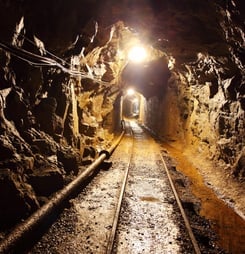
Mining helps keep modern life moving forward. The raw materials pulled from rock and soil end up in bridges and buildings, medical equipment and smartphones, water systems and wind turbines.
Even the gravel beneath a neighborhood sidewalk often begins its journey at a mine site. Because this work is so essential, the people behind it matter too, including the women whose contributions to mining have not always been fully recognized or supported.
International Women in Mining Day highlights the women who were, are, and will continue to be part of the mining industry around the world.
It celebrates their expertise and resilience while encouraging meaningful progress toward a more inclusive industry, from mine sites and processing plants to laboratories, boardrooms, and local communities.
How to Celebrate International Women in Mining Day
Women and men alike can show support and get involved with International Women in Mining Day with some of these ideas.
Thank a Woman in Mining
Anyone who knows a woman working in mining, whether a family member, friend, colleague, or acquaintance, can celebrate International Women in Mining Day by expressing sincere appreciation.
A thoughtful note, a small gesture, a coffee, or simply taking time for a genuine conversation can make a lasting impact. Mining is demanding work that often goes unnoticed by the wider public, so recognition can feel especially valuable.
A meaningful “thank you” becomes even more powerful when it acknowledges the many different roles women hold throughout the industry. Not every woman in mining operates heavy machinery or works underground.
Women contribute as geologists mapping mineral deposits, engineers developing safer systems, environmental experts monitoring ecosystems, metallurgists improving recovery processes, and technicians maintaining critical equipment.
They also work in supply chain management, health and safety, automation, finance, human resources, and community relations. Recognizing someone’s specific achievements, such as mentoring a colleague, identifying a safety concern, or improving operations, transforms appreciation into genuine respect.
Taking time to ask thoughtful questions can also show support. What inspired them to enter mining? What challenges and rewards come with the work? Which parts of the job are most fulfilling? Listening openly and respectfully helps create meaningful conversations in an industry where people are often valued only for productivity rather than personal experience.
In workplaces, appreciation can become practical rather than symbolic. Leaders can recognize achievements during meetings, ensure women receive proper credit for their work, and support their professional growth through development opportunities.
Colleagues can amplify women’s ideas, share opportunities fairly, and challenge workplace habits that quietly exclude people, such as assumptions about who should take notes, welcome guests, or handle technical presentations.
Learn More About Women in Mining
Participate and get connected with International Women in Mining Day by learning more about the industry. Get started with some of these facts and statistics:
Women in mining represent approximately 8% to 17% (or 12.5% on average) of the people who work in that industry worldwide.
In 2018, the output of the global mining industry equaled more than 6% of the GDP worldwide, at $5.9 trillion USD.
Despite the fact that mining employment has continued to grow steadily over the years, the percentage of women employed in mines has barely changed.
Join the International Women in Mining Day Event
International Women in Mining Day is often marked with online talks and community events organized by industry groups, employers, universities, and local Women in Mining networks. Virtual sessions can be especially helpful because they allow participation from remote operations, students exploring career options, and professionals who may not have a nearby network.
These events often include keynote talks, panels, and moderated discussions covering topics such as career growth, leadership development, mentoring, technical innovation, and building safer and more respectful workplaces. Some sessions are aimed at people already in the industry, while others are designed for newcomers who want a clearer picture of what mining careers look like.
To get more out of a virtual event, it helps to participate actively. Attendees can write down a few questions in advance, especially questions that invite practical detail: What helped a speaker build credibility on a new site? How did they find mentors, and what did that relationship look like in practice?
What does effective allyship look like during a shift, in a meeting, or on a fly-in, fly-out roster? Practical questions tend to produce answers that stay useful after the event ends.
Work teams can also participate together. A company or department can watch a panel as a group, then hold a short discussion focused on realistic improvements at their own site.
The point is to turn inspiration into action items, even small ones, such as checking whether safety gear and uniforms are available in a full range of sizes, reviewing whether reporting channels are trusted, or making sure training opportunities are posted openly rather than shared only through informal networks.
People outside the industry can take part, too. Sharing stories of women in mining, encouraging young people interested in geology or engineering, and supporting respectful, informed discussion about how resources are produced all reinforce the day’s broader goal: recognition paired with real progress.
International Women in Mining Day Timeline
History of International Women in Mining Day
International Women in Mining Day began in 2022, created by the nonprofit organization International Women in Mining (IWiM). The day was launched as a sector-led, global campaign to celebrate women working across mining and to highlight the need for stronger gender equity throughout the industry.
The idea responded to a long-standing reality. Women have always participated in mining communities and mining work, but their contributions have not always been visible, credited, or supported in the same way as men’s. In modern mining, women may still find themselves as the only woman on a crew, left out of informal networks where opportunities are shared, or judged more harshly for mistakes.
At the same time, many women build long careers in mining and bring deep expertise to technical, operational, and leadership roles. A dedicated international day creates a shared moment to recognize those careers and to connect people across companies, job types, and borders.
IWiM’s broader mission centers on building a global network that supports women in mining and encourages industry-wide improvement. Establishing an annual day of recognition gave that mission a focal point: a recurring reason for organizations to showcase role models, invest in mentoring, and discuss structural barriers rather than treating inclusion as a side project.
From the start, the day was designed to be accessible. Online participation has helped the observance reach people who might otherwise miss out, including those working at remote sites and those in regions without a strong local professional network.
That global format also reflects the way mining operates. Supply chains, investment, technical standards, and labor markets all cross borders, and many of the challenges women face in mining, such as safety, career progression, and workplace culture, show up in different forms across many settings.
The growth of International Women in Mining Day also fits with how the industry itself has evolved. Mining increasingly depends on a workforce with varied expertise, including environmental management, community relations, data analysis, automation, and advanced engineering.
As technology changes job tasks and work environments, the old assumptions about who “fits” certain roles can weaken, but only if training, hiring, and workplace culture keep pace. The day helps keep attention on that connection between modernization and inclusion.
At its best, International Women in Mining Day does two things at once. It celebrates individual excellence and it encourages organizations to examine systems.
Recognition matters, but lasting change usually comes from practical steps: fair hiring and promotion processes, transparent pay practices, safe and trusted reporting channels, respectful job sites, and equipment and facilities designed for the whole workforce. The day provides a reason to talk about those steps openly and to commit to them in ways that can be measured over time.
Other days along this theme that may be celebrated include National Miner’s Day in December, International Women’s Day in March, and National Women’s Equality Day in August.