Skip to content

It’s a well-known truth that jewels and diamonds are a girl’s best friend. One truly can’t go wrong gifting jewels for a special occasion such as a birthday or anniversary.

Ornaments are also an excellent way to dress up an outfit and help boost one’s self-confidence.

Jewels are sparkly and attractive and fun to wear all year-round. Anyone would be lucky to receive a brand new jewel to show off to friends and family. It’s all about celebrating the makers, the jewelers, and the actual pieces that have and will continue to delight customers regularly.

The day encourages people not only to wear and enjoy their jewels but to take a moment to appreciate the artisans who work hard and diligently to create these beautiful gems.

Learn About National Jewel Day

National Jewel Day is the perfect opportunity to pull out old pieces or to purchase new ones to give to someone else. It’s not just about the beauty of the jewels but also the creative makers who produce these striking items.

The purpose of the day is to come together to commemorate these unique pieces that are shiny, blingy, and sparkly and can help enhance one’s outfit and style any day of the week.

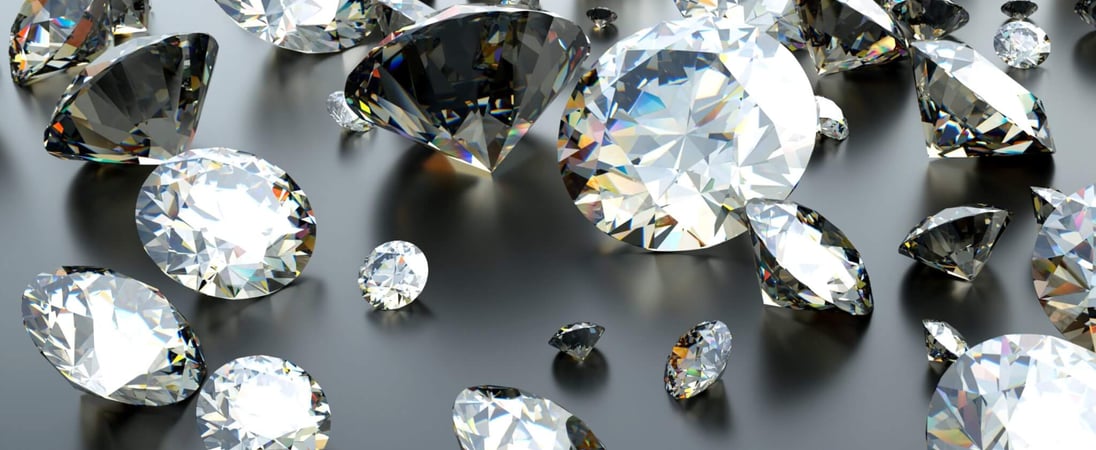
One of the hardest substances known to man is a diamond. The word diamond comes from the Greek word invincible, which is very fitting. National Jewel Day is an excellent way to highlight makers and designers who work hard to please their customers.

It’s essential to admire their talent and ability to come up with custom solutions and options for each person who shops with them.

Most jewelers offer a wide variety of gemstones and can please even the pickiest of customers. These artisans are talented and crafty and deserve some recognition when it comes to all their creativity and abilities.

Not only do artisans make jewelry and work with clients to design pieces made for them, but they also know how to repair and clean jewels so that they look brand new again.

History of National Jewel Day

The word jewel originates from the Medieval Latin word jocale, which means plaything or pastime. One can define a jewel as a gemstone, or precious or semi-precious and natural or man-made. Also, for ornaments made from these gemstones.

People have been wearing jewels for centuries, and many view them as a way to reflect one’s status in society. Ornaments of all shapes and sizes have been, and today people wear them for both functional and decorative purposes.

While the origins of National Jewel Day are unknown, many people acknowledge and celebrate this special day annually. One historical fact that should be touched on is that one can purchase birthstones by month and personalize a gift based on this idea. See the information below for more details.

Birthstones by Month

  • January – Garnet
  • February – Amethyst
  • March – Aquamarine
  • April – Diamond
  • May – Emerald
  • June – Pearl
  • July – Ruby
  • August – Peridot
  • September – Sapphire
  • October – Opal
  • November – Yellow Topaz, Citrine
  • December – Tanzanite, Zircon, Blue Topaz

How to Celebrate National Jewel Day

There are many ways for how a person can celebrate and participate in National Jewel Day. It’s a chance for anyone who’s been eyeing up a piece of jewelry to indulge and treat oneself to a special gift.

On the other hand, a shopper may want to purchase a jewel or gemstone for someone they care about deeply.

A person may want to save up his or her money over the year so that when this day rolls around, he or she can make a purchase and call the pieces their own or gift it to someone special. It’s also fun to exchange handmade jewelry with friends and family members or use the day as a chance to polish and take care of one’s personal jewels.

Get together and observe each other’s jewels and share about why each piece is important to the person and reasons why that’s the case. Pull out all the favorites and wear them on National Jewel Day.

One should take advantage of the day as a way to celebrate and take pride in the jewels that a person has collected over the years. Someone looking to celebrate National Jewel Day should plan ahead and schedule a dinner or outing with family or friends to show off some of the most precious jewels one can find in their home that they own.

Those celebrating the day may want to take pictures and post these images with a hashtag on social media to help spread the word.

Another way to celebrate jewel day is to take the time to learn more about jewels from a range of historical time periods and about what different cultures are wearing and making. Sign up for a jewelry-making class to get a better feel of what it’s like to be a creator and inventor of jewels.

It’s a chance to expand one’s knowledge and education around the topic and better understand the importance and significance of jewels. It’ll help to make one appreciate these items even more and may give a person ideas about what jewelry they may want to own next.

Many people look forward to celebrating National Jewel Day, and it’s no wonder why given how much fun and how enjoyable it is to appreciate and shop for diamonds and gemstones. Anyone will take pleasure in the act of going through one’s jewels and remembering who they’re from and reasons why they’re so special and meaningful.

No one should let this day pass by without acknowledging the beauties one has in their jewelry drawer or case or going out and buying a new jewel to gift to someone they care about in their life.

Presenting someone with new jewels is an excellent way to make their day and bring a smile to their face. It’s never too early to begin scoping out what’s popular and selling in the stores and online and going through one’s inventory at home to figure out what to buy when National Jewel Day arrives.

Facts About National Jewel Day

Birthstones Were Standardized by American Jewelers in 1912

The modern list of birthstones by month is not ancient folklore but a 20th century creation.

In 1912, the American National Retail Jewelers Association (now Jewelers of America) adopted an official list in Kansas City to help standardize marketing and gemstone choices across the industry, and this list has been revised only a few times since, such as the addition of tanzanite for December in 2002.

Ancient Sumerians Were Early Masters of Gemstone Adornment

Archaeologists have found jewelry from around 2600–2500 BCE in the royal tombs of Ur, in present‑day Iraq, showing that Sumerians were already skilled at using gemstones like lapis lazuli and carnelian alongside gold.

These elaborate headdresses, necklaces, and earrings illustrate that gemstone jewelry as a symbol of status and ritual importance has roots going back more than 4,000 years.  

Diamond’s “Invincible” Reputation Comes From Its Greek Name 

The word “diamond” traces back to the ancient Greek word “adamas,” meaning unconquerable or invincible, a nod to the stone’s exceptional hardness.

On the Mohs scale, diamond is rated 10, and its resistance to scratching is so extreme that it can only be effectively scratched by another diamond, which is why it has long been associated with endurance and unbreakable bonds.  

India’s Golconda Region Shaped the Early Global Diamond Trade

For centuries before diamonds were discovered in Brazil and South Africa, nearly all known diamonds came from river gravels in India, particularly the Golconda region of the Deccan Plateau.

These mines supplied legendary stones such as the Koh‑i‑Noor and Hope Diamond, and their exports fueled a thriving trade that linked Indian courts with merchants in Persia and Europe from at least the 16th century onward.  

The Cut of a Gemstone Is a Relatively Recent Art  

Early gemstones were often worn as simple polished pebbles or cabochons because ancient cutters lacked tools to facet the extremely hard materials.

True brilliant faceting, which maximizes a diamond’s light return, did not emerge until the 17th and 18th centuries in Europe, culminating in the “round brilliant” proportions proposed by engineer Marcel Tolkowsky in 1919 that still underpin modern diamond cutting.  

Jewelry Has Long Served as Portable Wealth and Security 

Across many cultures, jewelry has functioned not only as adornment but also as a practical store of value that can be easily transported, traded, or pawned.

Anthropologists note that in regions from South Asia to the Middle East, women’s gold bangles, necklaces, and bridal sets traditionally act as a form of financial security, sometimes referred to as “wearable savings,” particularly where access to formal banking is limited.  

Modern Gemstone Mining Raises Significant Ethical Concerns

Behind many polished jewels is an extractive industry with complex environmental and human‑rights issues.

Reports from organizations such as Human Rights Watch and Earthworks describe problems ranging from deforestation and water pollution at gold and colored‑stone mines to unsafe labor conditions and conflict financing, prompting the rise of certification schemes like the Kimberley Process for diamonds and “Fairmined” standards for gold.  

National Jewel Day FAQs

How can someone tell if a piece of jewelry is made from real precious metal?

A simple first step is to look for a hallmark, which is a small stamp indicating metal type and fineness, such as “925” for sterling silver or “750” for 18-karat gold.

Many countries regulate hallmarking as a consumer protection measure, often requiring independent assay offices to verify metal purity.

Weighing the item, checking for discoloration where plating may have worn off, and using a magnet test for non-magnetic precious metals can give clues, but only a qualified jeweler or assay office can reliably confirm composition with tests such as X-ray fluorescence.  

What are the “4Cs” of a diamond, and why do they matter?

The 4Cs are cut, color, clarity, and carat weight, a system created by the Gemological Institute of America to describe diamond quality in a standardized way.

Cut refers to how well the stone has been shaped and proportioned and has the greatest impact on sparkle. Color grades run from D (colorless) to Z (light yellow or brown), while clarity measures internal and external imperfections under magnification.

Carat describes weight rather than visible size. Together, the 4Cs give buyers and sellers a shared language for comparing diamonds and heavily influence price.  

Why do some months have more than one birthstone?

Birthstone lists have evolved over centuries, and different cultures and trade groups have revised them for reasons such as availability, durability, and consumer preference.

The modern U.S. list was standardized in 1912 by the National Association of Jewelers, and later updates added alternatives like tanzanite for December and alexandrite and moonstone for June.

These additions give jewelers options when original stones are rare, fragile, or very expensive, while still keeping a symbolic gem connected to each month.  

How do jewelers clean delicate gemstone jewelry without damaging it?

Professional jewelers choose cleaning methods based on each gemstone’s hardness, toughness, and sensitivity to heat or chemicals.

Hard, stable stones like diamonds, sapphires, and rubies often tolerate ultrasonic or steam cleaners, while porous or soft gems such as opals, pearls, turquoise, and emeralds usually require gentle hand cleaning with mild soap, water, and a soft brush or cloth.

Reputable guidance from organizations like the GIA emphasizes avoiding harsh chemicals, extreme temperatures, or abrasive materials and recommends regular inspections so loose stones or worn prongs can be repaired before cleaning.  

What is the difference between “precious” and “semi-precious” gemstones, and does it affect value?

Historically, the jewelry trade used “precious” for diamonds, rubies, sapphires, and emeralds, and “semi-precious” for most other gems, largely for marketing and tradition rather than strict scientific criteria.

Modern gemological organizations point out that this terminology can be misleading, because some so‑called semi‑precious stones, such as fine jadeite or alexandrite, can be rarer and more valuable than many “precious” stones.

Today, professionals prefer to evaluate gems by specific factors like rarity, color, clarity, size, origin, and treatment history rather than relying on the old labels.  

How can a buyer check whether a diamond or gold ring has been ethically sourced?

Consumers can look for independent certifications and company policies that address human rights and environmental standards.

For diamonds, documentation that the stone complies with the Kimberley Process shows it is meant to be conflict free, though some advocacy groups consider this a minimum standard.

For gold and other metals, programs such as the Responsible Jewellery Council, Fairtrade Gold, and Fairmined certify parts of the supply chain that meet defined social and environmental criteria.

Reviewing a brand’s sustainability report, asking about traceability back to mine or recycler, and seeking third‑party verification help buyers assess ethical claims.  

Is lab-grown gemstone or diamond jewelry considered “real,” and how does it compare to natural stones?

Lab-grown diamonds and many colored gemstones have essentially the same crystal structure and chemical composition as their natural counterparts, so gemological labs classify them as real diamonds or corundum, for example, rather than simulants like glass or cubic zirconia.

The key differences are origin, price, and perceived rarity: lab-grown stones can often be produced more quickly and consistently, so they tend to cost less and do not carry the same scarcity premium as natural gems.

Professional labs can distinguish between natural and lab-grown stones using advanced testing, and reputable sellers clearly label origin so buyers can choose based on budget, ethics, and personal preference.  

Also on ...

View all holidays

National Good Samaritan Day

Kind-hearted individuals shine, making a positive impact through selfless acts, emphasizing the beauty of compassion and generosity.

World Sleep Day

Resting your eyes, recharging your body, and dreaming of wonderful things are just a few reasons to love bedtime.
View all holidays

Find your birthday!

Find out what's happening on your big day.

Calendar

Join the community!

Password requirements

  • At least one capital letter
  • At least one lowercase letter
  • At least one number
  • 8 or more characters

Welcome back!

Log in to get personalized recommendations, follow events and topics you love, and never miss a day again!