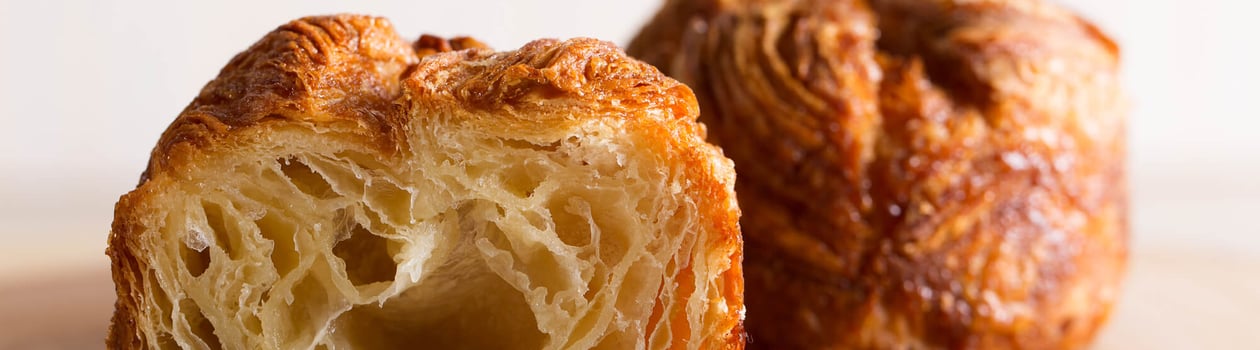
Every year on this day, it’s time to celebrate National Kouign Amann Day, a delicious excuse to get better acquainted with one of France’s most unapologetically buttery creations. For anyone who has ever looked at a pastry case and thought, “I want the flakiest thing you’ve got, but also the stickiest,” this is the day that speaks their language.
So what exactly is a kouign amann? In simple terms, it is a Breton pastry that lands somewhere between a cake and a laminated viennoiserie, with a crackly caramelized shell and a tender, layered interior. It is sweet, it is rich, and it is not shy about either of those qualities.
A kouign amann is often described as a kind of cake, made with lots and lots of butter. That description is not exaggerating. The dough is layered with butter and sugar, then rolled and folded so it bakes up into many thin layers. As it cooks, steam from the butter helps separate those layers, puffing the pastry from within while the sugar melts and caramelizes on the outside. The result looks like a pastry because, functionally, it is one.
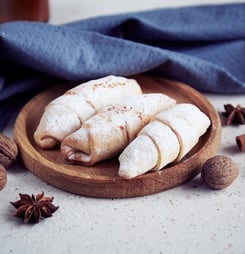
Depending on where it comes from, a kouign amann might show up as a small, intensely flaky, single-serve treat baked in a muffin tin or metal ring, or as a larger round “cake” meant to be sliced into wedges. Either way, it is built for dramatic texture: crisp edges, caramelized corners, and a center that manages to stay soft even while everything around it turns golden and glossy.
Although the kouign amann is not always as widely recognized as croissants or éclairs outside its home region, it has steadily earned a loyal following. National Kouign Amann Day exists to nudge more people toward that first bite, the one where flakes scatter, caramel sticks slightly to the fingers, and the only reasonable response is to immediately plan the next one.
How to Celebrate National Kouign Amann Day
Celebrating National Kouign Amann Day can be as ambitious or as low-effort as the day demands. The pastry itself is a little project if made from scratch, but it is also one of those rare treats that feels special even when simply picked up from a great bakery and eaten while standing at the counter.
One classic approach is to bake kouign amann at home. Because it relies on lamination, the same general family of techniques used for croissants and puff pastry, it rewards patience and a cool kitchen. The basic idea is straightforward: make a yeast dough, fold in butter, fold in sugar, and repeat until the dough contains layers upon layers. The tricky part is temperature management. Butter that stays cool creates distinct layers; butter that melts too early tends to leak out, leaving fewer layers behind.
A few practical pointers make the at-home version far more pleasant:
- Chill between folds. Short rests in the refrigerator keep the dough workable and the butter firm, which helps preserve the layering.
- Use sugar strategically. Many bakers sprinkle sugar on the dough during later folds and even on the work surface during final rolling. This reduces sticking while building the caramelized crust that defines the pastry.
- Plan for a little mess. Kouign amann is famous for bubbling butter and sugar during baking. A lined baking sheet under the pan can save cleanup time.
- Unmold promptly. The caramelized sugar sets as it cools. Turning the pastries out shortly after baking helps prevent them from cementing themselves to the pan.
For those who want the fun without the flour-covered countertops, visiting a bakery is a perfectly respectable way to participate. Kouign amann is no longer quite as obscure as it once was, and it can sometimes be found anywhere that leans into French pastry traditions, artisan bread, or laminated dough. Some shops keep it classic, while others riff with fillings or flavored sugars.
If a bakery offers more than one style, it can be worth trying both. The larger round version tends to have a generous interior and a bold caramelized exterior that slices neatly. The individual versions often have more corners and edges, which means more caramelized crunch per bite. Neither option is wrong. They simply cater to different personalities: the slicer-and-sharer versus the “this is mine and I will guard it” crowd.
A kouign amann also makes a surprisingly charming centerpiece for a casual gathering. It is naturally shareable when baked as a round, and the individual forms are practically designed for a platter. Pair it with coffee, tea, or anything that appreciates buttery sweetness without competing too hard. The pastry already brings the drama.
For a more playful celebration, some people turn it into a tasting experience:
- Compare a classic kouign amann with one that includes fruit, chocolate, or spiced sugar.
- Try versions from different bakeries to see how each balances caramelization, salt, and flake.
- Warm a portion briefly and taste it next to a room-temperature piece. The difference in aroma and texture can be surprisingly noticeable.
And yes, sharing is part of the fun. Kouign amann tends to photograph well in that “slightly chaotic, extremely tempting” way. A picture of its caramelized ridges and scattered flakes rarely needs much explanation. If the goal is to spread awareness of what people have been missing, a visible trail of crumbs does an excellent job.
National Kouign Amann Day Timeline
History of National Kouign Amann Day
National Kouign Amann Day became an official day in 2015, submitted by San Francisco bakery B.Patisserie.
The day spotlights a pastry with deep roots in Brittany, a region in northwestern France known for its strong culinary identity, particularly when it comes to butter. Kouign amann is closely associated with the town of Douarnenez, and it is often discussed as a regional specialty, the kind of baked good that locals recognize instantly and outsiders remember vividly after the first encounter.
Historically, kouign amann was made using a bread-like yeast dough rather than the more enriched doughs often used in modern laminated pastries. That detail matters because it helps explain the pastry’s personality. A leaner dough provides structure, chew, and contrast. The richness comes not from eggs or milk baked into the dough, but from the layers of butter and sugar that are folded in and around it.
This layering technique will feel familiar to pastry bakers because it resembles the approach used for puff pastry and croissant dough. The difference is that kouign amann leans into sugar in a way that croissants do not. Sugar is not merely a topping; it becomes part of the lamination, dissolving as it bakes and turning into caramel that coats the exterior. That caramelized shell is one of the pastry’s signatures, giving it a burnished look and a crisp bite that contrasts with the soft, layered interior.
The baking process itself plays a major role in the final texture. As the pastry heats, butter melts and releases steam, which helps separate layers of dough. Meanwhile, sugar melts, bubbles, and caramelizes, creating a glossy crust and a sticky base. Many bakers intentionally bake kouign amann until it is deeply browned, even flirting with the edge of “too dark,” because that is where the flavor becomes complex and slightly toasty rather than simply sweet.
Over time, kouign amann traveled beyond Brittany and began appearing in pastry shops elsewhere. Its rise in broader popularity is tied to the modern fascination with laminated doughs and the growing presence of artisan bakeries willing to tackle labor-intensive pastries. Unlike some traditional pastries that rely on delicate fillings or precise decoration, kouign amann’s appeal is more primal: butter, sugar, heat, and patience.
Modern bakeries have also helped reshape how the pastry is served. Traditionally baked as a single round and sliced, kouign amann is now frequently made as individual portions. This shift is practical as well as appealing. Individual pastries are easier to sell, easier to portion, and they maximize the number of caramelized edges, which is arguably the best part.
National Kouign Amann Day, as established in 2015, fits neatly into this contemporary wave of appreciation. It draws attention not only to the pastry itself but also to the craft behind it. Laminated dough requires an understanding of fermentation, temperature, and timing. Caramelization requires confidence and restraint, because the line between perfectly bronzed and genuinely burnt is thin. A good kouign amann is both rustic and refined: not fussy in appearance, but undeniably technical in execution.
The name “kouign amann” comes from the Breton words for cake and butter, “kouign” and “amann” respectively. The translation, essentially “butter cake,” is refreshingly honest. It sets expectations clearly and delivers on them with enthusiasm.
And perhaps that is why the pastry inspires such devotion. Kouign amann does not pretend to be sensible. It is celebratory by design, a reminder that sometimes the point of baking is not restraint but joy, baked into crisp layers and caramelized corners.
Butter as a marker of Breton identity
In Brittany, butter is more than a baking ingredient; it is a regional emblem, especially in its salted form. The area historically escaped France’s harsh salt taxes, which made salt plentiful and helped cement a culture of salted butter that shows up in everything from crêpes and galettes to rich cakes like kouign amann.
How lamination makes flaky pastry layers
Kouign amann belongs to the family of laminated doughs, where a slab of butter is enclosed in dough and repeatedly rolled and folded. As the pastry bakes, water in both the dough and butter turns to steam, and the trapped vapor forces the thin layers apart, creating the distinct flaky, honeycombed structure seen in croissants, Danish, and kouign amann.
The role of sugar in kouign amann’s crust
Unlike many other laminated pastries, kouign amann has sugar rolled and folded directly into the dough and often sprinkled in the baking tin. In the oven, this sugar melts and then caramelizes, forming a deep golden, glassy crust and pockets of hard caramel where it meets the hot pan, while also contributing to Maillard browning with the dough’s proteins.
A pastry built on near-equal parts of dough, butter, and sugar
Traditional descriptions of kouign amann from Douarnenez emphasize just how rich it is: one commonly cited “strict” ratio is about 40 percent dough to 30 percent butter and 30 percent sugar by weight. This unusually high fat and sugar load, compared with many other pastries, helps explain both its intense flavor and its reputation as one of Europe’s most indulgent baked goods.
From a 19th‑century coastal town to a global bakery star
Kouign amann originated in the 19th century in the Breton fishing town of Douarnenez and remained a local specialty for generations. Only in the late 20th and early 21st centuries did it gain international attention, as artisan bakeries in cities like Paris, London, and San Francisco began featuring it and English‑language media introduced it to a wider audience.
Why is salted butter so common in Brittany
The prevalence of salted butter in Breton baking has roots in France’s former salt tax, the gabelle, which was historically lighter or not enforced in western coastal regions. That made salt cheaper and more available in Brittany than in many inland areas, encouraging cooks and bakers there to use it liberally in butter and sweets.
Caramelized pastries and texture contrast
Kouign amann illustrates how pastry chefs use caramelization to create contrast in a single bite. The high-sugar exterior bakes into a crisp, almost candy-like shell while the steamy laminated interior stays tender and layered, a textural balance that food scientists and baking educators point to as a hallmark of well-executed laminated, high-sugar doughs.