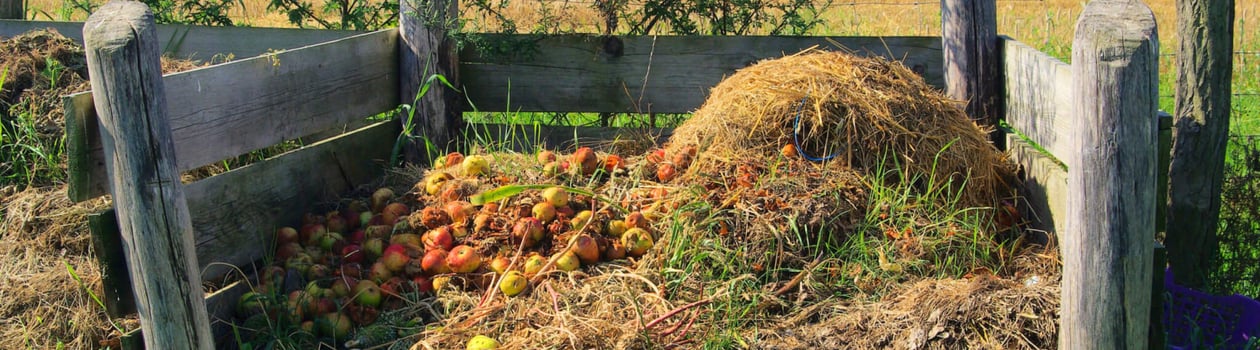
Imagine a day dedicated to learning how to turn your kitchen scraps and yard waste into gold for your garden. Learn About Composting Day is all about that!
This special day is a chance for everyone to dive into the world of composting.
Learn About Composting Day Timeline
Early Compost Use in Mesopotamia
Cuneiform tablets from Mesopotamia describe returning organic wastes such as straw and manure to fields, an early recorded practice similar to composting to maintain soil fertility.
Composting Described by Aristotle and Theophrastus
Greek philosophers Aristotle and his student Theophrastus write about rotting organic matter and manures improving soils, providing some of the earliest Western descriptions of controlled decomposition for agriculture.
Roman Agronomists Systematize Manure and Compost Use
Roman writers such as Columella and Pliny the Elder detail methods for piling and aging manures and plant residues, giving practical guidance on what would now be recognized as composting techniques.
Liebig Challenges Humus Theory and Spurs Soil Science
German chemist Justus von Liebig publishes “Organic Chemistry in Its Applications to Agriculture and Physiology,” disputing the prevailing humus theory and shifting focus to mineral plant nutrition, which later influences scientific study of compost as a nutrient source.
Sir Albert Howard Develops the Indore Composting Method
Working in India, British agronomist Sir Albert Howard refines the Indore process, a systematic method for composting mixed plant residues and animal manure that becomes a foundation for modern organic composting practices.
First Earth Day and Growing Interest in Organic Waste Recycling
The inaugural Earth Day in the United States helps spark broader public concern about waste and pollution, contributing to emerging community and backyard composting efforts as alternatives to landfilling organic materials.
San Francisco Adopts Citywide Curbside Composting
San Francisco implements a large-scale, source-separated organics collection program, becoming one of the first major U.S. cities to offer universal curbside composting and setting a model for municipal food-scrap recycling.
How to Celebrate Learn About Composting Day
To make Learn About Composting Day a blast, here are some fun and quirky suggestions:
Host a Compost Party
Invite friends over and show them how to start their compost pile. Make it fun with a potluck using ingredients that contribute to a compost bin afterward.
DIY Compost Bin Challenge
Get creative and challenge your family to build the most efficient (and maybe a bit wacky) compost bin using recycled materials.
Compost Treasure Hunt
Organize a scavenger hunt for kids and adults to find compostable items in your home. Whoever collects the most wins a plantable prize!
Worm Wiggle Watch
Start a vermicomposting bin and invite the neighborhood kids to meet the worms. It’s a great way to teach them about the composting process and let them see the wriggly wonders up close.
Compost-Themed Movie Night
Screen documentaries or films about composting sustainability, or gardening. Provide snacks that result in compostable scraps to add to the bin after the movie.
Visit a Local Farm or Garden
Many farms and community gardens have composting systems. Take a tour to learn how they do it and gather tips for your own composting adventures.
Compost Art Day
Encourage kids and adults to create art from items that can be composted. This can be an enlightening way to understand what can go into a compost bin.
Compost Swap Meet
If you’re already a composting pro, organize a swap where you exchange compost with neighbors. It’s a great way to enrich your garden with different nutrient mixes.
Why Celebrate Learn About Composting Day
Composting is an age-old practice, but it’s gained a lot of attention in recent years for its environmental benefits.
It’s a simple process that transforms organic waste into a rich soil amendment, helping to reduce the amount of waste sent to landfills, cut down on methane emissions, and decrease the need for chemical fertilizers.
The beauty of composting lies in its simplicity and accessibility. Whether you’re setting up a small bin in your backyard or participating in a community program, composting is an easy way to make a big impact on the planet.
Learn About Composting Day isn’t just about understanding the mechanics of composting; it’s about getting hands-on experience and seeing the magic of decomposition at work.
From visiting a local farmers market to discuss composting with growers to starting your compost pile with a mix of greens and browns, the day is filled with activities that are both fun and educational.
It’s also a great opportunity to involve kids, teaching them early on about the importance of recycling organic waste and conserving natural resources.
By turning something as simple as food scraps into valuable compost, we’re not just reducing waste; we’re contributing to a healthier, more sustainable world.
History of Learn About Composting Day
Dive into the quirky tale of Learn About Composting Day, because this day isn’t just about tossing apple cores and leaf piles into a bin.
It’s a full-on celebration of turning “What’s that smell?” into “Wow, look at my flowers!” Composting, you see, has been a thing since forever. Imagine cavemen burying their leftovers, though without fancy bins or blogs to brag about it.
Fast forward a bit, and George Washington himself was all about that compost life, making him the unofficial poster boy for early American composting efforts. He had his farmhands gathering up all sorts of bits and bobs, turning them into plant gold long before it was cool.
But why do we earmark a whole day for composting chit-chat? Simple: it’s eco-friendly, almost like magic, and, believe it or not, a barrel of fun.
You’re not just reducing waste; you’re crafting nutrient-packed soil that’s like a spa treatment for your garden. And it’s not just for the green-thumbed. With a mix of this and a bit of that (think kitchen scraps, yard waste, and even some paper goods), anyone can join the compost party.
Bob Matthews from Rochester, NY, gave us this gem of a day back in 2011. He, a big believer in the “Go Green” movement, wanted to make sure the world knew how easy and impactful composting could be.
Whether you’re in it for reducing waste, saving the planet one banana peel at a time, or just for the cool factor of making something useful out of what you’d normally toss, Learn About Composting Day is for you. So, on this day, whether you’re a composting newbie or an old pro, take a moment to appreciate the cycle of life…in your trash.
Attend a workshop, start a pile, or simply spread the word. It’s all about getting those scraps back into the earth, where they can do some good.
Facts About Composting Day
Compost as a Natural Soil Sponge
Well‑made compost can help soil hold significantly more water, reducing irrigation needs and protecting plants during dry spells.
Research from the U.S. Environmental Protection Agency notes that compost improves soil structure and increases its water‑holding capacity, particularly in sandy and degraded soils, which can lower runoff and erosion while boosting plant resilience.
Microbial “Engineers” Inside Compost
Compost is rich in diverse microorganisms that play different roles at different stages of decomposition.
Studies summarized by the University of California’s Sustainable Agriculture Research and Education Program show that bacteria, fungi, actinomycetes, and other microbes break down organic matter, cycle nutrients into plant‑available forms, and can even help suppress certain soil‑borne diseases by outcompeting or antagonizing plant pathogens.
Ancient Farmers Practiced Proto‑Composting
Long before modern bins and tumblers, early farmers deliberately returned organic waste to fields.
Archaeological and historical evidence cited by the Rodale Institute and the Food and Agriculture Organization describes ancient Chinese, Greek, and Roman farmers layering manures, crop residues, and household scraps in pits or heaps to enrich soil, a practice recognizable today as basic composting.
George Washington’s Manure and Compost Experiments
At Mount Vernon, George Washington kept detailed notes on improving his farm’s fertility, including organized collection of animal manures and plant residues.
The Mount Vernon Ladies’ Association records show that Washington built dung repositories and experimented with mixing stable waste, crop residues, and soil to restore worn‑out fields, anticipating later scientific composting methods.
Composting’s Role in Cutting Methane from Landfills
When food scraps and yard trimmings decompose without oxygen in landfills, they generate methane, a greenhouse gas far more potent than carbon dioxide over the short term.
The U.S. Environmental Protection Agency reports that landfills are a leading source of human‑related methane emissions in the United States, and that diverting organic materials into aerobic composting or digestion can substantially reduce those emissions.
Food Waste Is a Major Compostable Resource
A large share of what households throw away could be composted instead of landfilled.
The U.S. Department of Agriculture estimates that 30 to 40 percent of the American food supply is wasted at the retail and consumer levels, while the EPA notes that food is the single largest component of U.S. municipal solid waste sent to landfills, a missed opportunity for creating compost and recovering nutrients.
Vermicomposting Turns Worms into Waste Managers
Vermicomposting uses specific earthworm species, often Eisenia fetida (red wigglers), to transform kitchen scraps and other organic material into a fine, nutrient‑rich product known as worm castings.
Research summarized by North Carolina State University finds that vermicompost can enhance seed germination, improve plant growth, and increase microbial activity in soil, sometimes at lower application rates than traditional compost.