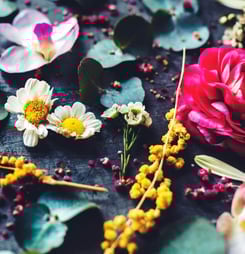
If it hadn’t been for coffee, cocoa, vanilla, lavender, camomile, marijuana, and many other flowering plants and trees, our world would have been a barren, dismal place.
So, National Water a Flower Day is that yearly reminder to show our flowers how much we appreciate them for their sumptuous colors, their fragrant blossoms and their medicinal, or sometimes lethal, properties!
National Water a Flower Day Timeline
Early Irrigation for Cultivated Plants
Archaeological evidence from Mesopotamia and ancient Egypt shows some of the first organized irrigation systems, allowing people to bring water to domesticated plants and early garden plots rather than relying solely on rainfall.
Formal Gardens and Decorative Flower Beds
Ancient civilizations, including Egypt and later Persia, India, and Greece, created formal gardens that featured ornamental flowering plants arranged around water channels, basins, and pools, emphasizing deliberate watering and display rather than purely agricultural use.
Dioscorides Describes Medicinal and Garden Plants
The Greek physician Dioscorides compiles De materia medica, systematically describing hundreds of plants, many of them flowering herbs cultivated near settlements, and noting where and how they grow, which helped guide their care and intentional cultivation for centuries.
Rise of Ornamental Flower Gardens in Europe
With expanding global trade, European elites establish elaborate flower gardens, cultivating tulips, lilies, and other ornamentals and using manual watering and early irrigation devices to maintain beds that became symbols of status and horticultural skill.
Stephen Hales Quantifies Plant Water Uptake
English clergyman and physiologist Stephen Hales publishes “Vegetable Staticks,” providing the first quantitative experiments on how plants absorb and transpire water, which laid the groundwork for understanding how much and how often cultivated flowers need watering.
Garden Hoses and Modern Watering Tools Spread
As rubber manufacturing improves and municipal water systems expand in Europe and North America, flexible garden hoses and metal watering cans become common household tools, making it easier for amateur gardeners to keep ornamental flower beds and potted plants watered.
Drip Irrigation and Efficient Garden Watering
The development and popularization of plastic drip irrigation systems, pioneered in Israel and adopted worldwide, give gardeners and landscapers a precise way to deliver water directly to the roots of flowers and shrubs, reducing waste and overwatering.
How to Celebrate National Water a Flower Day
Water Your Plants
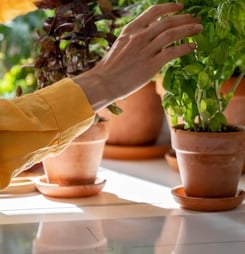
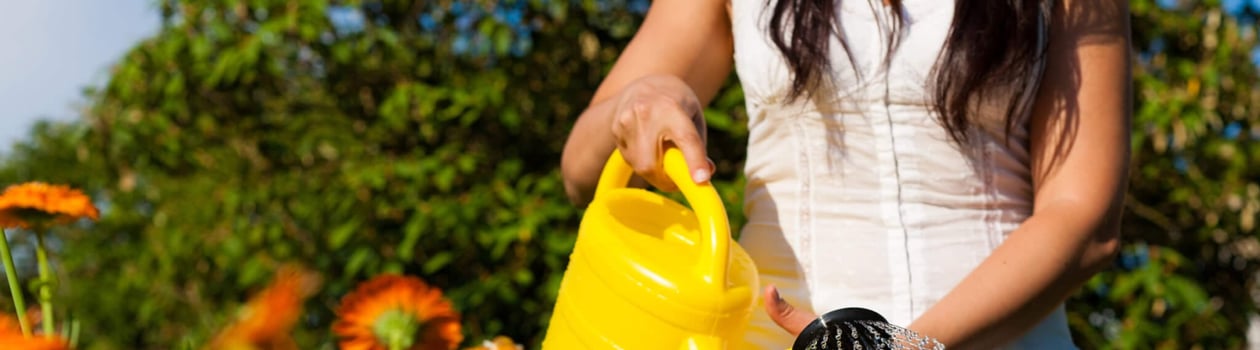
The best way to celebrate National Water a Flower Day is by giving all of your household and garden plants an aquatic treat.
Also, studies show that gently caressing them in the way that a diaphanous zephyr would in their natural habitat promotes growth, so don’t be shy, give their leaves a tender squeeze.
Choose Wisely
Of course, you should be cautious if you own a Rafflesia Arnoldii, the largest flower on the planet, which doesn’t have any leaves and is also known as the ‘corpse flower’ due to the odor it oozes when disturbed! That’s one plant we wouldn’t mind forgetting to water, isn’t it?
Better stick to roses and lilies, I say, and water them, stroke, and sing to them as you would to a child. You’ll be a better person for it and you’d make the world a brighter, sweeter, and more colorful place.
Learn About Flowering Plants
You can also use National Water a Flower Day to learn more about flowers and gardening in general. As mentioned earlier, caring for a garden can be a lot more difficult than a lot of people realize.
This is because you need to know the optimal growth conditions for your plants.
You also need to make sure you plant them correctly, leaving enough space for the roots, as well as planting them at the correct time of year.
There is a lot that needs to be taken into consideration, which is why it is a good idea to spend some time furthering your knowledge on National Water a Flower Day.
Be Cautious
While the day does encourage you to water your garden flowers, it is important to make sure you don’t overdo it. Drowning your flowers is not going to do them any sort of favors!
Enjoy Flowers in Many Ways
There are other ways that you can celebrate this day if you have already given your flowers a good watering. For example, you can get involved in some floral arts and crafts.
From painting a photo of flowers to even decorating your own watering can, there are plenty of ways to get the creative juices flowing in honor of National Water a Flower Day.
Learn About National Water a Flower Day
National Water a Flower Day is a day that recognizes the importance of caring for our garden plants. Just think about how dull the world would be if we did not have beautiful flowers everywhere!
Most people would agree that we tend to take flowers for granted. This is because we see them whenever we look out of the window or go for a walk. However, our walks would not be anywhere near as beautiful or peaceful without nature!
Caring for plants can often be a therapeutic act. It is a great way to spend time when you’re looking to de-stress and cut off from work. You are able to focus on the beauty around you, nurturing the flowers in your garden so that they thrive.
Plus, caring for flowers is no easy business! Flowers have their own unique requirements in terms of their optimal growth conditions. Some flowers prefer to be in the shade, others like full sunlight. There are then those that thrive in damp soil, as well as flowers that prefer their soil to be on the drier side.
They may require watering on a daily basis if they are potted. This merely scratches the surface of the different factors you need to consider when caring for the plants in your garden. This highlights why it is important to do your research before you head outside with the watering can!
If you do not give your flowers enough water, this can result in a flower garden wilting and producing barely any blooms at all if any! Overwatering your flowers can be just as damaged, though, as this can drown your plants and cause disease.
The best time for you to water your plants is during the morning, ideally sometime between 6 and 10 a.m. The cooler temperature is beneficial because it reduces evaporation and enables the water to remain where you need it, i.e. with the plant. You can help to keep the soil moist by spreading mulch around.
One way you can keep track of how much water you are getting in your garden is by placing a rain gauge outside. You can also find plenty of good magazines, books, and websites that can help you to further your knowledge on looking after the plants you have outside of your home.
History of Flowers
The flower is the reproductive part of a plant that creates the seeds. Plants produce fruit and flowers that are called angiosperms. There are almost 300,000 species of angiosperms, and their fruits and flowers can differ significantly.
Flowers and fruits are some of the most useful features for identifying species of plants. A lot of modern cultures see flowers as attractive, and they have fascinated scholars for thousands and thousands of years.
In fact, a first-century physician of Greek called Dioscorides wrote De materia medica, which is considered the most significant early book about plants.
This was the first text about the medicinal uses of plants, featuring a lot of diagrams of plants and their flowers. The book assisted other physicians in identifying the sorts of plants to assign their patients for certain sicknesses. It was deemed an essential reference on plants for over 1,500 years.
National Water a Flower Day is a grass roots movement that can be traced back to at least 2014.
Facts About National Water a Flower Day
Deep Roots of Flowering Plants
Flowering plants, or angiosperms, appeared relatively late in Earth’s history yet rapidly became the dominant plant group on land.
Fossil evidence suggests that early angiosperms were present by at least 125 million years ago, and within tens of millions of years they had diversified into many lineages that now account for roughly 90% of all plant species, reshaping terrestrial ecosystems and food webs.
How Flowers Move Water Against Gravity
Flowers and their supporting stems rely on a microscopic system of tubes called xylem to lift water from the roots, sometimes more than 300 feet in tall trees.
This movement is powered not by pumps but by transpiration: as water evaporates from leaves and petals, it creates a negative pressure that pulls more water upward in a continuous column, a process that can move dozens of meters of water in a single day.
Why Overwatering Kills Flowers
Many ornamental flowers die from “too much love” in the form of excess watering.
When soil pores stay waterlogged, roots are deprived of oxygen needed for respiration, which weakens root tissues and makes them vulnerable to root-rot fungi and bacteria; horticultural studies show that poorly drained, chronically wet soils are one of the most common causes of failure in container and garden flowers.
Most Freshwater Withdrawals Go to Plants
Globally, about 70% of all freshwater withdrawals are used for agriculture, and a significant share of that sustains irrigated crops that flower, including fruits, vegetables, oilseeds, and ornamental plants.
In some arid regions, irrigation for high-value crops and ornamental horticulture can account for more than 80% of local water use, which has prompted research into more efficient watering methods such as drip irrigation and deficit irrigation strategies.
Morning Watering Helps Flowers Use Water Efficiently
Experimental and extension research in horticulture has found that watering bedding plants and ornamentals in the early morning typically reduces evaporation losses and leaf disease compared with midday or evening watering.
Morning irrigation lets foliage dry quickly after watering, which lowers the risk of fungal leaf spots and mildews while still giving plants a full day to absorb and move water through their tissues.
Flowers Quietly Support a Major Global Industry
Ornamental horticulture, which includes cut flowers, potted plants, and landscape ornamentals, is a multibillion-dollar global industry.
In the European Union alone, the value of flower and ornamental plant production has been estimated at over 20 billion euros annually, while the worldwide floriculture trade moves billions of stems each year, tying home gardens and small flower beds to complex international supply chains.
Flowers as Urban Cooling Tools
Planting and watering ornamental flowers and other vegetation in cities can do more than beautify sidewalks; it can slightly reduce local temperatures through shading and evapotranspiration.
Urban climate studies show that vegetated areas, even small gardens and planted beds, often remain several degrees cooler than surrounding hard surfaces, helping to mitigate the urban heat island effect during hot weather.