National Cordova Ice Worm Day is a lively celebration dedicated to one of nature’s most unusual creatures: the ice worm.
Found in glacial ice, these tiny, dark worms thrive in conditions that would shut down most other animals, wriggling through snow and ice as if it were perfectly normal to make a living inside a frozen world.
This quirky day honors their unique existence and brings the Cordova community together for a fun and spirited event.
It has the feel of a collective deep breath in the middle of winter: a reason to be playful, gather indoors and outdoors, and remember that even the cold season can have its own brand of joy.
This day is celebrated for several reasons. First, it highlights the uniqueness of ice worms, which fascinate scientists and nature enthusiasts alike. Ice worms are a symbol of endurance and adaptability, living in extreme conditions where few other creatures can survive.
Unlike many cold-weather animals that avoid freezing by hibernating, migrating, or growing thick insulation, ice worms solve the problem by fully committing to the ice itself, spending their lives in the narrow temperature zone that glaciers provide.
The day also emphasizes environmental awareness, as these worms can be viewed as indicators of glacial health. Glaciers are not just inert slabs of frozen water.
They are living landscapes with a surprisingly busy “micro-ecosystem” that includes algae, fungi, and tiny invertebrates, and ice worms are one of the rare larger residents of that system.
Celebrating them naturally invites curiosity about how glaciers work, why they matter for ecosystems and water cycles, and what it means when ice environments change.
Beyond its scientific significance, National Cordova Ice Worm Day is a beloved cultural event in Cordova. It brings locals together through various activities, including parades, contests, and communal gatherings.
The celebration fosters community spirit and showcases the town’s character: resilient, creative, and willing to laugh at winter rather than simply endure it.
Whether it’s creating ice worm-themed desserts or participating in festive parades, the day offers something for everyone, making it a cherished tradition in Cordova.
Even for people far from glaciers, it offers a fun prompt: learn about a strange animal, celebrate cold-weather creativity, and enjoy a bit of silliness with purpose.
National Cordova Ice Worm Day Timeline
First Scientific Description of Ice Worms
Canadian geologist G. M. Dawson reports strange worms living in glacier ice, providing the first formal account of what are now called ice worms.
Robert Service Popularizes Ice Worm Legends
Poet Robert Service publishes “The Ballad of the Ice-Worm Cocktail,” turning ice worms into a humorous Yukon tall tale and embedding them in northern folklore.
Biologists Recognize Ice Worms as Glacier Specialists
Mid-20th-century glaciology and biology work in Alaska and the Pacific Northwest establishes ice worms as true glacier-dwelling annelids with a narrow cold-temperature niche.
Study of Ice Worm Habitats in Alaska
The Geophysical Institute at the University of Alaska publishes work on ice worm distribution and habitat, highlighting their abundance on temperate coastal glaciers.
Mesenchytraeus solifugus Profiled in Modern Taxonomy
A consolidated species account for Mesenchytraeus solifugus is published online, summarizing taxonomy, ecology, and physiology for researchers and educators.
Detailed Field Notes on Ice Worm Ecology
Natural history notes from the Slater Museum describe ice worm temperature limits, daily activity patterns, and distribution, refining understanding of their glacier life cycle.
New Outreach Links Cordova Science and Ice Worms
Prince William Sound Science Center highlights ongoing research on local ice worms, using Cordova’s glaciers and community interest to explain their biology and climate sensitivity.
How to Celebrate National Cordova Ice Worm Day
Go on an Ice Worm Hunt
Bundle up, gather friends, and head to glacial terrain only if it can be done safely and responsibly. The best “hunt” is really a guided nature outing where people practice careful observation rather than collecting anything.
Ice worms are small, typically about the size of a short paperclip, and dark brown to black, so spotting one can feel like finding a moving thread against bright snow.
A good approach is to treat it like a scavenger hunt for signs of glacier life: look for patches of colored snow caused by algae, listen to the sounds of meltwater, and notice how wind and sun shape the surface.
If an ice worm sighting happens, the moment is memorable because it feels like stumbling into a hidden world. Photography is a better souvenir than handling wildlife, and taking notes can turn the outing into a mini science journal.
For those without access to glaciers, an “ice worm hunt” can become a playful indoor version: hide paper or felt “worms” around the house, tuck clues into the freezer, or create a family challenge where each clue teaches a quick fact about glacier ecology.
Create Ice Worm Treats
Get creative in the kitchen by crafting desserts inspired by ice worms. Make worm-shaped cookies, dark chocolate “worms” nestled in crushed-cookie “glacier gravel,” or gelatin treats with a dramatic black-and-white color scheme. The fun is in leaning into the theme without needing special equipment.
A few easy, crowd-friendly ideas:
• Chocolate-dipped pretzel rods cut into short segments for “ice worm clusters.”
• Black licorice or dark gummy candy laid over frosted cupcakes to create “worms on snow.”
• A cookies-and-cream parfait layered in a clear cup so the “worms” appear to burrow through “ice.”
These treats not only taste great but also add a quirky twist to a gathering. They are also an easy way to bring younger celebrants into the day: shaping, decorating, and naming creations turns baking into a shared activity instead of a chore.
Host a Winter Parade
Organize a neighborhood parade with participants dressed as ice worms. Use bright colors and playful designs to capture the festive spirit.
Because real ice worms are dark and small, costumes can either mimic that look in an exaggerated way or go the opposite direction with bold, cartoonish “worms” that stand out against winter backdrops.
A parade can be simple: a short walking route, homemade signs, and a “grand marshmallow” (or another silly title) leading the line. Or it can be more theatrical with music, choreographed wriggle-walks, and float-like creations pulled on sleds.
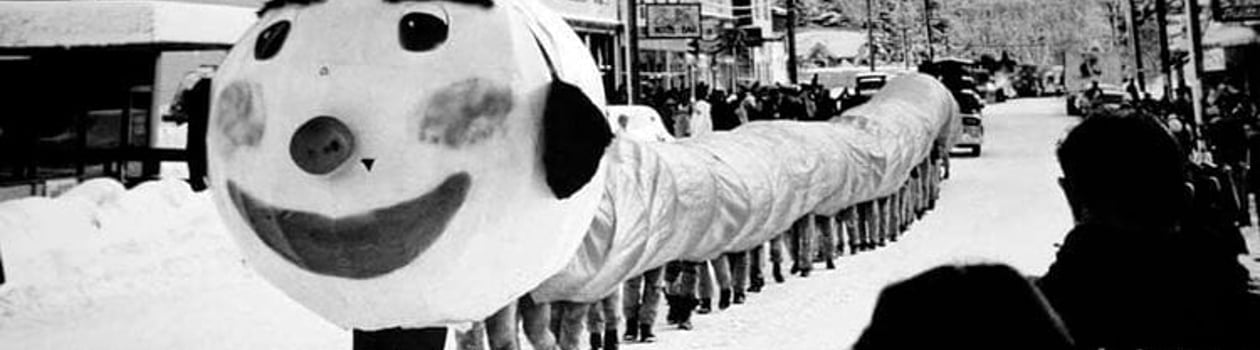
One classic Cordova tradition is the idea of a giant ice worm figure in a parade, and that concept adapts well anywhere with a bit of cardboard, fabric, and imagination.
To keep it welcoming, organizers can add low-pressure participation options: decorate mittens with “worm segments,” carry a lantern “glow worm,” or make a banner celebrating cold-adapted animals.
Watch a Documentary
Watch a documentary to learn more about these fascinating creatures. Gather family and friends for an educational movie night. A strong pairing is to watch general glacier or polar ecology programming and then follow it with a short discussion about what makes ice worms special.
Ice worms are particularly interesting from a biology standpoint because they are true animals living in ice, not just microbes. They are often described as the only known glacier-obligate worm species: organisms that are not simply visiting the ice, but are built for it.
Their dark pigmentation is linked to high melanin levels, which may help with managing radiation and energy in their bright, reflective habitat. Researchers have also investigated how their cellular machinery can function in near-freezing conditions and why warming can be deadly for them.
To make the night interactive, viewers can pause to jot down questions, then look up answers afterward. Another option is to create a “glacier bingo” card with items like “meltwater stream,” “crevasse,” “algae bloom,” and “tiny invertebrate,” turning learning into a game.
Participate in a Fishing Contest
Join or organize a local fishing contest in honor of the ice worms. This activity connects the community and adds a competitive edge to the celebrations. In Cordova, winter gatherings often celebrate outdoor skills and togetherness, and a friendly contest fits that spirit nicely.
A fishing event can be as structured or relaxed as desired. Some groups prefer a set time window and simple categories like “first catch,” “smallest catch,” or “best fish story.” Others keep it purely social, using the contest as an excuse to share warm drinks, trade tips, and spend time outside.
For people nowhere near fishing spots, the same communal idea can be recreated with different outdoor games: snowshoe walks, winter photography challenges, or a nature-themed “biggest bird spotted” tally. The goal is the same: get outside, bond, and give winter a reason to feel festive.
Share on Social Media
Spread the word about National Cordova Ice Worm Day by sharing activities on social media. Post pictures of adventures, treats, and events, and include a quick note explaining what an ice worm is so the post becomes a tiny piece of science communication rather than just a snapshot.
Ideas that tend to travel well online:
• A “worm vs. glacier” themed craft photo with a caption about how ice worms survive near freezing temperatures.
• A short video showing an ice worm-themed dessert being assembled.
• A parade clip featuring homemade costumes and a playful “wriggle” dance.
Encouraging others to join in the celebration helps raise awareness and adds a global touch to the festivities. It can also highlight the bigger theme behind the fun: appreciating unusual species and the environments that support them.
History of National Cordova Ice Worm Day
National Cordova Ice Worm Day grew out of Cordova’s well-known Iceworm Festival tradition, which began in 1961 as a way to boost spirits during the darkest, coldest stretch of winter.
Local organizers wanted something that could lift morale, create reasons to gather, and add a dash of visitor-friendly spectacle.
The ice worm, oddly charismatic for a creature most people have never seen, became the perfect mascot: a real animal tied to nearby ice, tough enough to symbolize endurance, and strange enough to spark laughter and curiosity at the same time.
The choice was also clever branding before branding became a buzzword. Many communities can celebrate common themes, but not every place can claim a worm that lives in glaciers. The ice worm’s very existence feels like a punchline until someone learns it is genuine.
That mix of “wait, really?” and “how is that possible?” gives the day its signature charm, blending community fun with natural history.
During early celebrations, residents embraced big, theatrical elements, including the creation of an oversized ice worm figure to parade through town. This kind of public art is more than decoration. It is a shared project that turns neighbors into collaborators and transforms winter streets into a stage.
Over time, the festival atmosphere expanded into a familiar blend of competitions, performances, and social events that give everyone, not just the hardiest outdoor enthusiasts, a way to participate.
Some of the signature activities associated with the broader festival tradition have included pageants, playful contests, sports tournaments, food events, and quirky races with humorous rules.
The point has never been perfection or seriousness. It is a celebration built to be a little ridiculous on purpose, because winter can feel heavy, and a carefully planned dose of ridiculousness is surprisingly effective at lightening the mood.
The ice worm itself, however, is not just a mascot. It is a real species, commonly identified as Mesenchytraeus solifugus, an annelid related to earthworms. Ice worms are typically small, often just a few centimeters long, and dark in color.
They live within glacial ice and survive in a very narrow temperature range near the freezing point. If conditions get too warm, they cannot simply retreat to shade or burrow into soil the way other worms might. Their bodies are adapted to cold, and temperatures that feel mild to humans can be fatal to them.
That scientific reality adds a deeper layer to the day’s meaning. A celebration that starts as a morale booster also becomes an invitation to learn about glacier ecosystems and how finely tuned some organisms are to their habitats.
Glaciers can look empty from a distance, yet they host communities of life that include microscopic organisms and, in the case of ice worms, animals large enough to see with the naked eye.
Ice worms feed within that icy ecosystem and play a role in recycling organic material on the glacier surface, linking tiny life forms with broader nutrient cycles.
Researchers have studied ice worms to understand how they function in near-freezing temperatures, including how their cells continue producing energy efficiently in cold conditions.
Their dark pigmentation, tied to high levels of melanin, is another intriguing feature that may help them manage the intense light environment of snow and ice.
These details turn the ice worm into more than a quirky symbol. It becomes a real example of extreme adaptation, the kind of organism that helps scientists ask better questions about life’s limits.
Over decades, National Cordova Ice Worm Day and the wider Iceworm Festival tradition have continued to thrive because they do multiple jobs at once.
They offer a reason to gather, laugh, and show off local creativity. They also keep attention on a unique species and the frozen habitat it depends on.
The celebration’s staying power comes from that balance: part community party, part nature appreciation, and part reminder that the planet still has plenty of surprises wriggling around in unexpected places.
Facts About Ice Worms
Ice worms are one of the most unusual animals on Earth, living their entire lives inside glacier ice where few organisms can survive. Found only in select glaciers of the Pacific Northwest and Alaska, these small, dark worms thrive at temperatures hovering around the freezing point. Their biology, behavior, and extreme sensitivity to temperature make them a rare example of life perfectly tuned to a narrow environmental window—and a key species for understanding how ecosystems function even in frozen landscapes.
Ice Worms Are Segmented Relatives of Earthworms
Glacier ice worms belong to the phylum Annelida and the family Enchytraeidae, making them close relatives of common earthworms despite living in glacial ice. Classified in the genus Mesenchytraeus, they are typically about 1–3 centimeters long, darkly pigmented, and have segmented bodies with bristles (setae) used for movement through snow and ice.
Specialized for Cold, Yet Killed by Freezing
Unlike many cold-adapted organisms, ice worms cannot survive actual freezing; they live at around 0°C (32°F) and die if temperatures drop much below freezing or rise to roughly 4°C (40°F). Their cellular machinery is so finely tuned to near-freezing conditions that modest warming can denature proteins and disrupt membranes, while lower temperatures can cause lethal ice formation in their tissues.
Daily “Sun-Avoiding” Migrations in Glacier Ice
The best-studied glacier ice worm, Mesenchytraeus solifugus, has a scientific name meaning “sun-avoiding,” reflecting its behavior of retreating into the ice before daylight. These worms migrate vertically through the snow and ice column—approaching the surface in the cool evening to feed on snow algae, then descending by morning to escape potentially lethal solar heating and ultraviolet radiation.
Glacier Specialists of the Pacific Northwest and Alaska
Natural populations of ice worms are known only from temperate glaciers in a narrow coastal band of the Pacific Northwest and Alaska, including southern Alaska, British Columbia’s Coast Mountains, and Washington’s Cascades and Olympic Mountains. Their entire life cycle depends on glacial and perennial snow environments, making them one of the few animals truly specialized to live within glacier ice.
Ice Worms Feed on Snow Algae and Shape Glacier Ecosystems
By grazing on snow algae and associated microbes, ice worms help structure the tiny but complex food webs that exist on glacier surfaces. Their feeding can influence the abundance and composition of pigmented algae that darken snow, which in turn can affect how much sunlight the glacier absorbs and how quickly it melts, linking a small invertebrate to larger glacier processes.
Cordova’s Glaciers Harbor Real Ice Worm Populations
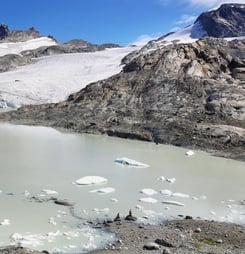
Cordova, Alaska, is bordered by the Chugach Mountains and nearby glaciers that host natural populations of glacier ice worms. These worms inhabit coastal icefields and valley glaciers in the region, where they emerge on the snow surface at dusk in summer and can sometimes be seen as dark threads wriggling across the ice.
Glacier Ice Worms Help Scientists Study Life in Extreme Environments
Because glacier ice worms remain active at temperatures near 0°C and die when warmed only a few degrees, they provide a rare example of an organism with an upper thermal limit close to the freezing point of water. Researchers study their physiology and genetics to understand how enzymes, cell membranes, and metabolic pathways can be adapted to function in such a narrow, near-freezing thermal window, with implications for astrobiology and extremophile biology.