
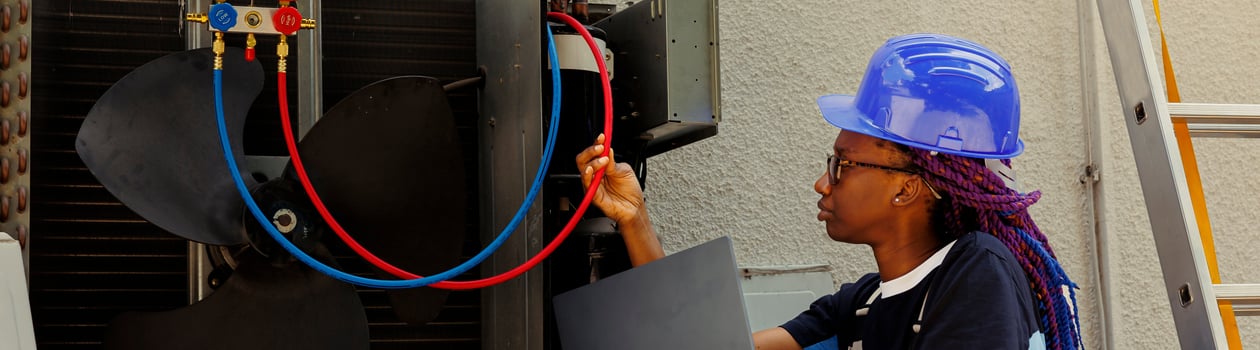
Every year on this day, we celebrate National HVAC Tech Day, a day dedicated to the skilled technicians who keep our heating, ventilation, and air conditioning systems running smoothly.
This special day shines a spotlight on these professionals who work tirelessly to ensure our comfort at home and at work, no matter the season. HVAC techs are equal parts mechanic, electrician, problem-solver, and customer translator, often showing up when the building is uncomfortable, the clock is inconvenient, and the system is making that one noise nobody can accurately describe. Recognizing their work also highlights something many people forget until it stops working: indoor comfort is engineered, maintained, and earned.
How to Celebrate National HVAC Tech Day
Shoutout to the Techs!
Blast out a message on social media to celebrate the unsung heroes of HVAC. Highlight their dedication and hard work with a personalized post that shows how much you appreciate their service.
A shoutout lands best when it’s specific. Mention the moment a technician restored heat on a bitter night, kept an office from turning into a sauna, or explained a confusing thermostat setting without making anyone feel silly. If it’s appropriate and privacy allows, share a photo of the freshly installed unit, a neatly labeled breaker panel, or the “before and after” of a cleaned-out condenser coil area.
Don’t forget to tag your favorite techs and include the hashtag #NationalHVACTechDay. For workplaces, this can be a team effort: feature a few technicians with a short quote about what they like most about the trade, the best advice they’ve received, or the tool they refuse to work without. That kind of public recognition helps boost pride in skilled work and can even inspire others to consider the field.
Gift a Cool Tool
Surprise your favorite HVAC technician with a handy tool they can use on the job. Make sure to choose something practical, like a gadget that will make their workday a bit easier.
A thoughtful gift shows you understand and support their skills. The most appreciated items tend to be durable, easy to carry, and actually useful in the field. Consider jobsite staples such as quality work gloves, a reliable headlamp for dim crawlspaces, a compact magnetic parts tray, a sturdy insulated water bottle, or a gift card to a tool supplier so they can pick what fits their setup.
If the technician works for a company, it is worth remembering that some employers have policies about accepting gifts. In that case, a small, universally useful item or a handwritten note can be the perfect workaround. For companies celebrating their own crews, “tools” can also mean support: upgraded safety gear, better inventory organization, or a new tablet case for service software can make daily work smoother.
Treat Them to a Meal
There’s no better way to say “thank you” than with a delicious meal. Treat your tech to breakfast before their busy day begins, or hand them a gift card for a well-deserved break.
Showing kindness with food is always a hit. Tech schedules can be unpredictable, so the easiest approach is something flexible: a gift card, a packed snack bundle, or a lunch delivered to the shop for the whole crew. For an employer, a simple breakfast spread can feel surprisingly special if it’s paired with genuine thanks and a few minutes that aren’t spent rushing back to the next call.
If a technician is on-site for service, a small gesture like offering cold water in warm weather or a hot drink when it’s chilly can also be meaningful. It acknowledges the reality of the job: climbing ladders, hauling equipment, and working in spaces that are rarely as comfortable as the rooms they’re trying to make comfortable.
Learn About HVAC
Attend a local seminar to dive into the world of HVAC technology. You’ll gain a deeper appreciation for what technicians do and maybe even learn how to keep your system running better.
Learning about HVAC turns “magic box in the closet” into something understandable. Even a basic overview helps: heating and cooling rely on airflow, heat transfer, and controls, and small issues can cascade into big ones. For example, a system can have plenty of cooling capacity but still feel lousy if airflow is restricted by a clogged filter, blocked vents, or a dirty coil. A thermostat can be perfectly functional but poorly placed, such as in direct sunlight or near a draft, leading to comfort complaints that aren’t really equipment failures.
For homeowners and building managers, a little knowledge also improves communication. Being able to describe symptoms clearly, like “the outdoor unit runs but the indoor fan doesn’t” or “the air feels humid even though it’s cool,” helps a technician diagnose faster. Many training programs and community education opportunities also explain modern upgrades like heat pumps, zoning, smart thermostats, and improved filtration, all of which are increasingly common and often misunderstood.
Take Care of Your System
Keeping your HVAC system in top shape not only helps you but also eases your technician’s workload.
Regular maintenance, like changing the filter, ensures your tech won’t have to work as hard to keep your system running efficiently. It also reduces preventable breakdowns, which are rarely convenient and often show up during peak demand.
Helpful, technician-friendly habits include:
- Change filters on schedule. The “right” schedule depends on the filter type, indoor conditions, and whether pets or renovations add extra dust. The key is consistency and checking more often when conditions change.
- Keep outdoor units clear. Leaves, tall grass, and stored items can choke airflow and make service harder. A clear working area also makes inspections safer.
- Keep vents and returns unblocked. Furniture pushed against a return grille can starve the system of airflow, which affects comfort and efficiency.
- Address odd behavior early. Strange noises, short cycling, inconsistent temperatures, or unusually high humidity are all worth checking before they become major failures.
- Schedule professional tune-ups. Techs can test electrical components, check refrigerant performance, verify safe operation of heating equipment, and spot wear before it becomes a “no cooling” emergency.
These steps are practical ways to honor the trade because they respect the system, the technician’s time, and the fact that most HVAC problems get cheaper the earlier they’re addressed.
Why Celebrate National HVAC Tech Day
National HVAC Tech Day is important because it acknowledges the hard work and expertise of HVAC technicians.
These technicians not only fix broken systems but also perform regular maintenance to prevent future problems. That maintenance matters for comfort, cost control, and peace of mind. A well-tuned system typically runs more efficiently, maintains steadier temperatures, and places less strain on motors and controls. It can also improve indoor air quality when ventilation and filtration are functioning as designed, which is especially valuable in buildings where people spend most of their time indoors.
It is also a day that highlights how broad the job really is. HVAC technicians often work across:
- Heating equipment (furnaces, boilers, heat pumps) where safe operation is essential.
- Cooling systems (central air conditioners, ductless systems) that rely on correct airflow and refrigerant performance.
- Ventilation (bath fans, kitchen exhaust, fresh air systems) that helps manage moisture and contaminants.
- Controls and electronics (thermostats, sensors, circuit boards) that turn comfort into something programmable.
- Refrigeration in some roles, especially in commercial settings, where temperature stability can protect inventory and operations.
There are numerous reasons why we celebrate this day. Technicians brave extreme conditions, from scorching heat to freezing cold, to repair and maintain HVAC systems. They work in attics where temperatures climb quickly, on rooftops with full sun exposure, and in cramped mechanical rooms that were clearly designed with the equipment in mind but not the human being who has to service it later. The job often requires careful physical work plus mental focus, because the same person tightening a connection may also be diagnosing electrical readings, interpreting error codes, and explaining options to a customer.
Their expertise ensures that our environments are safe and comfortable. Good HVAC work supports healthy humidity levels, helps reduce the risk of moisture issues, and keeps critical systems operating reliably. By recognizing their efforts on National HVAC Tech Day, people can appreciate the unseen heroes who play a significant role in daily life, making modern living more comfortable and often more energy-conscious.
National HVAC Tech Day also provides a positive moment for employers and customers to reinforce what “professionalism” looks like in the trades: clear communication, safe practices, respect for property, and continued learning. HVAC technology changes constantly, and many technicians invest in ongoing education to keep up with new refrigerants, higher-efficiency equipment, and smarter controls. Celebrating them is a way of saying that skill, training, and careful work deserve to be noticed.
National HVAC Tech Day Timeline
Early Mechanical Refrigeration Patented
American physician John Gorrie receives a U.S. patent for a mechanical ice-making machine, an early step toward artificial cooling that lays groundwork for modern air conditioning.
Willis Carrier Designs Modern Air Conditioning
Engineer Willis Haviland Carrier creates the first modern air-conditioning system for a Brooklyn printing plant, using mechanical refrigeration to control temperature and humidity.
Carrier Engineering Corporation Founded
Willis Carrier and six colleagues form Carrier Engineering Corporation, helping turn industrial air conditioning into a commercial industry that will later support a large HVAC workforce.
ASHRAE Professional Society Established
The American Society of Heating, Refrigerating and Air-Conditioning Engineers (ASHRAE) is founded, formalizing HVAC&R as a global profession with shared standards and research.
Air Conditioning Contractors of America Organized Nationally
The Air Conditioning Contractors of America (ACCA) is established as a national trade association representing HVAC contractors and promoting technical standards and training.
Montreal Protocol Adopted
Nations sign the Montreal Protocol to phase out ozone-depleting refrigerants, forcing major changes in HVAC equipment design and technician practices around refrigerant handling.
EPA Section 608 Certification Implemented
The U.S. Environmental Protection Agency launches Section 608 technician certification, requiring HVAC workers who handle regulated refrigerants to be trained and certified.
History of National HVAC Tech Day
National HVAC Tech Day, celebrated each year, was established in 2016 by ARS/Rescue Rooter, a prominent member of the Air Conditioning Contractors of America (ACCA). The day was founded to honor the unsung heroes of modern comfort, the technicians who keep our heating, ventilation, and air conditioning systems in good working condition.
Choosing a dedicated appreciation day for HVAC technicians made sense for an industry that is easy to overlook when everything is running well. Heating and cooling systems tend to be tucked away in basements, closets, ceilings, rooftops, and fenced-in side yards. The work stays out of sight, even though the results are felt in every room. By creating a named day of recognition, the industry also created a convenient moment for contractors, schools, manufacturers, and customers to celebrate the people behind that comfort.
HVAC technicians play a critical role in modern society. They manage complex systems that regulate air quality, temperature, and ventilation in buildings. These systems are not simply “on or off.” They involve airflow balance, refrigerant cycles, electrical controls, combustion safety (in many heating systems), and building-specific needs. A technician may need to spot a failing capacitor, verify safe ignition, test a control board, measure temperature drop across a coil, and confirm that drainage is flowing properly, sometimes on the same visit.
These professionals work in challenging conditions, often unseen, to ensure homes and workplaces remain comfortable all year round. The work can be physically demanding, but it is also detail-driven. Small mistakes can cause big problems, which is why careful diagnostics and methodical craftsmanship matter. It is also why technicians often rely on a blend of hands-on experience and formal training, including safety procedures for electricity, pressurized systems, and refrigerant handling.
Beyond simply fixing broken units, they also help maintain the health of systems that keep spaces safe, efficiently warm in winter, and cool in summer. Regular maintenance by these technicians helps systems run smoothly, supports lower energy use by preventing common efficiency losses, and can extend equipment life by reducing wear and tear. In many cases, maintenance is also about prevention: catching a failing part before it becomes a breakdown, or correcting airflow issues before they cause comfort complaints and system strain.
The founding of this special day helps raise awareness of the importance of HVAC technicians. It encourages people to express gratitude for the hard work these professionals put in, day in and day out.
Recognizing their contributions helps people understand the value of regular maintenance and the importance of properly functioning HVAC systems in everyday life. It also helps elevate the idea of skilled trades as careers built on knowledge, responsibility, and continuous improvement. National HVAC Tech Day, at its core, is a reminder that comfort is not accidental. It is built, measured, maintained, and restored by technicians who show up ready to solve problems that most people never want to think about until they have to.
Facts About National HVAC Tech Day
Ancient Civilizations Used Passive Cooling Long Before Mechanical HVAC
Long before electric compressors and air handlers, builders in ancient civilizations used architecture itself as a kind of early “HVAC.”
Egyptians hung damp reeds in windows to cool incoming air through evaporation, while Persians developed windcatchers and underground water channels called qanats that directed cooler air into homes.
In parts of the Roman Empire, hypocaust systems circulated hot air under floors for heating public baths and villas, showing that temperature control has been a design concern for thousands of years.
Modern Air Conditioning Was Invented to Solve a Humidity Problem, Not Heat
The first widely recognized modern air conditioner, designed by Willis Carrier in 1902, was created not to make people comfortable but to stabilize humidity in a Brooklyn printing plant so ink would dry predictably and paper would not swell.
Carrier’s system used coils filled with cold water to cool and dehumidify the air, laying the groundwork for the temperature and humidity control that later transformed homes, offices, and movie theaters.
HVAC Systems Are Among the Largest Energy Users in Buildings
Heating, ventilation, and air conditioning account for a significant portion of building energy use; in U.S. commercial buildings, space heating, cooling, and ventilation together typically consume around 40 percent of site energy.
As a result, improvements in HVAC efficiency, controls, and maintenance play an outsized role in cutting operating costs and reducing greenhouse gas emissions from the building sector.
Refrigerant Handling in the U.S. Requires Federal Certification
In the United States, anyone who services, maintains, or disposes of equipment that could release controlled refrigerants into the atmosphere must hold Section 608 technician certification from the Environmental Protection Agency.
There are four certification types that correspond to different kinds of equipment, and technicians must pass an EPA‑approved exam to legally purchase or handle these refrigerants, which are regulated because of their potential to harm the ozone layer or contribute to climate change.
HVAC Technicians Face Extreme Heat and Confined-Space Hazards
Field HVAC work often takes place in attics, crawlspaces, and rooftops where summer temperatures can exceed 120°F and ventilation is poor, sharply increasing the risk of heat stress and dehydration.
Safety guidance from state agencies highlights additional hazards such as low oxygen levels, refrigerant leaks, and restricted movement in tight spaces, and recommends breaks, hydration, atmospheric testing where needed, and following confined-space procedures.
Formal HVAC Training Commonly Combines School and Multi‑Year Apprenticeships
In the United States, many HVAC technicians prepare for the trade by completing a technical college program of 6 months to 2 years and then spending 3 to 5 years in structured on‑the‑job training or apprenticeship.
These paths blend classroom work in refrigeration, electricity, controls, and safety with supervised field experience, reflecting how much of HVAC expertise depends on both theoretical understanding and practical problem‑solving skills.
HVAC Design Directly Influences Indoor Air Quality and Health
Beyond comfort, modern HVAC systems are central to indoor air quality, since they control ventilation rates, filtration, and humidity that affect how pollutants and airborne pathogens behave indoors.
Professional groups such as ASHRAE publish detailed standards for ventilation and filtration that are used in hospitals, schools, and offices, and these practices were widely referenced during respiratory disease outbreaks to help reduce transmission risks inside buildings.