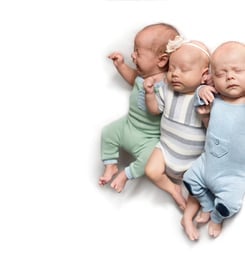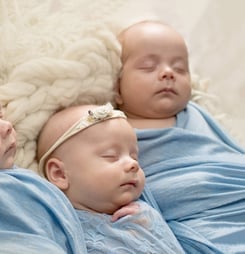

Looking for double, or even triple, the reason to get involved with celebrating this day? Then look no further than National Multiple Births Awareness Day.
It’s a great time to connect with others who are parents, friends, or family members of multiple birth children, whether twins, triplets, or more. It also shines a light on the very real, very specific needs that can come with welcoming more than one baby at a time, from pregnancy and birth to school years and beyond.
How to Celebrate National Multiple Births Awareness Day
Get ready for double the fun or triple the celebration with some of these ideas for enjoying National Multiple Births Awareness Day:
Attend a Multiple Births Local Event
Many different organizations may host events and activities in honor of National Multiple Births Awareness Day. These gatherings can range from casual playdates to more structured community programs.
Some are built for parents who want a chance to talk to someone who understands why a “quick trip to the store” can feel like planning a small expedition. Others focus on education and practical support, like safe sleep for multiples, feeding strategies, or how to divide and conquer bedtime without burning out.
Local events often reflect the age group in the community. Families with newborns may appreciate low-key meetups that allow for flexible arrival times, private spaces for feeding, and stroller-friendly locations. Families with school-age twins and triplets might enjoy park days, craft events, or group games that encourage each child’s individuality.
Teens and adult multiples sometimes join panels or discussion groups focused on identity, comparisons, and the oddly frequent question, “So, who’s older?” (Sometimes by minutes, sometimes by a whole lot more in terms of personality.)
Those who don’t know of an event happening nearby might want to check with a parents-of-multiples support group, a childbirth education center, a pediatric practice, or a community center. Another option is to host something in honor of NMBAD, even if it is small.
A coffee meetup at a library, a stroller walk, or a bring-your-own-picnic gathering can be enough to create a connection. The key is to make it welcoming and practical for families who may be juggling feeding schedules, nap windows, or the logistics of transporting multiple little humans at once.
For anyone planning an event, a few thoughtful touches go a long way:
- Choose an accessible venue with parking, ramps, and room for double strollers.
- Keep the schedule flexible and avoid long “sit still” segments.
- Include name tags that let each child choose what they want to be called, which helps reinforce individuality.
- Offer simple activities that do not require supplies families must carry in, like bubble play, sidewalk chalk, or a scavenger hunt.
- Consider a quiet corner for sensory breaks, nursing, or decompressing.
Get Involved with a Multiple Organizations
Parents of multiples who are feeling disconnected or in need of support can check out different resources that may be available.
While every family is different, multiple births often come with common themes: higher rates of prematurity, more frequent medical appointments, more equipment needs, and a bigger demand on time, energy, and finances.
Support organizations exist because many families truly benefit from hearing, “Yes, this is hard, and no, you’re not failing.”
Multiple groups frequently offer:
- Peer-to-peer support, including mentors who have “been there” with twins, triplets, or higher-order multiples;
- Educational materials on pregnancy, infant care, and child development specific to multiples
- Community meetups and family events;
- Advocacy for better resources in healthcare, childcare, and schooling;
- Guidance for unique situations such as NICU stays, feeding challenges, or coordinating different developmental needs within the same age group.
It can be helpful to ask an organization how they serve different stages of life. Some groups focus heavily on pregnancy and infancy, while others provide ongoing programming for school years, adolescence, and adult multiples.
Families formed through different paths, including fertility treatment, spontaneous multiple pregnancies, adoption, and blended families, may also find a welcoming place to share experiences and get practical advice.
Even people who are not parents of multiples can get involved. Friends, relatives, educators, healthcare workers, and childcare providers can use this day to learn more about what support truly looks like.
Sometimes that means offering something specific, like a meal drop-off, help with school pickups, or a hand with laundry. Sometimes it is learning to speak to each child directly rather than treating siblings as a matched set.
Some organizations to inquire with may include:
- Multiple Births Canada
- Multiples of America
- Australian Multiple Birth Association
- Twins Trust UK
Beyond joining, consider participating in awareness and fundraising efforts that help keep resources available. Many organizations use donations to provide parent education, support hotlines, scholarships for conference attendance, or community programming. Supporting these efforts can be a meaningful way to honor families who are navigating intense seasons of caregiving.
National Multiple Births Awareness Day Timeline
Galton’s Early Twin Studies
British scientist Francis Galton publishes “The History of Twins,” proposing twin comparisons to separate the roles of heredity and environment and laying the groundwork for modern twin and multiple birth research.
Birth of the Dionne Quintuplets
The Dionne quintuplets were born in Ontario, Canada, becoming the first known set of identical quintuplets to survive infancy and drawing worldwide attention to the medical, social, and ethical issues around multiple births.
FDA Approves Clomiphene Citrate for Ovulation Induction
The U.S. Food and Drug Administration approves clomiphene citrate, a fertility drug that stimulates ovulation and is later associated with an increase in twin and higher-order multiple pregnancies.
First IVF Birth and Changing Multiple Birth Patterns
The birth of Louise Brown, the world’s first baby conceived via in vitro fertilization, signals a new era of assisted reproductive technologies that will significantly influence rates of multiple pregnancies.
ASRM Issues Guidelines to Reduce High-Order Multiples
The American Society for Reproductive Medicine publishes practice guidelines on limiting the number of embryos transferred in IVF cycles to lower the risk of triplet and higher-order multiple pregnancies and related complications.
History of National Multiple Births Awareness Day
Founded in 2005 by a non-profit organization called Multiple Births Canada (MBC), National Multiple Births Awareness Day (NMBAD) has been going strong for around two decades. The inaugural event was scheduled to take place on May 28 in honor of the Dionne Quintuplets, who were born in 1934.
At the time, the successful birth and survival of the Dionne Quints, five identical and premature infants, was unprecedented. Their story drew enormous attention and became a cultural phenomenon, often described in awe at the medical odds they overcame.
However, the spotlight also created lasting challenges for the family and raised complicated questions about children’s rights, consent, and privacy. In many ways, their experience helps explain why an awareness day is not only about celebration, but also about protection, dignity, and long-term wellbeing for multiples.
The Dionne girls, Yvonne, Annette, Cecile, Emilie, and Marie, lived to adulthood, a remarkable outcome given the era and the medical realities of premature birth. Their story remains a powerful reminder that multiples are not a curiosity or a spectacle. They are individual people who deserve to be treated as such, even when the world is fascinated by the “matching” part.
In a nod to this fascinating history, the first NMBAD events took place at the Dionne Quints Museum in North Bay, Ontario. From there, the idea expanded into an annual opportunity to connect families, highlight available resources, and encourage supportive policies and practices.
National Multiple Births Awareness Day serves several purposes at once:
- Celebrating the bond that can exist between twins, triplets, and more
- Supporting parents and caregivers with real-life strategies and community
- Promoting awareness of medical and developmental realities that can be more common with multiple births
- Encouraging respectful language and behavior toward multiples in public spaces
- Advocating for the rights and special needs that may arise for multiples and their families.
Those needs can show up at different stages. Pregnancy with multiples is often considered higher risk and may involve more monitoring. After birth, multiples are more likely to spend time in neonatal care or require extra follow-up appointments. In infancy, caregivers may need guidance on feeding two or more babies, coordinating sleep, and finding safe equipment that works for their space.
As children grow, families may navigate decisions about schooling, whether to place siblings in the same class, and how to support each child’s identity without constant comparison.
There is also the emotional side.
Parents of multiples sometimes describe living in a paradox: feeling incredibly lucky and completely overwhelmed in the same hour. Sleep deprivation can hit harder when there are multiple newborns waking at different times.
Postpartum mood challenges can affect any family, but the intensity of caring for more than one infant at once can add strain. Awareness days help by normalizing support, encouraging families to ask for help early, and reminding communities to offer practical assistance rather than just enthusiastic comments.
Each year, the organizers of National Multiple Births Awareness Day include different themes that allow participants to get involved in a particular aspect. Themes often function like a gentle spotlight, inviting people to learn, share stories, or focus on a specific kind of support. Some past themes have included:
- Demystifying Multiple Births: Sharing Our Unique Stories (2023);
- Connecting Coast to Coast (2020);
- Growing Up Multiples (2018);
- Building Support for the Road Ahead (2016).
Themes like these reflect the evolving conversation around multiple births. “Demystifying” can include correcting common misconceptions, such as the idea that all twins are identical or that multiples always develop at exactly the same pace.
In reality, twins can be identical or fraternal, and triplets can be a mix. Even siblings who share a birthday can have distinct temperaments, strengths, and needs. “Growing up multiples” highlights that the story does not end after the baby stage. Multiples continue to navigate identity, comparisons, and closeness across childhood, adolescence, and adulthood.
“Building support” underscores something families learn quickly: support systems are not a luxury. They are the infrastructure that makes daily life possible. That might mean coordinated childcare, flexible workplace policies, or healthcare providers who understand the unique questions that come with more than one baby at once.
It can also mean smaller, human things, like neighbors who know not to ring the doorbell during nap time, or teachers who avoid calling students “the twins” as if that is their full personality.
In addition to raising awareness and celebrating multiples, NMBAD also seeks to promote the rights and special needs that are inherent to those who are multiples, as well as their parents or other family members. Multiples can face challenges that are easy to overlook in everyday life.
For example, even well-meaning strangers sometimes treat twins like a public conversation starter, asking intrusive questions or expecting them to perform similarity on demand. Awareness efforts encourage a more respectful approach: ask permission before taking photos, address each child individually, and remember that “no thanks” is a complete answer.
The organization behind the event, MBC, works throughout the year to raise funds and provide resources that support and encourage families who have multiples. That ongoing work matters because the needs are ongoing, too.
Families may need help at the beginning with basics like feeding schedules and safe sleep setups. Later, they may look for guidance on fostering independence, handling rivalry, supporting different learning styles, or managing social dynamics when siblings are constantly grouped together.
National Multiple Births Awareness Day makes space for all of it: the adorable matching outfits and the reality that matching outfits are sometimes just the easiest clean clothes available. It recognizes the joy of built-in companionship and the importance of letting each person be their own person. Most of all, it invites communities to learn how to support multiples and their families in ways that are practical, respectful, and truly helpful.
The Truth Behind Multiple Births: Trends, Risks, and Modern Factors
Multiple births are more common today than in the past, but the reasons behind this shift are complex.
From advances in fertility treatments to changing medical practices and health considerations, understanding these patterns helps paint a clearer picture of what multiple pregnancies mean for families and healthcare systems worldwide.
Rising Rates of Twins Tied to Fertility Treatments