
With thrilling competition and a great deal of risk, race car driving is a sport that is not necessarily for the faint of heart. But to participants and fans of NASCAR racing, it’s worth it for the strategy, the split-second decisions, and the roar of engines that turns an ordinary afternoon into something unforgettable.
National NASCAR Day taps into that excitement while also shining a spotlight on the community side of the sport. It’s a chance to enjoy stock car racing culture, learn what’s really happening beyond “cars going in circles,” and support charitable work tied to NASCAR’s broader world.
How to Celebrate National NASCAR Day
Enjoy the fun and excitement of National NASCAR Day, whether celebrating from home or making a whole experience of it at a track. NASCAR can feel larger-than-life, but celebrating it does not require special access or a garage pass. A little curiosity goes a long way, and the day lends itself to anything from a low-key watch party to a full-throttle weekend plan.
Try a few ideas below, or mix them into something that matches the level of fandom in the room, from longtime followers who can name every crew chief to newcomers who just want to understand why a pit stop matters so much.
Attend a NASCAR Race
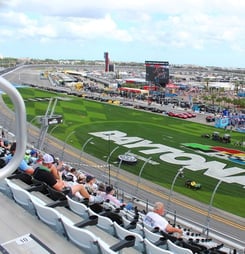
One of the most direct ways to celebrate National NASCAR Day is by experiencing a race in person. Watching on television shows the competition, but it cannot fully recreate the feeling of being at a speedway: the roar you hear before the cars come into view, the rush of air as they pass, and the perfectly timed movements on pit road where teams complete complex tasks in seconds.
If you are attending for the first time, it helps to know that a NASCAR event includes more than just the main race. Many tracks host practice sessions, qualifying rounds, and additional races, giving fans a chance to observe different techniques and strategies.
Between sessions, the infield and fan zones often feel like a lively festival, filled with merchandise stands, exhibits, simulators, and sponsor activities. On National NASCAR Day, there may also be special additions like raffles, meet-and-greets, and charity initiatives connected to the NASCAR Foundation.
A few practical tips can help you enjoy the experience more:
- Arrive earlier than you think you need to. Parking, security checks, and getting to your seat can take time, and arriving early allows you to explore the venue.
- Bring hearing protection. The cars are extremely loud, and protecting your hearing will make the experience more comfortable.
- Prepare for the weather. Most seating areas are exposed, so bring sunscreen, a hat, and water.
- Use a scanner or radio feed if possible. Listening to team communication adds insight into strategy, tire conditions, and race decisions.
If attending in person is not possible, you can still enjoy the experience from home. Many races are broadcast on TV or streaming platforms, and you can enhance the viewing experience by keeping a simple rule guide nearby, checking track layouts, and observing how cautions, restarts, and pit stops affect positions.
Hosting a watch party can also recreate some of the excitement. Fans can choose drivers to support, track positions, or even create fun challenges during breaks, such as timing how quickly someone can complete a “pit stop” activity with snacks or toy tires.
Make a Donation to the NASCAR Foundation
National NASCAR Day is also closely linked to charitable giving, with the NASCAR Foundation often highlighted as a key organization. The idea is to combine the excitement of racing with meaningful support for children and families in need of medical care.
There are several ways to contribute:
- Direct donations. Financial contributions help fund programs focused on children’s health and well-being.
- Symbolic gifts. Items like plush toys or comfort gifts can brighten the day for children in hospitals.
- Vehicle donation programs. Donating an old vehicle can be converted into funds for charitable initiatives.
For those who want a more social approach, the day is a great opportunity to organize a small fundraiser. This could include a themed bake sale, a car wash, or a friendly competition where participants support a chosen driver with a small pledge. The focus is not on large-scale events, but on connecting a shared passion with a meaningful cause.
You can also support local pediatric health initiatives, even if they are not directly linked to NASCAR. The spirit of the day is about generosity and using a positive, energetic event to make a difference.
National NASCAR Day Timeline
First Automobile Speed Trials on Daytona Beach
Drivers begin setting officially timed speed records on the hard-packed sands of Daytona Beach, Florida, turning the shoreline into a celebrated proving ground for high-speed automotive competition.
Moonshine Runners Refine Fast “Stock” Cars
During Prohibition, Appalachian moonshine traffickers modified ordinary-looking cars for speed and handling to outrun law enforcement, helping shape the culture and machinery that later defined stock car racing.
First NASCAR-Organized Race
The newly formed NASCAR sanctions its first race for modified stock cars on the beach-road course at Daytona Beach, marking the beginning of the organization’s official competition era.
Inaugural Strictly Stock (Cup Series) Race
NASCAR stages its first Strictly Stock race at Charlotte Speedway in North Carolina, launching the top-tier series that eventually evolves into today’s NASCAR Cup Series.
First Daytona 500 at Daytona International Speedway
The new, high-banked Daytona International Speedway hosts the first Daytona 500, creating NASCAR’s most prestigious event and showcasing the spectacle of superspeedway stock car racing.
History of National NASCAR Day
NASCAR began as part of American car culture, rooted in informal stock car racing. Originally, “stock” referred to vehicles that closely resembled everyday cars rather than specially designed race machines. Early races were exciting but lacked consistency, with different rules, varying prizes, and limited safety standards.
During the 1930s and 1940s, the popularity of stock car racing increased. Drivers, mechanics, and promoters recognized the appeal of close racing with familiar car brands. Events held on beaches and road courses near Daytona attracted attention, while local tracks helped build rivalries and talent. Despite its growth, the sport needed structure to become more organized.
That structure came in 1948, when Bill France Sr. and others established the National Association for Stock Car Auto Racing, known as NASCAR. This organization introduced consistent rules, organized competitions, and clearer opportunities for drivers and teams. Over time, NASCAR developed into a major sport, combining speed, strategy, and strong personalities that attracted loyal fans.
As the sport evolved, so did its culture. Teams became more specialized, technology advanced, and racing developed a recognizable rhythm: practice sessions, qualifying, races, and championship battles. Even as cars became more advanced, NASCAR maintained its “stock car” identity through branding and competitive racing.
National NASCAR Day was introduced later, in the early 2000s, as a way to celebrate the sport while supporting charitable efforts. Linked to the NASCAR Foundation, the day encourages fans to contribute to causes focused on children’s health. Activities have included fundraising campaigns, special promotions, and community events.
The charitable aspect reflects an important idea: racing depends on a community. Behind each car is a team of engineers, crew members, medical staff, and many others. National NASCAR Day uses this sense of community to support families facing medical challenges.
Celebrations often include fan-focused activities such as driver appearances, interactive exhibits, and demonstrations. These experiences offer insight into the sport, from pit crew coordination to strategic decision-making during races.
The day also serves as an accessible entry point for new fans. While NASCAR may seem complex at first, the core elements are easy to understand:
- Drafting and airflow: Cars can move faster when driving closely behind others due to reduced air resistance.
- Pit strategy: Timing stops effectively can change a driver’s position in the race.
- Tire management: Maintaining tire condition can be more important than achieving the fastest lap early on.
- Restarts: After cautions, the field tightens, creating opportunities for position changes.
National NASCAR Day is not only for experienced fans. It is also an opportunity for newcomers to discover why the sport remains popular: it blends speed, planning, teamwork, and unpredictability.
At its core, the day highlights two connected stories. One is the growth of stock car racing from local beginnings into a major motorsport. The other is the use of that platform to support children’s health and families in need. Together, they make National NASCAR Day both a celebration of racing and a reminder of the positive impact that shared enthusiasm can create.
Surprising Facts About NASCAR’s Origins and Global Reach
NASCAR’s story goes far beyond fast cars and modern racetracks. From its unexpected beginnings in the Prohibition era to its early races on beach sand and its expansion across continents, these facts reveal how the sport evolved into the global phenomenon it is today.
Bootlegging Roots of Stock Car Racing
Modern NASCAR stock car racing grew directly from the cars and drivers used to haul illegal liquor during Prohibition.
Moonshiners in the Appalachian South modified ordinary-looking sedans with tuned engines, strengthened suspensions, and hidden compartments so they could outrun federal agents on twisting back roads.
After work, many of these same drivers began informally racing each other on dirt ovals and makeshift tracks, creating a competitive culture and technical know-how that fed directly into the organized stock car circuits that followed World War II.
Daytona Beach’s Hard Sand Was an Early “Superspeedway”
Long before high-banked asphalt ovals, land speed records, and early stock car events were held on the hard-packed sands of Daytona Beach, Florida.
Beginning in the early 1900s, racers used a 4.1‑mile course that ran partly along the beach and partly on a parallel road, with cars reaching record speeds on the natural surface.
By the 1930s and 1940s, this beach‑road circuit had become a premier venue for stock car events and helped establish Daytona as the symbolic home of American stock car racing long before a permanent speedway opened inland.
NASCAR’s Geographic Reach Extends Far Beyond the Southeast
Although stock car racing is often associated with the American South, NASCAR’s sanctioned series has run points-paying events in Canada, Mexico, and across Europe.
The NASCAR Pinty’s Series in Canada and the NASCAR Mexico Series each crown national champions, while the NASCAR Whelen Euro Series stages oval and road course races in countries such as Italy, Germany, the United Kingdom, and the Netherlands.
This expansion has introduced American-style stock car racing to new fan bases and allowed drivers from multiple continents to compete under the same rulebook.
The HANS Device Transformed Driver Survival Rates
A pivotal safety change in stock car racing came with the widespread adoption of the Head and Neck Support (HANS) device in the early 2000s.
Designed to prevent basilar skull fractures by tethering the driver’s helmet to a carbon-fiber yoke, the HANS device reduces the violent forward motion of the head in high-speed crashes.
After several high-profile fatalities in the late 1990s and 2001, NASCAR moved to mandate head-and-neck restraints, and subsequent research has shown a dramatic decline in fatal head and neck injuries in top-level stock car racing.
SAFER Barriers Turned Rigid Walls into “Steel and Foam” Shock Absorbers
Impact with concrete walls was once a leading cause of serious injury in oval-track racing, but the introduction of SAFER (Steel And Foam Energy Reduction) barriers changed that risk profile.
Developed through research at the Midwest Roadside Safety Facility at the University of Nebraska–Lincoln, these walls use steel tubes backed by foam blocks to absorb and spread crash energy before it reaches the concrete.
First installed at Indianapolis Motor Speedway in 2002 and quickly adopted at major NASCAR tracks, SAFER barriers have been credited with reducing the severity of countless impacts that previously might have been catastrophic.
Fuel Strategy and Aerodynamics Turn Stock Cars into Rolling Science Labs
Behind the spectacle of stock car races is a deep reliance on physics and engineering, particularly in managing aerodynamics and fuel.
Teams use wind tunnel testing and computational fluid dynamics to refine body shapes that balance downforce with reduced drag, while race engineers run real-time fuel consumption models to decide when to pit and how hard a driver can push.
Even small changes in air density from temperature or altitude can alter handling and fuel burn, which is why crew chiefs rely on detailed telemetry and data analytics to make split-second strategic decisions.
Stock Car Racing’s Regional Culture Helped Define “NASCAR Nation”
Sociologists and historians point out that stock car racing helped crystallize a distinct fan culture rooted in small-town and rural communities, particularly in the American South.
Tracks often became seasonal gathering places where multigenerational families camped, grilled regional foods, and built long-term social networks around specific drivers and teams.
Studies of fandom note that these rituals, along with symbols like car numbers and sponsor colors, function much like local club identities, reinforcing a shared sense of place and community that has persisted even as the sport’s television reach and corporate presence have grown.