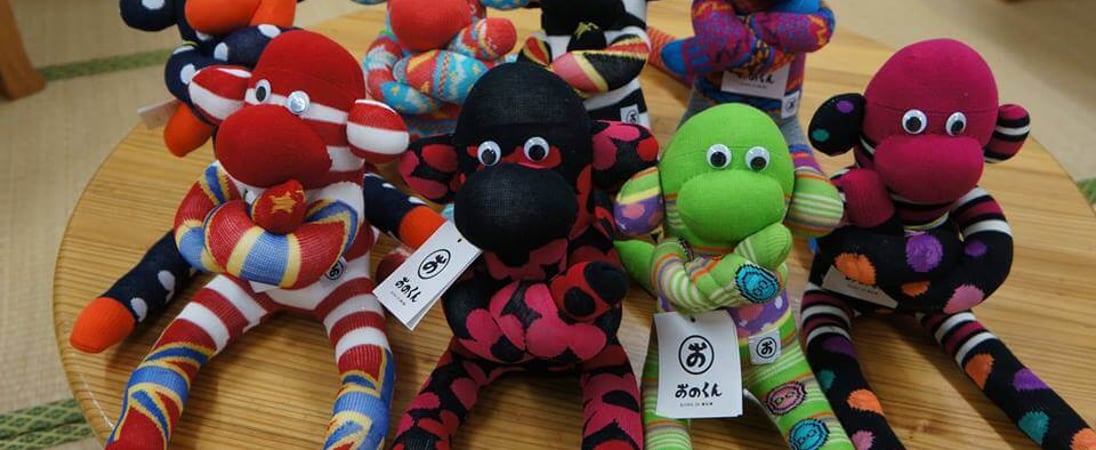
A fun little blend of folk art and kitsch, sock monkeys are simple and delightful toys that represent a bygone era. The ideal representation of repurposing and hand-crafting, sock monkeys offer a fun and silly reason to celebrate National Sock Monkey Day, a day dedicated to the charm of making something memorable out of something ordinary.
Sock monkeys have a way of feeling both homemade and iconic at the same time. They can be goofy or sweet, scruffy or perfectly stitched, and they somehow manage to look expressive even when they are basically a sock with arms.
That lovable simplicity is exactly the point. National Sock Monkey Day spotlights creativity, thriftiness, and the special kind of nostalgia that comes from a toy made by hand.
National Sock Monkey Day Timeline
John Nelson Settles in Rockford, Illinois Â
Swedish immigrant John Nelson settles in Rockford, later becoming central to the development of industrial sock knitting that would give rise to the famous work socks used for sock monkeys. Â
Improvements to the Sock Knitting Machine Â
John Nelson begins work on improving automatic sock-knitting machines, paving the way for mass-produced, sturdy work socks that families would eventually turn into handmade toy animals. Â
Founding of Nelson Knitting Company Â
Nelson Knitting Company was established in Rockford, Illinois, manufacturing durable brown work socks that became a staple for laborers and the raw material for later folk-art sock monkey dolls. Â
Introduction of the Red-Heel Work Sock Â
Nelson Knitting adds a distinctive red heel to its work socks to distinguish them from competitors, unintentionally creating the visual feature that crafters would turn into the trademark smiling mouth of the sock monkey. Â
Early Documented Sock Monkey Doll Â
Grace Winget of Rockford sews a monkey doll from a pair of red-heel socks for her grandson, providing one of the earliest clearly documented examples of the classic American sock monkey toy. Â
Sock Monkey Design Patent Dispute Â
Helen G. Cooke receives a U.S. design patent for a sock monkey doll, prompting Nelson Knitting to challenge the claim using earlier examples like the Winget monkey and eventually acquire rights and print patterns in its packaging. Â
Sock Monkeys Recognized as Classic Folk Toys Â
The Strong National Museum of Play highlights sock monkeys as iconic American folk toys rooted in Rockford’s red-heel socks, documenting their evolution from homemade playthings to enduring symbols of nostalgia and craft. Â
History of National Sock Monkey Day
The traditional sock monkey is made from a specific type of sock with a red heel. When fashioned properly, the heel becomes the monkey’s mouth and offers a fun little detail. The familiar “red mouth” look is not an accident of imagination, either.
It is closely tied to a particular style of sock that became widely available in the United States as industrial knitting improved and work socks became sturdier, more consistent, and easier to purchase.
When Red Heel Socks were introduced in the US in 1890, just a couple of decades after the sock knitting machine was patented, no one could have guessed how much delight children would get from these socks in future years. The red heel originally served a practical purpose. It helped the sock stand out from competitors’ versions and made the brand instantly recognizable.
The socks were made for hard use, which is part of why they worked so well for toys. Dense knit fabric holds up to handling, hides seams nicely, and stretches smoothly over stuffing. Even when the sock was worn past its prime, it often still had enough life left for one more job.
The idea of transforming socks into toys grew naturally out of a long tradition of make-do crafting. Families have always repurposed cloth remnants into dolls, rag animals, quilts, and other comforting objects.
A sock is basically a pre-shaped fabric with a built-in tube for the body and extra material that can be split and stitched into legs and arms. With the red heel positioned just right, that same practical design element becomes a smile.
Some stories say that the sock monkey was a product of the Great Depression in the 1930s, but more reliable sources show that they didn’t appear until a couple of decades later, sometime in the 1950s. The Depression-era story persists because it feels true to the spirit of the craft.
Sock monkeys are the kind of toy someone would make when store-bought options were limited. Still, the better-documented milestones point to mid-century popularity rather than a single dramatic moment of invention.
In fact, a patent for the sock monkey pattern seems to have been granted in 1953. That piece of evidence matters because it suggests the sock monkey had become recognizable enough as a distinct design that someone sought to protect a particular version of it.
In other words, the sock monkey was no longer just an improvisation made at a kitchen table. It had become a design people could identify, replicate, and market, even while it remained fundamentally a home craft.
It is also worth remembering that folk crafts rarely have one inventor. Sock monkeys likely appeared in multiple places through similar logic: a sturdy sock, a bit of stuffing, and a willingness to cut and sew.
A single patent does not necessarily mean a single beginning. It does show, however, that the sock monkey had entered public awareness in a big way by the middle of the twentieth century.
In any case, for many decades, sock monkeys have provided a delightful distraction and joyful playtime to children all over North America.
Though not as common now as they once were, some toy boxes can still offer the floppy and silly fun that comes from a sock monkey. Part of the appeal is that sock monkeys do not demand perfection. A slightly crooked seam can become personality.
Different sock materials lead to different “breeds” of monkey, from lanky long-limbed versions to squat little plush ones. Even the stuffing choice changes the character: soft and squishy for cuddling, firm and structured for display.
Sock monkeys also sit in an interesting space between toy and craft object. They can be made for play, but they can also be made as art. Some people customize them into superheroes, rock stars, or tiny vintage-clothed darlings with carefully sewn outfits.
Others keep the classic look: button eyes, a stitched smile, and that unmistakable red mouth. Either way, the sock monkey has remained a symbol of playful ingenuity.
By 1995, clothing designer Paul Frank started using a sock monkey named Julius in his fashion styles, and it didn’t take long for this trend to break into the mainstream. This moment gave sock monkeys a pop-culture boost.
They shifted from something people remembered from childhood into something deliberately “cool” again, showing up on accessories and apparel and reminding adults that the sock monkey vibe could be funny, friendly, and stylish all at once.
National Sock Monkey Day is here to celebrate and show appreciation for the nostalgia and creativity that the sock monkey stands for. Re-fashioning a toy from a simple sock is a clever and sustainable way to make the best of everything, even an old sock.
The day is also a small nod to craft traditions passed along through families and communities: basic sewing skills, the joy of making something with one’s hands, and the pride that comes from turning scraps into something that gets a second life.
How to Celebrate National Sock Monkey Day
Take some time to enjoy and celebrate National Sock Monkey Day with some of these clever and timely ideas:
Make a Sock Monkey at Home
This classic toy used to be a super basic item that moms and grandmas could easily make for the kids in their lives from items lying around the house.
Today, it might be a bit more challenging to get the items needed to make it, but it will be totally worth it once it’s finished!
A satisfying sock monkey starts with the right sock. The classic choice is a sturdy, mid-calf sock with a contrasting heel, especially a red heel.
Thicker socks create a more durable finished toy and hide stitches better. If the sock is thin or stretchy like a dress sock, it can still work, but it may require gentler handling and tighter stitching.
Beyond the sock itself, the basic supplies are simple: needle and thread, scissors, pins or clips, stuffing, and something for the face.
Many traditional sock monkeys have button eyes, but embroidered eyes are often a better option for a toy intended for very young children. Felt or embroidery thread can be used to create a neat nose, nostrils, and a friendly expression without hard parts.
The basic construction follows a few simple, time-tested steps:
- Plan the layout before cutting. The sock’s foot and ankle form the body, while the legs are created by cutting the long tube of the sock up the center and stitching along the edges. Marking or pinning a guide line helps keep the legs even.
- Turn and stitch carefully. A sock monkey may look simple, but strong seams make all the difference. Small, even stitches hold up better over time, especially in areas that get more strain, like the crotch and under the arms.
- Stuff little by little. Adding small amounts of filling prevents lumps. A blunt tool, such as the back of a spoon handle, can help push stuffing into the hands, feet, and tail without stressing the seams.
- Shape the face. The red heel becomes the mouth when placed at the front of the head. Some makers add a seam to define the lips for a classic smile, while others let the natural heel shape create the expression.
- Add personality. A sock monkey can stay traditional or become a character with a small scarf, hat, bow tie, or a simple outfit made from fabric scraps.
For beginners, National Sock Monkey Day is a friendly way to start sewing. The project is forgiving, teaches useful techniques like turning seams and ladder stitching, and shows that handmade doesn’t have to be complicated. The goal is a cheerful, lovable toy, not a factory-perfect result.
A few practical tips can make the process easier:
- Pre-wash the sock so it shrinks before you cut and sew.
- Use a strong thread or double the thread for extra durability.
- Choose suitable stuffing. Polyester fiberfill is washable and lightweight, fabric scraps add weight and structure, and wool provides a soft, springy feel.
- Care plan. If the toy will be used often, reinforced seams and washable materials will help it last.
Making a sock monkey is also a small act of sustainability. It gives new life to fabric that might otherwise be thrown away and encourages a repair-and-reuse mindset. Even a single leftover sock can become something charming instead of clutter.
Give a Sock Monkey as a Gift
Kids and adults alike can enjoy celebrating National Sock Monkey Day. For collectors or anyone who simply loves these cheerful toys, it’s the perfect occasion to give a sock monkey as a gift. You can find them in gift shops, toy stores, or through online retailers.
Sock monkey gifts can be simple or thoughtfully selected. A classic version makes a playful present for a child, but it can also be a meaningful nostalgia gift for an adult who remembers one from a grandparent’s home or childhood photos. Since sock monkeys can be handmade or store-bought, they suit a wide range of budgets and styles.
When choosing a sock monkey, it helps to consider how it will be used:
- For young children: Look for soft materials, embroidered or securely stitched features, and strong seams. A machine-washable option is especially practical.
- For collectors: Traditional proportions, vintage-style socks, or unique craftsmanship can make the piece more special. Many collectors appreciate creative variations that still keep the iconic red-mouth design.
- For décor lovers: A sock monkey can add charm to a room, whether placed on a shelf, tucked into a reading corner, or used as a playful seasonal accent.
Adding a small backstory can make the gift more meaningful. Explaining how the red heel becomes the monkey’s mouth or sharing the history behind the design gives the present a personal touch. For crafters, a handmade sock monkey feels even more special, as it reflects time, care, and creativity.
The gift doesn’t have to be the toy itself. Sock monkey–themed items are widely available, including socks, pajamas, hats, oven mitts, and even bedding. Exploring themed options can make shopping for the day more fun.
Sock monkey gifts also work well for group celebrations. A small themed item can serve as a lighthearted token for a classroom activity, a craft club gathering, or a family event where everyone brings something fun and sock-inspired. Even practical items, like cozy socks with a sock monkey print, capture the spirit of turning everyday essentials into something cheerful.
Another creative idea is to give a simple “maker kit.” A pair of sturdy socks, a small bag of stuffing, and a few basic sewing supplies can encourage someone to try making their own sock monkey. It’s a gift that invites creativity and participation rather than just display.
Whether the day is spent crafting, collecting, gifting, or simply enjoying a classic toy, National Sock Monkey Day celebrates a simple truth: imagination doesn’t require fancy materials. Sometimes all it takes is a sock, a needle, and the willingness to turn something ordinary into a smile.
How an Everyday Work Sock Became an American Folk Icon
The story of the sock monkey is a surprising blend of industry, creativity, and legal history. These facts reveal how a simple factory-made work sock evolved into a beloved handmade toy, shaped by innovation, community pride, and a few unexpected twists along the way.
Industrial Sock Makers Accidentally Created a Folk Art Icon
The classic sock monkey grew out of an industrial product, the Rockford Red Heel work sock made by Nelson Knitting Company in Rockford, Illinois.
To distinguish its socks from competitors, the company added a bright red heel in the early 1930s as a branding feature, which homemakers later repurposed as the monkey’s smiling mouth.
Nelson Knitting eventually acknowledged this unintended folk art by printing monkey-making instructions and including them in packages of Red Heel socks, tying a factory brand to a now-iconic handmade toy.Â
Rockford, Illinois, Became Known as the “Home of the Sock Monkey”
Rockford’s reputation as the “Home of the Sock Monkey” traces to its role as a major American center of hosiery production and the home of Nelson Knitting Company.
Swedish immigrant John Nelson settled in the Rockford area in the 19th century, patented improvements to automatic sock-knitting machines, and helped build an industry that churned out millions of work socks.
When families began turning worn Rockford Red Heel socks into monkeys, local historians and civic boosters embraced the toy as a symbol of the city’s industrial ingenuity and domestic creativity.Â
A 1950s Patent Fight Helped Pinpoint Early Sock Monkey Origins
In the early 1950s, Colorado homemaker Helen Cooke obtained a U.S. patent for a sock monkey doll design and pursued infringement claims against toy sellers.
Nelson Knitting Company joined the dispute and produced evidence that Rockford resident Grace Winget had already sewn a sock monkey from Red Heel socks in February 1951 as a gift for her grandson.
That earlier, well-documented example helped undermine Cooke’s exclusive claim, led to Nelson acquiring rights to the design, and provided rare written and photographic records of what had largely been an informal household craft.Â
Victorian Stuffed Animal Crazes Helped Pave the Way for Sock Monkeys
Sock monkeys did not appear in a vacuum but followed an earlier fascination with plush animal toys that swept Europe and North America in the late 19th and early 20th centuries.
Companies such as Germany’s Steiff popularized soft, stuffed animals, including early teddy bears, creating a strong cultural appetite for cuddly, anthropomorphic creatures.
Toy historians note that this widespread enthusiasm for plush animals set the stage for American homemakers to imitate factory-made toys by stitching whimsical monkeys from simple household items like work socks.Â
Homemade Sock Toys Reflect Depression-Era and Wartime Thrift
Turning worn work socks into playful monkeys fits into a broader 20th-century pattern of resourceful home crafting during hard times.
During the Great Depression and again in World War II, many American families stretched every household item, and mothers often transformed outgrown or holey socks into homemade stuffed animals rather than discard them.
Histories of domestic craft link sock monkeys with other thrifty creations such as feed-sack dresses and scrap quilts, in which castoff textiles were reimagined as comforting toys and useful household goods.Â
Museum Curators Treat Sock Monkeys as Evidence of Everyday Childhood
Curators at institutions such as The Strong National Museum of Play collect sock monkeys not just as cute toys but as artifacts of everyday family life.
In their collections, worn fabric, repairs, and improvised clothing on individual monkeys are studied as clues to how children played, how long toys were cherished, and how caregivers stitched or patched them over time.
By cataloging details like materials, construction methods, and signs of wear, curators use sock monkeys to tell wider stories about 20th century childhood, consumer culture, and home sewing skills.Â
A Dedicated Sock Monkey Museum Traces Changing Toy-Making Styles
The Sock Monkey Museum in Illinois houses thousands of vintage and contemporary sock monkeys and documents how their appearance has evolved over the decades.
Its collection shows shifts from early examples with button eyes and simple embroidered mouths to later monkeys that reflect changing safety standards, fabric technologies, and fashion influences, such as added clothing and accessories.
By recording patterns, materials, and regional variations, the museum treats each handmade monkey as a small record of the era and community in which it was created.