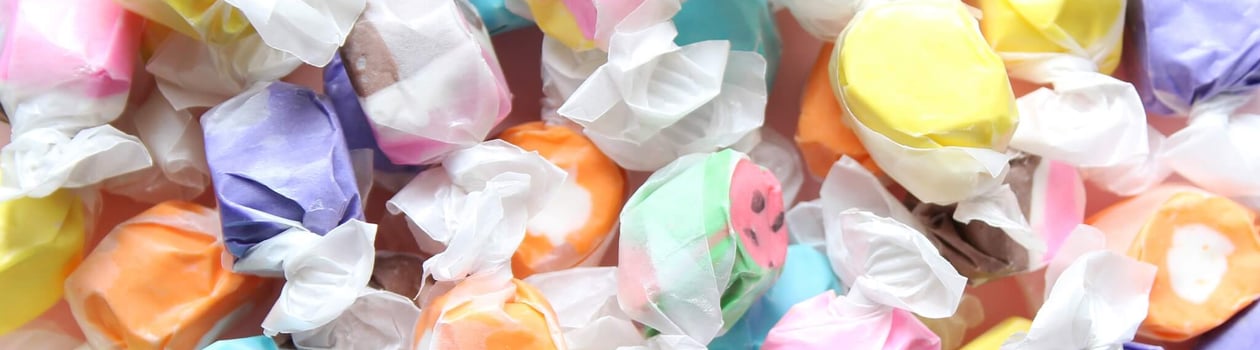
National Taffy Day might just be one of the sweetest days on the Days Of The Year calendar. Imagine a world where every chew is a nostalgic, sweet, and fun journey. That’s exactly what National Taffy Day is all about!
National Taffy Day comes every year. It’s a day dedicated to honoring one of the most beloved confections — taffy. Known for its chewy texture and myriad fruity and sweet flavors, taffy is not just a scrumptious nibble of candy. Instead, it is a time-honored culinary technique that has tickled taste buds throughout the generations.
How to Celebrate National Taffy Day
Have a Taffy Pulling Adventure
Roll up those sleeves — it gets a little messy when diving into the world of homemade taffy. This adventure begins with selecting the main ingredients — sugar, cornstarch, butter, water, salt, and a dash of flavoring. The magic happens when cooking these ingredients together and pulling the taffy until it becomes aerated and stretches into that perfect chewy consistency. This process is as much about making memories in the kitchen as it is about making candy. Plus, it’s a fantastic way to engage some muscle — taffy pulling takes a surprising amount of arm strength.
Taffy Tasting Party
Transform the living room or backyard into a taffy-tasting haven. Lay out a spread of various taffy flavors. Think of classics like vanilla and strawberry, or serve up some crowd favorites like chocolate and peppermint. Throw in wild cards like banana, grape, or spicy cinnamon.
Blindfold guests and let them embark on a sensory journey, guessing the flavors as they chew — enhance the experience with scorecards, awarding a taffy-themed prize for the most accurate palate. It’s not just a party; it’s a playful exploration of tastes and textures.
Taffy Art
Unleash that inner artist with taffy as a medium. This edible art form can be a fun activity for all ages. Use the vibrant colors of taffy to create everything from simple shapes and figures to elaborate mosaics and landscapes. The pliable nature of taffy makes it perfect for molding and shaping. Host a taffy art contest, or just enjoy creating something beautiful (and delicious). It’s a unique way to celebrate the versatility of this beloved candy.
Visit a Taffy Shop
Lucky enough to be near a place where taffy is made? Don’t miss the opportunity to witness this captivating process. Observing taffy being stretched and pulled on a taffy puller is entertaining and educational. Many shops offer a behind-the-scenes look at how taffy is made, from the initial cooking to the final wrapping. It’s a mesmerizing dance of machinery and human skill, resulting in those perfect little pieces of joy.
Spread the Sweetness
Taffy’s delightful colors and flavors make it a charming gift. Create small bundles of joy by packaging assorted taffy in decorative bags or boxes. Add a personal touch with a handwritten note card or a fun taffy-related pun. Distribute these sweet parcels to friends, family, or even colleagues. It’s a thoughtful and heartwarming way to spread happiness and share the spirit of National Taffy Day.
Taffy Flavor Invention
National Taffy Day is the perfect excuse to experiment in the kitchen. Ever dreamed of a chocolate-coffee taffy or a tangy lemon-basil blend? Now’s the chance to bring those ideas to life. Mix and match different flavorings, extracts, and even spices to create a unique taffy flavor. This creative endeavor is not just about the end product; it’s about enjoying the journey of discovery and taste-testing.
National Taffy Day Timeline
“Taffy” Enters Printed English
The word “taffy” appears in the Oxford English Dictionary, referring to a sugar candy, marking one of the earliest known print uses for the chewy confection.
Taffy Pulls Become Popular Social Events
In the late 19th century, homemade taffy “pulls” spread across the United States as cold‑weather parties, with newspapers and etiquette writers describing groups gathering to cook, pull, and share the candy.
Salt Water Taffy Legend on the Jersey Shore
Stories from Atlantic City trace the “salt water taffy” name to the early 1880s, when a candy seller’s stock was soaked by ocean water and jokingly sold as “salt water taffy,” starting a uniquely American seaside treat.
Fralinger and James Commercialize Salt Water Taffy
Candy makers Joseph Fralinger and Enoch James refine recipes and packaging in Atlantic City, boxing salt water taffy as a portable souvenir and helping to spread the confection far beyond the boardwalk.
Mechanical Taffy Pullers Transform Production
By the turn of the 20th century, patented mechanical taffy pullers replaced much hand‑pulling in candy factories, continuously stretching and aerating the candy to create a lighter texture at a commercial scale.
FDA Issues First Comprehensive Food Additive Rules
The U.S. Food Additives Amendment of 1958 establishes stricter oversight of ingredients, coloring, and preservatives in candies like taffy, pushing makers toward standardized labeling and safer mass production.
Modern Branded Taffy Hits Mass Market
The Willy Wonka Candy Company, founded in 1971, later introduced Laffy Taffy as a branded, joke‑filled chewy candy bar, bringing taffy’s texture into supermarkets and convenience stores nationwide.
History of National Taffy Day
The story of taffy, especially the wildly popular saltwater taffy, is as colorful as its many flavors. The humble beginnings of taffy can be traced back to the 19th century. The first mention of it in print appeared in the Oxford English Dictionary in 1817. However, it was not until the mid-1800s that taffy really began to take off in popularity.
The evolution of taffy saw a significant milestone in the 1870s with taffy pulling, giving it its unique texture. But the most exciting urban legend in taffy history is how saltwater taffy got its name. Legend has it that in the 1880s, a candy shop on the Jersey Shore was flooded by a tremendous storm, soaking its taffy stock with salty Atlantic seawater. The owner was not thrilled to lose his precious inventory. So, with a sense of humor and business acumen, he began selling it as “saltwater taffy.” An American classic was born. Whether that’s true or not we will never know – but it sure makes a good story!
In the late 20th century, taffy saw another variation with the introduction of a new Laffy Taffy, a commercially-made and readily available candy shaped like a long cord, adding to the already diverse world of taffy varieties. The first National Taffy Day was celebrated in the mid-1980s.
National Taffy Day is more than a day to pop in a bite of this yummy sweet treat. Rather, it is a celebration of candy-making history, creativity, and the simple joys of life. So, whether trying to pull taffy at home or purchasing some to share, savor each sweet moment!
Sweet Facts About Taffy and the Science Behind Its Chew
Taffy is more than just a nostalgic candy—it’s a mix of chemistry, technique, and history. From the precise temperatures that create its signature texture to the seaside culture that made it famous, these facts reveal what makes taffy so uniquely satisfying.
Taffy’s Distinctive Chew Comes From Sugar-Stage Chemistry
Taffy’s signature chewiness depends on cooking the sugar mixture to the “soft-ball” stage, typically around 234 to 240 °F (112 to 115 °C).
At this temperature range, enough water has boiled off to create a concentrated sugar syrup that will form a soft, malleable ball in cold water.
This precise control of temperature and moisture gives taffy its pliable texture and keeps it from becoming either brittle like hard candy or sticky like caramel sauce.
Pulling Taffy Literally Whips Air Into The Candy
The act of repeatedly stretching and folding taffy is not just for show; it aerates the candy by incorporating tiny air bubbles throughout the sugar mass.
This mechanical working alters the microstructure of the candy, making it lighter in color and giving it a softer, less glassy bite.
The same principle is used in making foods like nougat and marshmallows, where controlled aeration dramatically changes both texture and appearance.
Salt Water Taffy Was Shaped By American Seaside Tourism
Salt water taffy became tightly associated with Atlantic City and other East Coast boardwalks in the late 19th and early 20th centuries, when seaside resorts were booming.
Candy makers capitalized on the growing tourist trade by selling brightly wrapped pieces as portable souvenirs, and by the early 1900s, dozens of shops lined the Atlantic City boardwalk.
The candy’s identity as a nostalgic “shore” treat is rooted in this era of mass leisure travel and resort culture.
Despite Its Name, Salt Water Taffy Uses Little More Salt Than Other Candies
Most traditional saltwater taffy recipes do not contain actual seawater and typically include only modest amounts of table salt, comparable to other caramels and chewy candies.
The distinctive “salt water” label is more a marketing and regional identity than a literal description of the ingredients, although some modern recipes may slightly increase salt levels to balance sweetness or highlight flavors.
Early Legal Battles Helped Define “Salt Water Taffy” As A Generic Term
In the 1920s, a New Jersey candy company attempted to trademark the term “Salt Water Taffy,” sparking a legal fight that ended with the U.S.
Patent Office ruling the phrase too generic to be owned by a single business. The case helped cement “salt water taffy” as a common descriptive name for a style of chewy seaside candy, allowing many independent confectioners to keep using it on their products.
Mechanical Taffy Pullers Transformed Small Candy Shops
Before mechanization, taffy had to be pulled by hand on hooks or between two people, which limited batch size and made production physically demanding.
By the early 20th century, inventors had developed rotating taffy-pulling machines with arms that stretch and fold the candy continuously, allowing candy shops to produce far larger volumes with more consistent texture
These machines became a common sight in shop windows, serving as both production tools and crowd-drawing attractions.
Taffy’s Bright Colors and Flavors Followed Advances In Food Additives
The explosion of taffy flavors and vivid colors coincided with the broader adoption of manufactured flavorings and coal-tar–derived synthetic dyes in the late 19th and early 20th centuries.
As commercial flavor and color houses expanded their catalogues, taffy makers could offer everything from fruit and spice blends to novelty flavors in eye-catching pastel stripes.
Later regulations in the United States restricted and standardized which food dyes could be used, but the tradition of multi-colored, multi-flavored taffy remained central to the candy’s appeal.