
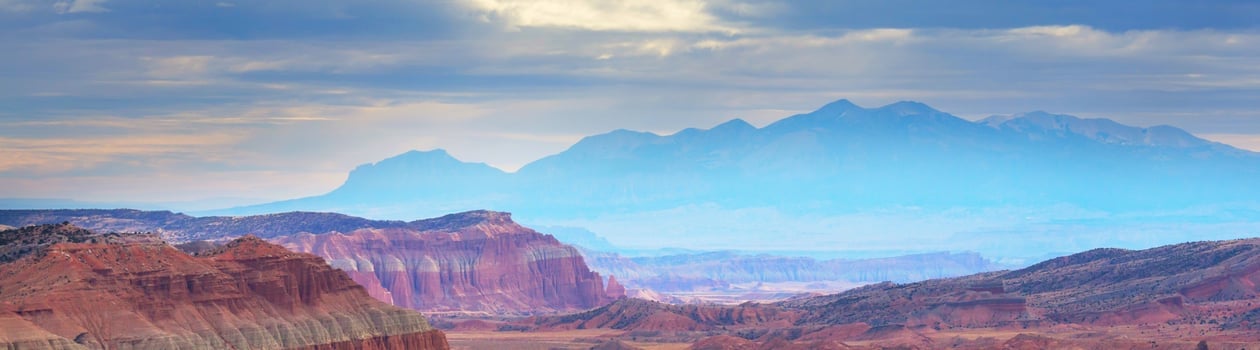
National Utah Day is an occasion when we can all celebrate the rustic beauty of the 45th state. It also honors the unique culture and tells its history. Utah truly has something for everyone. Love skiing? They have world-class resorts.
Enjoy hiking? You’ll find numerous canyons and peaks to explore. Prefer city life? You’ll love Salt Lake City. Utah is a decidedly gorgeous place. Despite what you might think you know, you’ll be delighted to learn about all its contrasts and surprises.
How to Celebrate National Utah Day
Celebrating National Utah Day invites one and all to enjoy the state’s unique history. Oh – and don’t forget to check out its heartstopping beauty.
Explore the Great Outdoors
Utah’s beautiful vistas steal many a heart. The state offers everything from the Wasatch Range’s towering peaks to its desert areas’ stark beauty. Plan a hike or a camping trip in one of Utah’s stunning national parks. You have several to choose from:
- Zion National Park
- Bryce Canyon
- Arches National Park
Each of these locations is well worth a visit. There’s hardly a bad view from any angle in Utah!
Plan a Ski Trip on Its Famous Slopes
National Utah Day falls after most of the ski resorts button up their skiing operations for the season. Just because they’ve shifted to welcoming summer guests doesn’t mean you can’t plan a Utah ski trip for next winter!
While you have Utah on your mind, go ahead and make those reservations. You’ll enjoy swooshing down some of the best ski trails in the country in just a few months.
Learn More About Utah’s History
Utah has so much to offer even the buffest of history buffs. Visit the Utah State Capitol in Salt Lake City. Or, explore the state’s rich Mormon heritage at Temple Square. Or check out some of the state’s incredible museums.
You might like the Natural History Museum of Utah and the Utah Museum of Fine Arts. Both are in Salt Lake City. Each will provide deeper insights into the state’s history and culture.
Celebrate with Local Cuisine
Utah’s culinary scene is what you might expect. It’s a balance of non-nonsense comfort food with a modern sensibility.
Be sure to check out the funeral potatoes – a shredded hash brown casserole with an ominous name. For dessert, give the cherry cobbler or Utah scones a taste. You’ll love these local favorites. Celebrating Utah Day in state? Support a local restaurant.
If you’re celebrating from afar, try preparing these dishes at home. It’s a “tasteful” way you can join in on the fun.
Attend Local Events
Check out community events happening around the state. Parades and culture may be a part of the day in some communities. You might also check local communities for historical reenactments.
Learn About Utah’s Native American Culture
Many visitors say they can feel the spirits of the ancient inhabitants in the wind. Visit the Edge of the Cedars State Park Museum or the Anasazi State Park Museum.
There, you can learn the incredible stories of the ancient Puebloans and other Native American people who first roamed the lands.
Consume Media about Utah
If you are intrigued by Utah but can’t make it to celebrate Utah Day, try some at-home learning activities. Stream documentaries. Check out some books from your library. Let your media choices transport you to Utah to see the natural wonders.
Share Utah Day on Social Media
Use the hashtag #NationalUtahDay to share your celebrations. You might be posting selfies from your adventures in Utah. Or perhaps you snapped a pic of your homemade Utah-inspired meal. Either way, be sure to spread the word about the beauty of Utah.
National Utah Day Timeline
Ancestral Puebloan Culture Flourishes in Utah
Ancestral Puebloan peoples built masonry villages, kivas, and cliff dwellings across what is now southern Utah, leaving behind extensive archaeological sites and rock art that document a complex farming society adapted to the high desert. [1]
Ute and Other Numic-Speaking Peoples Dominate the Region
Ute bands and other Numic-speaking groups establish seasonal rounds of hunting, gathering, and trade across the central Rockies and the Great Basin, giving rise to the name “Utah” from the Ute people, often translated as “mountain people.”
Latter-day Saint Pioneers Arrive in the Salt Lake Valley
Members of the Church of Jesus Christ of Latter-day Saints, led by Brigham Young, reached the Salt Lake Valley and began an ambitious irrigation-based settlement, laying the foundations for Salt Lake City and shifting political control of the region.
Creation of Utah Territory
The U.S. Congress organized the Utah Territory under the Compromise of 1850, carving it from land taken from Mexico after the Mexican-American War and setting off decades of tension between federal authorities and local Latter-day Saint leadership.
Utah’s National Parks System Takes Shape
Starting with Natural Bridges National Monument in 1909 and followed by Zion (1919), Bryce Canyon (1928), Arches (1971), and others, federal protection of Utah’s dramatic red rock landscapes transforms the state into a premier destination for outdoor recreation. [1]
Philo Farnsworth Advances Electronic Television
Utah-born inventor Philo T. Farnsworth demonstrates key components of fully electronic television, including the image dissector tube and electronic receiver, helping launch a new era of mass communication that would reach far beyond his rural Beaver, Utah roots. [1]
Salt Lake City Hosts the Winter Olympic Games
The 2002 Winter Olympics brought global attention to Utah’s mountain landscapes, ski resorts, and infrastructure, accelerating the growth of winter sports tourism and cementing the state’s reputation as a world-class center for snow and outdoor recreation. [1]
History of National Utah Day
The story of Utah is an age-old tale of perseverance and cultural diversity. The state’s name pays homage to the ancient Ute tribe, the mountain people. This land is rich in history.
Before the Mormon pioneers arrived in the middle of the 1800s, many Native American tribes called its wide expenses home. But that changed in 1847 with the arrival of the pioneers.
The first Mormon settlers came to the young territory in search of a space to practice their faith without persecution. They proposed a new name for the territory: Deseret. That term came from the Book of Mormon and meant honeybee.
To the Mormon settlers, the busy honey bee symbolizes industriousness. However, Congress chose Utah, rightfully acknowledging the land the Ute tribe had called home. Congress admitted the territory into the United States as the 45th state in 1896.
Because about 60% of the state’s population are members, you will see the Mormon values in daily life.
Utah is still a dynamic state. Its economy thrives on tourism, especially near its mountain regions. Outdoor attractions include National Parks and ski slopes. The state also has a thriving agricultural economy.
The first celebration of National Utah Day took place in 2017.
National Utah Day Facts
Utah’s Otherworldly Rock Arches Formed Over Millions of Years
Utah’s famous natural arches, including those in Arches National Park, are the result of at least 65 million years of geologic processes acting on thick beds of Entrada Sandstone.
Uplift of the Colorado Plateau, jointing in the rock, and the selective erosion of weaker layers by water, ice, and salt all contributed to the landscape.
The park alone contains more than 2,000 documented stone arches, making it one of the densest concentrations of natural stone arches in the world.
The Great Salt Lake Is a Remnant of a Vast Ice Age Sea
Utah’s Great Salt Lake is what remains of ancient Lake Bonneville, a massive freshwater lake that covered much of western Utah during the last Ice Age.
As the climate warmed and most of Lake Bonneville evaporated or drained about 14,500 years ago, the smaller Great Salt Lake was left behind, with no outlet rivers.
Minerals left behind by evaporation have made the lake several times saltier than the ocean, creating unique ecosystems and one of the world’s largest breeding grounds for certain migratory birds.
Utah Sits on the Colorado Plateau, One of Earth’s Most Stable Regions
Much of Utah lies on the Colorado Plateau, a geologic province that has been slowly uplifted more than a mile above sea level while remaining relatively undeformed compared with surrounding mountain belts.
This stable block of crust, mostly made of layered sedimentary rocks, allowed rivers like the Colorado and Green to carve deeply over time, exposing spectacular canyons and rock strata that record hundreds of millions of years of Earth’s history.
Ancestral Puebloans in Utah Engineered Complex Communities
Long before European or American settlers arrived, ancestral Puebloan peoples built intricate communities in what is now southern Utah, including sites like Hovenweep and Cedar Mesa.
Archaeological evidence shows they constructed multi-story stone dwellings, kivas, dams, and check dams to manage scarce water resources, and they farmed corn, beans, and squash in an arid environment for centuries before gradually migrating away in the late 13th century.
The Ute People Gave Utah Its Name and Shaped Its Early Trade Networks
The state’s name derives from the Ute people, whose traditional homelands spanned what is now Utah and neighboring states.
Historically, Ute bands were skilled horsemen and traders, connecting the interior West with the Spanish colonies and the Great Plains, and their territories overlapped key routes later used by fur trappers, settlers, and the U.S. military.
Today, the Ute Indian Tribe of the Uintah and Ouray Reservation remains one of the largest Native landholders in the region.
Utah’s “Silicon Slopes” Tech Corridor Grew from Defense and Academic Roots
Utah’s modern tech boom, often called “Silicon Slopes,” is rooted in mid‑20th‑century defense contracts and computing research at the University of Utah.
The university’s computer science department was one of the original nodes on ARPANET and became a world center for computer graphics in the 1960s and 1970s, helping train pioneers who went on to found or influence major visual effects and software companies, laying the groundwork for today’s dense cluster of startups and tech firms along the Wasatch Front.
Utah’s Ski Industry Benefited From Atmospheric Science During World War II
Utah’s reputation for “The Greatest Snow on Earth” is tied not only to geography but also to meteorology research that ramped up during and after World War II.
Studies of orographic snowfall over the Wasatch Range, driven by moist air from the Pacific rising over steep mountains, helped explain why the region sees frequent, relatively low‑density powder snow.
This understanding later guided ski area development and avalanche forecasting, turning Utah’s mountains into a global skiing destination.
National Utah Day FAQs
Why is Utah nicknamed the “Beehive State”?
Utah’s nickname, the “Beehive State,” symbolizes industry and perseverance.
Early Mormon settlers adopted the beehive as a representation of their strong work ethic and communal spirit.
This emblem reflects the settlers’ desire to create a cooperative and industrious society in the harsh desert environment.
What is the significance of the Spiral Jetty in Utah?
The Spiral Jetty is a renowned earthwork sculpture created by artist Robert Smithson in 1970.
Located on the northeastern shore of the Great Salt Lake, it is a 1,500-foot-long spiral made of basalt rocks and earth.
The artwork interacts with the lake’s fluctuating water levels, sometimes submerged and other times visible, offering a unique experience to visitors.
Did you know Utah has a town named after a body part?
Yes, the town of Levan in Utah is believed to be named as “navel” spelled backward, indicating its central location in the state.
This quirky naming showcases the settlers’ sense of humor and the town’s significance as a central point in Utah.
What unique condiment is popular in Utah’s cuisine?
Fry sauce is a beloved Utah condiment, typically a blend of ketchup and mayonnaise.
It’s commonly served with French fries and onion rings, adding a tangy twist to these snacks.
This sauce has become a staple in Utah’s culinary scene, reflecting the state’s penchant for simple yet flavorful accompaniments.
Is it true that Utah has a law against causing catastrophes?
Yes, in Utah, it’s illegal to cause a catastrophe. This unusual law is likely aimed at preventing large-scale disasters, whether natural or man-made, ensuring public safety and welfare.
What is the story behind Utah’s first department store?
Utah is home to the nation’s first department store, Zion’s Co-operative Mercantile Institution (ZCMI), founded in 1868 by Brigham Young.
ZCMI was established to promote self-sufficiency among Mormon settlers and became a model for cooperative merchandising in the United States.
How did Utah’s Great Salt Lake influence local folklore?
The Great Salt Lake, with its high salinity, has inspired local folklore, including tales of a mysterious creature known as the North Shore Monster.
Reported sightings describe a creature with the body of a crocodile and the head of a horse, adding an element of mystery to the lake’s natural allure.
What is the significance of January 13th in Utah’s skiing culture?
Historical data points to January 13th as the golden winter day in Utah, known as the perfect day for skiing.
This date marks the highest likelihood of optimal snow conditions, making it a favorite among skiing enthusiasts.
Did you know about Utah’s contribution to television technology?
Philo T. Farnsworth, born in Beaver, Utah, was an inventor known for creating a prototype of the first all-electric television.
His pioneering work laid the foundation for modern television technology, showcasing Utah’s contribution to technological advancements.
What is the story behind Utah’s unique state rock?
Coal has been Utah’s state rock since 1991. This designation honors the significant role coal played in powering Utah’s early industries and its contribution to the state’s economic development.



You may also like

National Après Day
National Après Day is a lively celebration dedicated to the joy of relaxing and enjoying good times with friends after an adventure-filled day. This day, established by Breckenridge Distillery, captures the essence of unwinding and sharing stories, whether you've been skiing, hiking, or just experiencing the thrill of the day...

National Backcountry Ski Day
Snow blankets the ground, untouched and inviting. Skiers gather at dawn, their breath visible in the crisp air. They check their gear: shovels, beacons, and bindings are all secure. A guide leads the way, breaking a path into the wilderness. National Backcountry Ski Day, celebrated on March 4th, is a...
- Austria
- Canada
- Switzerland
- and 1 more

The Day the Music Died
Buddy Holly, Ritchie Valens, and the Big Bopper — their timeless music continues to inspire fans, over 60 years after their untimely deaths.

McDonald’s Day
Every year on this day, McDonald's fans mark a special day known as McDonald's Day. It commemorates the opening of Ray Kroc's first McDonald’s franchised restaurant in Des Plaines, Illinois, back in 1955. It's a day filled with nostalgia and appreciation for one of the world's largest fast-food chains. McDonald's Day isn't...
National days and holidays on May 31

World No Tobacco Day
Discover World No Tobacco Day, raising awareness of smoking’s harms and empowering people to quit, protect lung health, and build tobacco‑free communities.

Buddha Day
Buddha Day, known as Vesak, celebrates the life of Siddhartha Gautama, the founder of Buddhism. It’s observed on the full moon day of the Vaisakha month, usually in May. This day is a key moment for Buddhists as it marks the Buddha’s birth, enlightenment, and passing, making it the most...
- Bangladesh
- Bhutan
- Cambodia
- and 14 more

Vivid Sydney
Vivid Sydney is a dazzling celebration that transforms the city into a vibrant playground of lights, music, and creativity. For weeks, iconic landmarks and urban spaces glow with stunning light installations and 3D projections, captivating both locals and tourists. This festival draws millions of visitors each year, offering an enchanting...

National Autonomous Vehicle Day
Discover how National Autonomous Vehicle Day celebrates self-driving technology, safer roads, accessibility, and the future of stress-free, autonomous travel.
Seize Every Day
Join free for personalised recommendations, email reminders and exclusive guides. Never miss a day.